
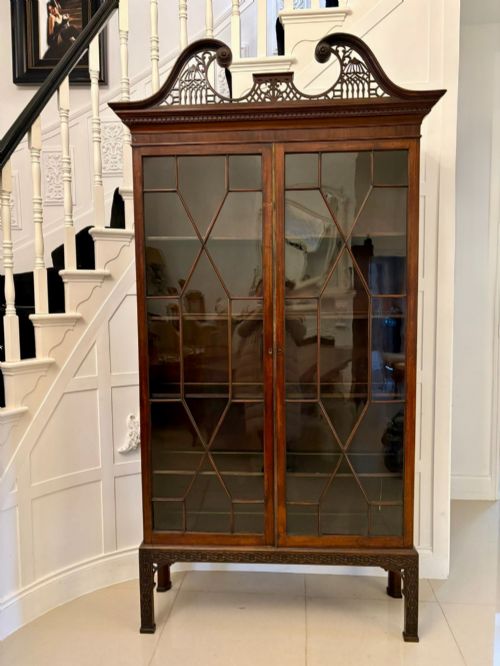
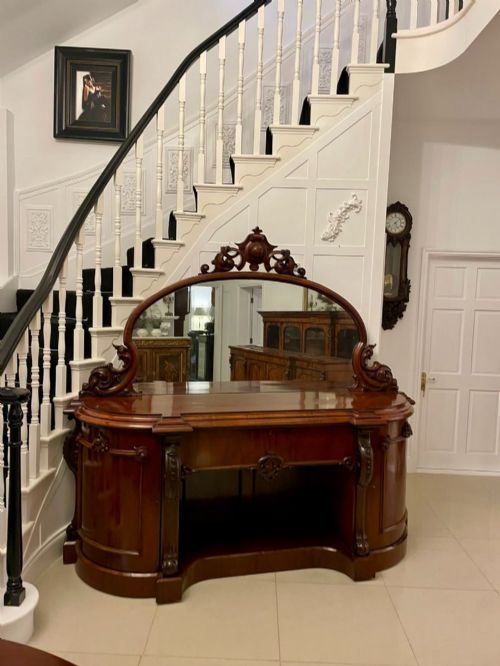
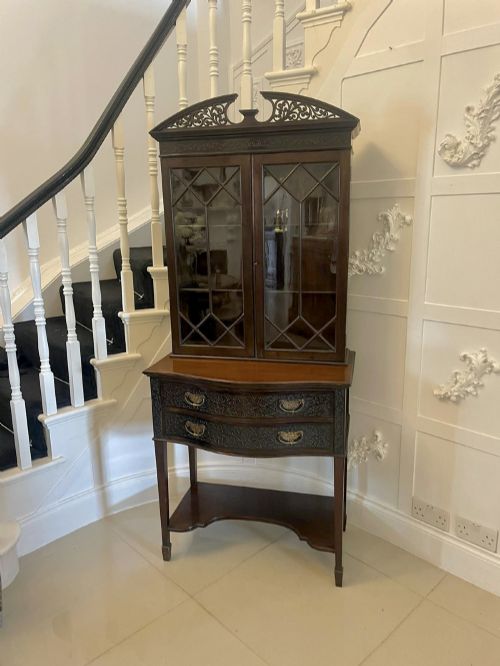

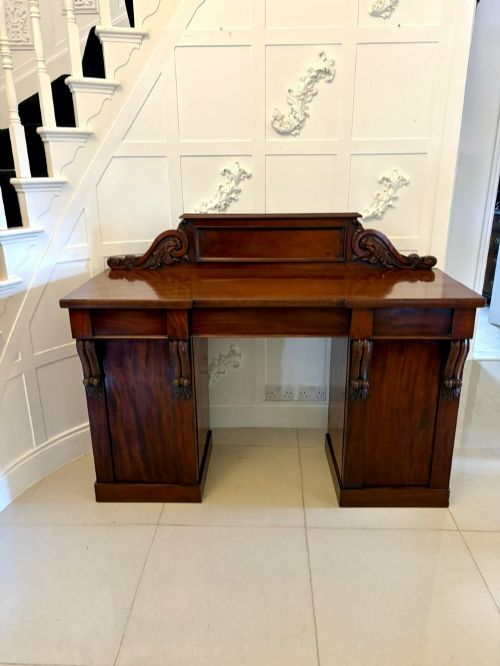
Victorian Carved Mahogany Cabinet
A victorian carved mahogany cabinet brings rich timber tones and intricate craftsmanship to a room, offering both display and storage.
Victorian Carved Mahogany Cabinet
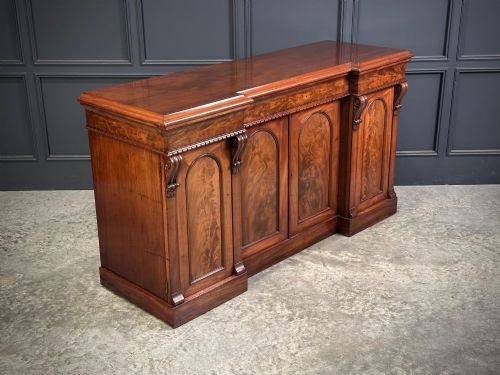
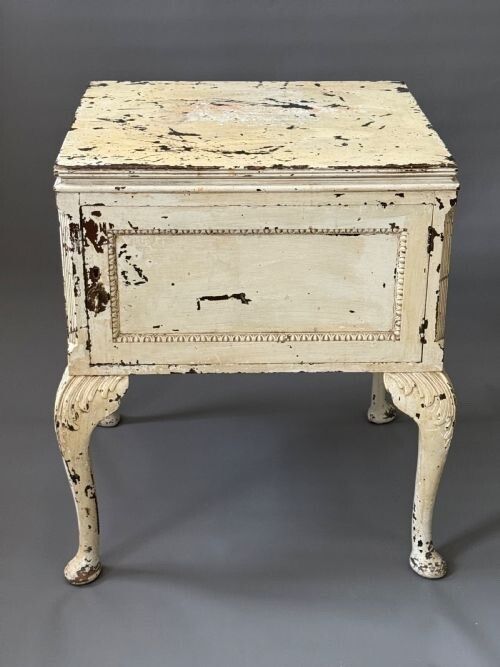
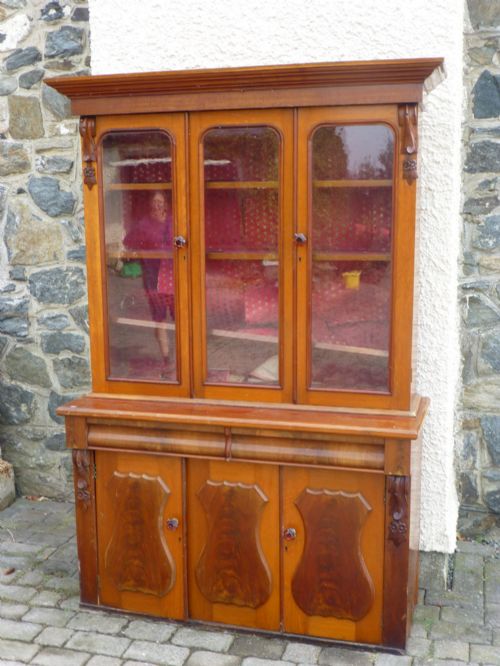
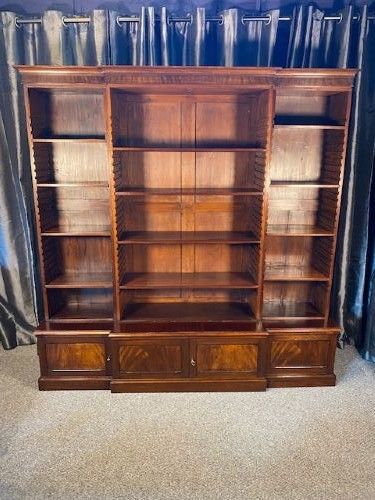
A victorian carved mahogany cabinet encompasses a broad selection of nineteenth-century furniture, spanning formal display cabinets, bookcases, chiffoniers, sideboards, and bedside chests. Buyers searching this phrase typically encounter robust pieces built during the Victorian era, particularly from the mid to late nineteenth century.
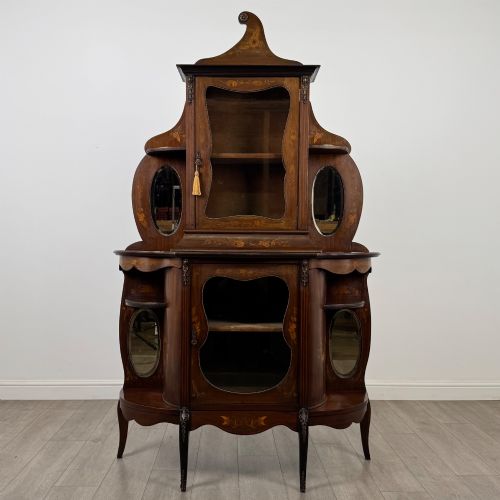
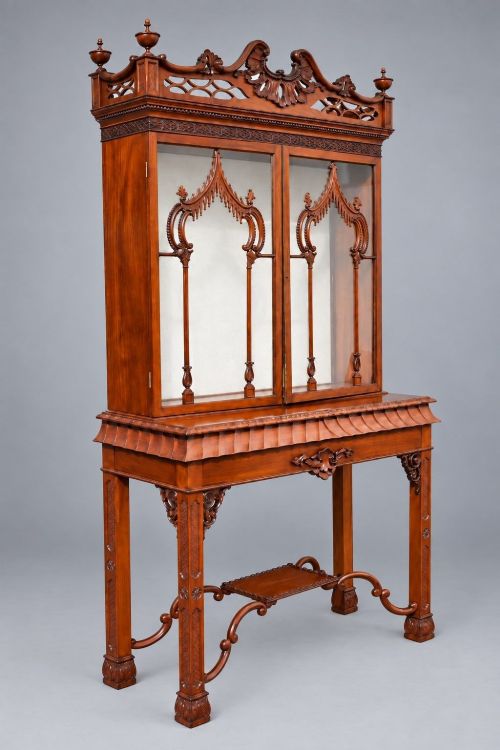
The assortment includes glazed display units, mirror-back sideboards, and compact bedside cupboards. Many examples incorporate revival styles such as Chippendale and Chinese Chippendale, alongside later Art Nouveau flourishes.
Originating largely from the nineteenth century, these cabinets serve functional roles as bookcases, drinks storage, or side tables. Each form reflects the domestic requirements of the period, executed in dense native and imported timbers.
How they were made
Cabinetmakers utilised solid mahogany and flame mahogany veneer over secondary timbers to achieve deep figures and rich grain patterns. Surfaces frequently feature hand-carved detailing, blind fretwork cornices, or inlaid decoration.
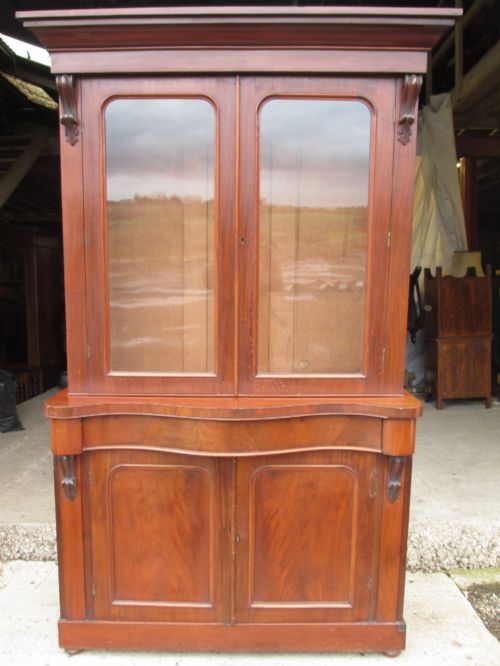
Construction incorporated brass hardware, glazed doors with astragal bars, and mirrored glass panels, particularly on sideboard backs and display units. Timber preparation and jointing methods ensured structural stability across large bookcases and breakfront cabinets.
Several bedside cabinets arrived with hidden compartments designed for nineteenth-century nocturnal necessities.
What varies in quality
The distinction between standard production and top-tier cabinetmaking rests on the selection of timber figures, such as flame mahogany, and the depth of hand-carved ornamentation. Master workshops invested significantly more time in crisp carving, matched veneer panels, and finely turned or fitted interior components.
Hardware choice and secondary timber selection further separate cabinet grades. Superior pieces utilise original brass handles, thick mirror glass, and precise joinery that maintains structural integrity over decades of use.
Gillows·Edwards & Roberts·James Winter & Sons
The Victorian Carved Mahogany Cabinet Glossary
- Flame mahogany
- A veneer cut from timber where the grain creates a flickering, flame-like pattern. This prized figure is typically applied to prominent door panels and drawer fronts.
- Astragal glazed
- A method of dividing glass panes within a door using narrow wooden mouldings. This technique defines many Victorian bookcases and display cabinets.
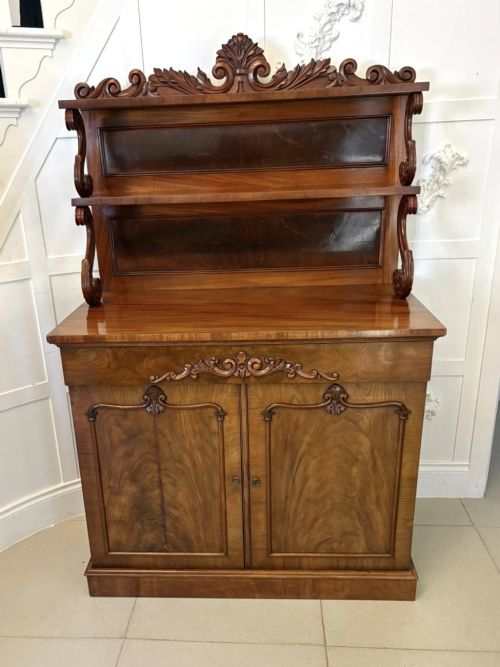
- Chiffonier
- A compact sideboard featuring a lower cupboard section often surmounted by a shelf or mirror back. These pieces served dining rooms and parlours across the nineteenth century.
- Blind fretwork
- Carved ornamentation applied flat to a wooden surface to simulate pierced openwork carving. It appears on cornices and friezes of mid-Victorian case furniture.
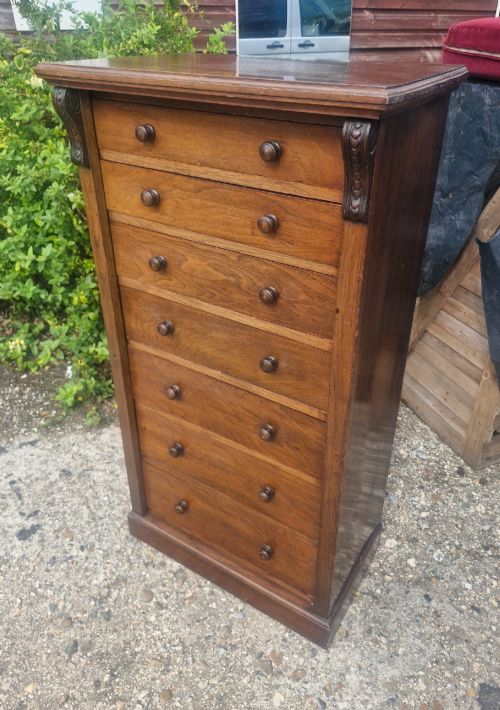
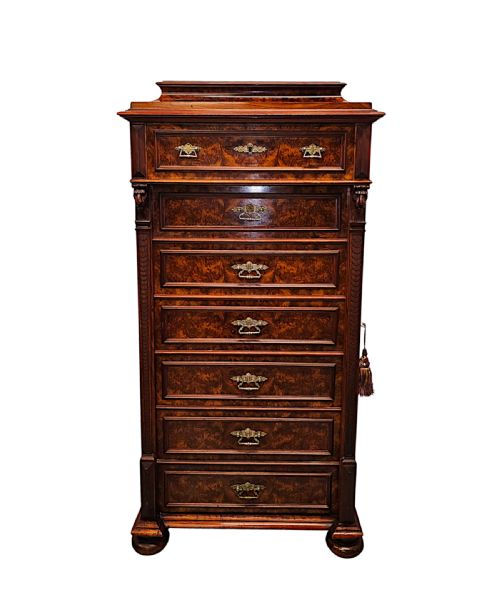
- Wellington chest
- A tall, narrow chest of drawers secured by a locking side flap hinged to one stile. Named after the Duke, these sturdy pieces provided secure bedside or bedroom storage.
Victorian Carved Mahogany Cabinet: Frequently Asked Questions
What is a Victorian chiffonier?
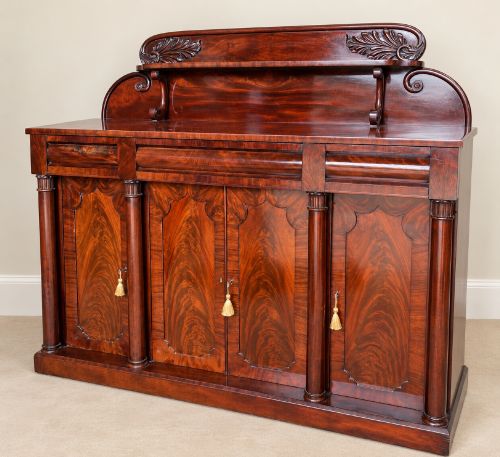
A chiffonier is a low sideboard featuring lower enclosed cupboards and often an upper shelf supported by pillars. They served dining rooms as serving surfaces and storage for tableware.
During the Victorian period, these pieces evolved in decorative detail, incorporating flame mahogany veneers and carved backboards.
How do I identify a display cabinet?
Display cabinets feature glass panels in the doors and sides designed to showcase porcelain and decorative objects. They emerged strongly during the mid to late nineteenth century.
Inside, you often find adjustable wooden shelves and mirrored backs to reflect light through the stored items.
Where should I place a bedside cabinet?
Victorian bedside cabinets function well beside low or standard bed frames, offering enclosed storage for small personal items. Pairs frequently appear in nineteenth-century listings.
Ensure you measure the height of your mattress against the cabinet surface to maintain comfortable daily access.
What distinguishes Chippendale revival styles?
Chippendale revival pieces emulate eighteenth-century aesthetics with carved details, fretwork, and classical proportions adapted by Victorian makers. They reflect the period fascination with earlier design epochs.
These cabinets combine historical decorative motifs with nineteenth-century interior engineering.