

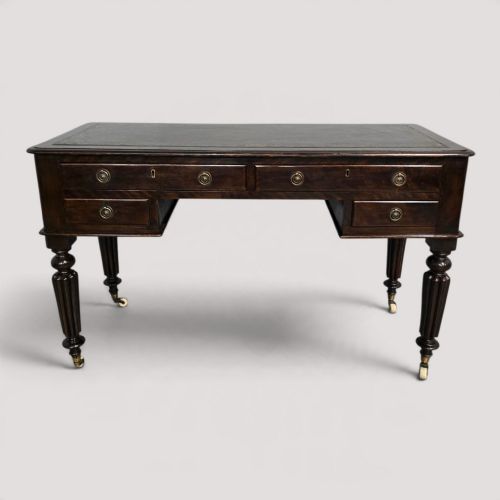
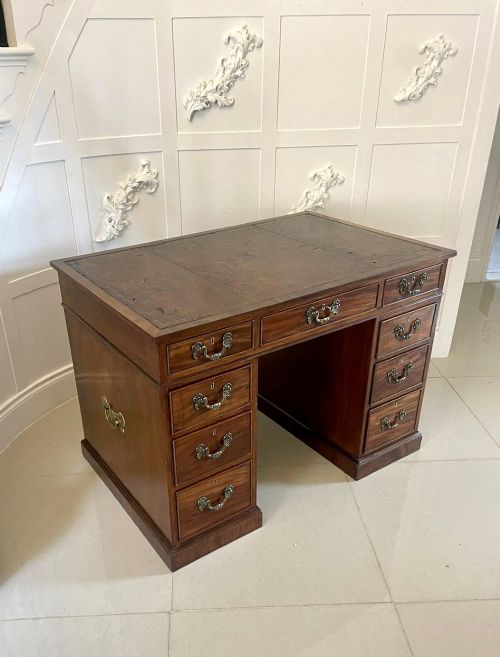
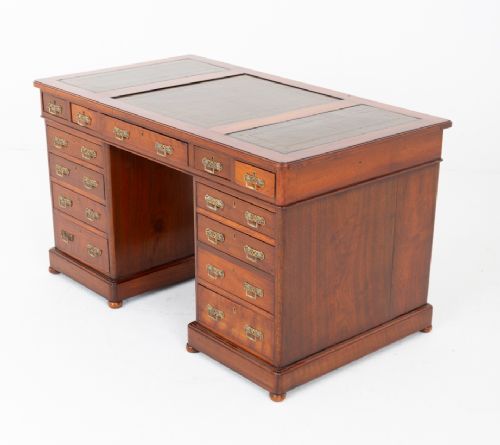
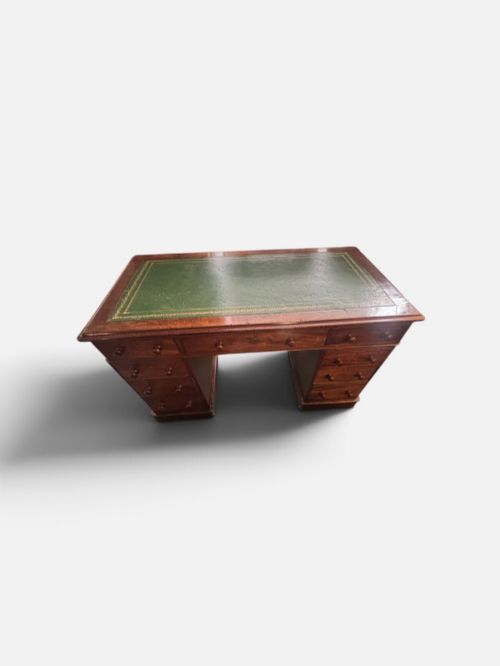




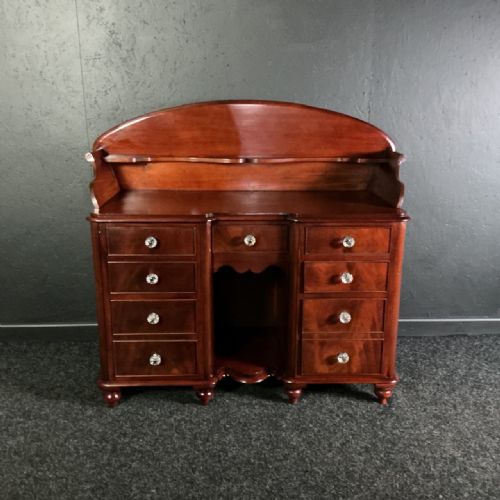


Victorian Carved Kneehole Desk
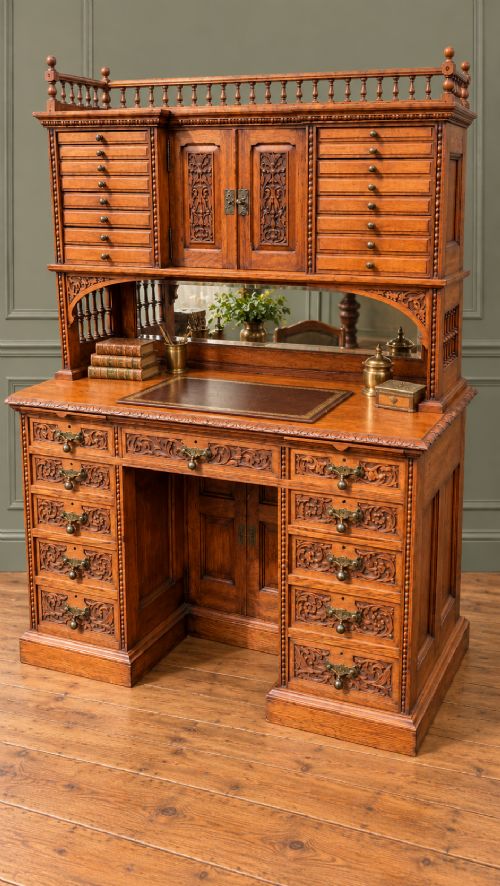
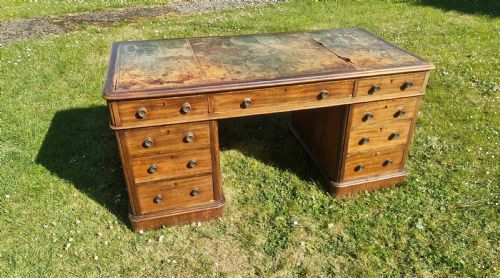
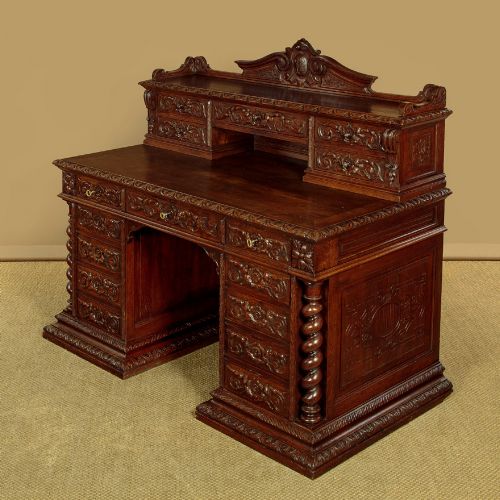
A victorian carved kneehole desk offers deep drawers and panelled pedestal construction, providing a grand writing surface rooted in nineteenth-century craftsmanship.
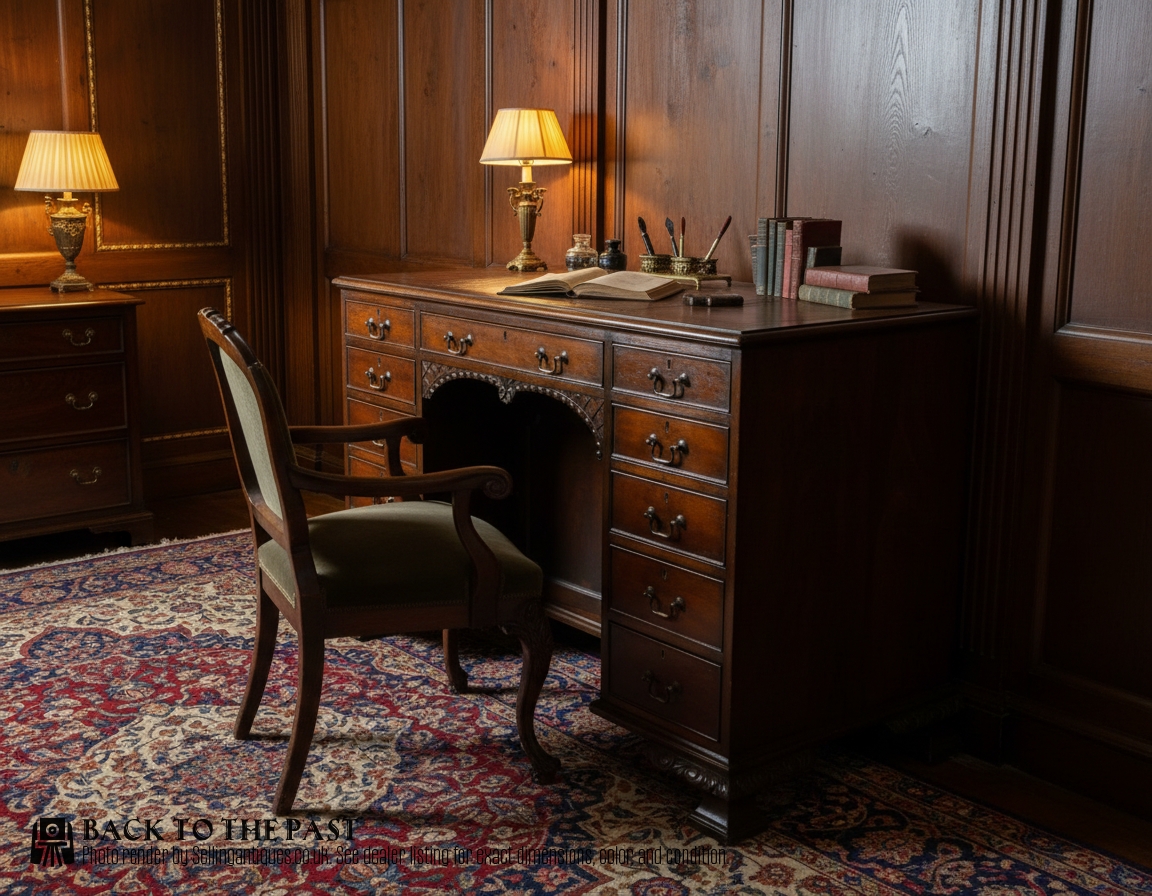
Victorian Carved Kneehole Desk
A victorian carved kneehole desk combines pedestal architecture with a central recess, frequently utilising solid oak or figured mahogany across the nineteenth century.
The evidence reveals pieces spanning from the mid nineteenth century through to the early twentieth century, incorporating revival styles such as Gothic, Chippendale, and Aesthetic movement.
Buyers will encounter twin pedestal formats containing numerous drawers, alongside variations featuring cupboards or raised library bookcases.
Materials and Technique
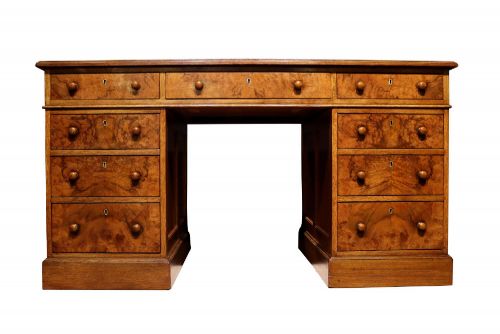
Carpenters utilised dense timbers including mahogany, oak, walnut, and burr walnut, often pairing figured veneers with solid structural framing.
Inlaid brass hardware, leather writing surfaces, and detailed hand-carved motifs define the construction recorded in these pieces.
Victorian Carved Kneehole Desk Retail Price Guide 2026
Typical asking prices for victorian carved kneehole desk among the pieces listed under this phrase on Sellingantiques today, from the lower quarter to the upper quarter. They describe what is for sale here now, not the wider market.
Listings feature woods spanning mahogany, oak, walnut, burr walnut, pollard oak, pitch pine, and padauk across the Victorian era.
Distinction in Craft
Finer examples display deeply articulated hand carving, such as lions heads and geometric tracery, set against plain utility pieces.
Selected desks bear maker stamps or signatures from established workshops, marking superior cabinet-making pedigree over anonymous workshop output.
Edwards and Roberts·Gillow and Co·Thomas Turner·Howard and Son
The Victorian Carved Kneehole Desk Glossary
- Kneehole
- A recessed central space beneath a desk designed to accommodate the user's legs. This form allows banks of drawers or cupboards to flank either side.
- Pedestal desk
- A heavy writing table supported by two vertical columns of drawers resting on the floor. These structures provide substantial storage flanking the central opening.
- Burr walnut
- Timber taken from the burl growth of a walnut tree, exhibiting swirling, knotty grain patterns. Cabinet-makers sliced this wood into decorative veneers for drawer fronts and top surfaces.
- Ebonised wood
- Timber treated with chemical finishes or dark stains to simulate expensive ebony. This technique gained popularity during the nineteenth century for accentuating carved details.
Victorian Carved Kneehole Desk: Frequently Asked Questions
How do I care for a leather desk top?
Apply a pH-neutral leather cream periodically to maintain suppleness and prevent the hide from drying out over time.
Avoid placing hot cups or direct moisture on the surface to protect the original tooling and gilding.
Are these desks easy to move?
Most pedestal desks separate into three distinct sections consisting of two drawer pedestals and a top writing surface.
This modular construction aids transportation and positioning within domestic rooms.
What is pollard oak?
Pollard oak derives from trees that were cut back close to the trunk to encourage dense, cluster-like branching.
This growth method produces distinctive knotty patterns prized by nineteenth-century cabinet-makers.
How do I distinguish late Victorian styles?
Late nineteenth-century pieces often incorporate eclectic revival aesthetics, drawing inspiration from Gothic, Chippendale, and Aesthetic movement design.
Carvings become heavier and more pronounced during this period, particularly on oak examples.