


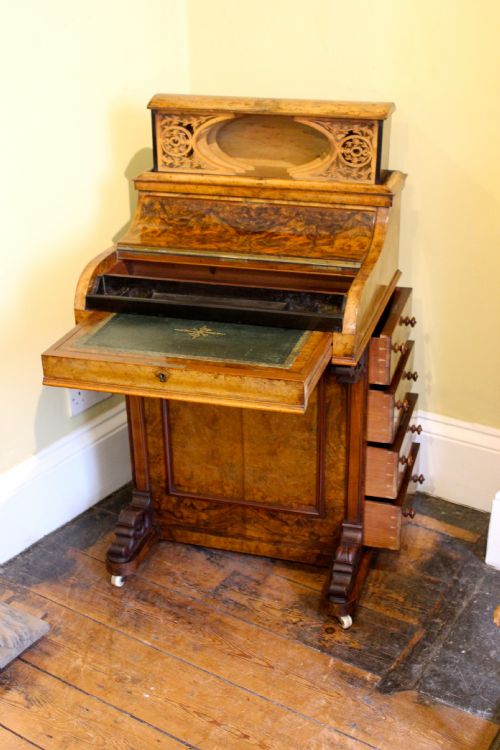
Victorian Carved Home Office Desk
A victorian carved home office desk brings solid timber construction and period character into a modern workspace.
Victorian Carved Home Office Desk
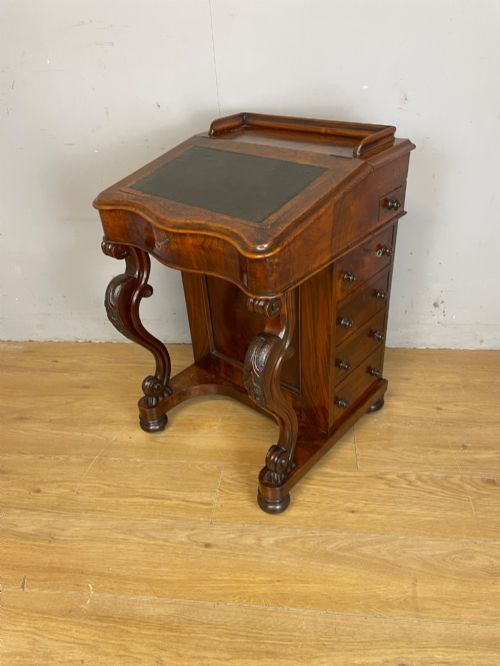
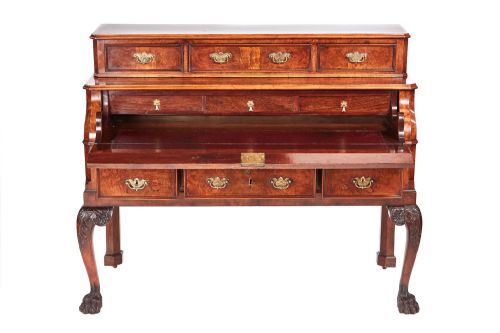
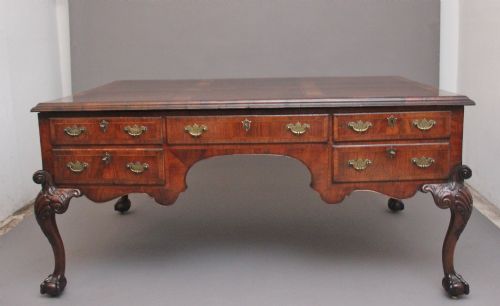
A victorian carved home office desk encompasses robust pedestal formats, compact Davenport designs and expansive partners tables built during the nineteenth century. These pieces served executive and writing functions in period homes and institutions.
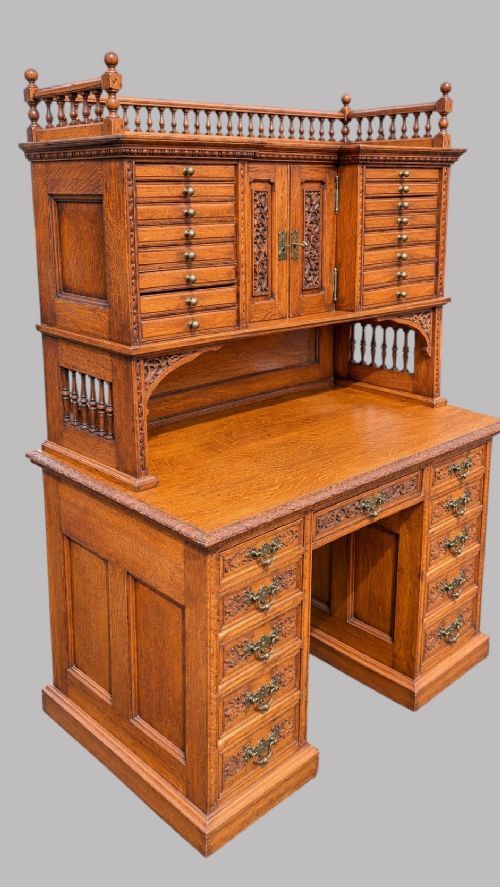
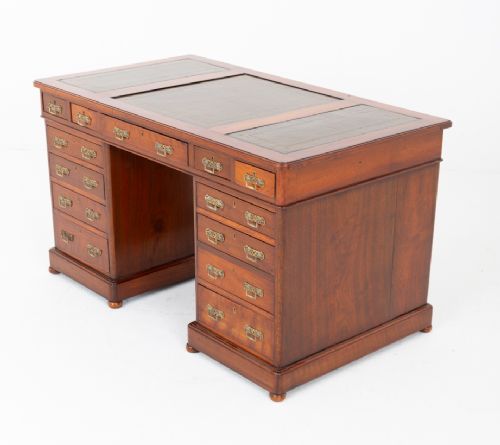
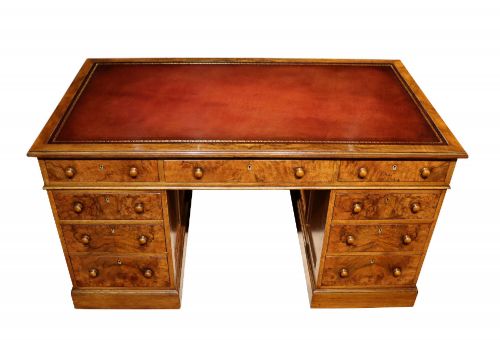
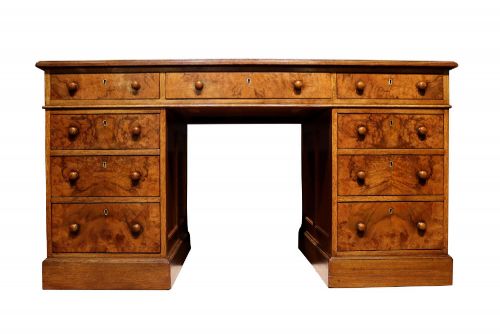
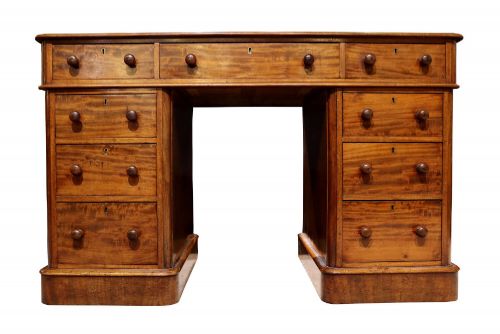
Pedestal desks dominate the selections, featuring banks of drawers beneath a surface typically inset with leather. Buyers frequently encounter walnut, mahogany and oak constructions spanning the mid to late Victorian decades.
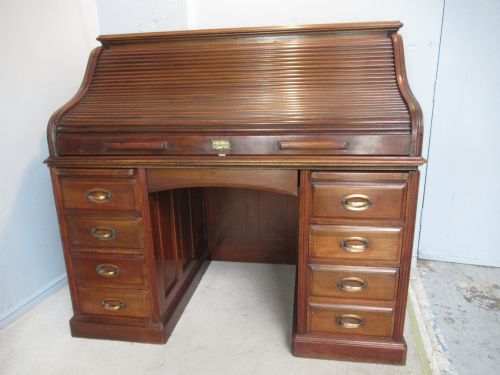
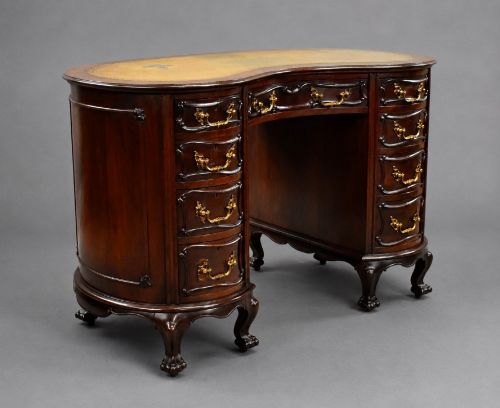
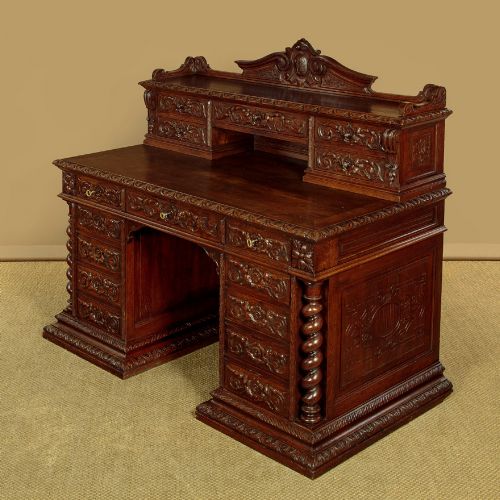
Alternative forms include kneehole tables, writing tables and bureau variations. The styles range from plain utilitarian timber to elaborate revival interpretations displaying deep relief carving and turned elements.
How they were made
Cabinet makers utilised dense hardwoods such as mahogany, oak and walnut alongside burr walnut veneers for visual depth. Secondary timbers line internal drawer components while solid mouldings frame panelled construction.
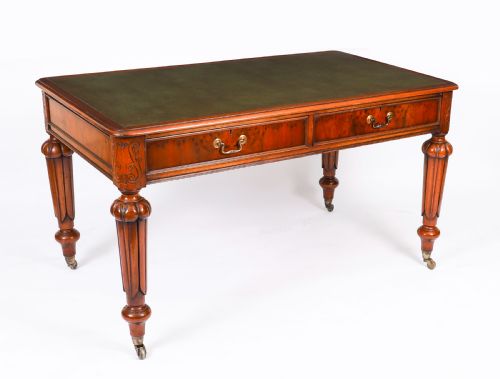
Surfaces received inset leather panels tooled with gilt borders to provide a smooth writing plane. Brass hardware including drop handles and casters secured functional mobility and operational longevity.
Joinery relied on traditional dovetailing for drawer boxes and mortise and tenon frames for structural support. Carved details like paw feet and scrolling foliage were hand-chiselled directly into the solid timber or applied moulding.
Design influences span across Renaissance revival, Aesthetic movement, Arts and Crafts and Chippendale styles.
What varies in quality
The sophistication of the timber selection dictates the visual tier, ranging from plain utility grain to highly figured burr walnut veneers matched across multiple drawers. Exhibition pieces display superior carving depth and meticulous secondary wood selection.
Hardware integrity and internal drawer construction reveal workshop standards. Original brasses, stamped maker details and secondary linings untouched by modern alterations distinguish superior examples from standard production pieces.
Rumney and Love·Edwards and Roberts·Merryweather and Son·Maple and Co
The Victorian Carved Home Office Desk Glossary
- Pedestal desk
- A heavy writing desk comprising two separate drawer pedestals supporting a single top surface. This format often includes a central kneehole drawer.
- Davenport desk
- A compact writing desk featuring a sloping lid above a bank of drawers accessed from the side. These units frequently incorporate stationary storage compartments at the top.
- Partners desk
- A large double-sided desk designed for two individuals to work opposite one another. Drawers and cupboards duplicate on both long faces.
- Burr walnut
- A highly prized timber veneer sourced from the root growth of the walnut tree. It produces intricate, swirling patterns across large flat surfaces.
- Kneehole desk
- A desk featuring a central recess for the user's legs flanked by vertical banks of drawers. Smaller variations often omit the heavy pedestal bases.
Victorian Carved Home Office Desk: Frequently Asked Questions
How do I choose the right size desk?
Consider the available floor space and clearance needed for a chair within your room. Pedestal formats require generous perimeter space whereas Davenport models suit compact corners.
Measure doorways and stairwells before purchase to ensure safe delivery of heavy timber pedestal assemblies.
Were these desks used for writing?
These furniture pieces served administrative, correspondence and estate management duties in nineteenth century households. Leather inserts provided a cushioned, non-slip surface for quill and steel nib pens.
Interior compartments within drawers organised stationery, stamps and financial ledgers.
How do I care for the leather top?
Maintain the leather insert by dusting gently and applying occasional neutral leather balsam to prevent drying. Avoid placing liquids directly on the hide to prevent staining the underlying wood.
Protect the surface from direct sunlight to preserve the original colour and gilt tooling.
How do I date a Victorian desk?
Examine construction methods, secondary timbers and hardware styles to determine the era. Drawer dovetails cut by hand usually point to earlier decades while machine-assisted techniques emerge later in the period.
Stylistic revivals like Chippendale or Gothic influence decorative motifs alongside documented maker stamps.