
Victorian Carved Hall Furniture
Victorian carved hall furniture encompasses benches, stands, and tables that greeted visitors in 19th-century entranceways through robust timber and ornamentation.
Victorian Carved Hall Furniture
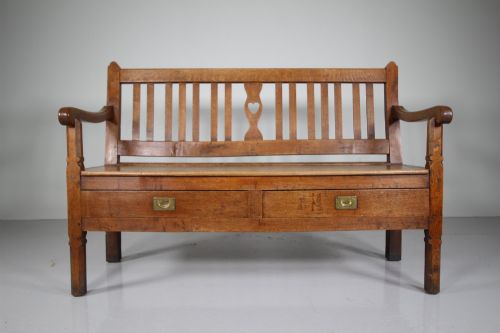
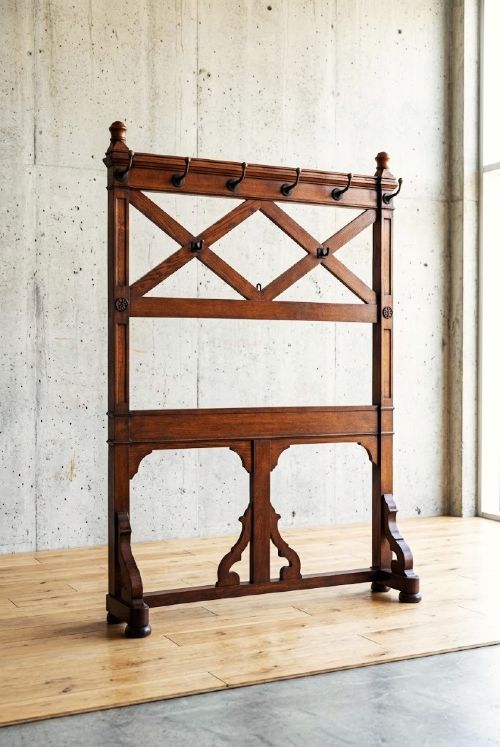
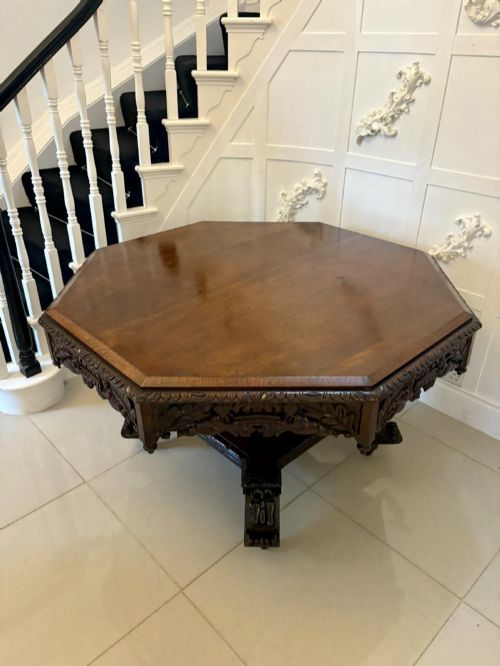
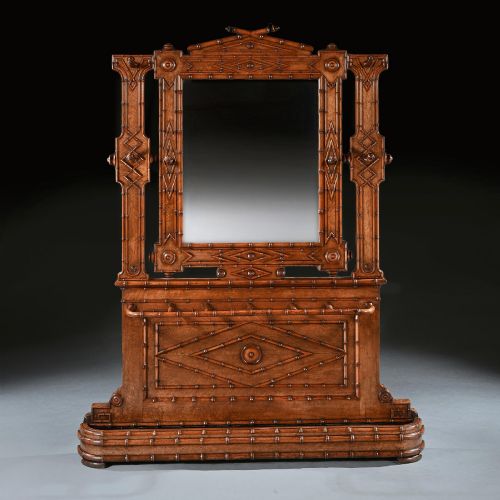
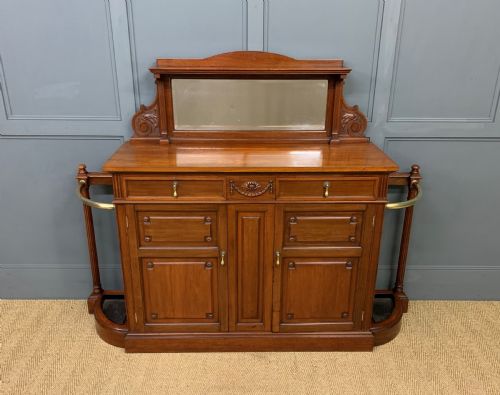
Victorian carved hall furniture serves the entranceway through practical forms designed for coats, hats, and brief seating. Hall stands, benches, and console tables dominate this category, providing structured utility for period hallways.
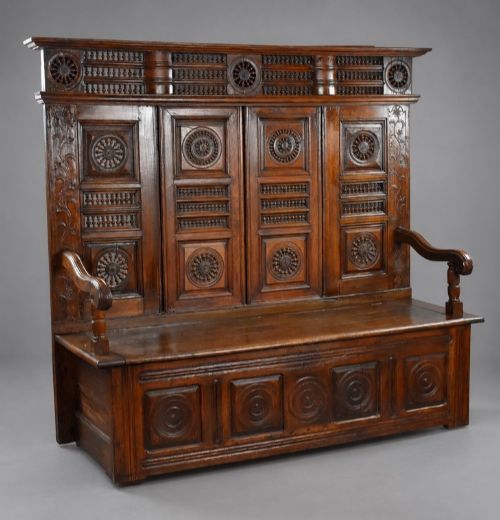
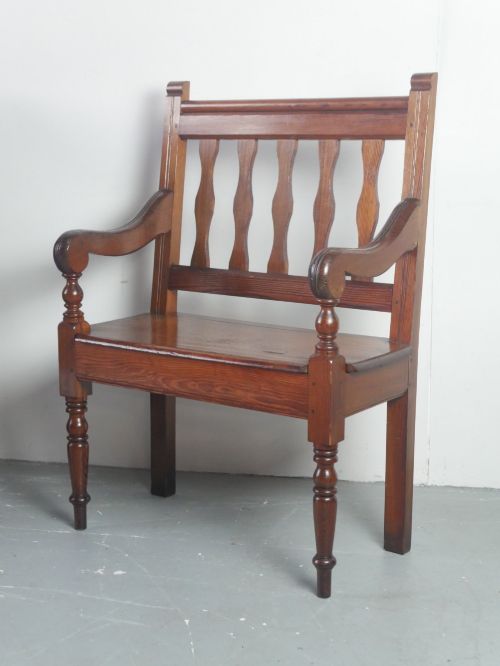
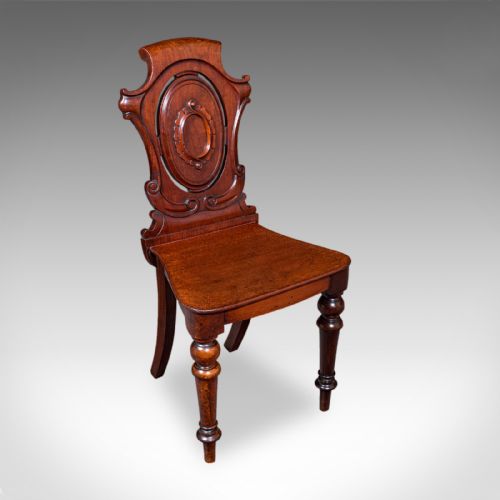
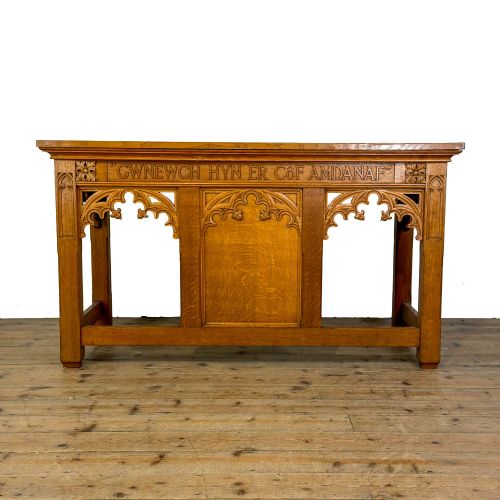
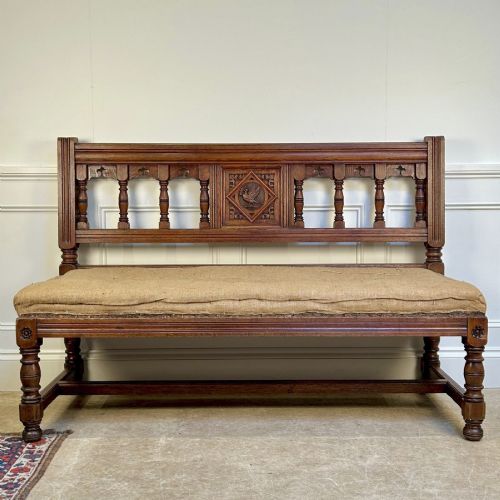
Oak forms heavily shape this selection, frequently appearing in substantial hall benches, settle seats, and coat stands with deep relief carving. Walnut and mahogany also recur across chairs and side tables, reflecting the broader material choices of the 19th century.
Makers and designers of the period adapted specific historic revival styles for these pieces, incorporating Gothic, Jacobean, and Aesthetic influences. Buyers encounter everything from compact oak hat racks to expansive settles bearing elaborate panel work.
Determinants of Quality
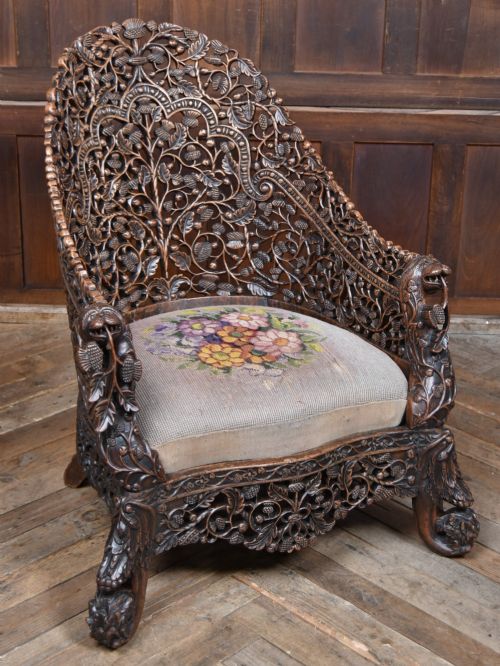
The depth and crispness of the hand-carving separate standard production items from finer workshop pieces. Superior examples display sharp undercut details in the foliage or figures, whereas lesser pieces show softer, shallower moulding.
The choice of timber and the integrity of the original construction dictate overall excellence. Selection extends from straightforward utility items to marked pieces by notable firms boasting superior secondary woods and well-preserved brass elements.
Listings feature oak, walnut, mahogany, and rosewood across multiple revival styles including Gothic, Aesthetic, and Jacobean.
Shoolbred & Co·James Shoolbred & Co·Robert Strahan·W.A. Willcocks
The Victorian Carved Hall Furniture Glossary
- Settle
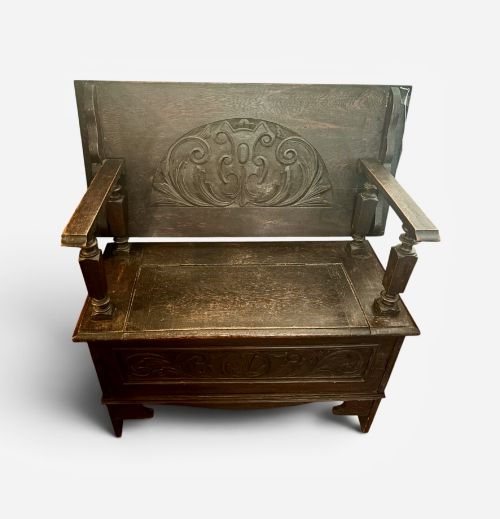
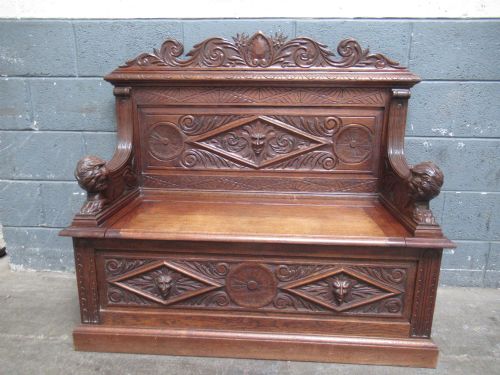
- A wooden bench with a high back and solid arms, often featuring a hinged seat revealing storage space beneath. These items provided shelter from draughts in hallways.
- Hall Stand
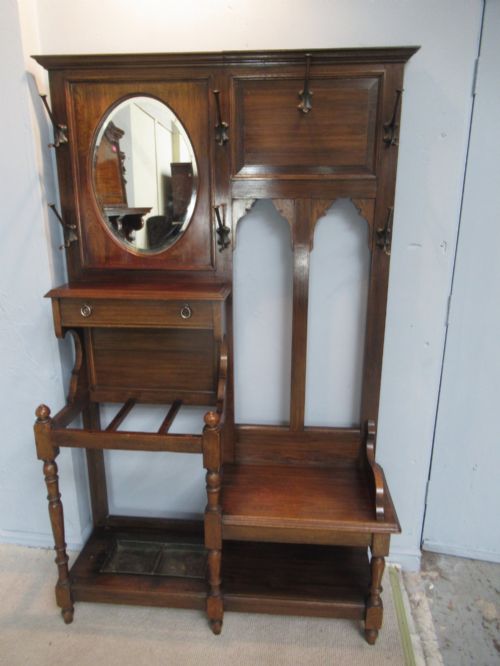
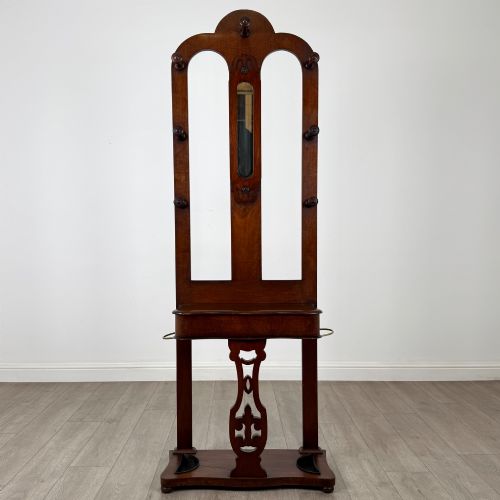
- A composite item combining mirror panels, umbrella wells, and brass or iron coat hooks. It served as the central storage unit for nineteenth-century outerwear.
- Gothic Revival
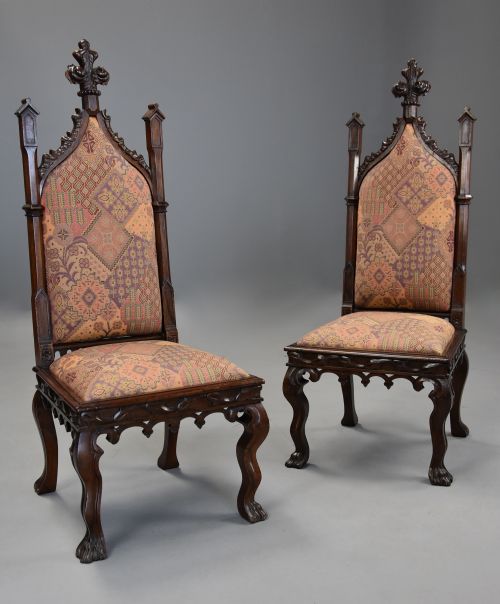
- An architectural and decorative style drawing inspiration from medieval design, featuring pointed arches and heavy tracery. This aesthetic strongly influences many oak benches and tables.
- Japonisme
- The study of Japanese art and design that heavily influenced European decorative arts during the late nineteenth century. It appears in specific faux bamboo and maple pieces.
- Console Table
- A table designed to be fixed against a wall, frequently supported by ornamental consoles or brackets. These pieces furnished narrow hallways and reception rooms.
Victorian Carved Hall Furniture: Frequently Asked Questions
What is Victorian carved hall furniture?
These pieces comprise functional entranceway items including oak benches, umbrella stands, console tables, and coat racks produced during the nineteenth century.
They combine practical domestic storage with decorative carving reflecting historic revival movements like the Gothic and Aesthetic styles.
How were hall benches used?
Hall benches provided temporary seating for visitors waiting to be announced, while incorporating integrated storage beneath the seat or behind panelled backs.
Many examples also doubled as stick and umbrella stands, keeping wet weather accessories contained near the front door.
How do I identify Gothic revival pieces?
Gothic revival items display architectural motifs such as pointed arches, quatrefoils, tracery, and heavy structural timbers. These design elements mimic medieval ecclesiastical woodwork adapted for domestic Victorian interiors.
Oak is the predominant material for this specific stylistic subgroup within our listings.
Where should I place a hall stand?
Hall stands suit entrance halls and reception rooms where their original functions for hanging coats and storing umbrellas remain useful. Their vertical mirrors and carved backs also provide a strong visual anchor against a main hallway wall.