

Antique Wooden Drip Tray Stand
An antique wooden drip tray stand keeps halls tidy by holding wet umbrellas and walking sticks.
Antique Wooden Drip Tray Stand
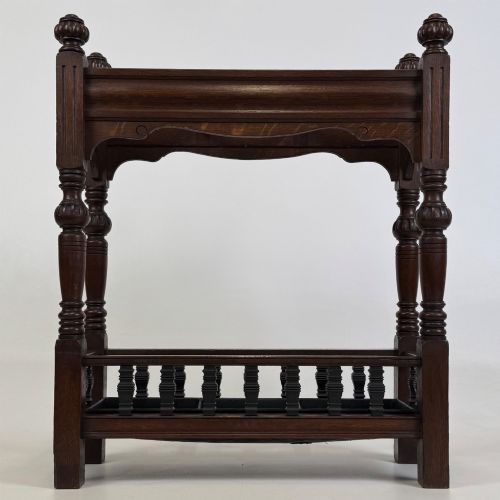
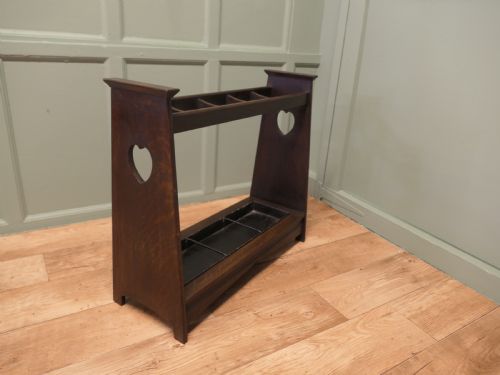
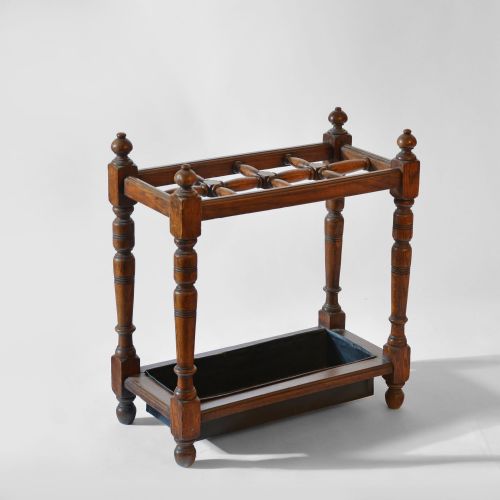
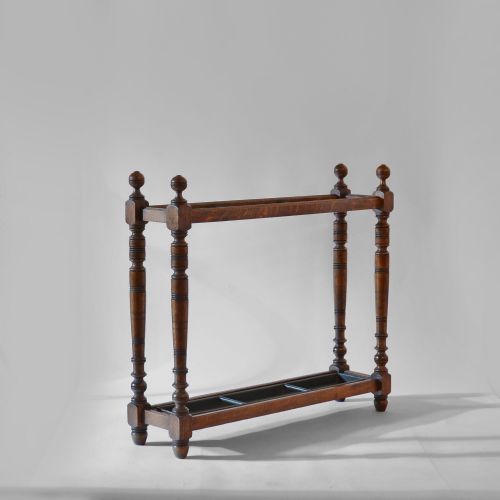
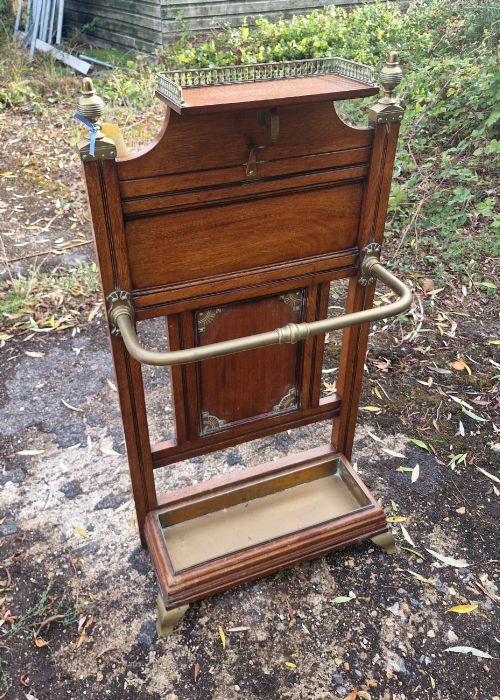
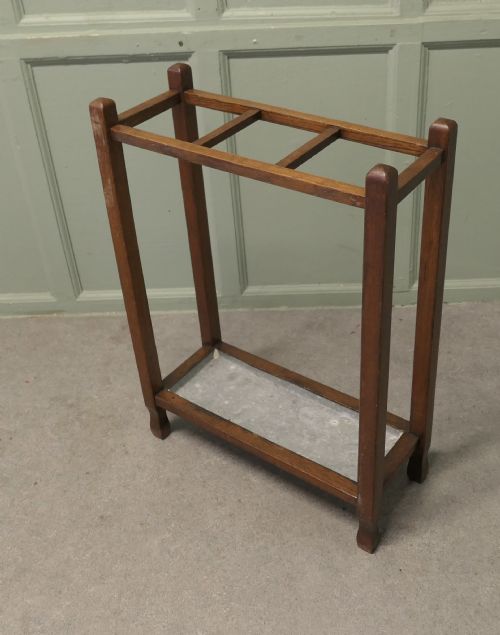
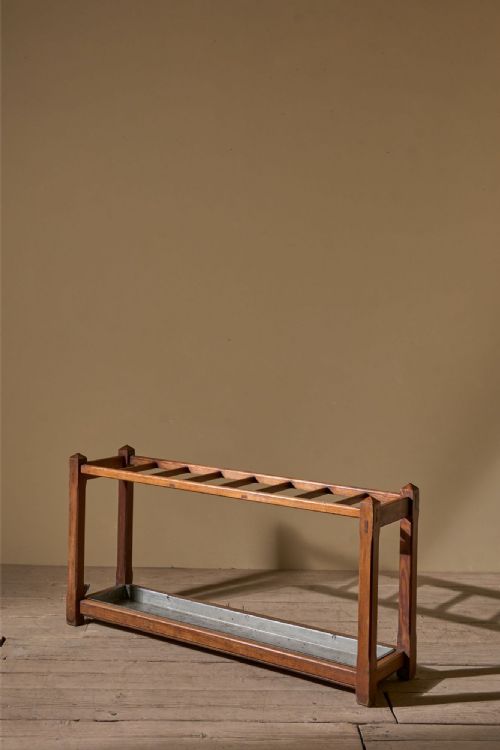
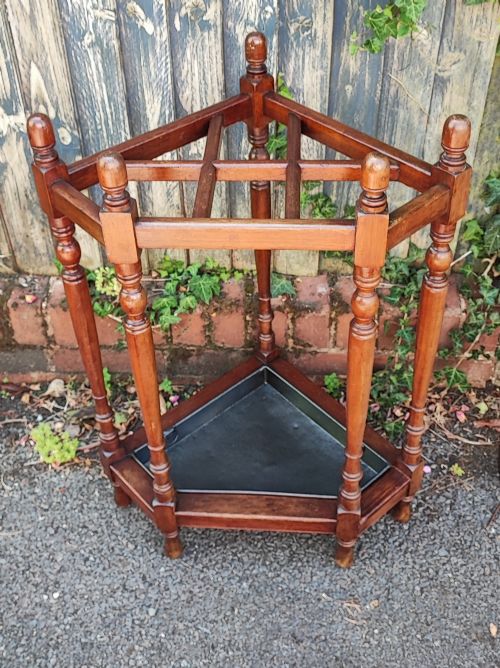
An antique wooden drip tray stand is a practical entrance hall furnishing designed to support wet umbrellas and walking sticks while protecting floors with a metal or zinc insert. When searching this phrase, buyers encounter functional pieces intended for domestic utility rather than decorative display.
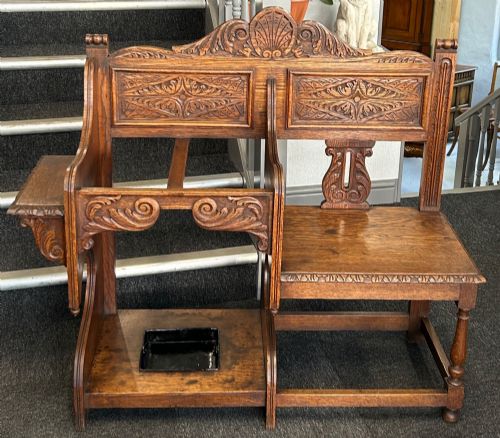
Originating largely from British country houses and urban townhouses, these items reflect the heavy traffic of daily Victorian and Edwardian life. Their forms range from simple corner frames to substantial hall furniture with integrated brass fixtures.
Materials and construction methods
Makers relied primarily on sturdy timbers such as oak, mahogany, and pitch pine to withstand the daily weight and moisture of wet umbrellas. These woods were often selected for their durability and finished to highlight natural grain patterns.
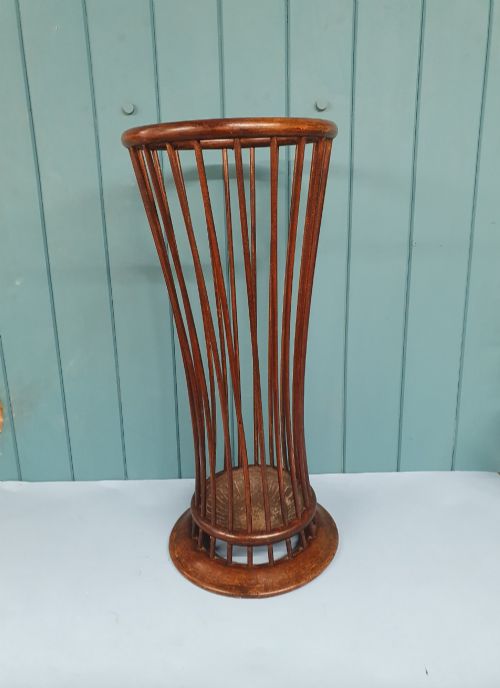
Functional metal components, including brass rails, iron supports, and removable zinc or metal drip trays, were integrated into the wooden frames to catch water run-off. Bentwood techniques also appear, utilising steam-bent timber to create curved structural supports.
Listings span from the nineteenth century through the nineteen-fifties, featuring oak, mahogany, pitch pine, and cast iron.
Assessing quality and craftsmanship
Quality in these stands is determined by the integrity of the timber framing and the presence of original hardware rather than applied decoration. Pieces retaining their original metal drip trays and intact brass dividers demonstrate superior survival and authenticity.
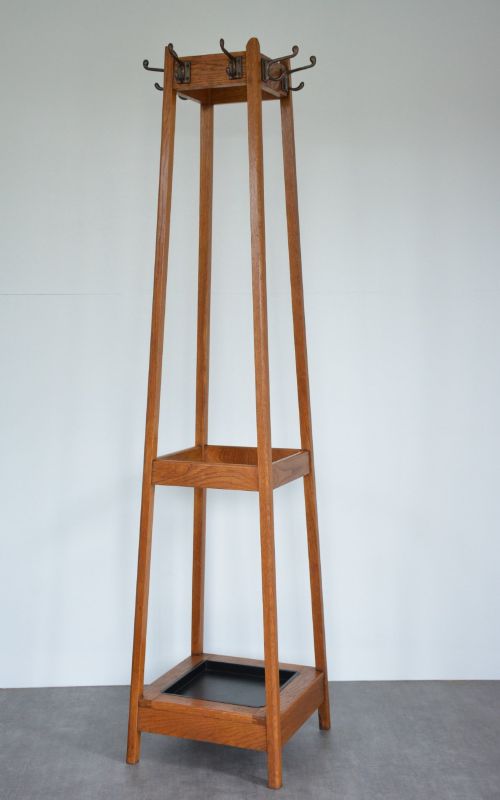
Construction techniques distinguish standard utility items from finer workshop pieces, with well-joined framing and thoughtful integration of coat hooks or mirror panels showing higher design ambition. Superior examples balance heavy timber durability with refined proportion.
Thonet·Heals of London·Shoolbred
The Antique Wooden Drip Tray Stand Glossary
- Drip tray
- A removable metal, zinc, or cast iron insert placed at the base of a stand to catch water from wet umbrellas. This component prevents moisture from damaging the wooden floorboards beneath.
- Hall stand
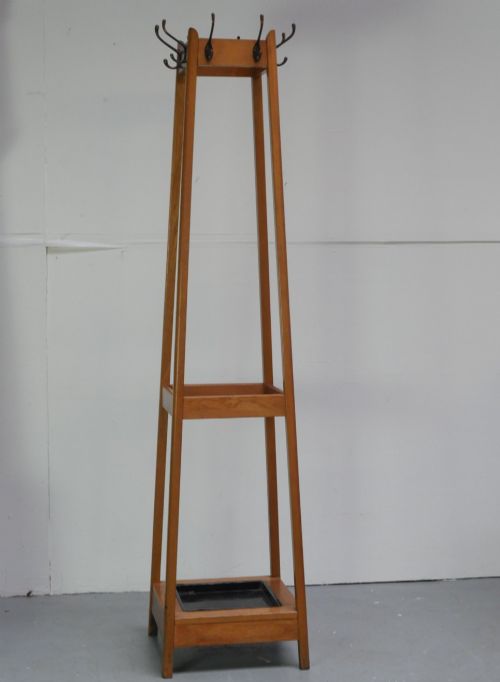
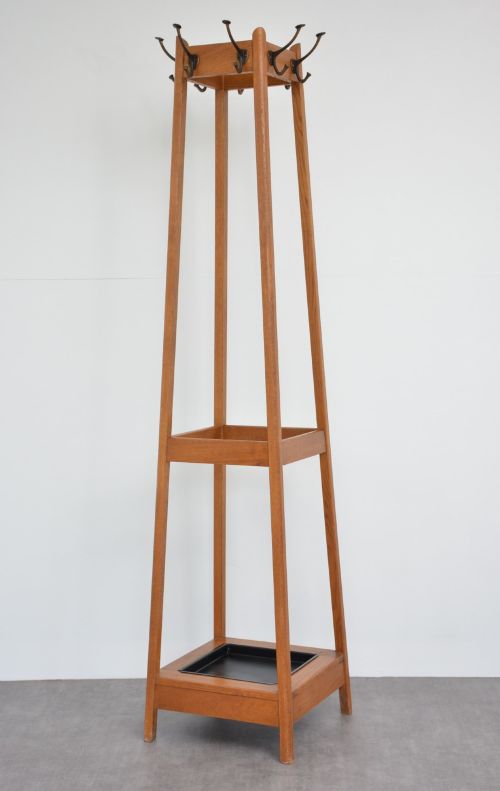
- A large piece of entrance furniture combining a stick stand with coat hooks, a hat rack, and often a central mirror or small seat. These items served as the primary storage hub for outdoor wear in period homes.
- Arts and Crafts
- A design movement emphasising handcraftsmanship, simple forms, and visible construction methods rather than mass-produced ornamentation. Pieces from this style often feature unpretentious oak construction and honest joinery.
- Bentwood
- Wood that has been heated using steam until pliable and then bent into curved structural shapes. This technique allows for lightweight yet sturdy frames, frequently utilised in umbrella stands.
- Pitch pine
- A resinous, durable softwood commonly used in nineteenth-century country house furniture. It provides strong structural support with a distinct, prominent grain pattern.
Antique Wooden Drip Tray Stand: Frequently Asked Questions
What is an antique wooden drip tray stand?
It is a hall furnishing made from timbers like oak or mahogany to hold walking sticks and wet umbrellas.
Most examples feature an integrated metal or zinc tray at the base to protect floors from water damage.
How do I care for the metal drip tray?
Regularly empty and dry the metal or zinc insert to prevent rust formation and wood rot around the base.
Keep the surrounding wooden frame polished and away from constant pooling water.
Are these stands suitable for modern hallways?
Their narrow footprint and practical division make them ideal for organising umbrellas and walking sticks in contemporary entryways.
They offer functional storage while adding period character to a hallway.
How can I tell Victorian stands apart from Edwardian ones?
Victorian stands tend to use heavier, darker woods with more elaborate turned details and Gothic or Aesthetic influences.
Edwardian and later pieces often favor lighter golden oak finishes and simpler Arts and Crafts lines.