
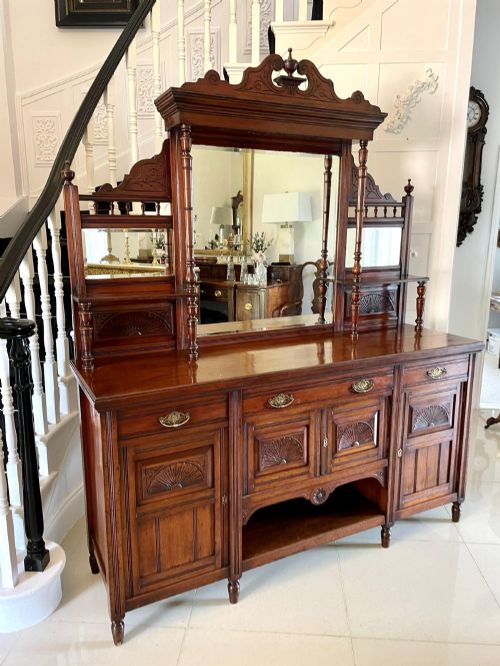
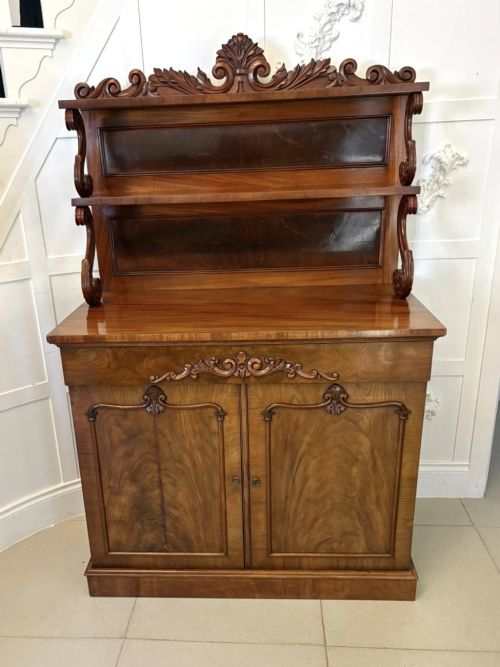
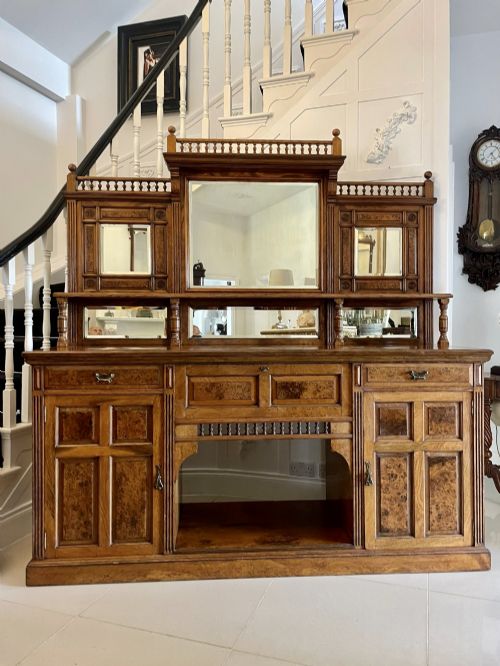
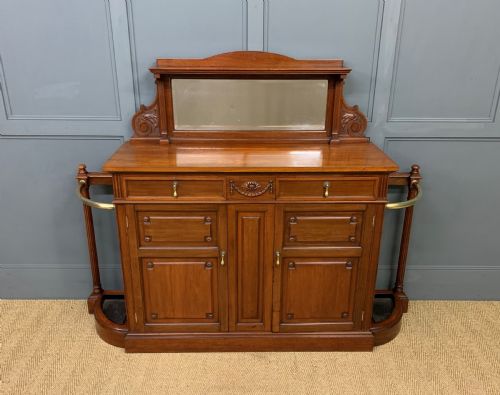
Victorian Carved Back Sideboard
When you search for a victorian carved back sideboard, you are looking at substantial timber furniture designed to anchor a formal dining room.
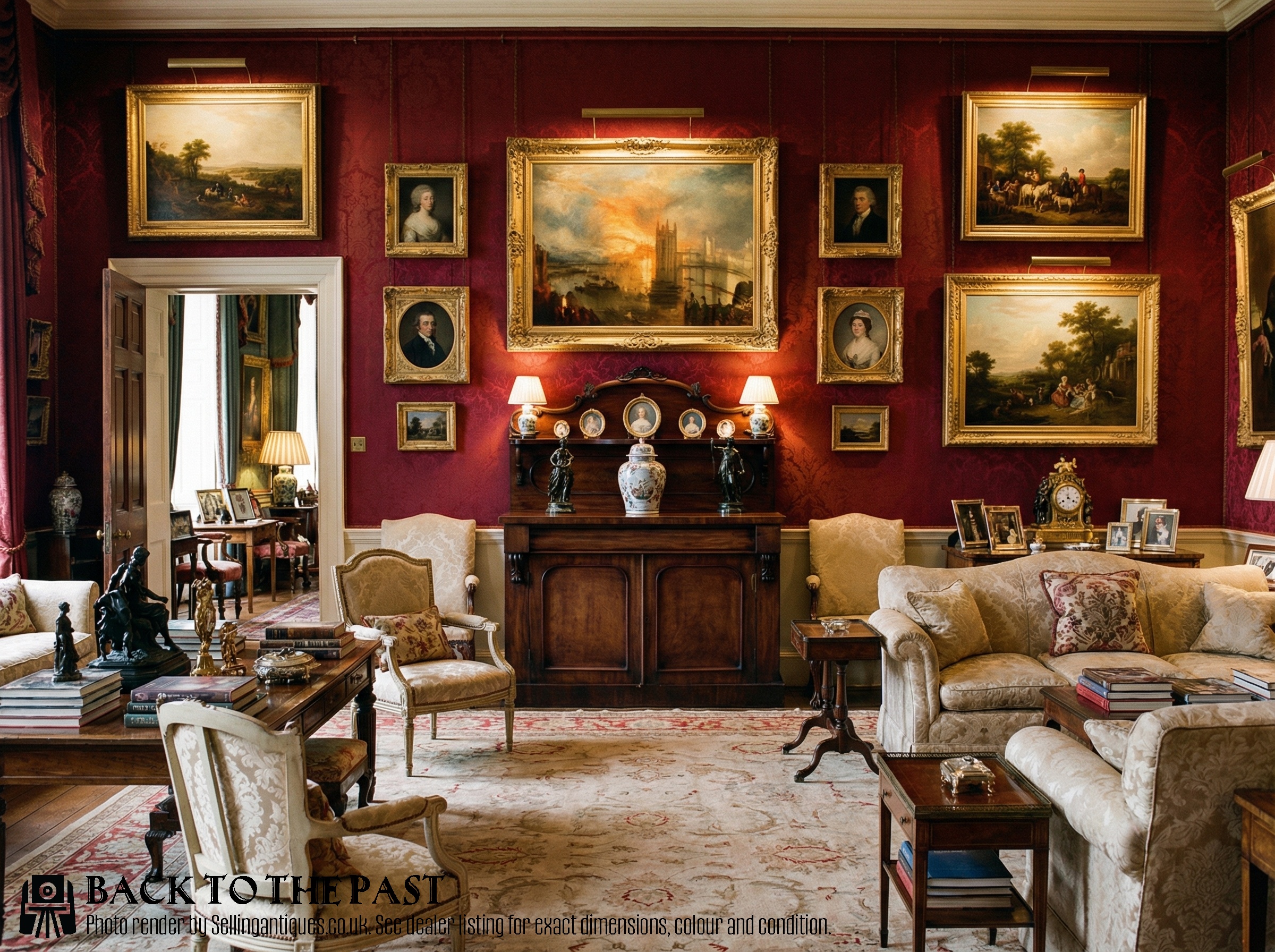
Victorian Carved Back Sideboard
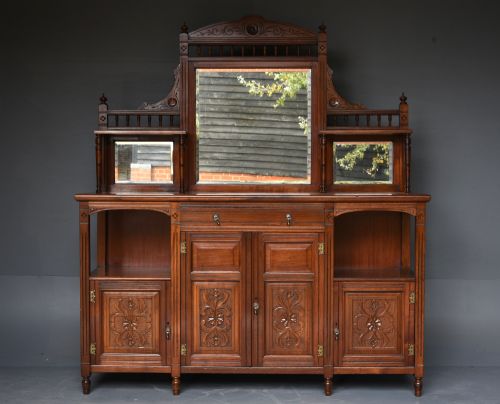
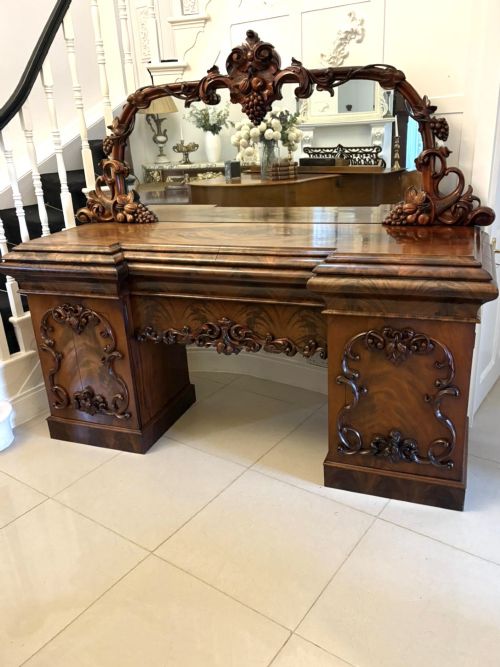
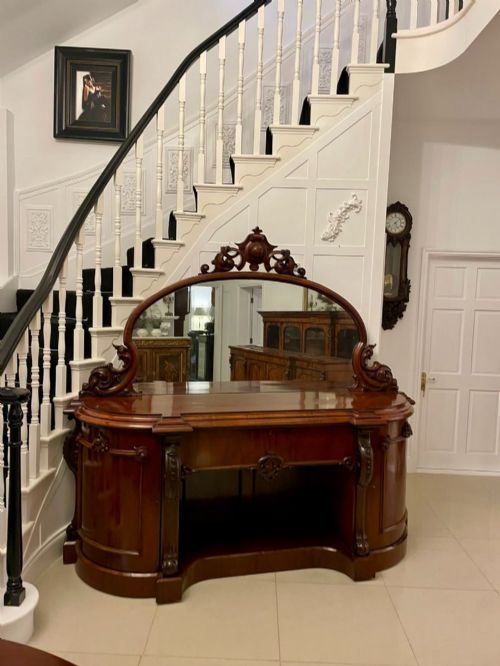
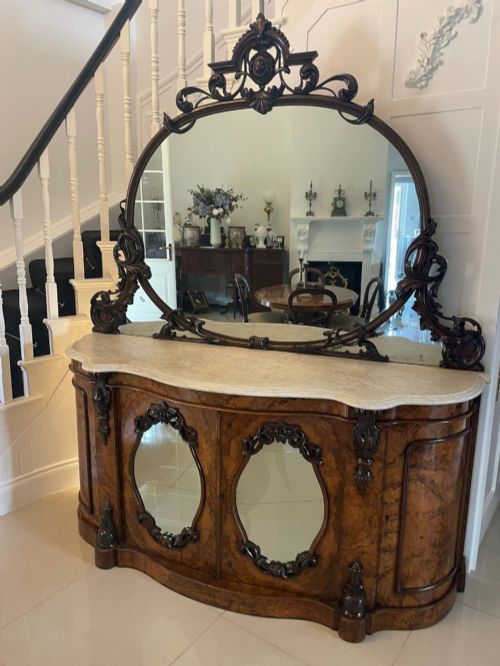
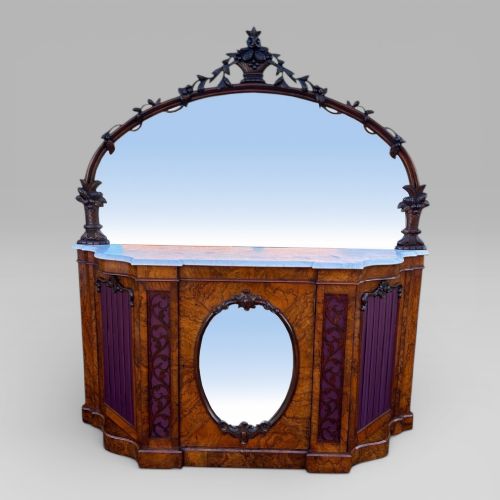
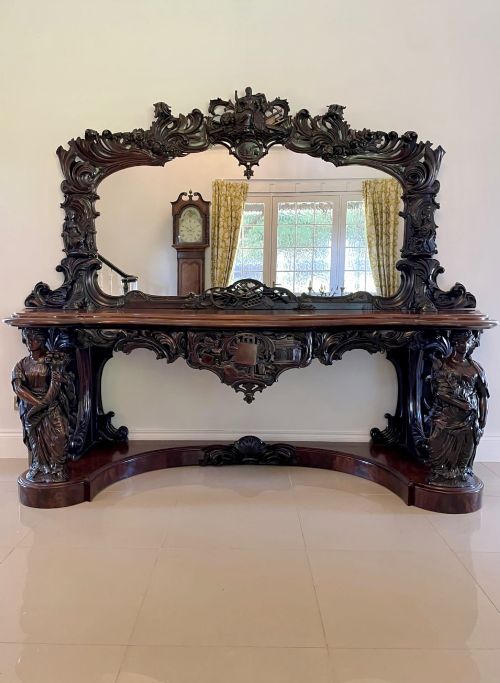
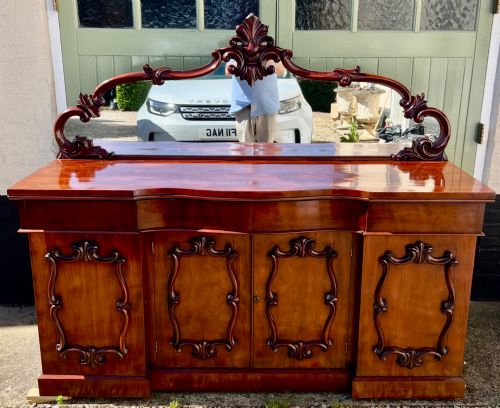
A victorian carved back sideboard serves as a major storage piece and display surface, combining lower cupboards and drawers with an upright superstructure. The most common version met on this page is the mirror back design, which incorporates a large plate glass mirror framed by heavy scrollwork or foliage.
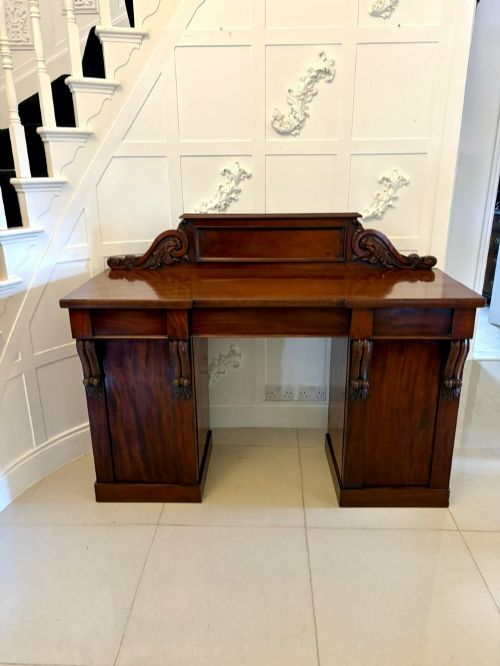
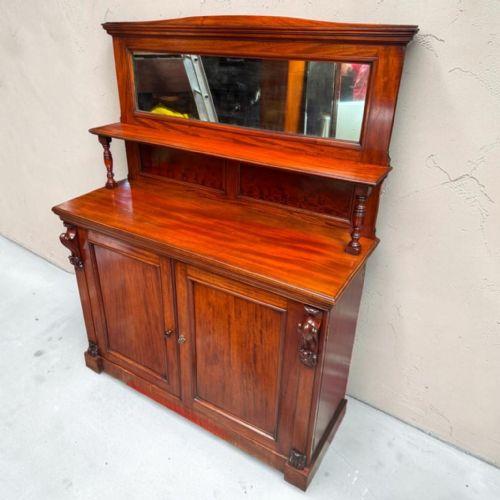
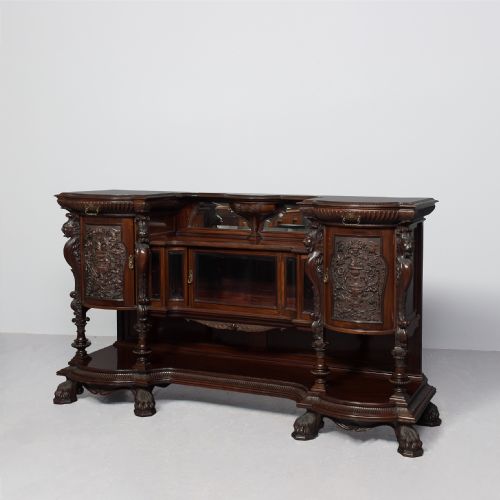
These items originate predominantly from the nineteenth century, spanning decades from the mid Victorian period through to later stylistic revivals. Variations include pedestal formats, chiffoniers, and credenzas that share the characteristic tall carved backboard.
Proportions tend to be grand, often requiring considerable floor space and high ceilings. They function both as practical servers for dining ware and as architectural statements within a room.
How They Were Made
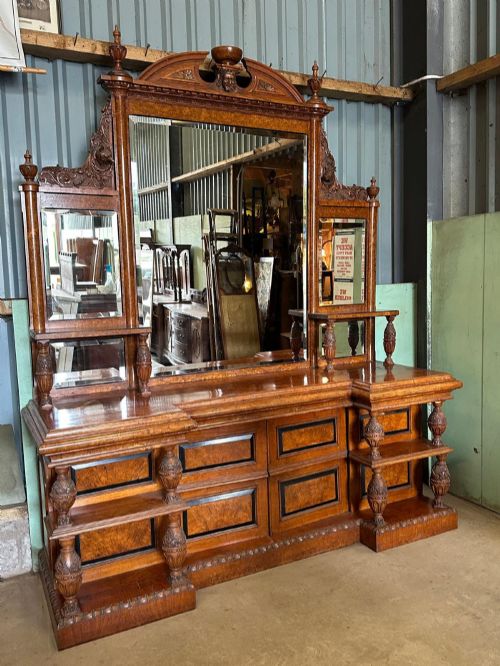
Cabinet makers utilised dense hardwoods such as mahogany, oak, and walnut, frequently selecting figured grains or burr veneers for prominent display surfaces. These timbers provided the structural strength required to support heavy marble tops and large inset mirrors.
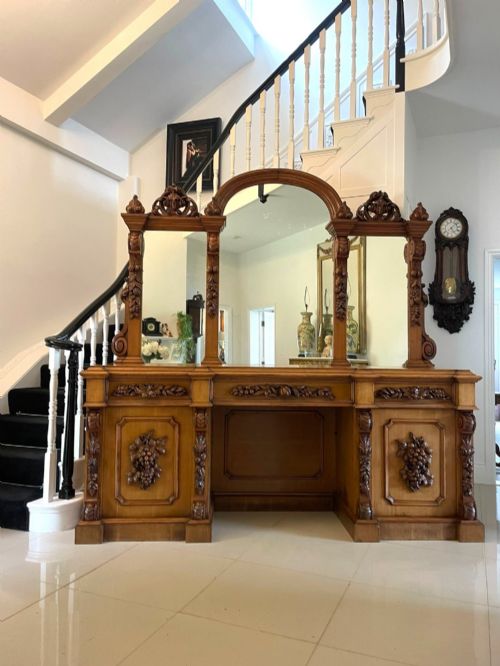
Decoration relied heavily on deep hand carving, producing dimensional fruit, foliage, and figural motifs like green men across the crests and door panels. Brass hardware, mirrored glass, and occasional inlay work completed the construction of these substantial pieces.
Several heavy oak pieces proudly incorporate carved green men, peering out from the foliage to watch over the dining room.
What Varies in Quality
The distinction between standard examples and top tier pieces rests on the depth and crispness of the hand carving and the selection of timber veneers. Superior items display meticulously figured mahogany, burr walnut, or pollard oak with integrated grain matching across the doors and drawers.
Shoolbred and Co·T Simpson and Son
The Victorian Carved Back Sideboard Glossary
- Mirror back
- An upright wooden superstructure fitted with a large looking glass, commonly incorporated into the design of nineteenth century dining room furniture.
- Credenza
- A low-profile storage cabinet or sideboard, frequently featuring glass-fronted display cupboards alongside central shelving.
- Chiffonier
- A compact sideboard or cabinet equipped with enclosed lower storage and often a small shelf or mirror on the upper tier.
- Burr walnut
- A decorative timber veneer taken from the knotted growths of walnut trees, prized for its swirling, highly figured grain pattern.
- Pedestal sideboard
- A heavy form featuring two large enclosed pedestals flanking a central recess or set of drawers.
Victorian Carved Back Sideboard: Frequently Asked Questions
What is a carved back sideboard used for?
These large pieces were traditionally placed in dining rooms to store cutlery, linen, and heavy serving dishes. The flat top surface served as a station for carving meat or displaying silver and glassware.
The upper mirror back bounced light around the room and visually expanded the dining space while showcasing ornamental ceramics.
How do I fit a large sideboard into a modern room?
Because nineteenth century proportions are exceptionally deep and tall, measure your wall space and ceiling clearance very carefully before acquisition. Placing one against a blank dining room wall allows the heavy timber and mirror to act as a natural focal point.
Keep surrounding furniture simple to balance the visual weight of the carved woodwork and dark timber.
What is the difference between a chiffonier and a sideboard?
A chiffonier is typically smaller and lower in scale than a full dining room sideboard, often serving a dual purpose as a display cabinet. It usually includes enclosed lower doors and a modest upper tier.
Sideboards are much longer and heavier, built specifically to anchor large dining spaces with extensive drawers and cupboards.