


Rich Brown Wooden Sideboard
A rich brown wooden sideboard brings deep mahogany warmth and disciplined utility to a dining room or hallway.
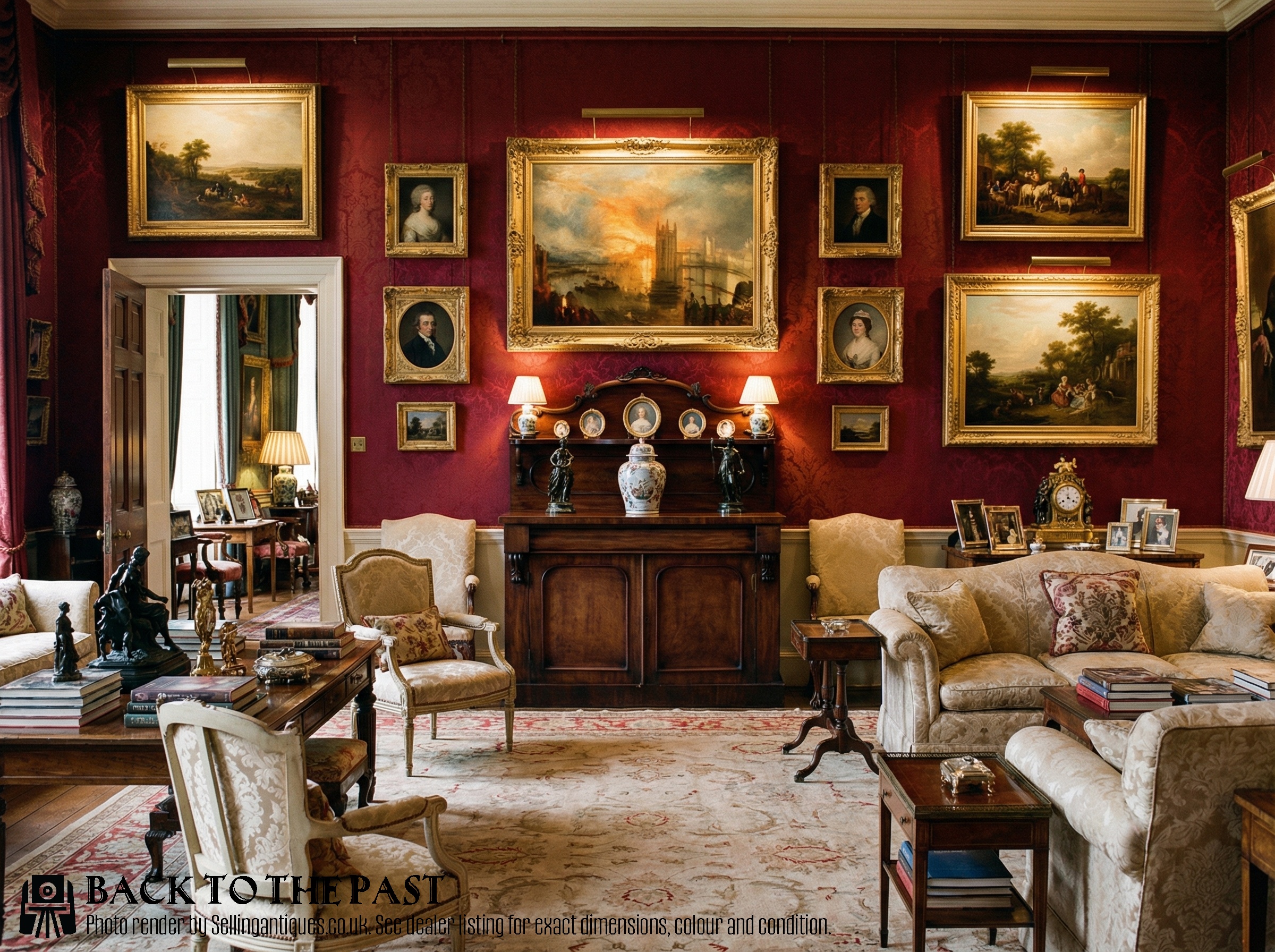
Rich Brown Wooden Sideboard
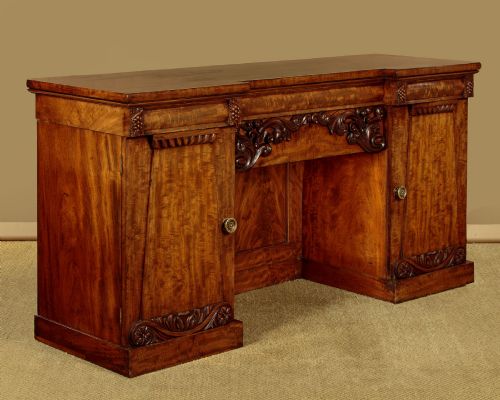
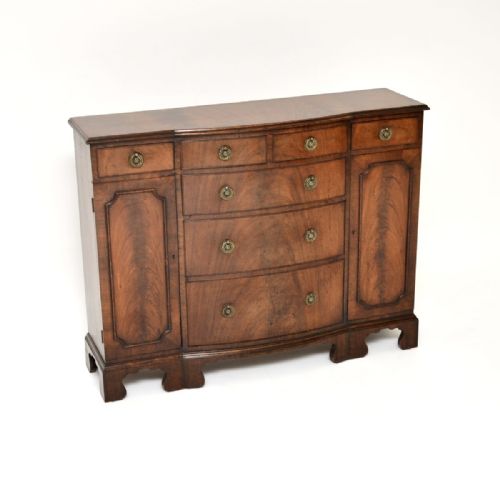
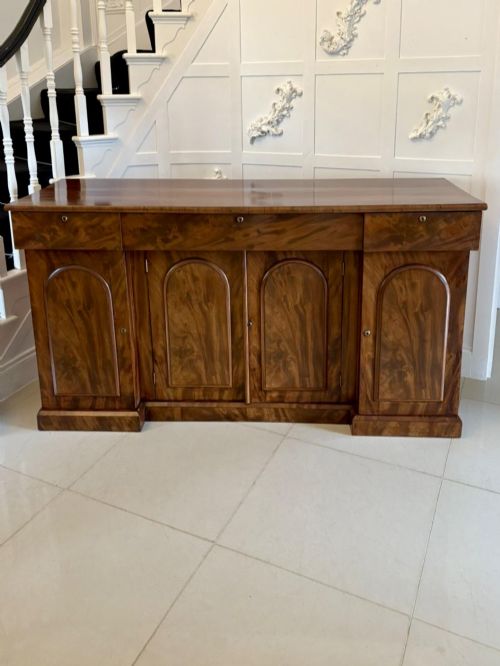
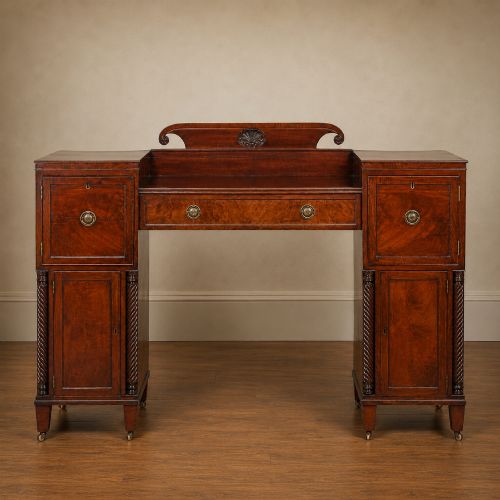
A rich brown wooden sideboard in these listings primarily spans the Georgian, Regency, and Victorian periods, along with later revivals. Buyers encounter robust four-door cupboards, pedestal sideboards with distinctive flanking pedestals, and serving tables designed for formal dining rooms.
The forms range from compact breakfronts and bowfronts to large credenzas, dressers, and serving sideboards. Solid timbers and rich veneers define the dominant aesthetic across the selection.
Makers and workshops from the eighteenth century onward utilised rich timbers like mahogany and walnut to construct these substantial dining room pieces. They functioned historically for food service, silver storage, and display.
Assessing quality
Quality rests upon the selection of timber grain, particularly the vibrancy of flame mahogany and figured mahogany veneers across primary surfaces. Superior examples demonstrate careful matching of grain patterns across multiple doors and drawers.
The sophistication of the joinery and the crispness of any carved ornamentation separate standard production from exceptional cabinetwork. Original brass hardware and well-proportioned smaller scales enhance the desirability of a piece.
One piece includes a dedicated wine cooler designed for nineteenth-century dining hospitality.
The Rich Brown Wooden Sideboard Glossary
- Breakfront
- A cabinet or sideboard whose central section projects forward from the flanking sections. This configuration creates architectural depth and visual interest.
- Pedestal sideboard
- A form featuring a central serving surface flanked by two distinct pedestals containing cupboards or cellarets. It emerged prominently during the Regency period.
- Bowfront
- A curved front structure where the central section swells outward in a convex arc. This shape softens the rigidity of traditional rectangular case pieces.
- Chiffonier
- A compact sideboard or cabinet equipped with enclosed lower cupboards and often a raised shelf superstructure. It gained popularity during the Victorian era for smaller entertaining spaces.
Rich Brown Wooden Sideboard: Frequently Asked Questions
How do I date a mahogany sideboard?
Dating relies on architectural proportions, secondary timbers, and surface treatments like flame mahogany veneer.
Georgian and Regency pieces display restrained classical lines, whereas Victorian examples often incorporate heavier mouldings and carved details.
Where should I place a sideboard?
Sideboards traditionally anchor the dining room wall for serving food and storing tableware and linens.
Their substantial depth and presence also suit large hallways, living rooms, and open-plan dining spaces.
What is flame mahogany?
Flame mahogany is a highly figured veneer cut from the branch junctions of the mahogany tree.
Cabinetmakers prized this timber for its fiery, swirling patterns, utilising it on prominent drawer fronts and door panels.