
Victorian Canterbury Music Rack
A victorian canterbury music rack organises sheet music and periodicals with distinct nineteenth-century craftsmanship.
Victorian Canterbury Music Rack
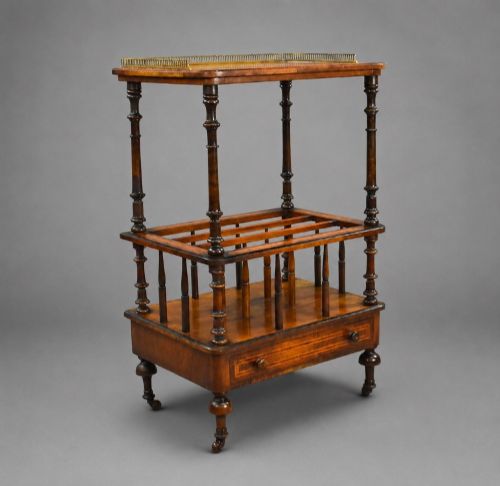
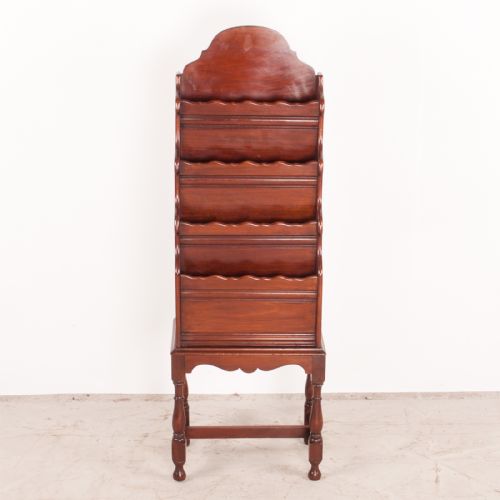
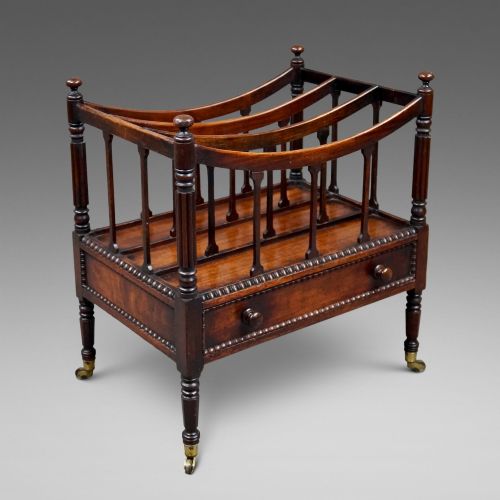
When you search for a victorian canterbury music rack, you are looking at nineteenth-century furniture designed to hold sheet music, magazines, and newspapers. The items appearing here span periods from the Regency era through to the late Victorian years, alongside Edwardian and later interpretations.
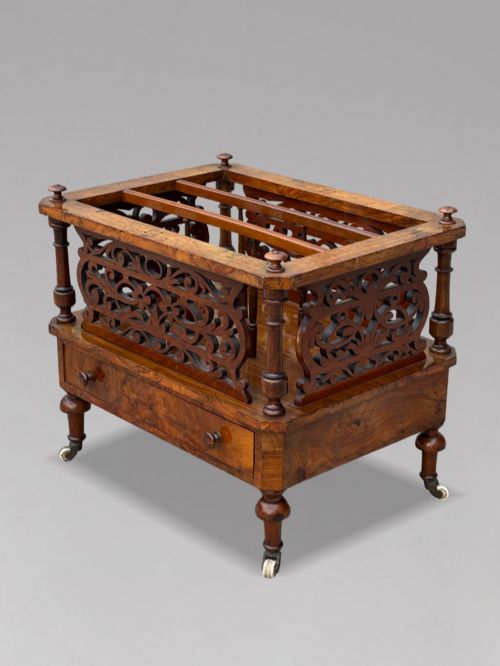
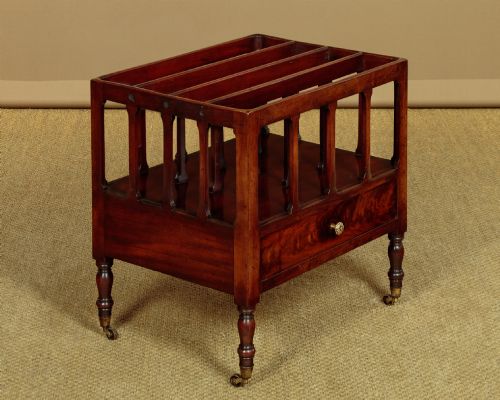
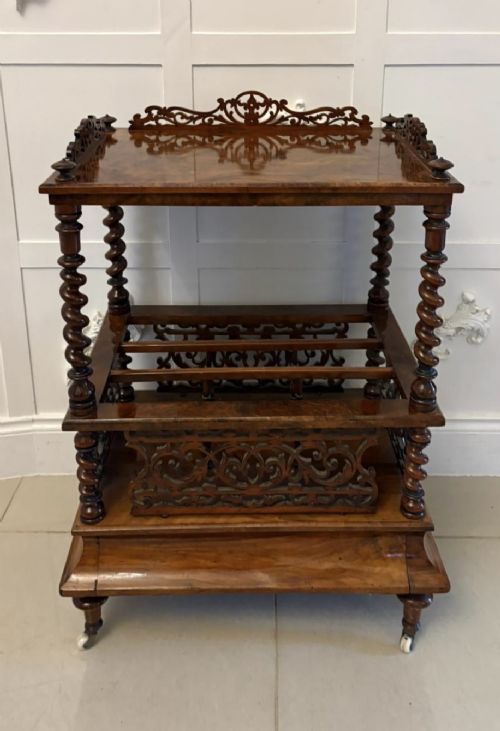
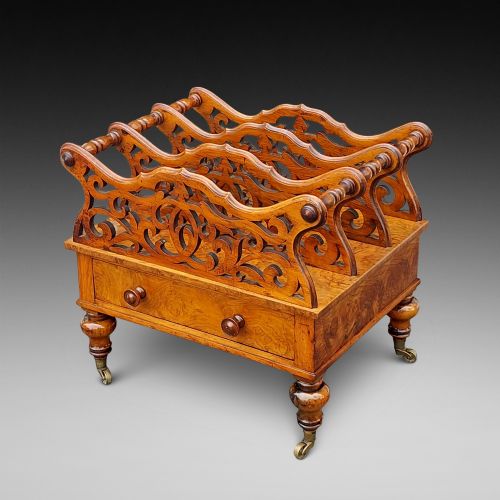
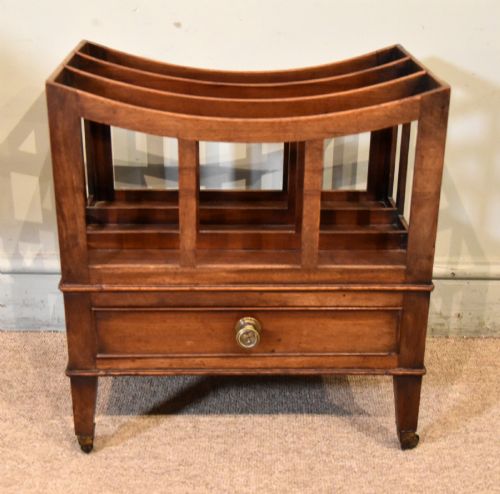
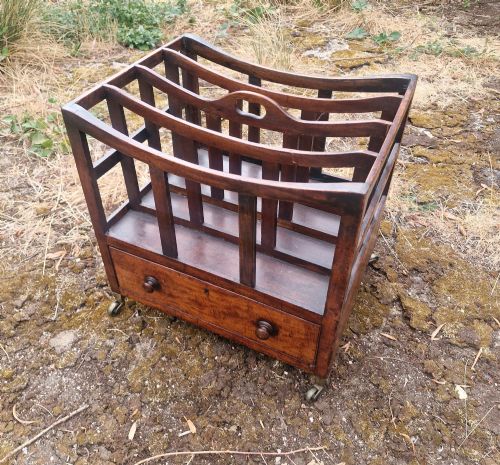
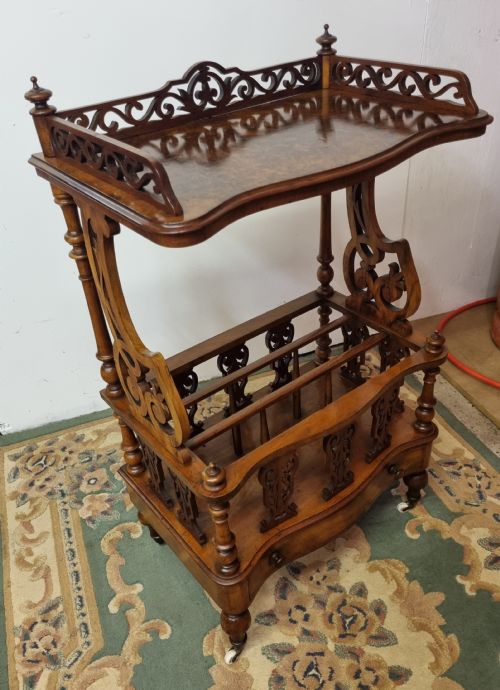
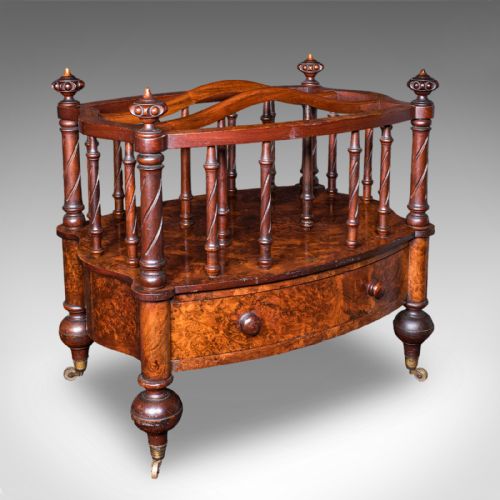
The version you are most likely to meet on this page is constructed from burr walnut or mahogany, frequently featuring multiple tiers or divided compartments for papers. These pieces often combine the functions of a music stand, occasional table, and magazine tidy.
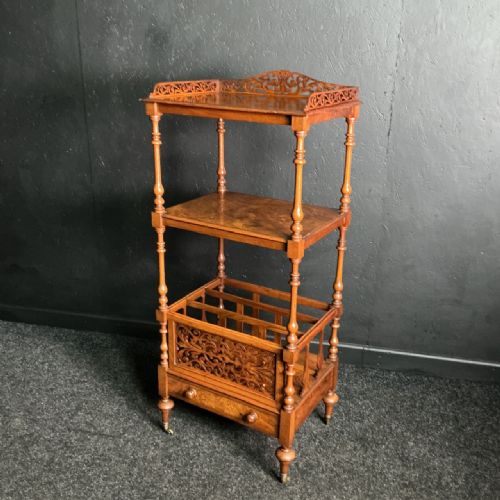
Makers and designers produced these stands in various configurations, including freestanding models, revolving stands, and combined whatnots with drawers. Their origins trace back through the nineteenth century, encompassing styles such as William IV, Aesthetic Movement, and Gothic Revival.
How they were made
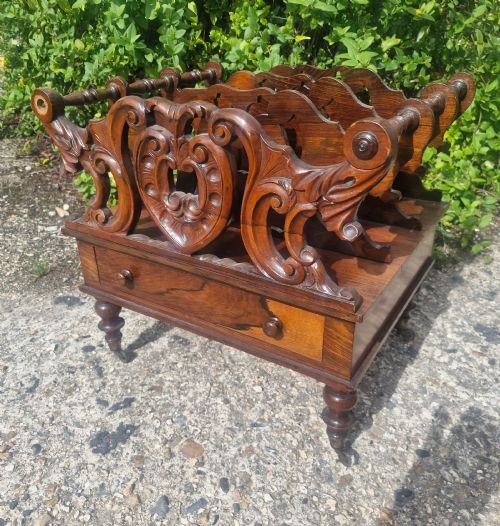
Cabinetmakers built these pieces primarily using solid and veneered hardwoods like mahogany, rosewood, and burr walnut, selected for their rich grain patterns. Workshops applied intricate inlay work and turned wooden spindles to define the upright partitions and tiers.
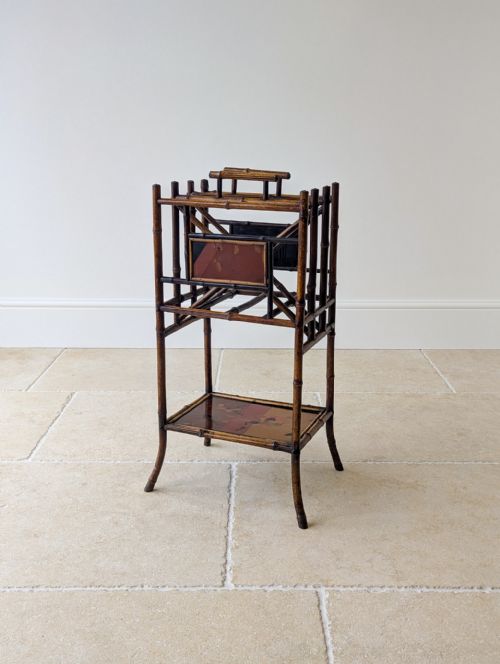
Listings feature walnut, mahogany, and rosewood alongside bamboo, brass, and ceramic materials across the nineteenth century.
What varies in quality
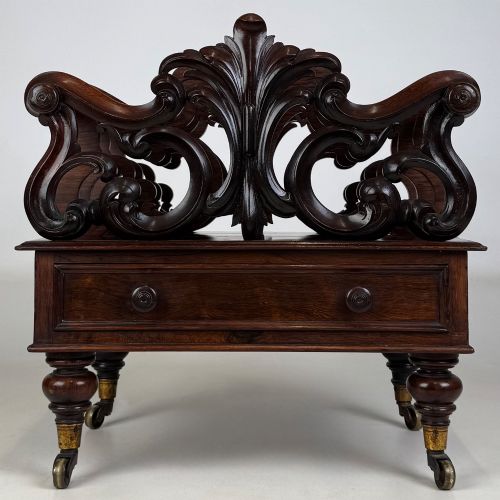
The distinction between standard production and finer examples rests on the selection of timber veneers, such as highly figured burr walnut or rich rosewood. Superior pieces display meticulous attention to detail in their marquetry inlay, turned pillars, and the crispness of carved wooden elements.
Structural complexity also dictates standing, with multi-tiered whatnots and models incorporating drawers or integrated work tops representing more ambitious craftsmanship than simpler magazine tidies.
Edwards and Roberts
The Victorian Canterbury Music Rack Glossary
- Canterbury
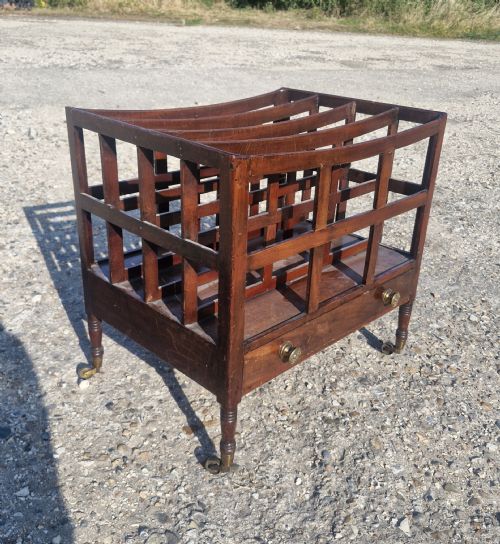
- A low stand with partitions designed for holding music sheets, newspapers, and periodicals. It originated in the eighteenth century and remained popular through the Victorian period.
- Whatnot
- An open set of shelves used for displaying ornaments or holding books and papers. These pieces often incorporate a Canterbury section at the base.
- Burr walnut
- A veneer taken from the warted growths of walnut trees, prized for its swirling and highly decorative grain patterns. Makers utilised it on prominent surfaces of Victorian cabinet furniture.
- Aesthetic Movement
- A late nineteenth-century design style that emphasised visual beauty over narrative content, often incorporating exotic materials like bamboo. Pieces from this movement display simpler, cleaner lines.
- Regency
- A style period spanning the early nineteenth century, characterised by classical restraint and the use of dark timbers like mahogany and rosewood.
Victorian Canterbury Music Rack: Frequently Asked Questions
What is a canterbury used for?
A canterbury served as a dedicated receptacle for sheet music, newspapers, and unbound periodicals in the Victorian parlour. The vertical partitions kept scores upright and sorted for musicians.
Over time, these stands evolved to hold general magazines and books, functioning alongside other occasional furniture pieces in the sitting room.
How do I identify a Victorian piece?
Victorian pieces typically display characteristic timbers such as burr walnut, rosewood, and mahogany, often enhanced with marquetry inlay. Construction details like hand-cut dovetails and turned wooden spindles point directly to nineteenth-century workshop practices.
Stylistic markers including Aesthetic Movement bamboo or heavy Gothic Revival motifs also help anchor pieces within the Victorian timeline.
Are all canterburys made of wood?
While the majority of pieces utilise hardwoods like mahogany and walnut, alternative materials appear across the period. Aesthetic Movement examples make distinct use of bamboo for lighter, exotic framing.
Metal components, particularly brass, are also found on revolving magazine stands and supportive castors.
Can I use a music rack today?
These racks suit modern living spaces as practical tidies for contemporary magazines, vinyl records, or sheet music. Their compact footprints allow them to function effectively as side tables or display stands.
Placing them in a study or living room preserves their original purpose while accommodating everyday items.