





Victorian Cane Seat Chair
A victorian cane seat chair brings woven flexibility and timber framing together into a seat that ranges from simple country forms to elaborate library armchairs.
Victorian Cane Seat Chair
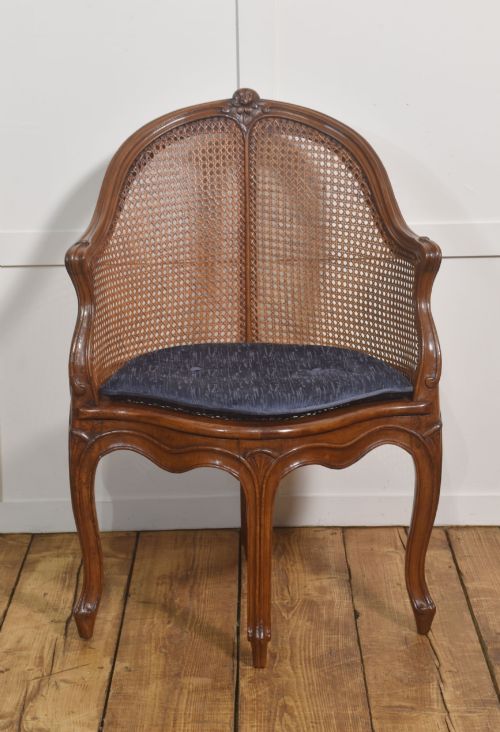
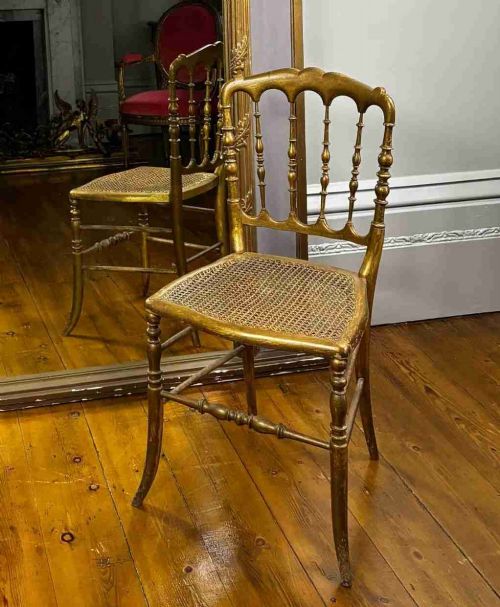
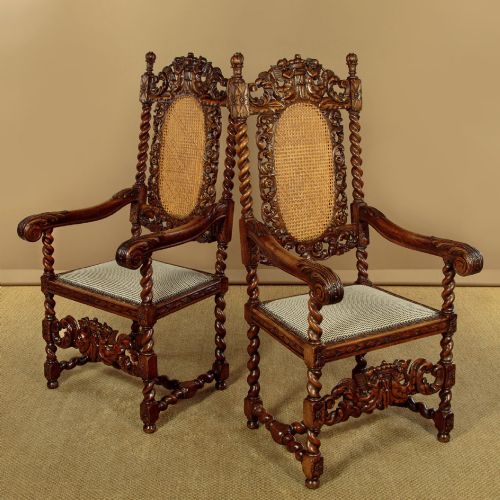
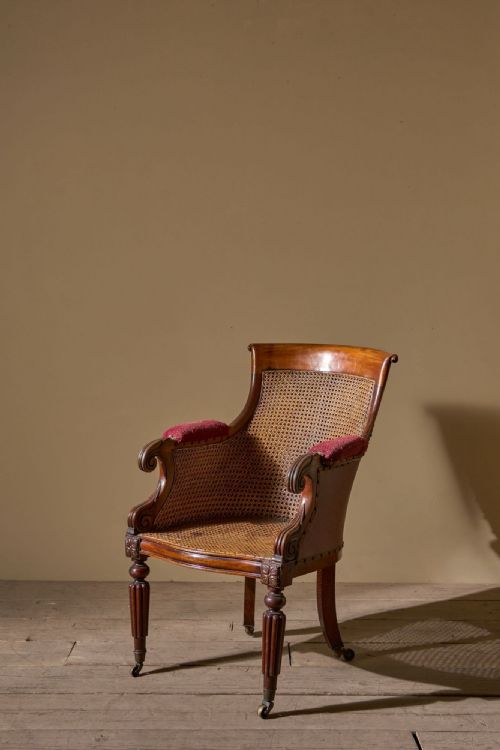
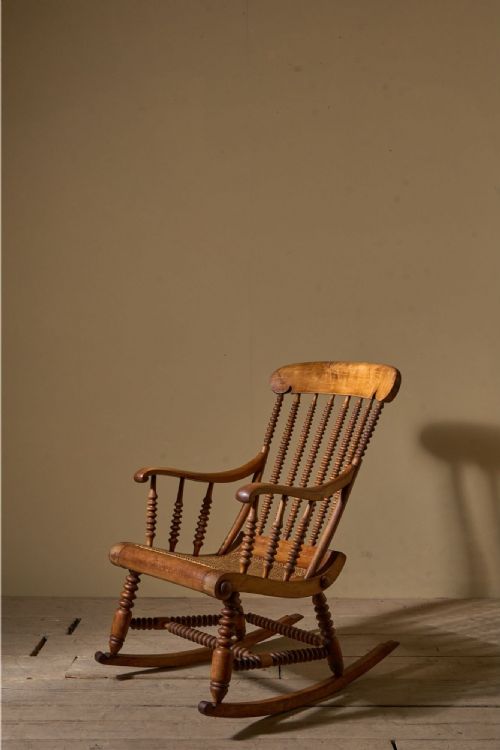
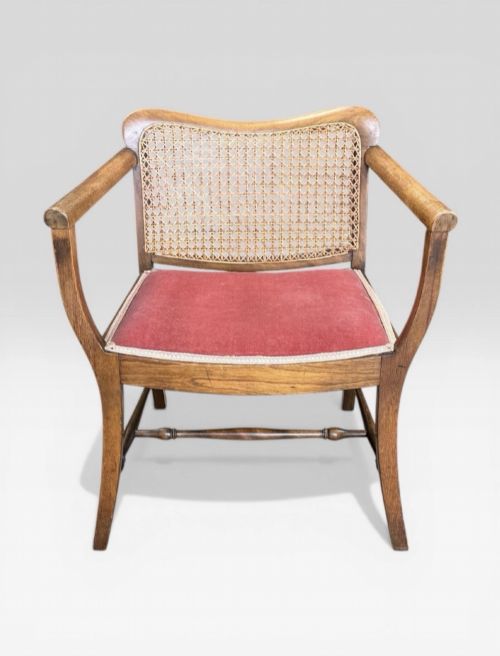
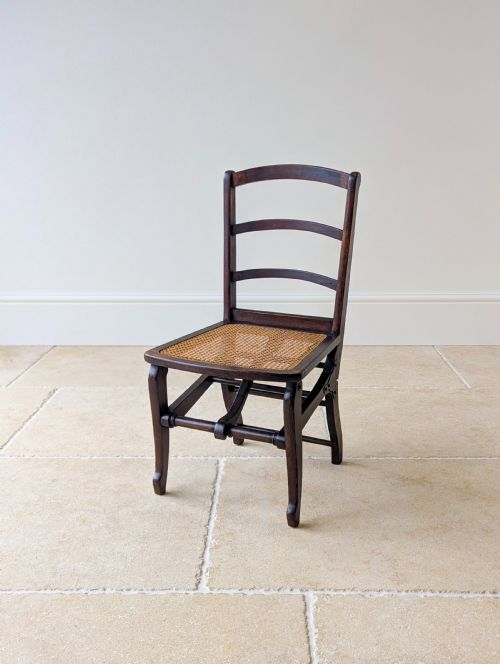
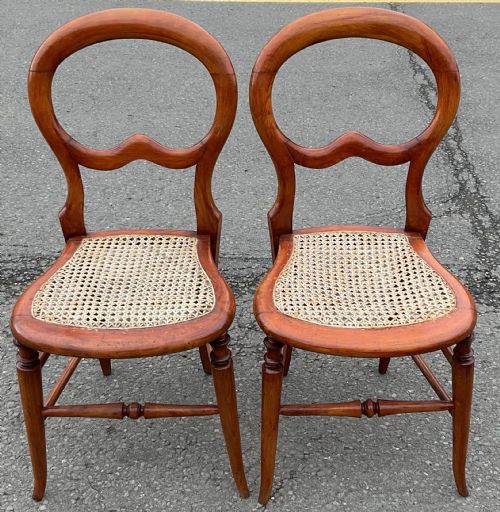
A victorian cane seat chair encompasses a broad variety of domestic seating, from side chairs and bedroom pieces to large library armchairs, rocking chairs, and child highchairs. The typical form encountered here relies on a traditional woven cane insert fitted into a solid wood frame.
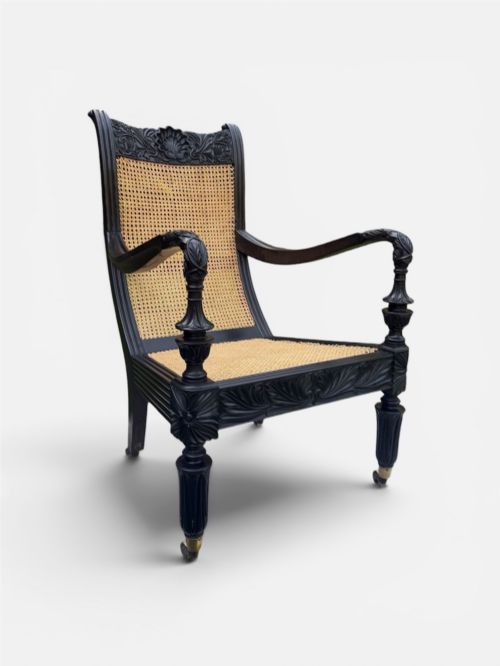
Makers produced these chairs across the nineteenth century in diverse styles including Victorian Country, Jacobean Revival, and Anglo-Indian Colonial, utilising materials like mahogany, oak, walnut, and beech. The surviving inventory reflects everyday domestic use as well as formal parlour settings.
How They Were Made
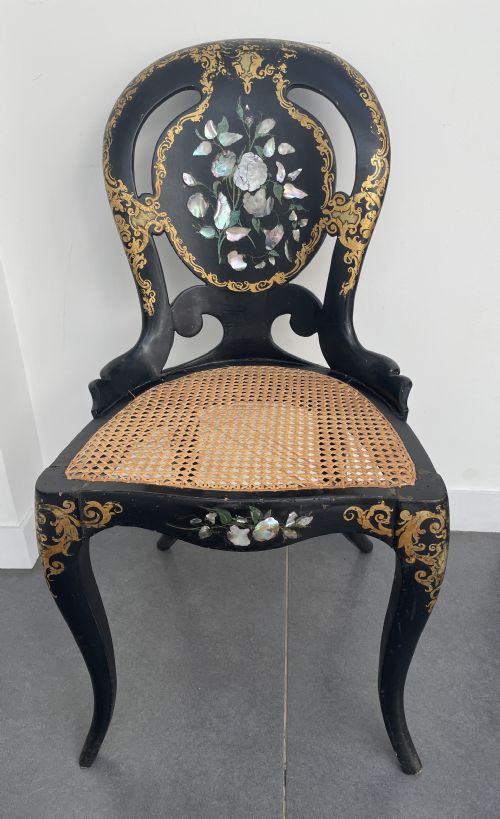
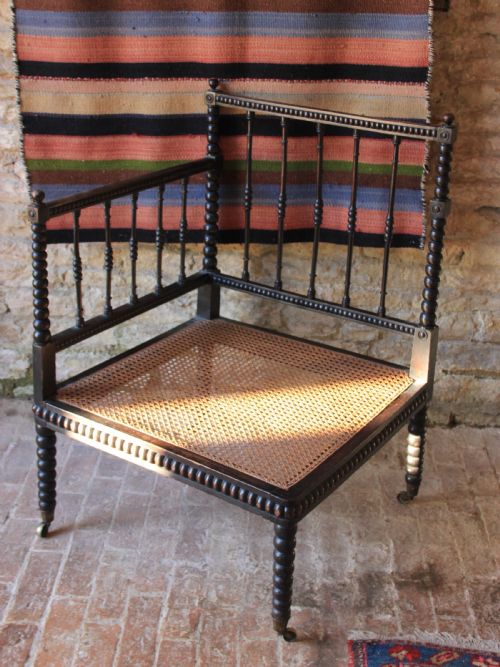
Craftsmen shaped dense hardwoods such as mahogany, walnut, oak, and satinwood to form the structural framework of the chair, often employing carved decoration, bobbin turning, or bentwood techniques. Frames frequently incorporated brass fittings or mother of pearl inlay depending on the intended room and period.
The characteristic seat utilises natural cane woven directly through holes drilled in the wooden frame or set into a channel, providing a resilient and breathable surface that supports the sitter without heavy upholstery.
A tiny doll's chair waits patiently alongside full-sized throne chairs, proving that miniature caning required just as much thumb-straining dedication.
What Varies in Quality
Quality rests primarily on the substance of the timber frame and the precision of its carving, turning, or applied ornament, distinguishing standard bedroom chairs from substantial library and throne armchairs. Solid construction in woods like walnut and mahogany elevates a piece above simpler utilitarian forms.
The integrity and tightness of the cane weave itself mark the standard of manufacture, where evenly spaced strands and secure binding demonstrate superior workmanship across parlour and dining seating.
James Shoolbred·E W Godwin
The Victorian Cane Seat Chair Glossary
- Bergere
- An enclosed upholstered or caned armchair with wooden framing, often featuring woven cane panels on the back and seat sides.
- Bobbin turning
- A form of woodturning characterised by a series of rounded spheres resembling bobbins or spools linked along the length of the leg or stretcher.
- Cane
- Strips of peeled rattan woven to create a flexible, patterned mesh surface for chair seats and backs.
- Tub chair
- A curved seating form where the back flows continuously into low arms, enclosing the sitter.
- Campaign chair
- A portable folding or knock-down chair designed for travel, often fitted with brass hardware.
Victorian Cane Seat Chair: Frequently Asked Questions
How do I identify a Victorian cane seat chair?
Look for nineteenth-century timber frames combined with woven rattan cane inserts across forms such as side chairs, armchairs, and rocking chairs. The construction typically employs hardwoods like mahogany, oak, or walnut.
Check for period characteristics such as bobbin turning, carved walnut details, or specific nineteenth-century styling that aligns with the recorded inventory.
Were these chairs used in dining rooms?
Dining chairs formed a regular part of nineteenth-century production, appearing individually or in matched sets alongside larger library and salon armchairs. They provided durable, lightweight seating for daily household use.
Craftsmen often built these dining seats from oak or mahogany to withstand regular handling around the table.
How should I care for the cane seat?
Keep the woven cane clean by dusting it gently and maintaining moderate humidity in the room to prevent the natural material from drying out and becoming brittle. Avoid placing heavy concentrated weight on the centre of the weave.
Occasional light conditioning with a damp cloth helps maintain the flexibility of the natural rattan fibres over time.
What is a bergere chair?
A bergere is an armchair featuring enclosed wooden sides and back panels filled with woven cane, offering a lighter alternative to fully upholstered seats. These pieces frequently appear in nineteenth-century drawing rooms and libraries.
The style emphasises both the exposed timber frame and the decorative geometric pattern of the cane work.