

Victorian Cane Rack
A victorian cane rack organises hallway clutter with practical heft, offering sturdy places for walking sticks and umbrellas.
Victorian Cane Rack
A victorian cane rack serves as a hallway holder for walking sticks, umbrellas and canes, keeping entryways tidy. These pieces appear as umbrella stands, stick stands and combined hall stands designed for daily household use.
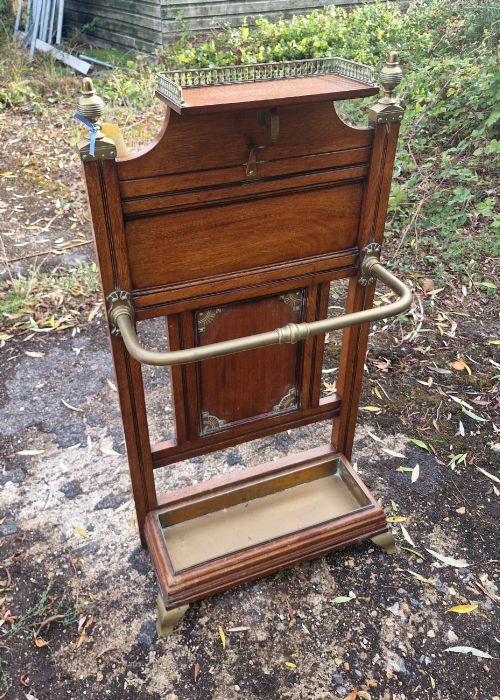
The pieces on this page span the Victorian era, the Edwardian period and the late nineteenth century, alongside specific styles such as Aesthetic Movement, Gothic Revival and Black Forest carving.
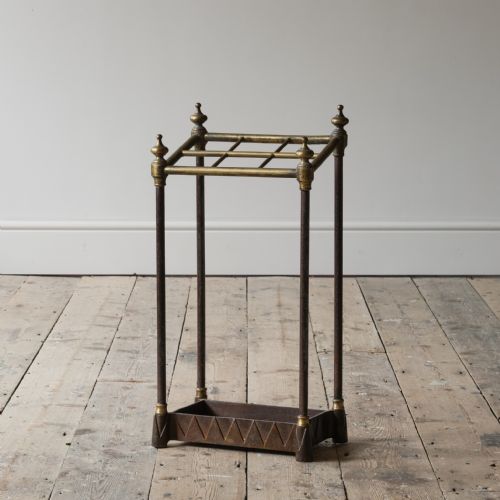
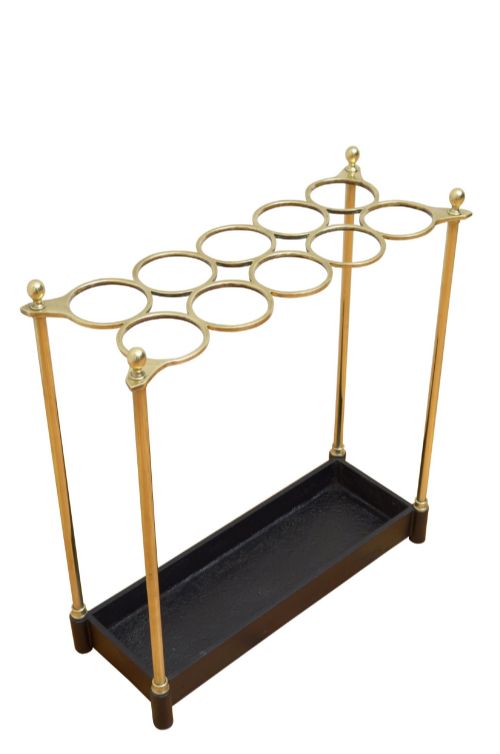
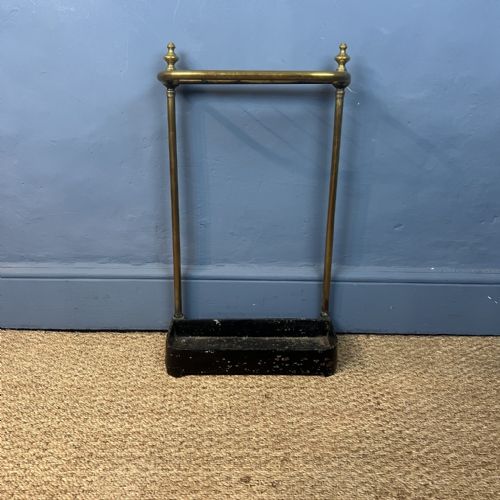
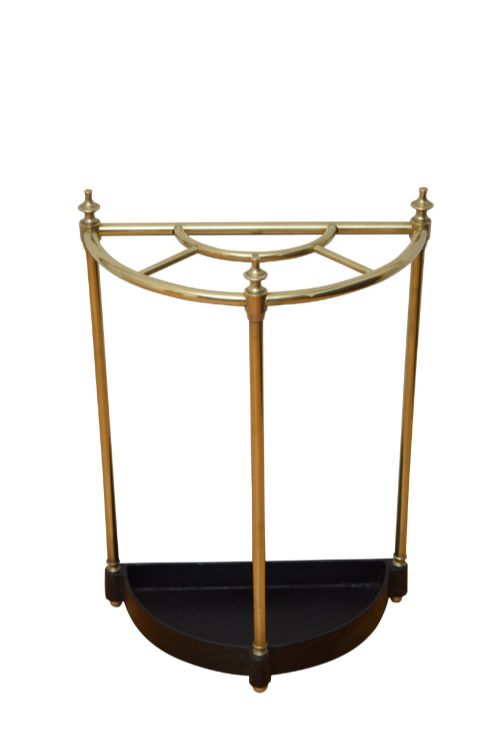
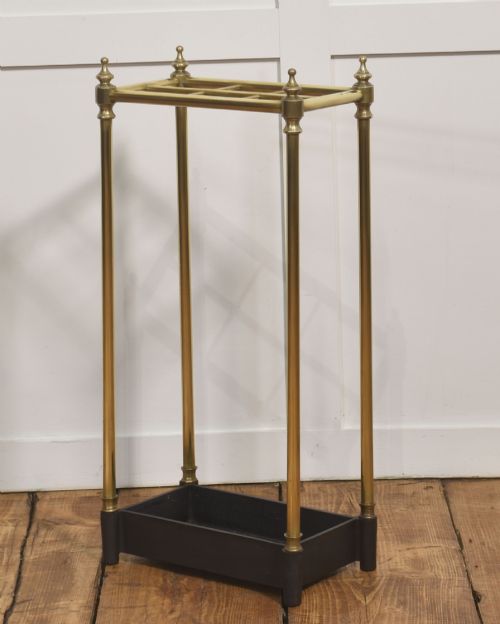
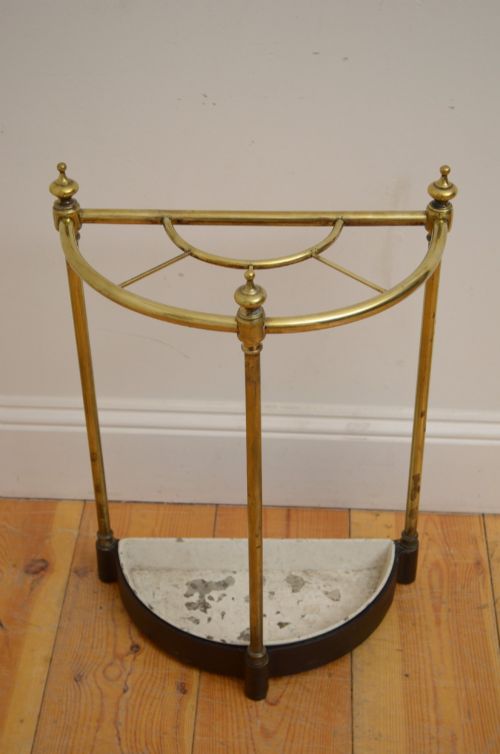
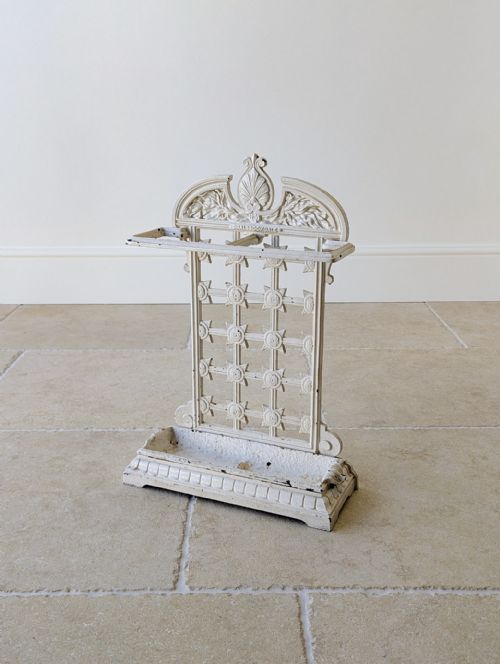
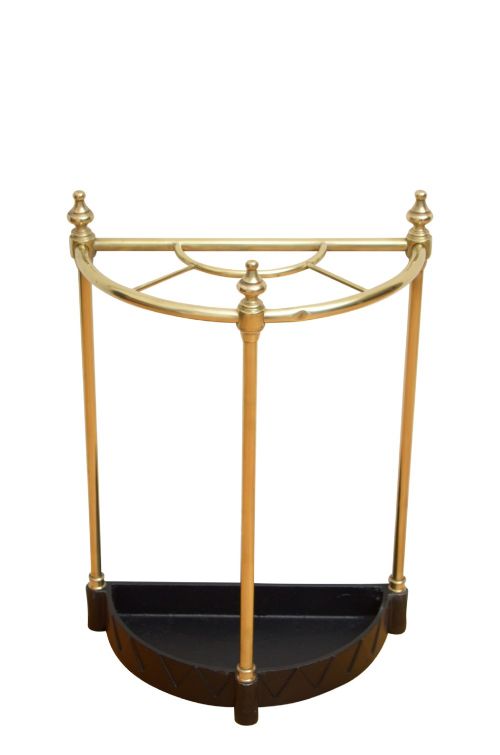
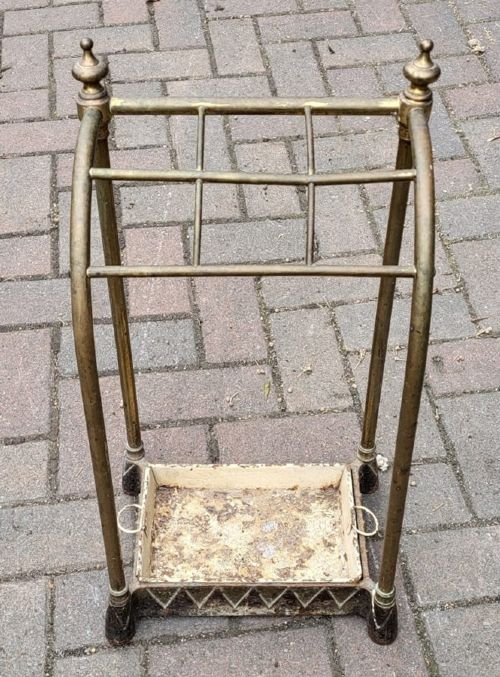
Most examples meet the eye as heavy cast iron frames or gleaming brass half-moon designs, often paired with zinc or iron drip trays to catch rainwater from wet umbrellas.
Materials and construction methods
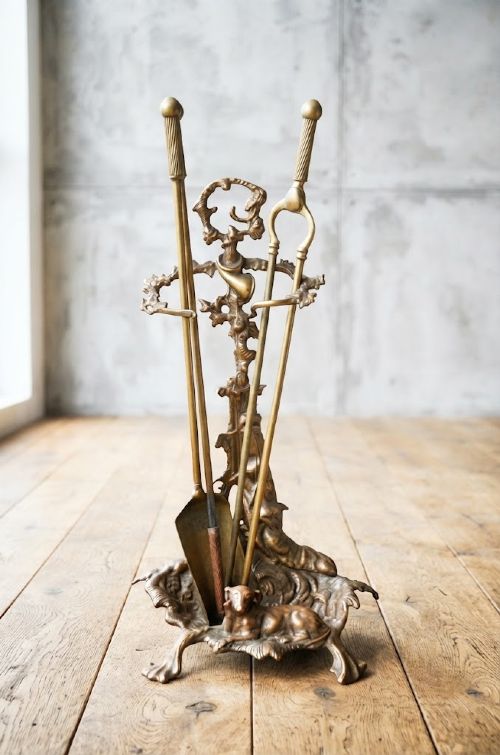
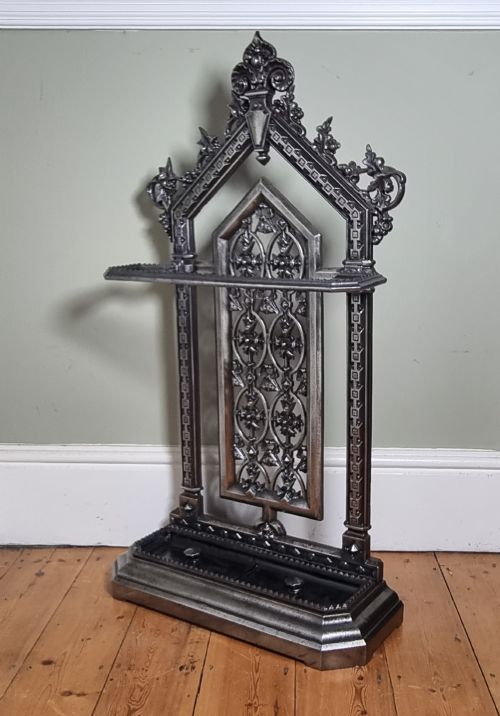
Foundries cast heavy metals into ornate patterns, producing robust iron and brass frames that withstand daily knocks from heavy walking canes and wet umbrellas.
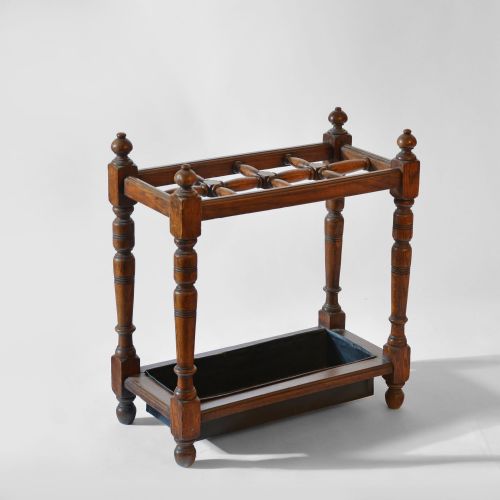
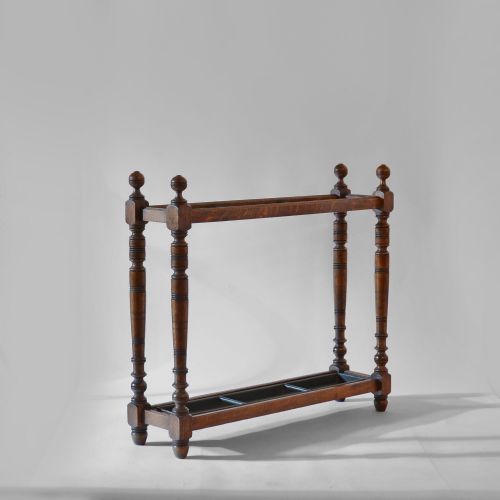
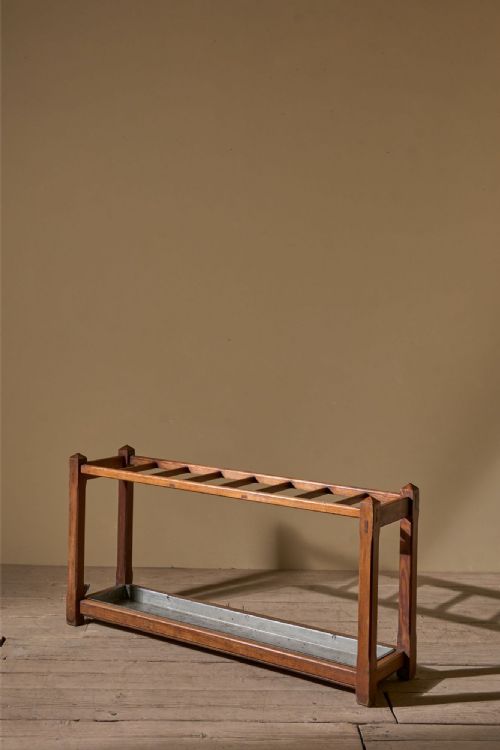
Cabinetmakers constructed wooden versions from oak, mahogany, pine and bentwood, frequently utilising steam-bending techniques to form curved rails and umbrella rings.
Many designs incorporate removable metal drip trays at the base, protecting wooden floors and carpets from puddles left by wet umbrella tips.
Listings feature materials spanning cast iron, brass, oak, mahogany, zinc and bamboo.
Assessing craftsmanship and design
Quality rests in the crispness of metal casting and the depth of decorative detailing, where finer foundry work displays sharply rendered patterns rather than soft edges.
The choice of materials dictates the character of the piece, ranging from simple utilitarian pine frames to elaborate Black Forest carved bears or designer-influenced forms.
Structural integrity depends on the original pairing of components, such as intact drip trays matching the exact footprint of the frame and secure joints on wooden or bamboo stands.
Coalbrookdale·Thonet·Falkirk Ironworks
The Victorian Cane Rack Glossary
- Demi-lune
- A half-moon shape allowing the stand to sit flush against a hallway wall. This profile saves floor space in narrow entryways.
- Drip tray
- A shallow metal basin placed at the base of the rack. It catches water dripping from wet umbrellas and protects flooring.
- Cast iron
- An iron-carbon alloy poured into moulds to create rigid frames. This heavy material prevents the stand from tipping under the weight of wet sticks.
- Bentwood
- Wood heated with steam and bent into curved shapes. This technique creates graceful, rounded frames for lighter umbrella stands.
- Aesthetic Movement
- A late nineteenth-century design style emphasising visual beauty over narrative meaning. Pieces in this style often feature geometric bamboo or stylized brass elements.
Victorian Cane Rack: Frequently Asked Questions
Where did people keep a victorian cane rack?
These racks traditionally stood in the entrance hall, porch or vestibule of a house.
This placement allowed family members and visitors to deposit wet umbrellas and walking sticks immediately upon entering the home.
How do I protect my floor from drips?
Most stands feature an integrated metal drip tray at the bottom.
These removable trays catch rainwater from umbrellas, preventing moisture from damaging wooden floors or carpets underneath.
Can these hold heavy walking sticks?
Heavy cast iron and brass stands provide robust support for weighty canes and sturdy umbrellas.
Lighter bamboo and bentwood versions suit everyday walking sticks but require care with heavier items.
How do I tell Victorian from Edwardian stands?
Victorian examples often display heavier cast iron decoration, Gothic influences or ornate brass framing.
Edwardian pieces tend toward lighter brass designs, dog-tooth trays and simpler architectural lines.