


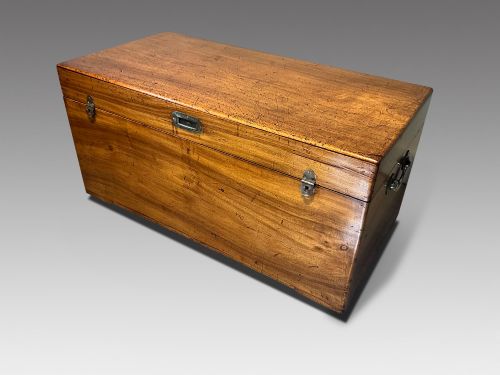


Victorian Camphor Wood Chest
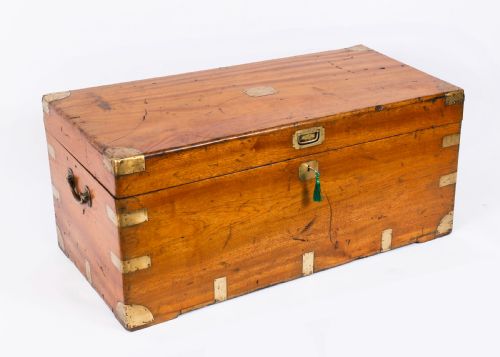
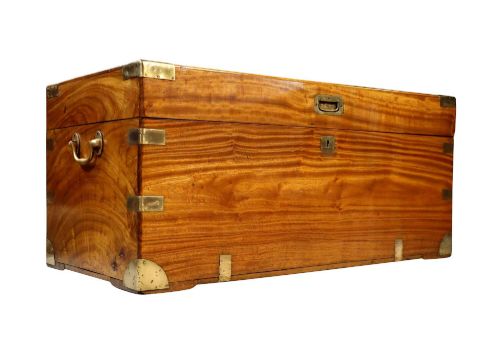
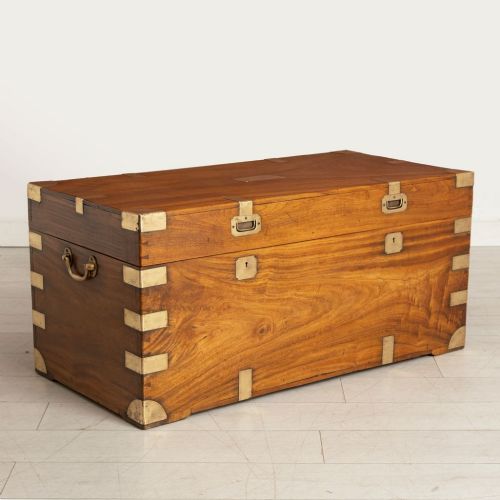
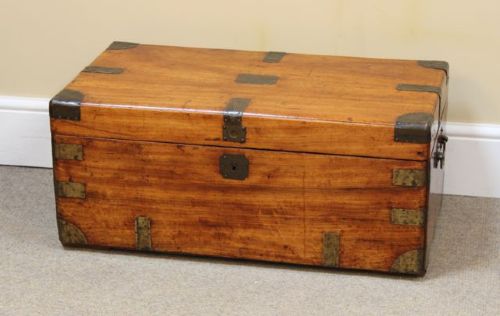
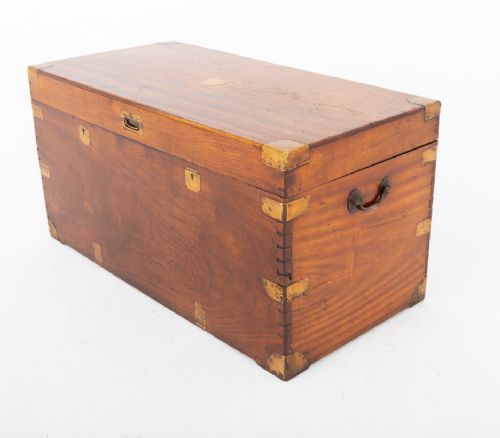
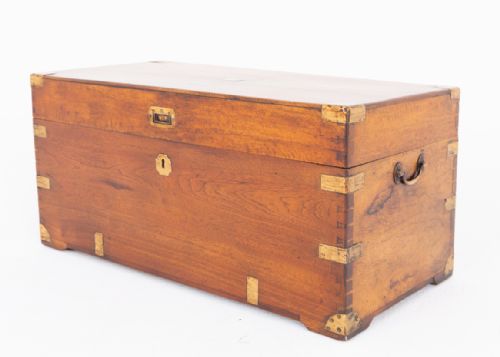
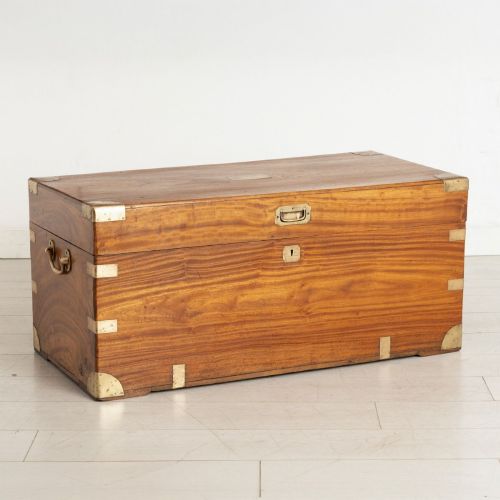
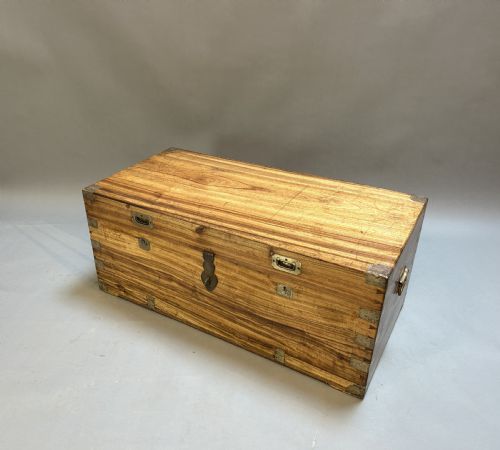
When you search for a victorian camphor wood chest, you are looking at utilitarian travel trunks and chests built for officers on the move.
Victorian Camphor Wood Chest
A victorian camphor wood chest serves as sturdy luggage and portable storage designed for British military officers and colonial travellers during the nineteenth century. These pieces range from simple lidded blanket boxes and travel trunks to sophisticated two-section chests of drawers and fitted secretaire desks.
Most examples found today date from the Victorian era, specifically spanning the middle and late nineteenth century around eighteen-fifty to eighteen-ninety. They connect directly to the British Empire, maritime trade routes, and Anglo-Chinese workshop production.
Buyers encounter everything from plain storage coffers to complex metamorphic writing slopes and multi-drawer military chests. The unifying element across these diverse forms remains the fragrant timber and robust construction meant to withstand long sea voyages.
How They Were Made
Makers built these pieces primarily from solid camphor wood or camphorwood, chosen for its insect-repellent properties and ability to protect uniforms from moths in humid climates. Carpenters reinforced the corners and edges with heavy brass binding, metal brackets, and iron fittings to absorb the shocks of transit.
Construction techniques prioritised modular portability, resulting in two-section chests that could be separated for easier hauling by pack animals or porters. Drawers often featured secret compartments, fitted interiors, and key locks, while exteriors utilised flush-mounted drop handles for tight packing.
Listings span the nineteenth century, with specific production dates recorded from eighteen hundred through to nineteen hundred, encompassing both plain trunks and fitted secretaire models.
What Varies in Quality
The degree of craftsmanship shows in the tightness of the joinery and the substance of the brass hardware, where cast corners and flush handles sit perfectly level with the timber surface. Superior examples display particularly rich wood grain patterns and retained keys for integrated brass locks.
Internal complexity elevates certain pieces above standard trunks, particularly those housing fitted stationery drawers, sliding compartments, or drop-down secretaire writing sections. The presence of original hardware and clean, unwarped multi-section carcasses distinguishes high-end officer pieces from basic utilitarian boxes.
The Victorian Camphor Wood Chest Glossary
- Campaign chest
- A modular chest of drawers or storage box built in two or more stackable sections for easy transport by military officers on active service. These pieces typically feature recessed brass handles and reinforced corners.
- Secretaire chest
- A cabinet containing a pull-down writing drawer fitted with small pigeonholes and secret compartments for correspondence. This form allowed travelling officers to maintain paperwork in the field.
- Brass bound
- The method of reinforcing box edges and corners with angle brackets and straps made of brass to prevent splitting during transit. It protects vulnerable wood grain from heavy impacts.
- Chinese export trade
- Goods manufactured in Asian treaty ports specifically for Western merchants and military buyers during the nineteenth century. These workshops combined traditional local timber with British furniture forms.
Victorian Camphor Wood Chest: Frequently Asked Questions
Why use camphor wood?
Camphor wood naturally emits a strong aromatic scent that repels moths and silverfish, protecting wool uniforms and documents from insect damage during long sea voyages.
Its natural oils also resist moisture and mildew in tropical climates, making it the ideal timber for military trunks moving across the British Empire.
What is a two-section chest?
A two-section chest is a modular piece built in an upper and lower half that stack together and lock in place with side brackets.
This division allowed servants and porters to lift and transport heavy officer luggage more easily across rough terrain and ship gangways.
How do I care for the timber?
Keep the wood away from direct heat sources and radiators to prevent the solid camphor panels from drying out and splitting over time.
Apply a light application of traditional beeswax occasionally to nourish the surface and maintain the natural lustre of the grain.
Were these chests only for soldiers?
While designed primarily for British military officers on campaign, these trunks were also utilised by colonial administrators, merchants, and sailors travelling abroad.
Their practical durability made them popular household blanket boxes and storage chests upon returning to Britain.