




Brass Corner Wooden Chest
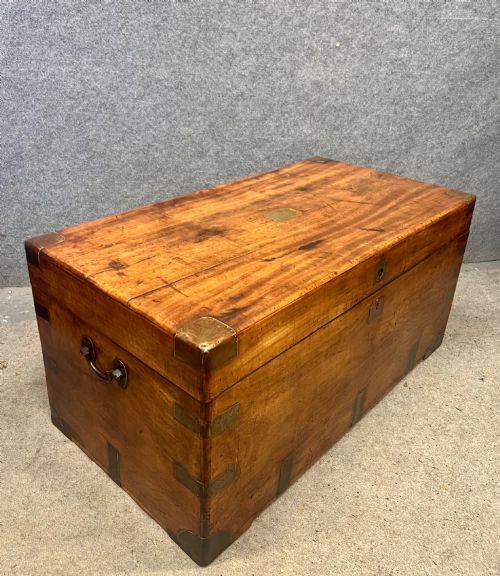
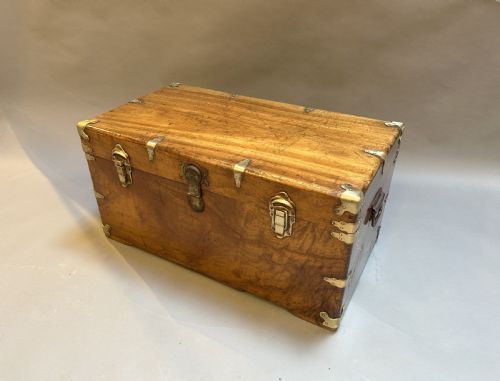
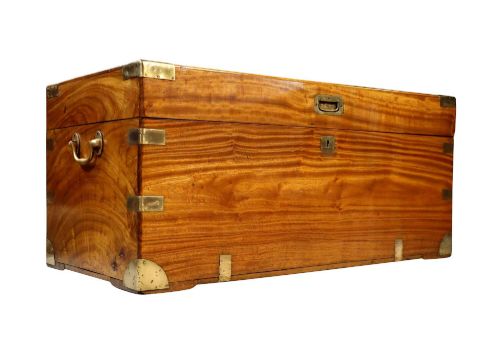
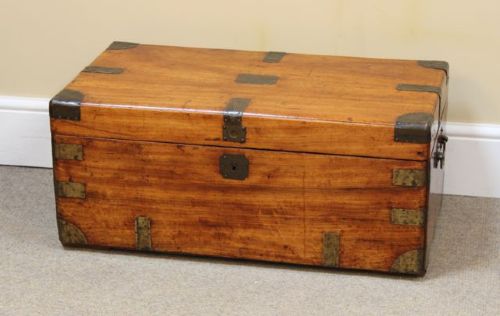
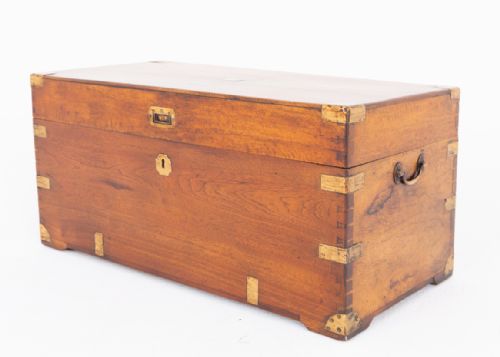
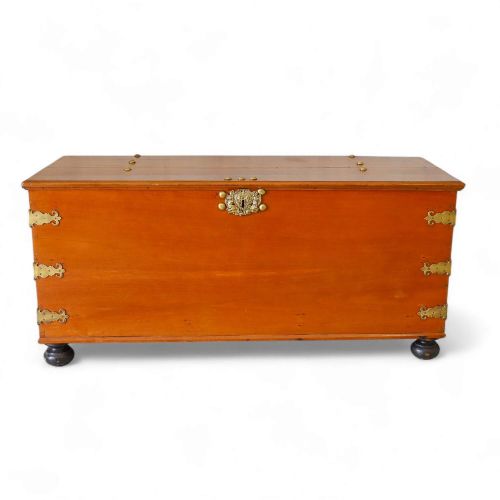
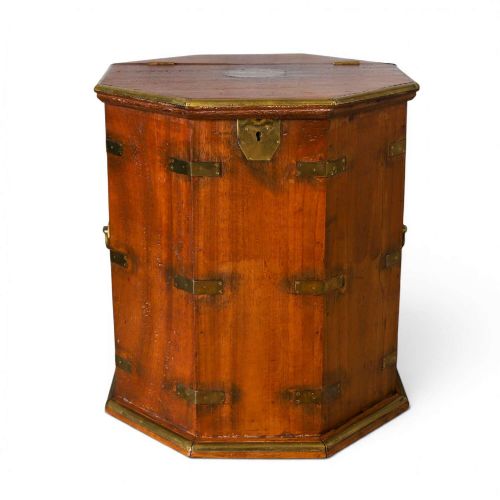
A brass corner wooden chest brings travel-worn character into a room, offering sturdy storage rooted in nineteenth-century campaign utility.
Brass Corner Wooden Chest
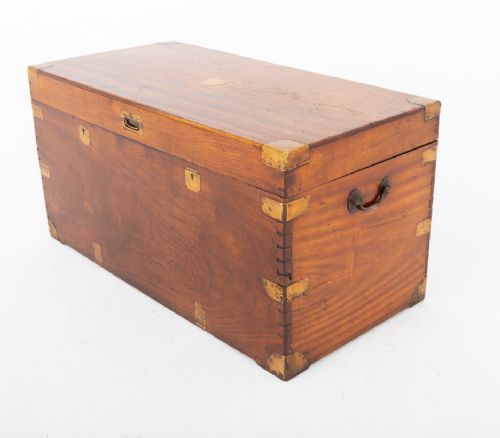
A brass corner wooden chest serves as robust storage, appearing predominantly in nineteenth-century campaign and colonial forms designed for travel. These pieces emerge from Victorian and Edwardian contexts, spanning military, naval, and merchant use.
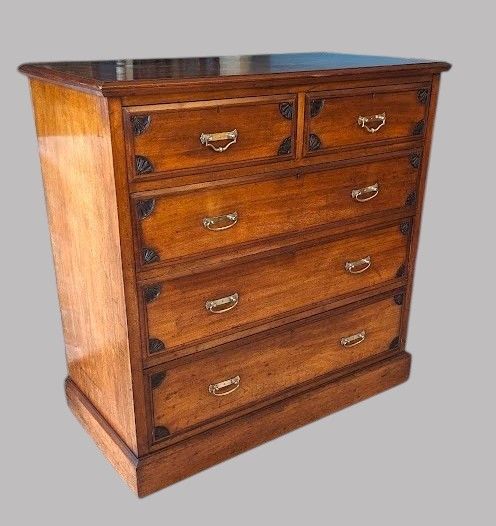
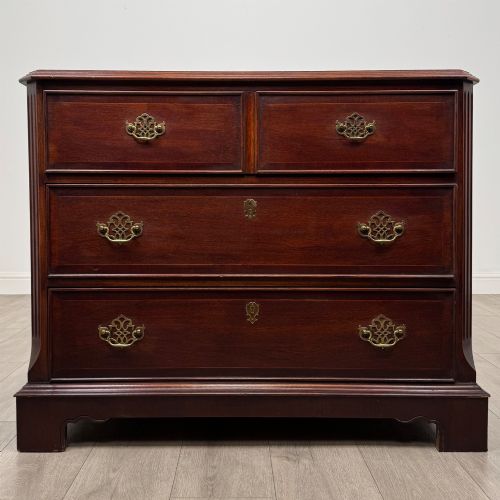
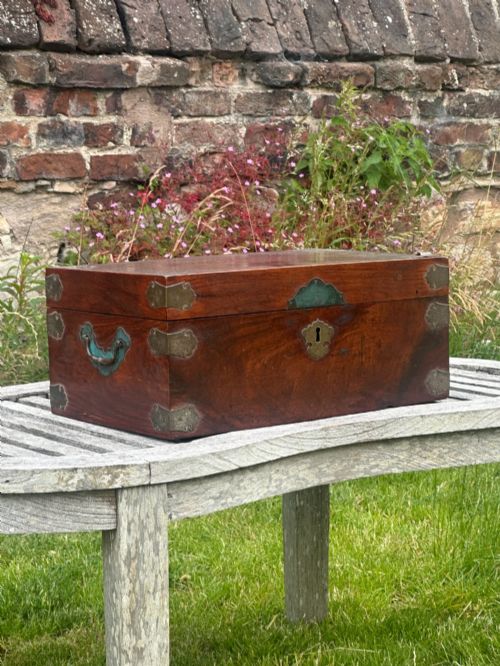
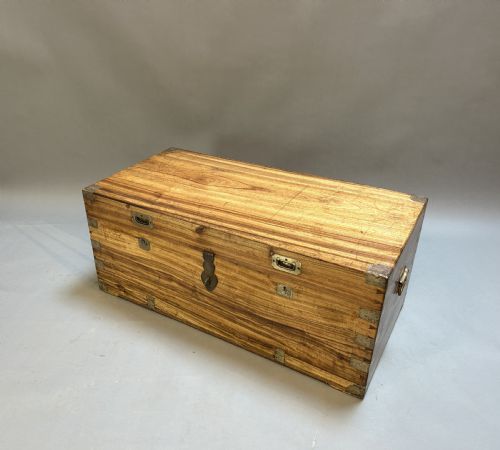
The most common versions on this page are camphor wood trunks and teak chests bound in brass, alongside occasional mahogany or walnut chests of drawers.
Origins stretch across British colonial routes, incorporating Anglo Indian craftsmanship and traditional campaign construction designed to withstand long voyages.
Materials and Construction
Carpenters utilised dense timbers such as camphor wood, teak, and mahogany to withstand humidity and heavy transit, frequently pairing them with solid brass corners, straps, and flush-fitting hardware.
Construction methods prioritised durability and modular transport, employing reinforced joints and recessed brass carrying handles to protect vulnerable edges during movement.
Judging Quality
Quality rests upon the integrity of the timber grain, the weight and finish of the original brass mounts, and the preservation of internal fittings or secondary drawers.
Superior examples maintain structural crispness in their brass bound edges and dovetail joints, reflecting master craftsmanship rather than purely utilitarian output.
The Brass Corner Wooden Chest Glossary
- Campaign trunk
- A portable chest built in sections or fitted with carrying handles for military officers on the move. These pieces prioritise structural resilience and practical transport.
- Camphor wood
- An aromatic timber frequently utilised for trunks to repel insects and protect stored textiles. Its distinctive scent remains a hallmark of these chests.
- Brass bound
- A method of reinforcing wooden corners and edges with metal plates and straps. This technique protects the chest from impacts during transit.
- Flush handle
- A recessed metal grip set level with the wood surface. This design prevents snagging and allows stacking.
Brass Corner Wooden Chest: Frequently Asked Questions
What is a brass corner wooden chest used for?
These chests originally served officers and merchants as durable luggage for transporting belongings across distant territories during long voyages.
Today, they function well as living room coffee tables, bedroom blanket boxes, or distinct storage solutions that anchor a room's decor.
How do I care for camphor wood?
Camphor wood requires minimal maintenance, benefiting primarily from stable indoor humidity and occasional dusting with a dry cloth.
Avoid placing the timber in direct sunlight to preserve the natural grain and prevent the wood from drying out.
Are these chests genuinely antique?
The pieces listed originate predominantly from the nineteenth and early twentieth centuries, encompassing Victorian and Edwardian periods.
Construction details, such as hand-cut dovetails and original brass hardware, help confirm their historical origins.
Why do these chests smell of camphor?
The distinct aroma arises from the natural oils inherent in the timber itself, which historically protected stored uniforms from moths.
This characteristic scent remains durable within the wood grain and often endures across generations of use.