


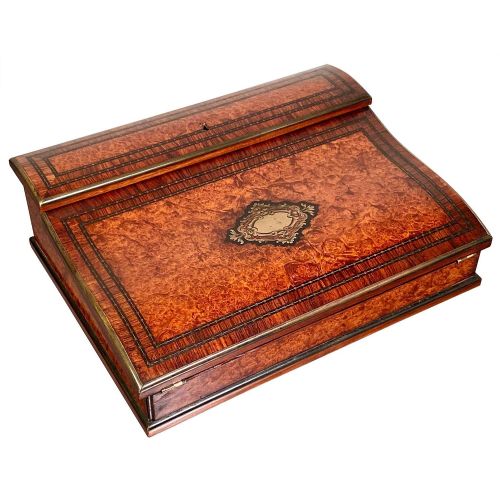

Victorian Campaign Writing Desk
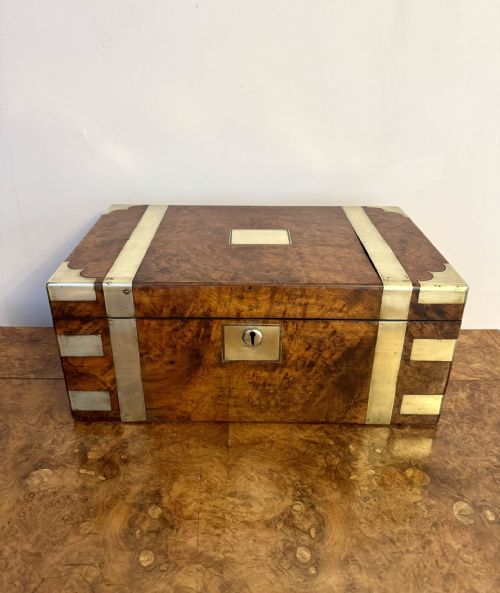
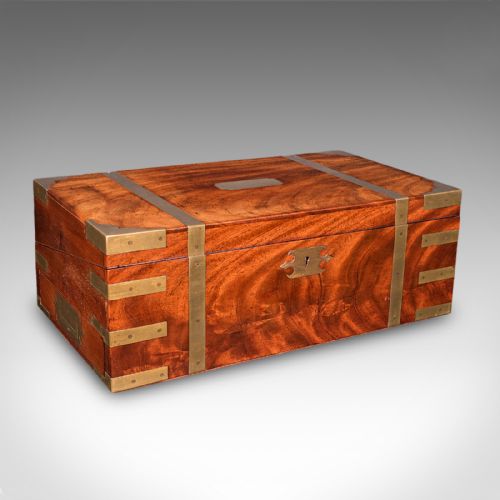
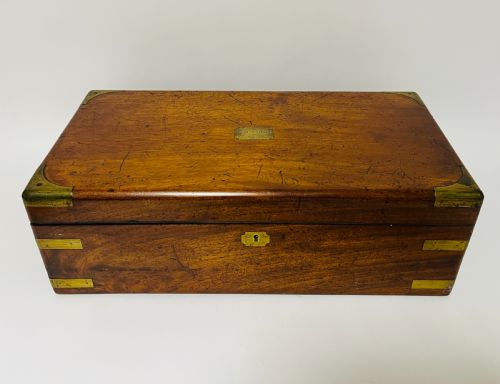
A victorian campaign writing desk is built to travel, pairing dense timbers with flush brass fittings for life on the move.
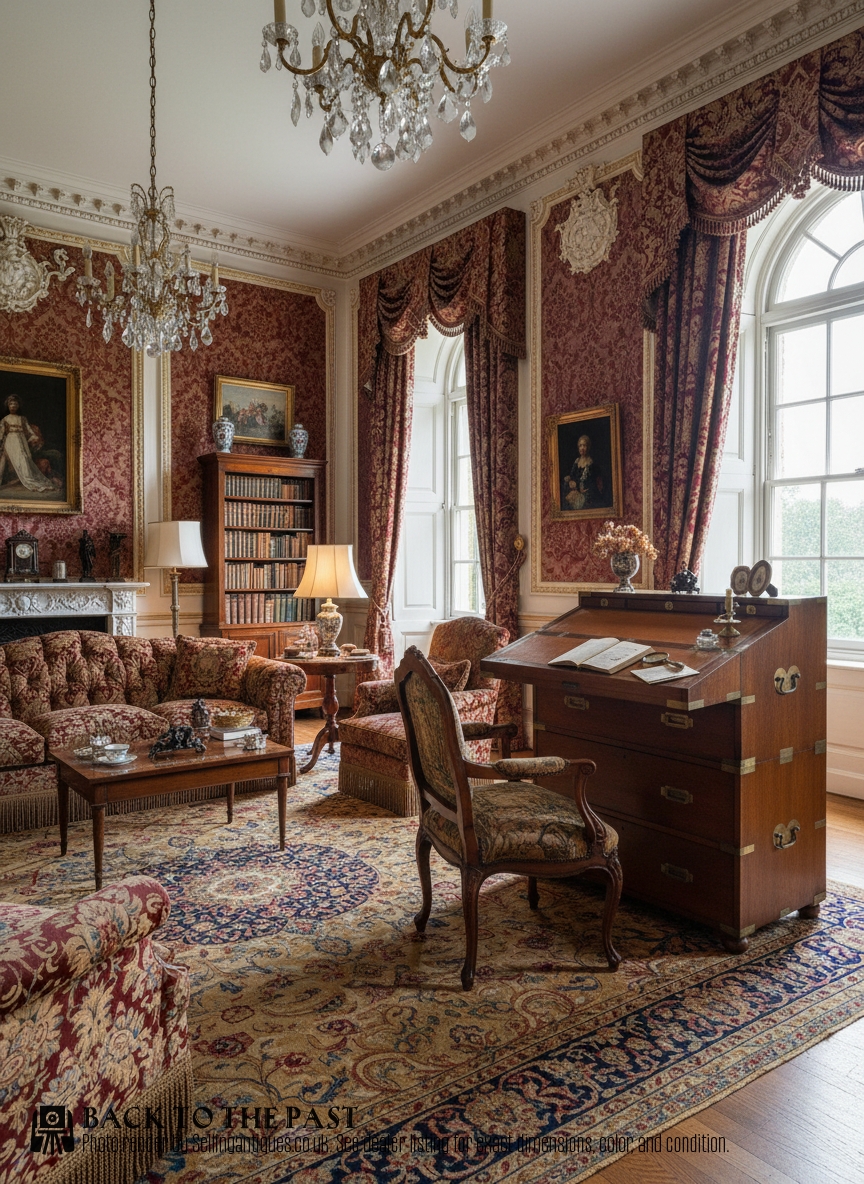
Victorian Campaign Writing Desk
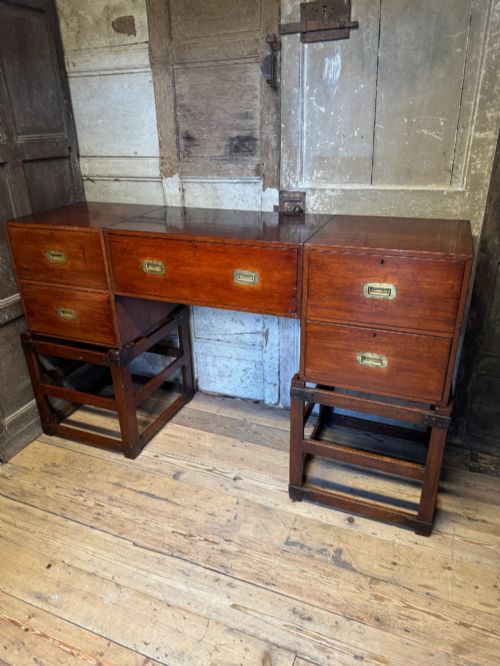
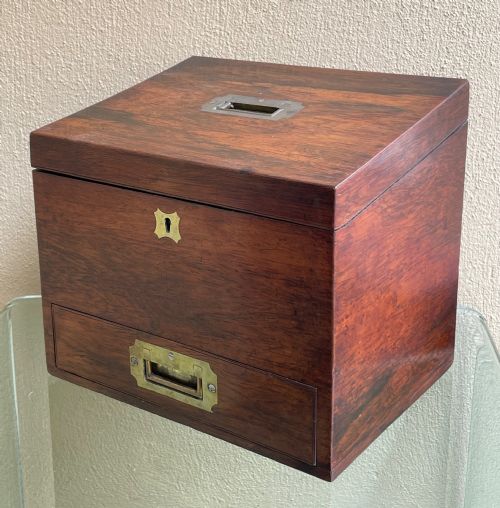
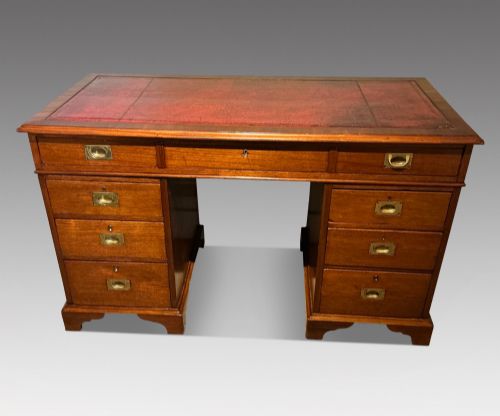
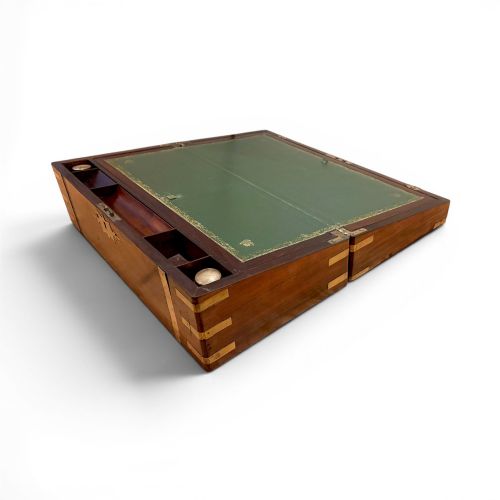
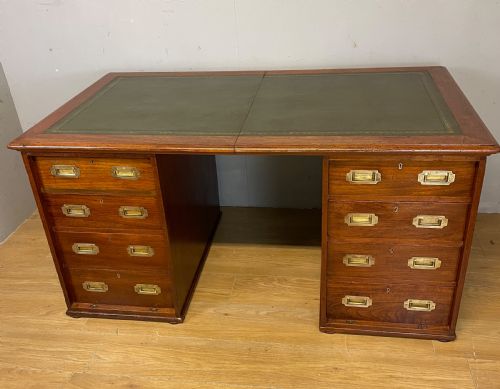
A victorian campaign writing desk encompasses portable writing slopes, lap desks, secretaire chests, and modular pedestal tables designed for easy transport. Most examples encountered here date from the nineteenth century, reflecting the needs of officers and travellers who required a functional workspace away from home.
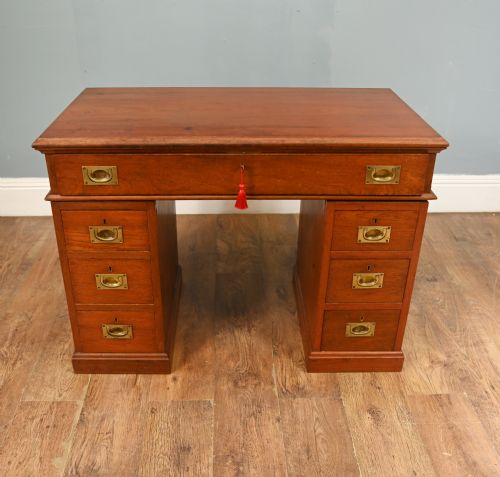
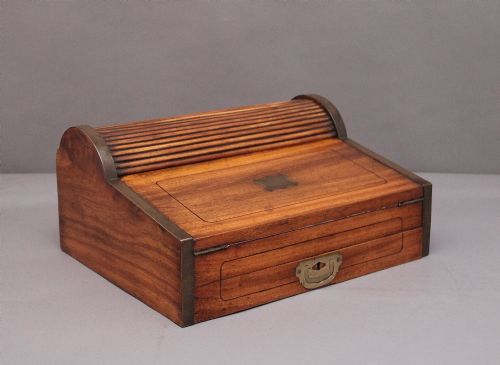
The format ranges from compact table-top boxes with fitted compartments to substantial two-part chests and pedestal desks. These objects served as mobile offices, housing correspondence, ink, and personal papers securely within fitted compartments.
Makers adapted traditional furniture forms into modular units that could be dismantled, packed, and reassembled without structural damage. Brass corners and recessed drop handles protect the edges and maintain flat surfaces for stacking.
Materials and Construction
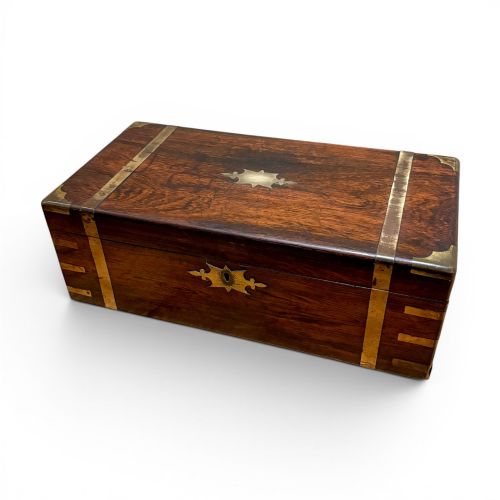
Construction relies heavily on durable tropical hardwoods such as mahogany, teak, camphor wood, and rosewood, selected for their stability in shifting climates. These timbers are reinforced with brass bound corners, strapwork, and flush-fitting hardware to withstand rough handling.
Interiors often feature fitted writing surfaces lined with leather, hidden secret drawers, and specialised compartments for inkwells and pens. Joinery utilises tight tolerances and sectional designs, allowing large chests and desks to separate into manageable transport pieces.
Listings feature camphor wood, teak, rosewood, and mahogany, alongside walnut, oak, and coromandel.
Markers of Quality
Quality rests in the precision of the brass work and the selection of timber veneers such as burr walnut, pollard oak, or coromandel. Superior pieces integrate flush hardware that sits level with the wood surface and retain working locks with original keys.
Interior complexity distinguishes standard boxes from exceptional examples, marked by hidden spring-loaded compartments, secret sovereign sections, and fitted correspondence slots. The integrity of the secondary timbers and the tightness of the sectional joints determine durability.
The Victorian Campaign Writing Desk Glossary
- Campaign slope
- A portable writing box with a hinged writing surface that folds flat, housing inkwells and stationery inside. These units sit on tables or travel inside luggage.
- Secretaire chest
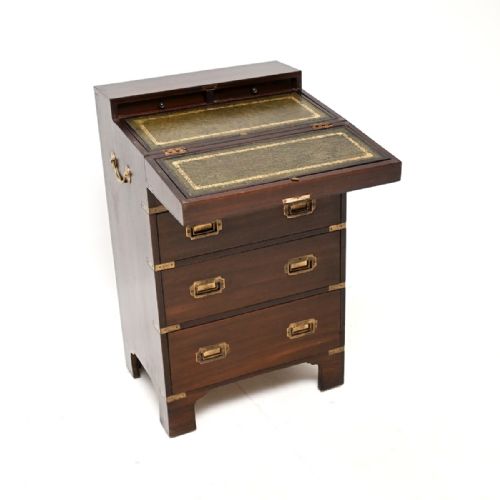
- A chest of drawers where the top drawer pulls down to reveal a fitted writing desk with small drawers and pigeonholes. This combines bedroom storage with a working surface.
- Brass bound
- Edges and corners reinforced with brass strips and corner pieces to prevent splitting during transport. This hardware sits flush with the timber.
- Secret drawers
- Hidden compartments concealed behind false panels or accessed via release mechanisms within the writing slope. They protect valuables and private documents.
Victorian Campaign Writing Desk: Frequently Asked Questions
How were campaign desks transported?
These desks and chests divide into modular sections or fold into compact boxes equipped with recessed carrying handles. The robust timber construction and brass edges protect the contents during long journeys.
Officers and officials packed these pieces into crates or strapped them onto baggage animals for transit across colonial territories. The flush hardware ensures nothing catches on ropes or canvas covers.
What is the difference between a slope and a chest?
A writing slope is a portable box placed on top of a table or desk to provide a slanted writing surface. It opens to reveal stationery compartments and inkwells.
A secretaire chest is a larger freestanding piece of furniture incorporating a pull-down desk drawer. It functions as both a chest of drawers and a permanent writing station.
Which woods were used for campaign furniture?
Workshops utilised dense, resilient hardwoods capable of withstanding humidity and temperature changes. Mahogany, teak, camphor wood, and rosewood appear frequently across these pieces.
Exotic veneers like burr walnut, pollard oak, and coromandel decorate finer examples. These timbers resist warping and provide a stable foundation for brass mounts.
How do I identify secret compartments?
Secret compartments usually hide behind false partitions inside stationery wells or beneath removable pen trays. Sliding panels and hidden latches release these private spaces.
Owners accessed them by lifting specific dividers or pressing spring-loaded catches within the interior pigeonholes. They secure valuables and personal letters.