


Victorian Campaign Drawers
Victorian campaign drawers are portable modular storage pieces designed for transport by officers, offering robust construction and disciplined organisation that suit modern interiors.

Victorian Campaign Drawers
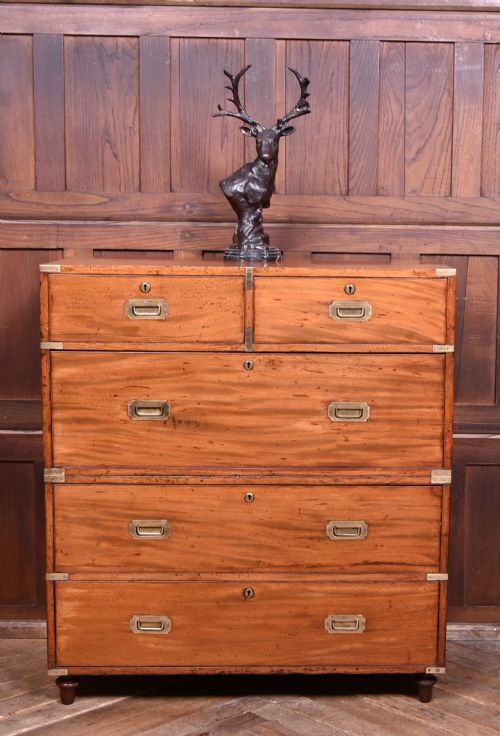
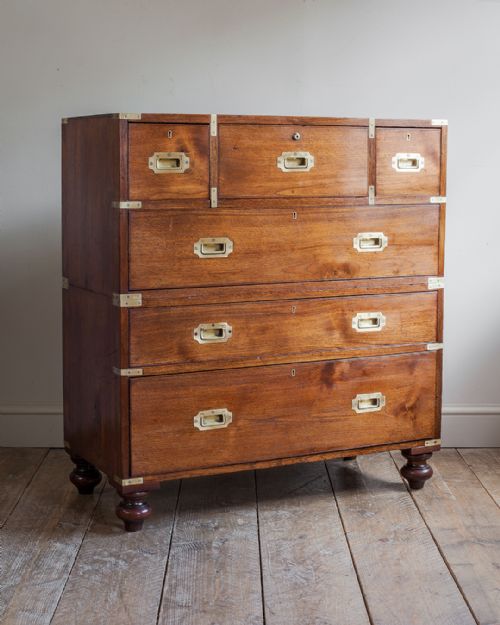
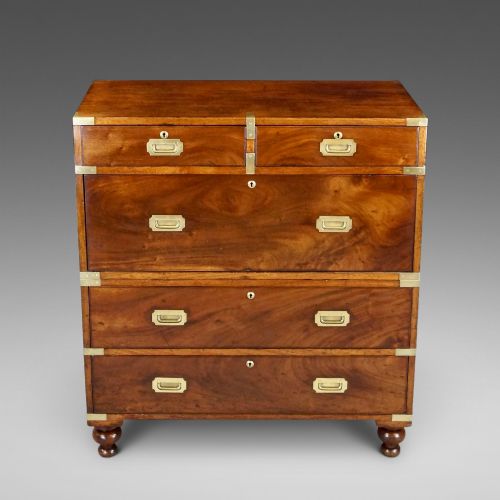
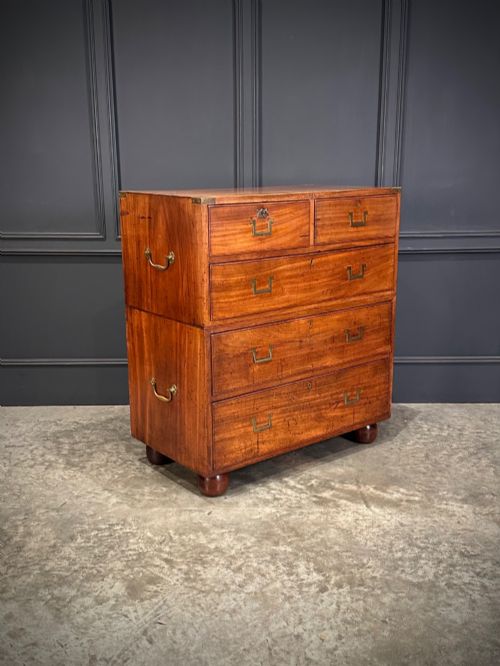
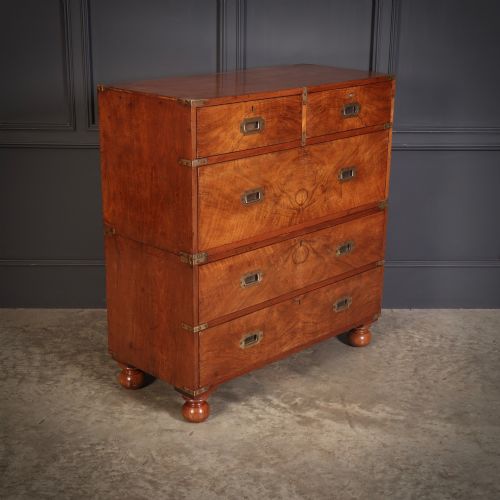
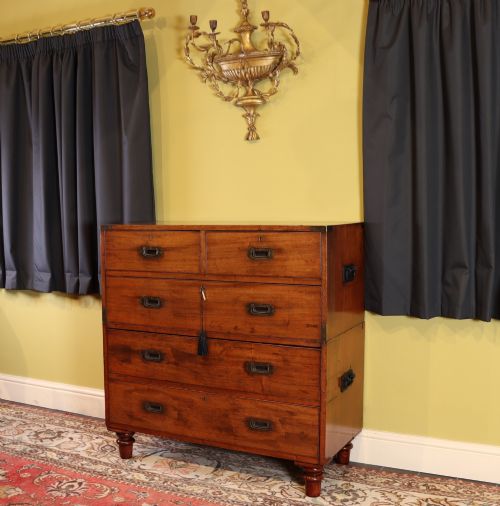
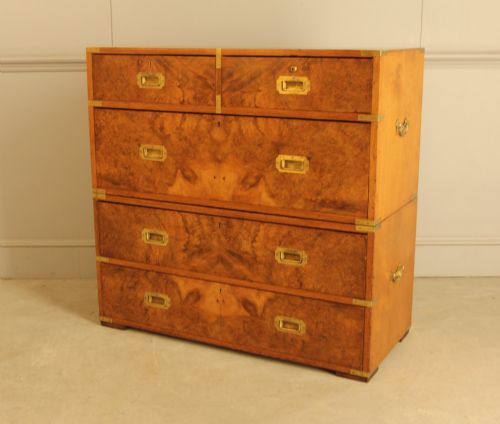
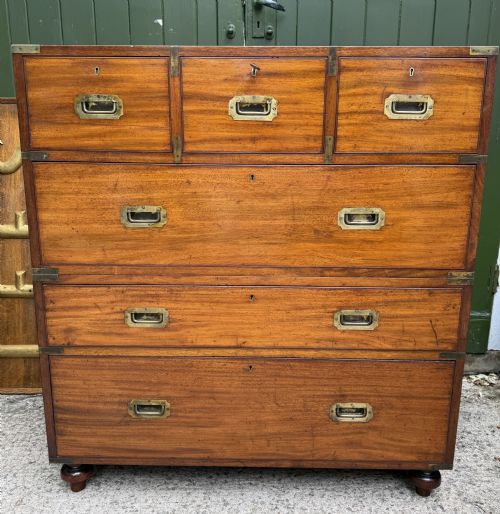
Victorian campaign drawers are modular chests built in two separate sections to facilitate travel and relocation during the nineteenth century. These items typically feature flush brass corners, recessed handles, and screw-in feet designed to prevent damage during transit.
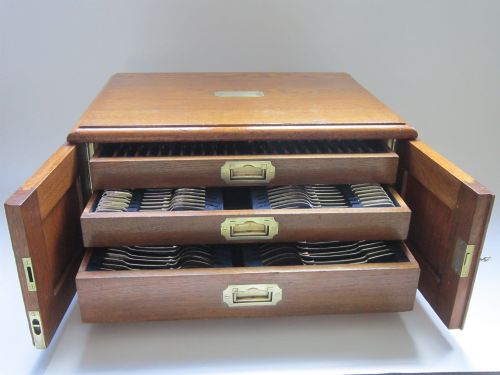
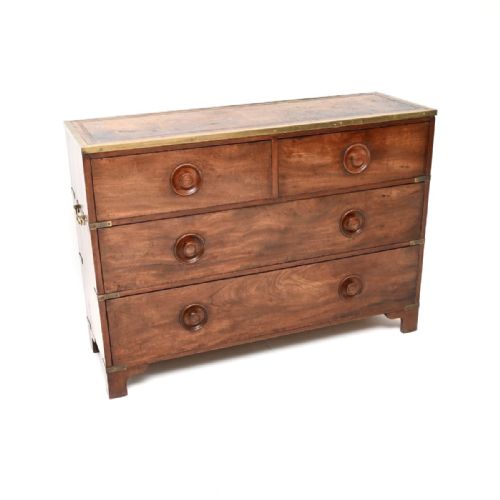
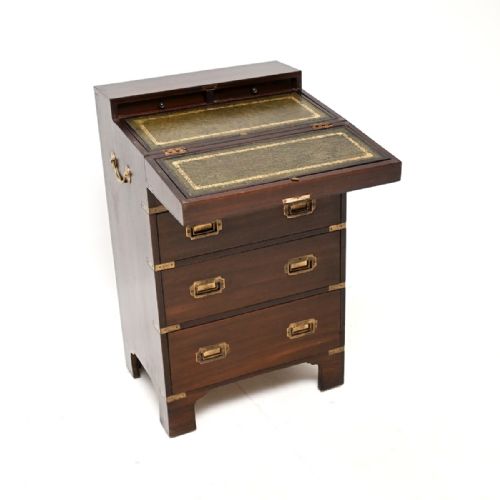
The versions most frequently encountered on this page are constructed from dense timbers such as mahogany, teak, and camphor wood, often arranged in a two-part chest configuration. Buyers will also discover variants including secretaire chests, writing slopes, and smaller desktop units.
Originating largely from military contexts, these storage pieces reflect practical utility combined with formal officer requirements. Their modularity allows each half to be moved independently before being locked together with internal brass straps.
How They Were Made
Makers utilised resilient tropical hardwoods including mahogany and teak to withstand frequent journeys across varied climates without warping. Camphor wood was frequently chosen for its natural insect-repellent properties.
Brass hardware, including corner brackets, binding strips, and flush drop handles, was screwed directly into the timber to protect vulnerable edges from impact. These metal fittings also served to reinforce the structural joints of the two-part carcass.
The documented periods span the early nineteenth century through to the late Victorian era, with select pieces continuing into the early twentieth century.
What Varies in Quality
The standard of timber selection and grain figuring marks the division between functional military issue and higher-status officer commissions. Fine examples employ carefully matched veneers of burr walnut or figured mahogany across the drawer fronts.
The precision of the brass work and the integration of internal mechanisms, such as secretaire drawers with fitted writing surfaces, distinguish superior workshops. Robust internal framing and original recessed hardware indicate a higher grade of manufacture.
S. W. Silver & Co. London & Liverpool·Ross & Co.·Army & Navy·Graves and Sons of Devonport·Arthur Foley & Son of Salisbury
The Victorian Campaign Drawers Glossary
- Secretaire chest
- A cabinet featuring a pull-out drawer with a hinged writing flap that conceals small compartments and pigeonholes. This hybrid form allowed officers to maintain correspondence while on the move.
- Two-part chest
- A modular case piece constructed as distinct upper and lower sections that stack together. This design halved the weight and bulk for carriage on ships or wagons.
- Recessed handle
- A pull handle set into a shallow cavity carved into the drawer face so it does not project beyond the surface. This prevented snagging during loading and transport.
- Brass binding
- Flat strips of brass screwed around the exterior edges and corners of a chest to absorb knocks. It forms a distinct grid pattern characteristic of campaign furniture.
- Camphor wood
- An aromatic timber utilised for campaign chests intended for tropical service. Its strong scent helped protect stored uniforms and papers from pests.
Victorian Campaign Drawers: Frequently Asked Questions
Why are these chests split into two sections?
The two-part construction was engineered to make heavy furniture manageable for transport by pack animal, wagon, or ship during military campaigns.
Each half was fitted with side carrying handles so soldiers or servants could lift and stow the units independently before securing them together.
How do I identify a genuine period campaign chest?
Look for recessed brass hardware, flush side carrying handles, and carcass construction split horizontally into upper and lower modules.
Period pieces exhibit traditional dovetail joinery, dense secondary timbers, and evidence of brass strapping designed to absorb the rigours of travel.
What is the difference between a standard chest and a secretaire chest?
A standard chest provides uniform drawers for clothing and equipment, whereas a secretaire variant incorporates a dedicated writing compartment.
Opening the middle drawer front reveals a leather-lined writing surface alongside small interior drawers and pigeonholes for documents.
Where should I place a campaign chest in a modern home?
These compact and structurally robust chests suit bedrooms, studies, and living spaces as statement storage units.
Their flat tops and durable timber surfaces function well for displaying lamps or books while providing deep drawer capacity.