
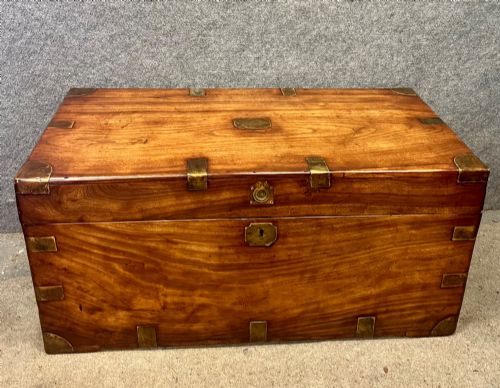
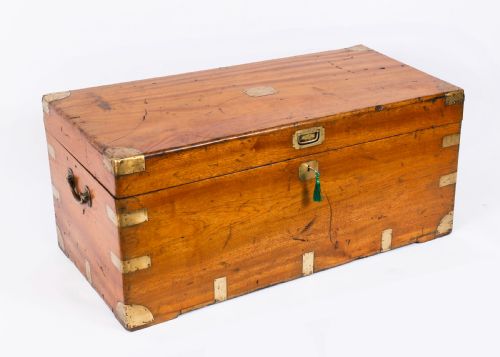


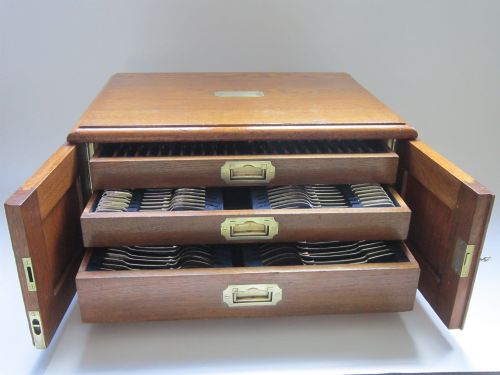
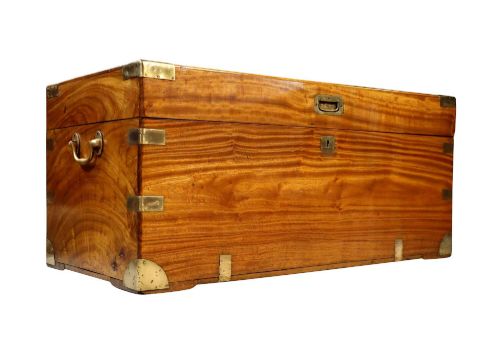
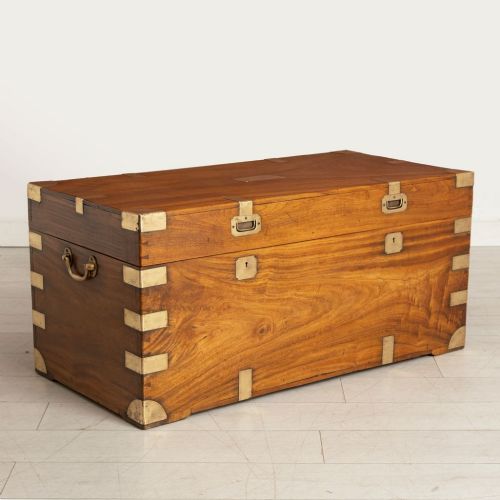
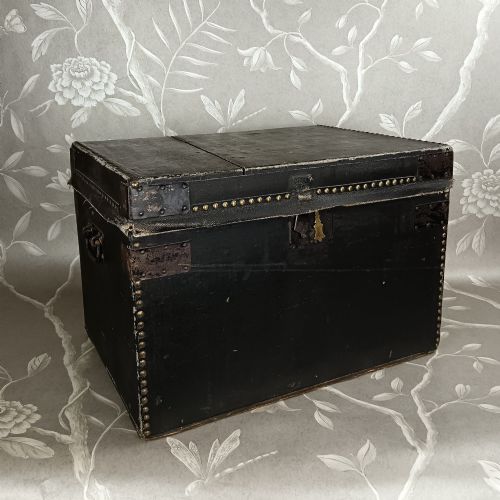
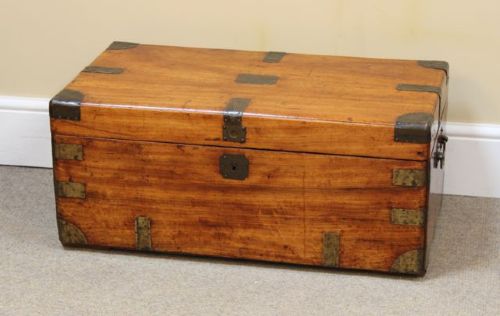
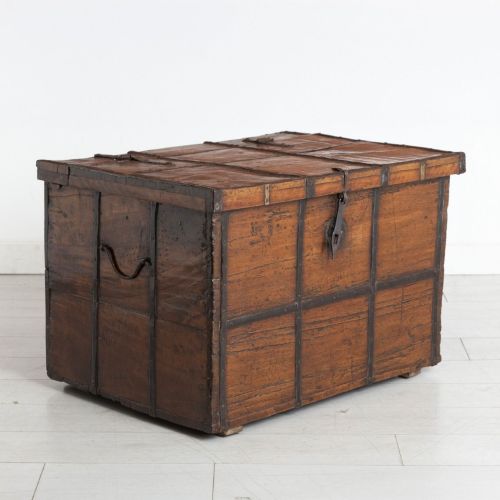
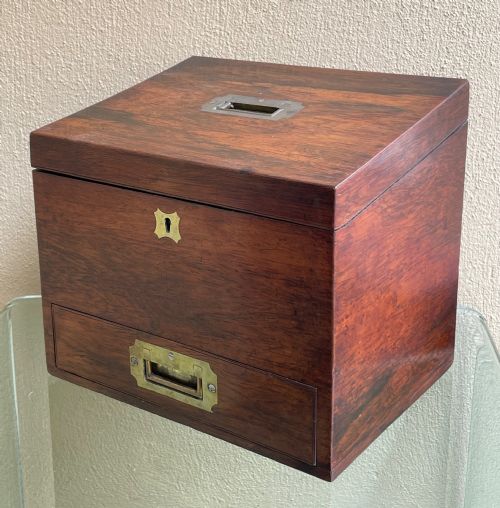
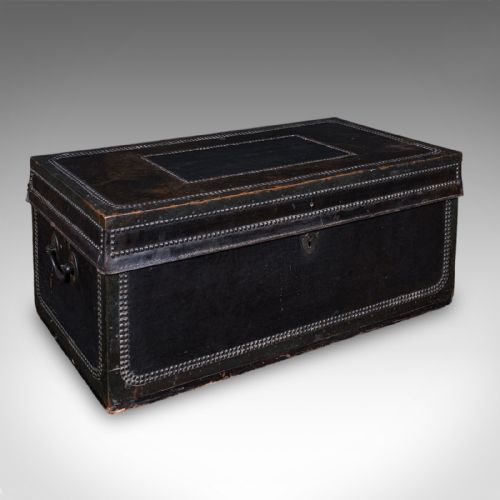
Victorian Campaign Box
A victorian campaign box offers portable utility and robust timber construction designed for travel, housing correspondence and valuables with military precision.
Forms and Origins
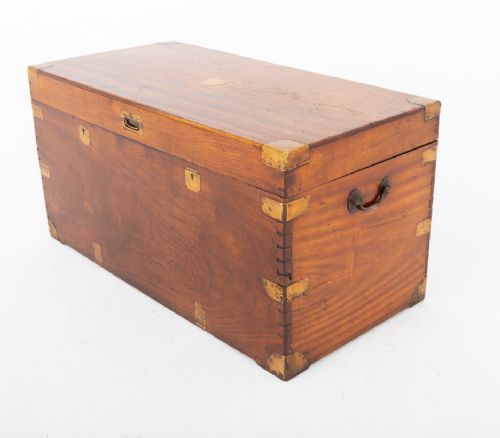
A victorian campaign box primarily encompasses writing slopes, lap desks, and correspondence boxes built for military officers and travellers during the nineteenth century. These pieces range from compact desk-top boxes to large storage trunks and chests.
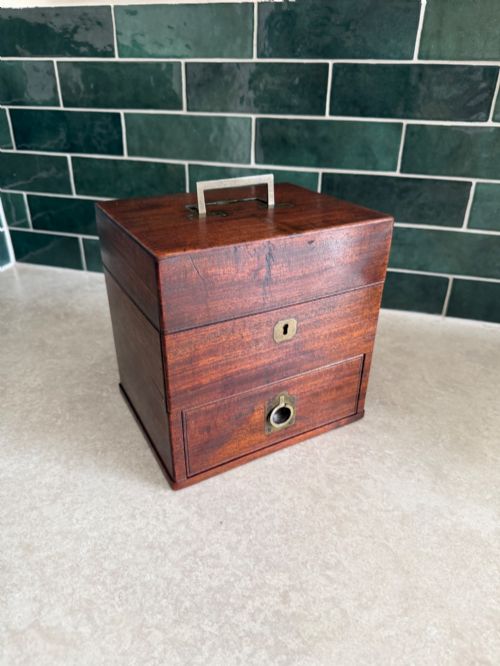
The mahogany writing slope with brass binding dominates the current selection, reflecting the practical needs of officers on the move. Variations include stationery boxes, metamorphic camphor pieces, and oak desk boxes intended for portable organisation.
Materials and Construction
Craftsmen utilised durable timbers including mahogany, teak, camphor wood, oak, walnut, rosewood, and mulberry wood to withstand arduous journeys. Brass corners, straps, and flush handles reinforce the edges and protect the wood against heavy handling.
Interiors frequently feature fitted leather writing surfaces, secret drawers, and compartments designed for inkwells, papers, and jewellery. Boxwood inlay adds fine detail to teak surfaces on select Anglo-Indian examples.
Retail Price Guide 2026
Typical UK retail prices for victorian campaign box, calculated from the Sellingantiques database of over a million retail prices indexed since 2003. This retail price guide relies exclusively on Sellingantiques data; no external sources or auction records are used, so the figures do not describe the wider market.
Several camphor wood boxes retain a distinct herbal aroma meant to deter insects during nineteenth-century voyages.
Standards of Execution
The calibre of a piece rests on the density of the primary timber, the precision of the brass work, and the complexity of the interior fittings. Heavier woods and sophisticated metamorphic mechanisms distinguish finer examples from standard utility boxes.
Execution of the joinery and the survival of original leather interiors, working keys, and secret compartments elevate the standing of a piece. Subtle differences in brass inlay and the presence of camphor or teak construction indicate regional colonial workshops.
The Victorian Campaign Box Glossary
- Campaign slope
- A portable desk hinged in the middle that folds flat to create a sloping writing surface.
- Flush handle
- A recessed metal handle set into the surface of a box so it does not catch during transit.
- Secret drawer
- A hidden compartment concealed behind false panels or accessed via a sequence of internal releases.
- Brass bound
- Edges and corners reinforced with brass strips to protect timber boxes from the rigours of travel.
- Stationery box
- A vertical desk accessory designed to organise letters, envelopes, and paper documents.
Frequently Asked Questions
What is a campaign box?
A campaign box is a portable chest or desk designed for military officers and travellers during the nineteenth century.
These pieces feature robust timbers and protective brass hardware to endure long journeys.
How were writing slopes used?
Writing slopes provided a stable, angled surface for drafting letters while away from home.
Internal compartments stored inkwells, pens, and paper securely during transit.
Which woods were used?
Makers utilised dense timbers such as mahogany, teak, camphor wood, oak, and walnut.
These materials resisted warping and offered durability in colonial climates.
How to spot secret drawers?
Secret drawers are concealed behind removable partitions or false bottoms within the stationery compartment.
Owners accessed them by lifting specific internal panels or releasing hidden spring catches.