



Victorian Cabriole Leg Settee
These Victorian cabriole leg settees combine curvaceous wooden framing with period upholstery, offering substantial nineteenth-century seating for a formal drawing room.
Victorian Cabriole Leg Settee
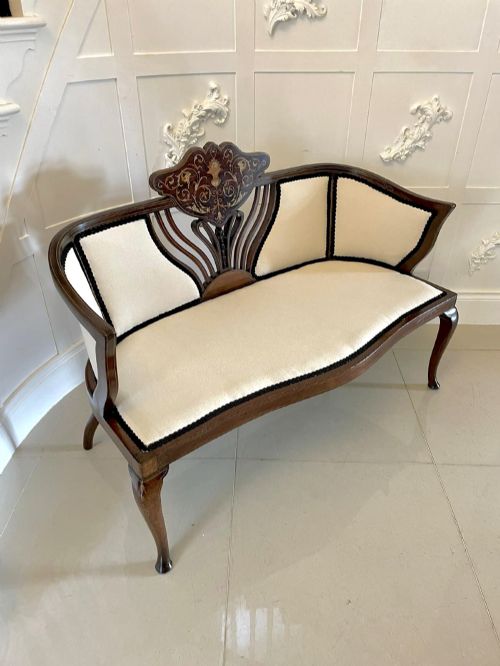
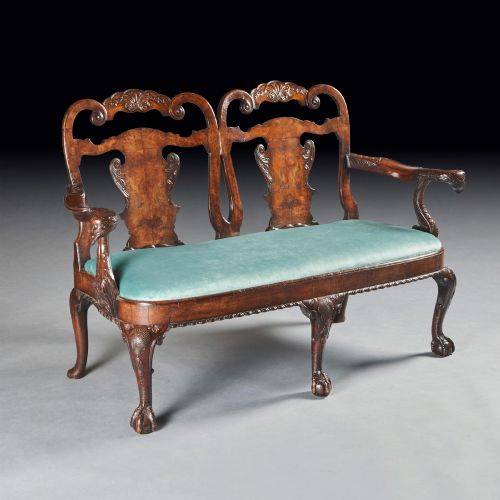
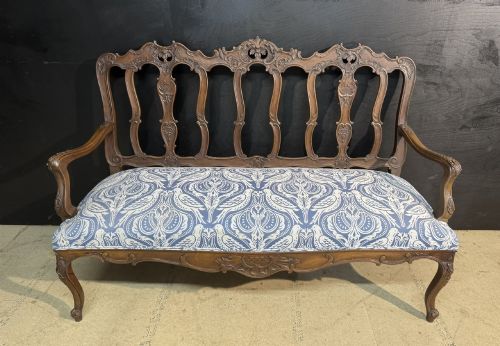
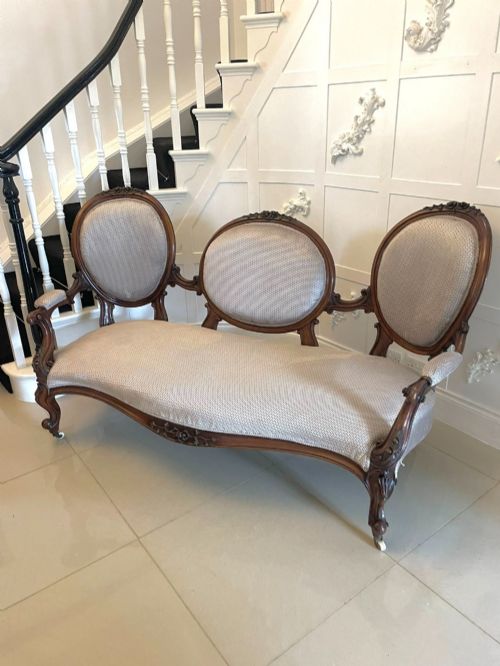
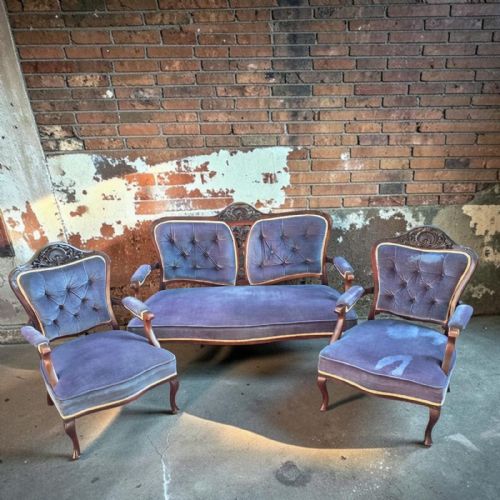
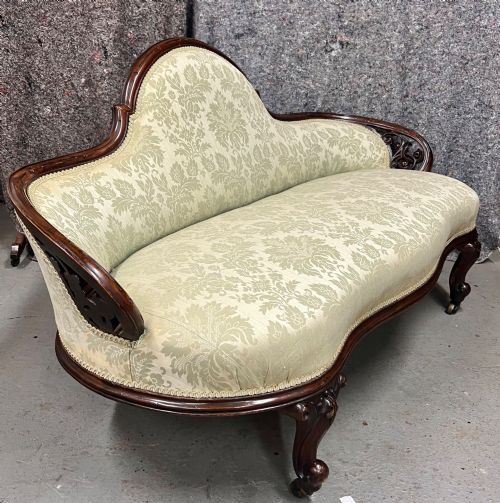
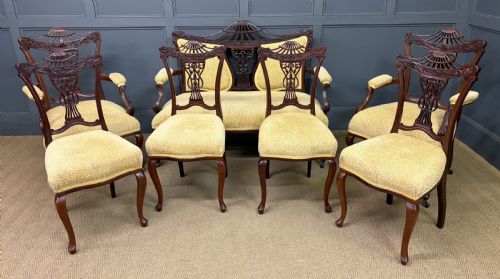
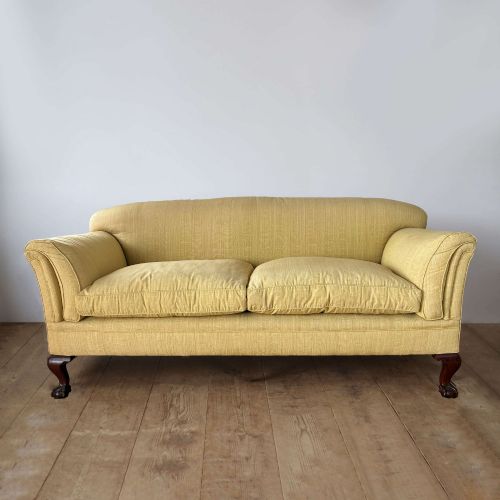
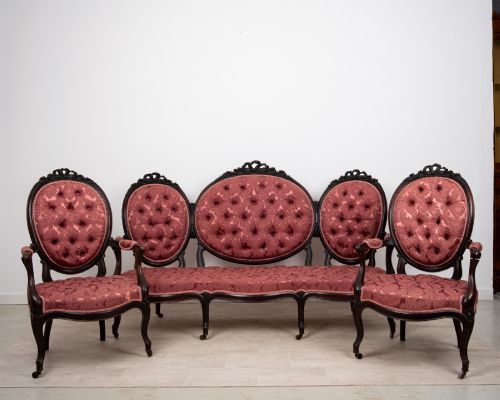
A Victorian cabriole leg settee presents a distinctive curved wooden support beneath a padded seat, spanning forms from twin-chair back sofas to larger three-piece salon suites. You encounter various nineteenth-century interpretations here, ranging from mid-century walnut cameo backs to late-century mahogany frameworks.
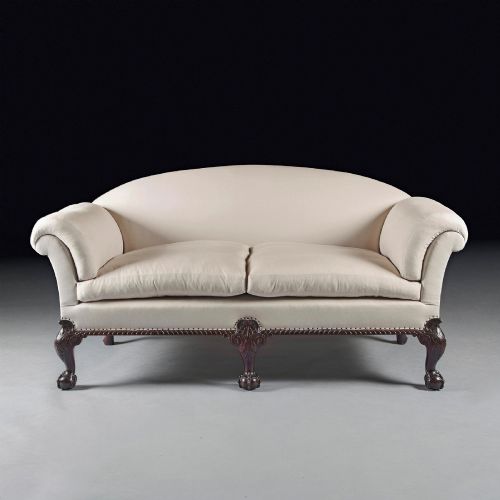
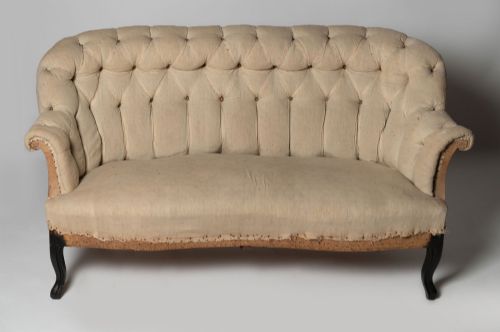
The aesthetic draws heavily on revival idioms, connecting direct Victorian manufacture with earlier George II, Chippendale, and Louis XV design influences. Makers frequently incorporated scroll arms, deep buttoned upholstery, or elaborate carved woodwork into these seating arrangements.
Originating across British and continental workshops, these pieces function as focal drawing room furniture or country house couches. The selection encompasses both intimate two-seater configurations and expansive seven-piece matching suites.
Materials and construction methods
Frames rely predominantly on dense hardwoods such as mahogany, walnut, and rosewood, chosen for their ability to hold intricate carved detail along the showwood borders and cabriole supports. Cabinetmakers shaped these timbers using traditional joinery before applying decorative veneers or polished finishes.
Upholstery techniques involve durable fabric coverings, including damask, velvet, textile, and hand-dyed leather, stretched over supportive internal webbing and springs. Brass accents and detailed inlay work occasionally punctuate the wooden chassis to enhance the visual depth.
Listings feature woods spanning mahogany, walnut, and rosewood alongside fabrics ranging from damask and velvet to hand-dyed leather.
Distinguishing quality across the range
The calibre of a Victorian cabriole leg settee rests primarily on the crispness of its hand-carved woodwork and the integrity of its timber frame. Superior examples demonstrate fluid lines in the cabriole supports and substantial timber thickness without structural compromise.
Upholstery execution and the selection of covering materials further divide standard production from exceptional pieces. Salon suites and matched pairs that retain their original proportions and cohesive revival detailing represent the upper tier of the inventory.
Howard and Sons·Butlers of Dublin·Morison and Co Edinburgh
The Victorian Cabriole Leg Settee Glossary
- Cabriole leg
- A furniture support that curves outward in a convex arc before tapering inward in a concave sweep toward a foot. This characteristic form derives from ancient animal leg motifs and anchors much nineteenth-century seating design.
- Cameo back
- An oval or shield-shaped upholstered panel set within an exposed wooden frame resembling a cameo brooch. This specific silhouette defines many mid-nineteenth-century drawing room sofas.
- Showwood
- Exposed polished timber frame surrounding the upholstered portions of a chair or settee. Cabinetmakers utilised this technique to display high-grade walnut or mahogany alongside the fabric.
- Salon suite
- A coordinated set of seating furniture comprising a settee accompanied by matching armchairs for a formal parlour. These groupings share identical wood species, carving motifs, and upholstery fabrics.
- Scroll arm
- An upholstered or wooden armrest that rolls outward in a spiral configuration. This feature appears frequently on country house couches and revival settees.
Victorian Cabriole Leg Settee: Frequently Asked Questions
What is a cabriole leg?
A cabriole leg is a curved furniture support that bows outward at the knee and tapers inward toward the foot. This design mimics the natural shape of an animal's leg and provides structural stability.
Craftsmen carved these flowing contours directly from solid hardwoods like mahogany and walnut to frame nineteenth-century seating.
How do I identify a Victorian settee?
Victorian settees are identified through their distinct nineteenth-century revival styles, exposed showwood frames, and specific upholstery details like deep buttoning. They often incorporate walnut or rosewood timbers shaped into cameo backs or scroll arms.
Examining the underlying construction methods and timber ageing helps confirm the nineteenth-century production period.
Where were these settees used?
These settees served as primary seating in nineteenth-century drawing rooms, formal parlours, and country house reception spaces. Larger salon suites accommodated guests during formal gatherings.
Smaller variants also functioned as window seats or bedroom couches within larger domestic interiors.
How should I care for antique upholstery?
Antique upholstery requires gentle cleaning using appropriate methods suited to textiles such as velvet, damask, or hand-dyed leather. Protecting the fabric from direct sunlight prevents fading and degradation of the historical fibres.
Maintaining stable indoor humidity also preserves the underlying wooden frames and internal webbing.