
Victorian Burr Wood Table
When you search for a victorian burr wood table, you seek the rich, swirling grain patterns characteristic of 19th-century craftsmanship.
Victorian Burr Wood Table
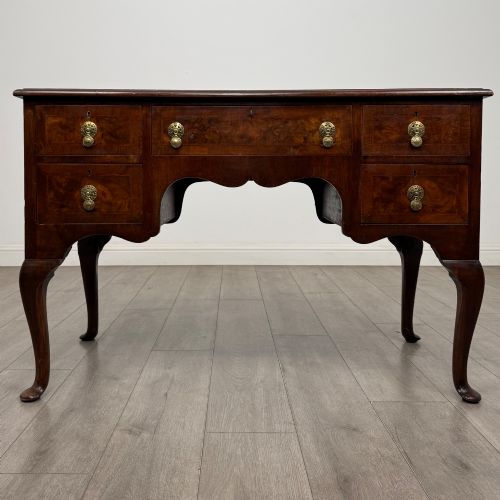
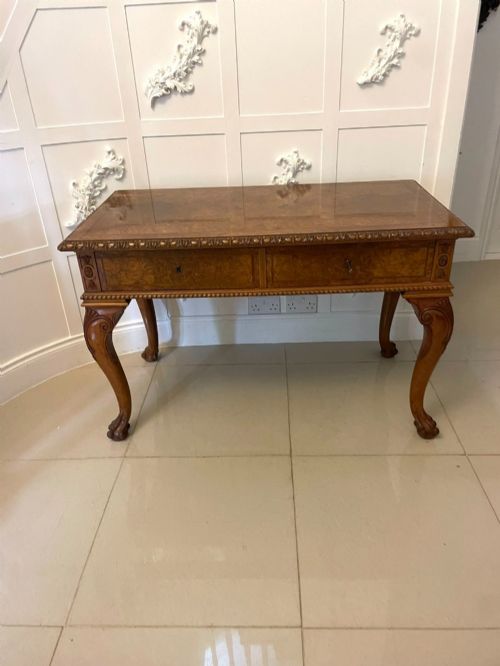
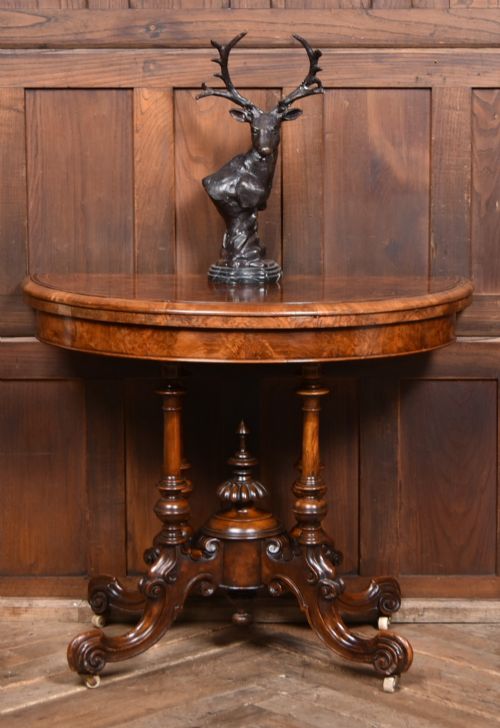
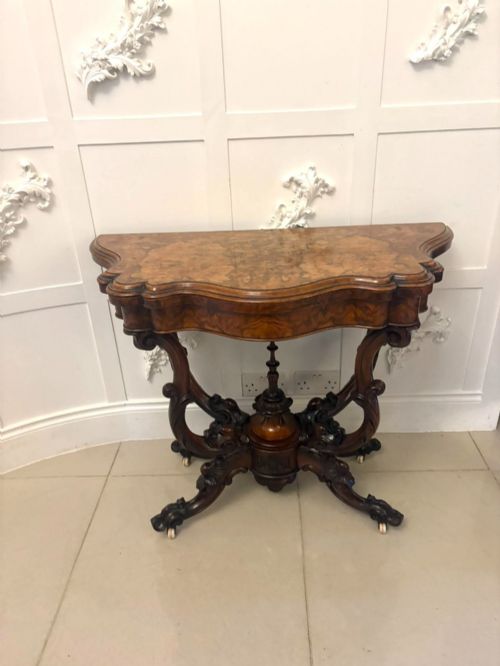
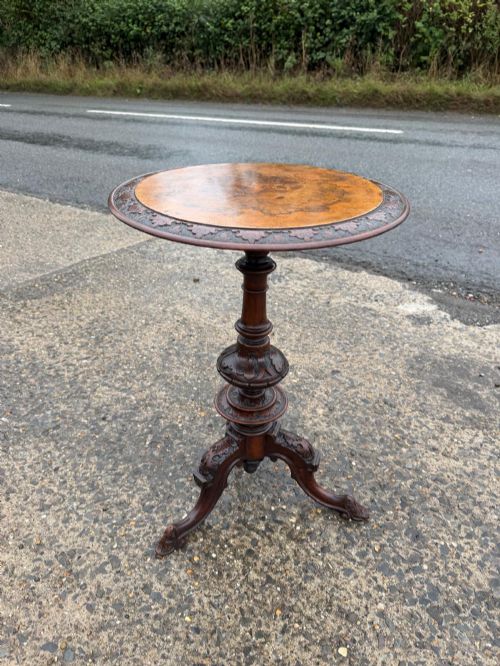
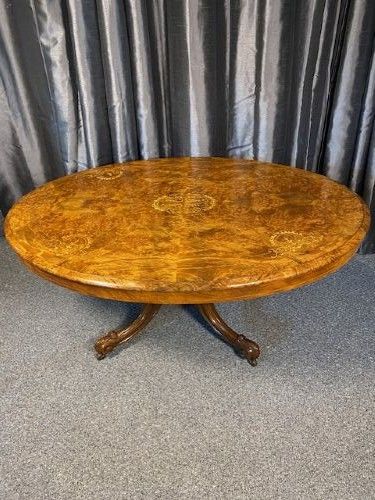
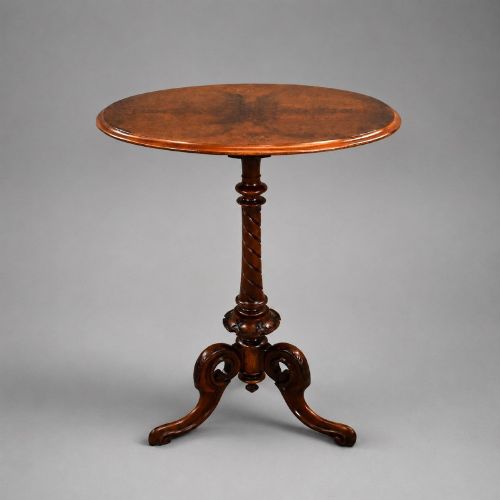
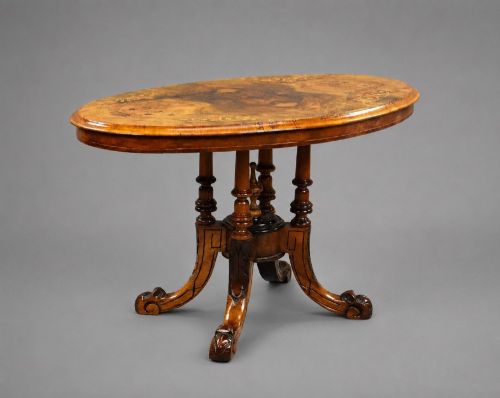
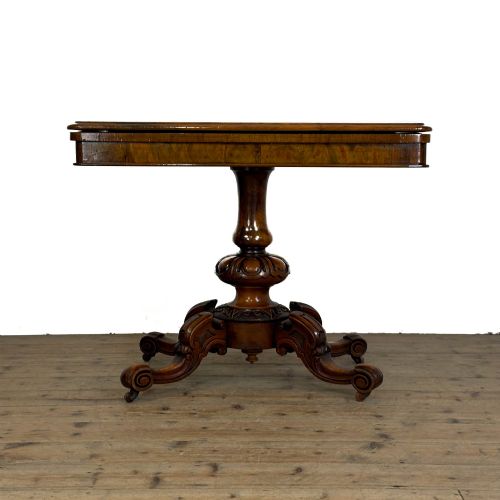
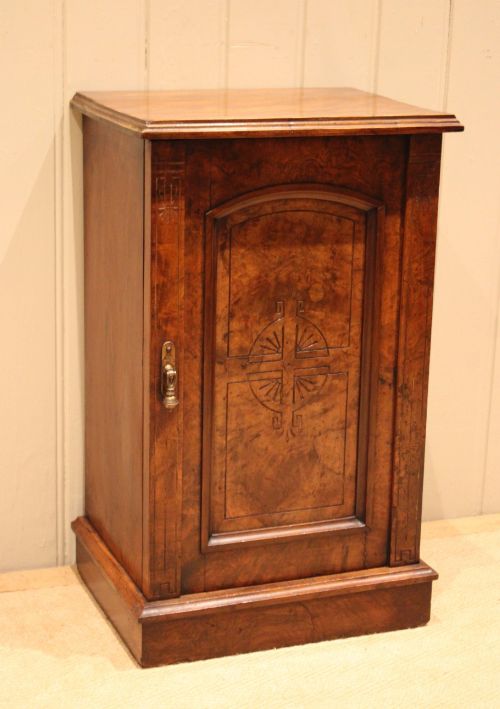
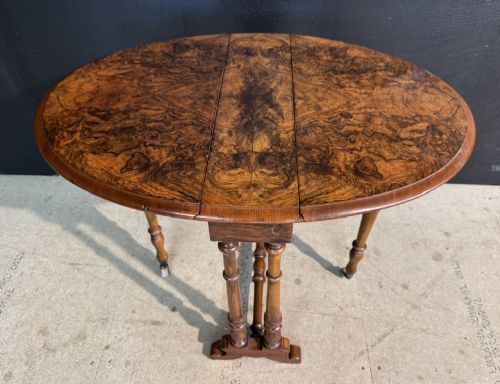
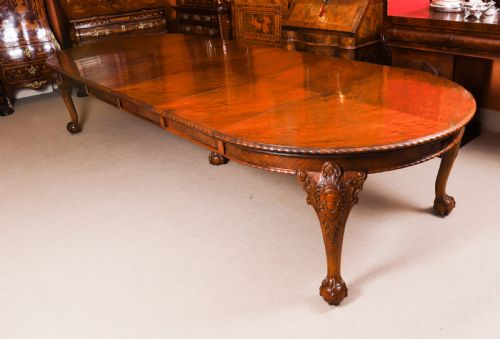
A victorian burr wood table brings distinct figured wood grain into domestic spaces, most frequently appearing as coffee tables, occasional tables, and fold-over card or games tables. The inventory shows pieces originating across the 19th Century, particularly from the Victorian period, alongside related forms like writing tables, desks, and console tables.
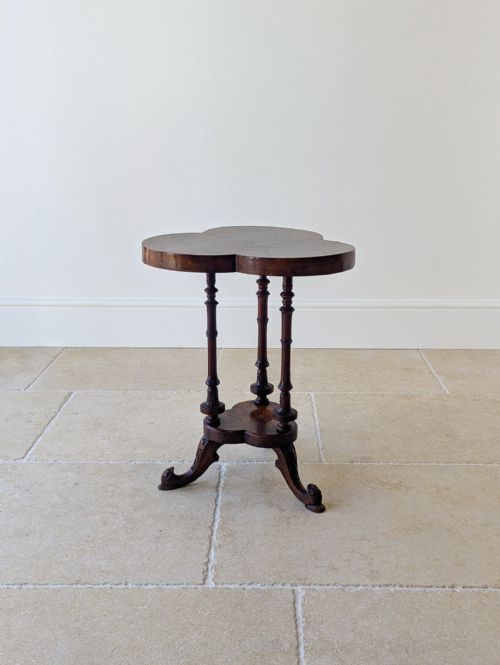
Buyers encounter smaller side tables and lamp tables alongside larger centre tables and dining tables. The selection also includes specialist forms such as sewing tables, work tables, and occasional tables with tripod bases or trefoil shapes.
Origins span standard Victorian production as well as revival styles like Queen Anne and Louis Philippe. Construction utilises rich timbers selected primarily for decorative impact in formal and informal rooms.
How they were made
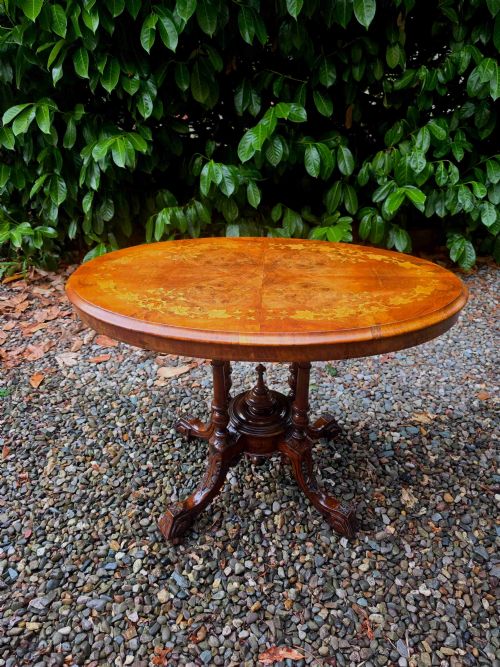
Cabinet makers utilised burr walnut, burr yew, and burr ash veneers applied over solid secondary timbers to produce swirling, highly figured table tops. These decorative surfaces were frequently enhanced with contrasting inlay and crossbanding in materials such as boxwood, satinwood, tulipwood, and kingwood.
Structural elements incorporated brass mounts, carved wooden bases, pedestal supports, and tripod legs. Joinery traditions of the period combined stability with elaborate shaping, seen in serpentine edges, fold-over mechanisms, and carved details.
The inventory records pieces incorporating boxwood stringing, kingwood crossbanding, and occasional brass mounts across Victorian periods.
What varies in quality
Quality in a victorian burr wood table rests upon the density and visual complexity of the burr grain utilised across the primary surfaces. Finer examples display meticulous matching of the veneer sections and precise contrasting stringing or marquetry inlay.
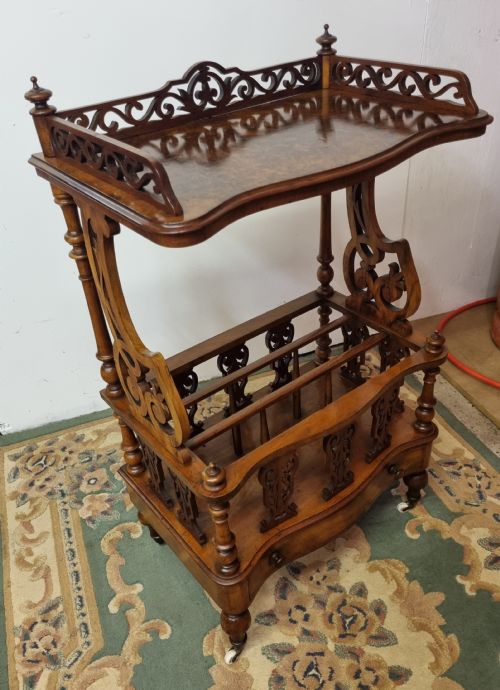
Construction standards appear in the execution of carved elements, such as pedestal bases or basket supports, and the smooth operation of functional components like fold-over tops and drawers. The integration of secondary timbers and the crispness of edge banding further distinguish superior pieces from standard workshop production.
Maple and Co·Gillows
The Victorian Burr Wood Table Glossary
- Burr wood
- Wood harvested from tree growths where the grain has grown in a deformed, swirling manner. This creates complex, highly decorative patterns prized by 19th-century cabinet makers.
- Crossbanding
- A strip of veneer applied around the border of a table top with the grain running perpendicular to the centre. It creates a neat visual frame for the central burr panel.
- Marquetry
- The art of applying pieces of veneer to a structure to form decorative patterns and pictures. It often incorporates varied timbers like boxwood and satinwood.
- Fold-over table
- A dual-purpose table featuring a hinged top that opens out to double its surface area. These were commonly used for card games or writing.
- Tripod base
- A table support consisting of three legs radiating from a central pillar. This form is typical of smaller occasional and wine tables.
Victorian Burr Wood Table: Frequently Asked Questions
How were card tables used?
Card tables served households during evening entertainments for games such as whist or bridge. Their fold-over tops allowed them to sit compactly against a wall when not in use.
When opened, the hinged top often revealed a baize-lined playing surface, supported by a swing leg or a central pivoting mechanism.
Where should I place an occasional table?
Occasional tables suit living spaces as lamp stands, side pieces, or small coffee tables. Their compact proportions allow them to sit beside seating or in hallways.
Care should be taken to keep antique timber away from direct heat sources and strong sunlight to protect the fragile veneer and polish.
How do I identify a Victorian table?
Identifying a Victorian table involves examining the timber selection, construction methods, and hardware typical of the mid to late 19th century. Characteristic woods include burr walnut paired with secondary timbers like mahogany.
Stylistic cues often reference revival movements such as Queen Anne or Louis Philippe, combined with period specific joinery and inlay techniques.