





Victorian Burr Walnut Lamp Table
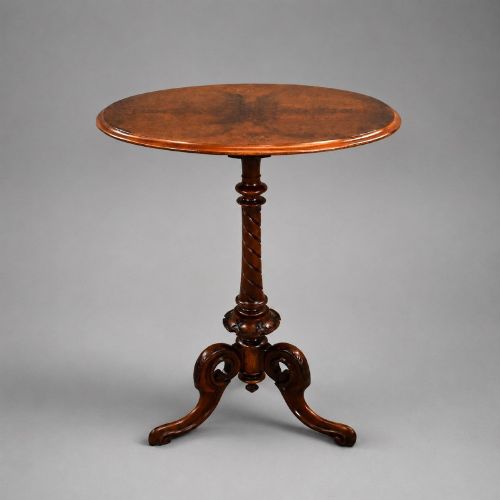
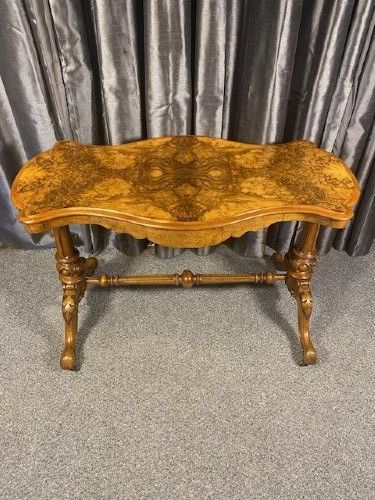
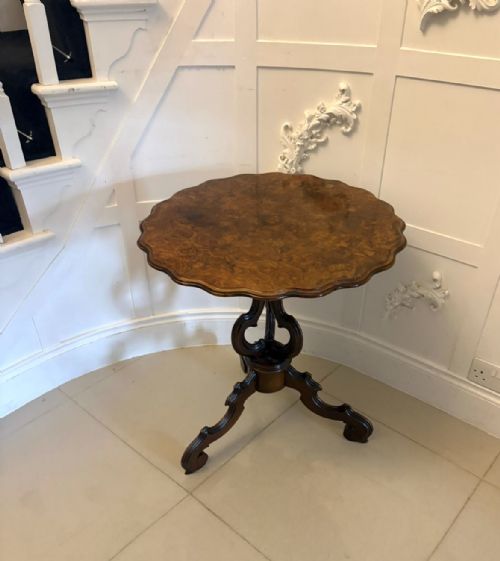
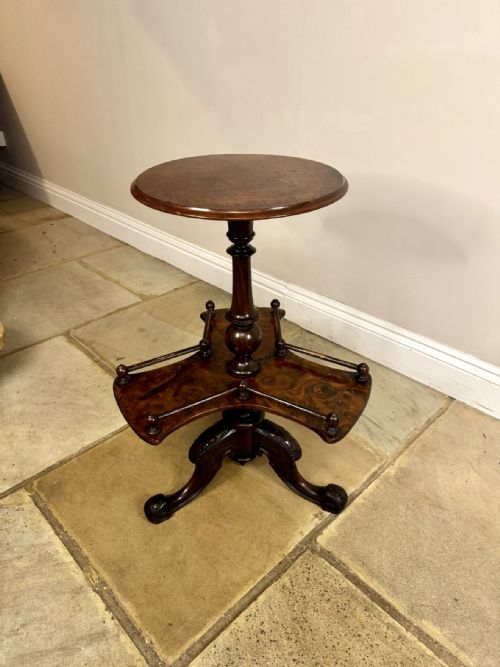
A victorian burr walnut lamp table brings rich grain and warm tone to a room, offering a versatile surface for daily use.
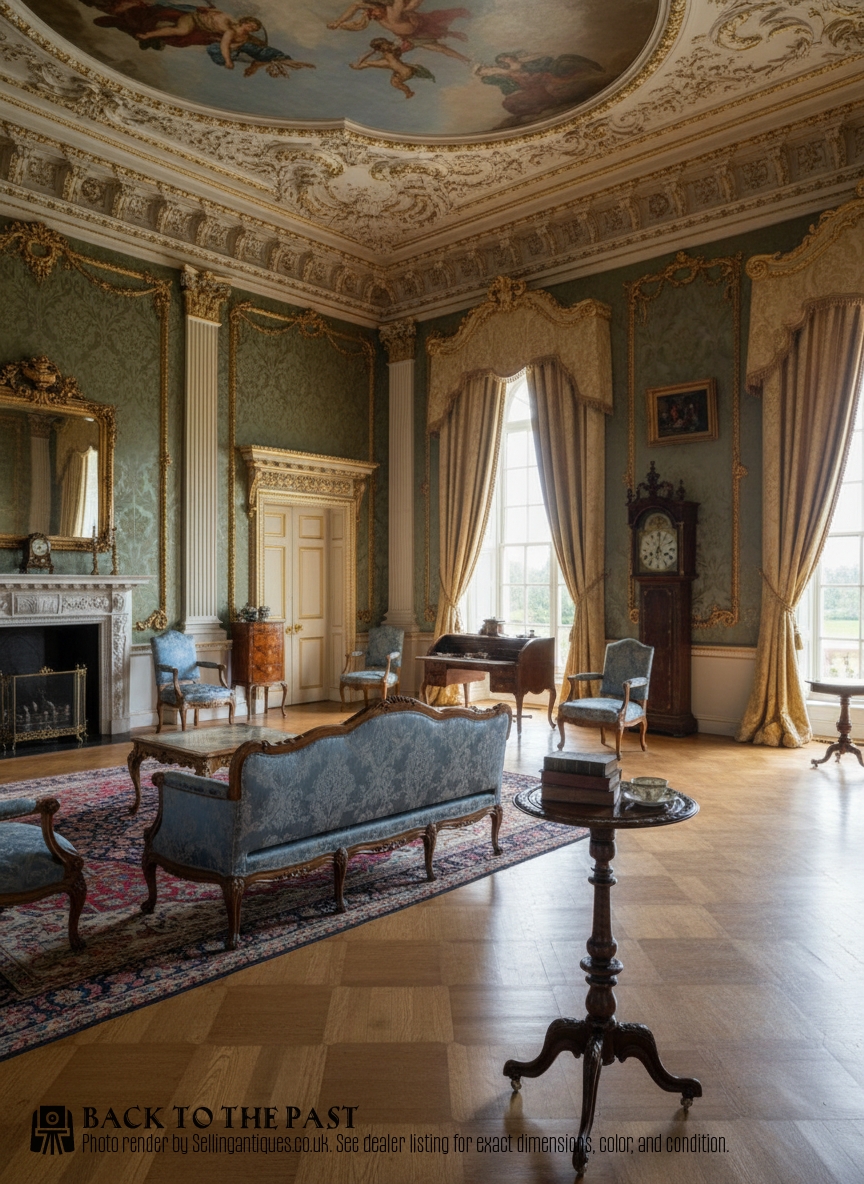
Victorian Burr Walnut Lamp Table
A victorian burr walnut lamp table is a compact nineteenth-century piece designed for functional placement beside seating or in hallways, appearing in various forms across this marketplace.
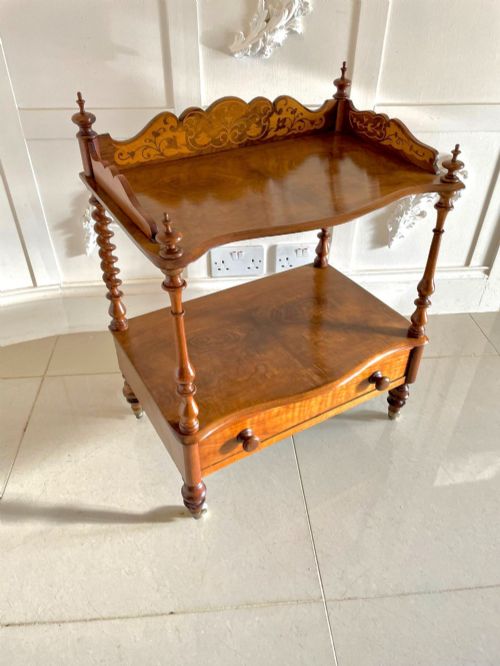
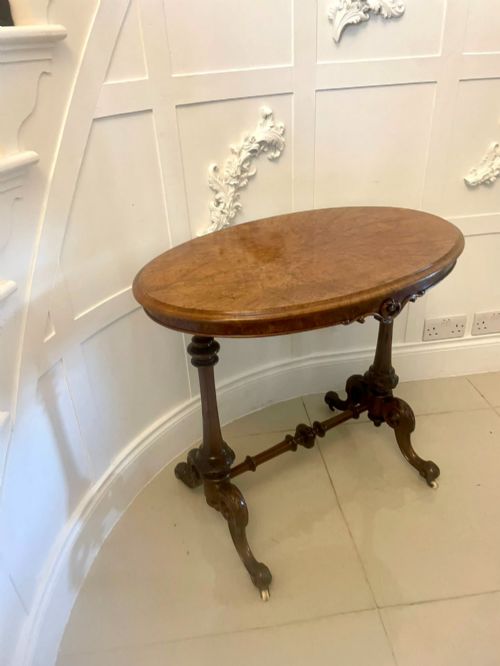
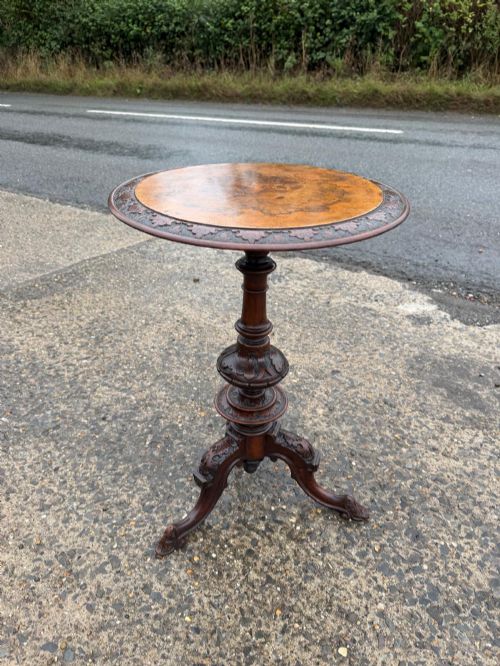
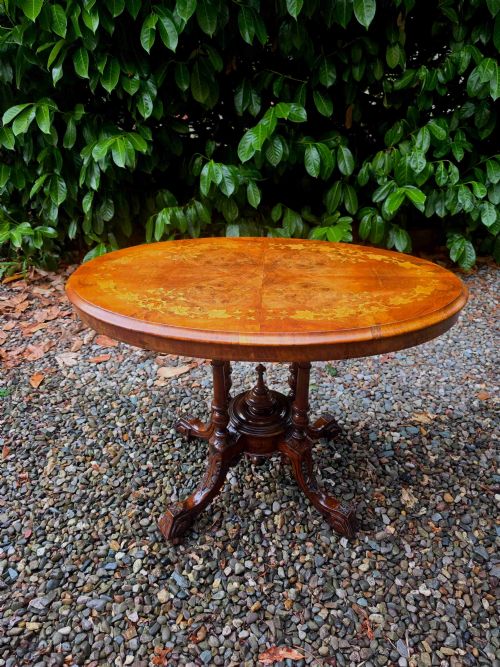
Buyers most frequently encounter circular, oval, and occasional tables dating from the middle decades of the nineteenth century, often featuring inlaid details or tripod bases.
The selection includes specialised variations such as sewing tables, wine tables, and small Sutherland formats, all sharing the distinct figured grain characteristic of the period.
How They Were Made
Cabinet makers utilised thin veneers of burr walnut applied over secondary timbers like mahogany or pine, allowing the dramatic swirling patterns of the wood to dominate the top surface.
Inlay work incorporated contrasting materials such as boxwood and various woods to create intricate geometric or floral marquetry motifs around the edges and centres.
Structural elements frequently combined turned or carved wooden supports with occasional brass mounts, ceramic components, or fabric linings depending on the specific form of the table.
The inventory records diverse forms including wine tables, bedside cabinets, and sewing tables alongside standard lamp tables.
What Varies in Quality
The visual impact of the burr walnut veneer dictates the primary tier of quality, with dense, evenly distributed knotting and rich figuring commanding greater attention than plain grain.
Execution of the inlaid marquetry and the crispness of any carved wooden details separate standard production items from finer workshop commissions of the era.
The integrity of the construction, visible in the stability of the tripod or pedestal base and the smoothness of any pivoting or drop-leaf mechanisms, defines the enduring standard of the piece.
The Victorian Burr Walnut Lamp Table Glossary
- Burr walnut
- A prized wood veneer harvested from the tree growths or burls, noted for its complex swirling grain patterns. This distinctive figuring provides the primary decorative appeal for nineteenth-century furniture.
- Marquetry
- The art of applying decorative pieces of veneer to a structure to form intricate designs. Craftsmen often utilised contrasting timbers like boxwood to achieve detailed floral or geometric patterns.
- Tripod table
- A freestanding small table supported by three legs branching from a central pillar. This form allowed for stable placement on uneven floors.
- Occasional table
- A small, versatile table intended for flexible placement around a living space. These pieces served various light duties including holding lamps or displaying decorative objects.
- Canterbury
- A partitioned low stand originally designed for holding sheet music or magazines. Victorian examples occasionally integrated lamp table functions into the upper surface.
Victorian Burr Walnut Lamp Table: Frequently Asked Questions
What is a burr walnut lamp table?
A burr walnut lamp table is a compact nineteenth-century piece featuring the highly figured, knot-swirled wood grain characteristic of the Victorian era. These tables were made to hold lighting and small decorative items beside seating.
The listings show numerous variations, from simple circular tripod designs to oval tables with intricate wood inlay and multi-functional sewing compartments.
How do I style a victorian lamp table today?
A victorian lamp table integrates well into contemporary interiors by providing a warm contrast of historic wood grain against modern furnishings. Use the surface for a small reading lamp or a modest ceramic vessel to highlight the timber.
Keep surrounding items simple to let the intricate wood inlay and rich colour of the walnut remain the visual focus of the corner.
How can I tell the period of these tables?
Dating relies on observing construction methods, timber choices, and stylistic markers such as Aesthetic movement ebonising or Victorian revival motifs. Most pieces date from the mid-nineteenth century, particularly around eighteen-sixty.
Examine the secondary woods beneath the top and the style of the turning on the pedestal to understand whether the piece originates from the mid or late nineteenth century.