
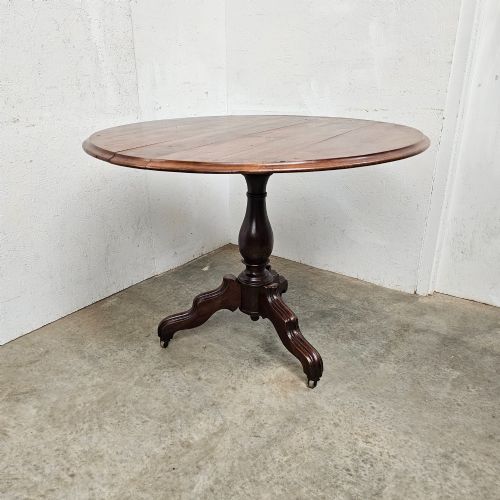


Dark Walnut Wine Table
A dark walnut wine table is a compact pedestal piece designed to hold glasses and bottles near a seat, offering rich timber grain and historic character.
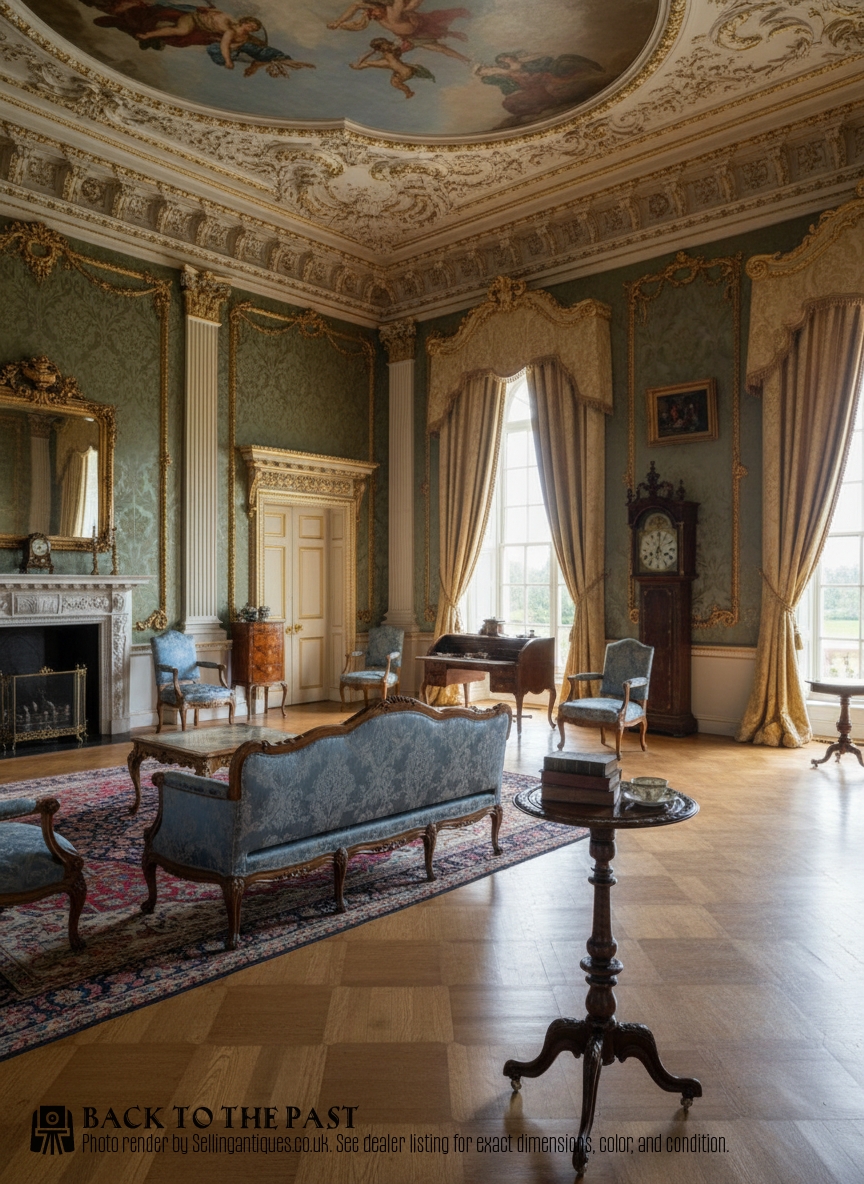
Dark Walnut Wine Table
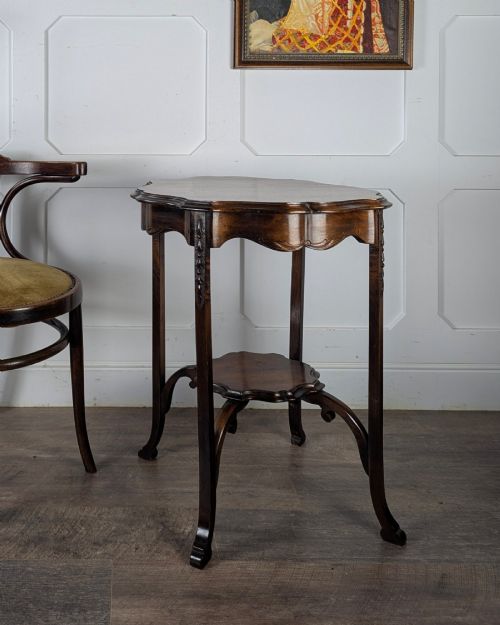
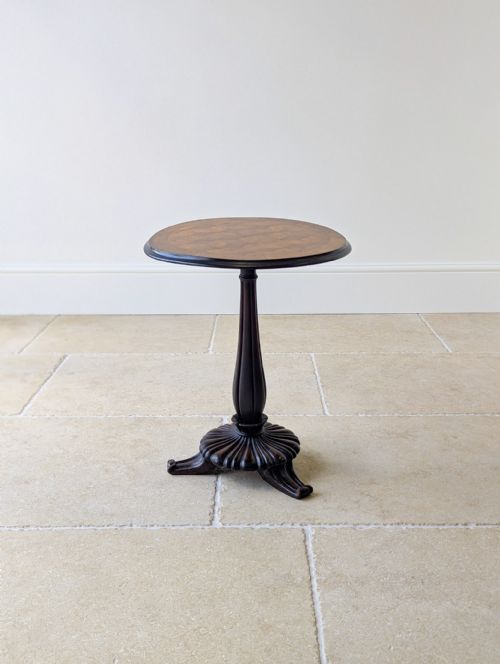
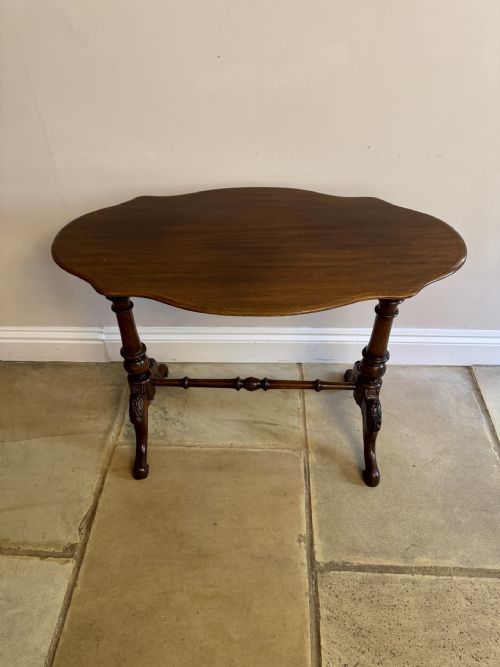
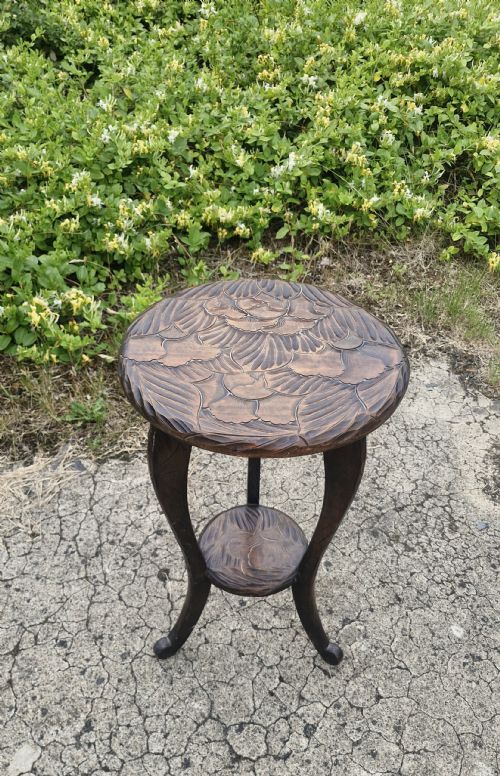
A dark walnut wine table appears in forms such as tripod tables, tilt-top tables, and small pedestal occasional tables spanning the Georgian and Victorian eras. These diminutive stands function equally well as lamp tables or drink surfaces beside a chair.
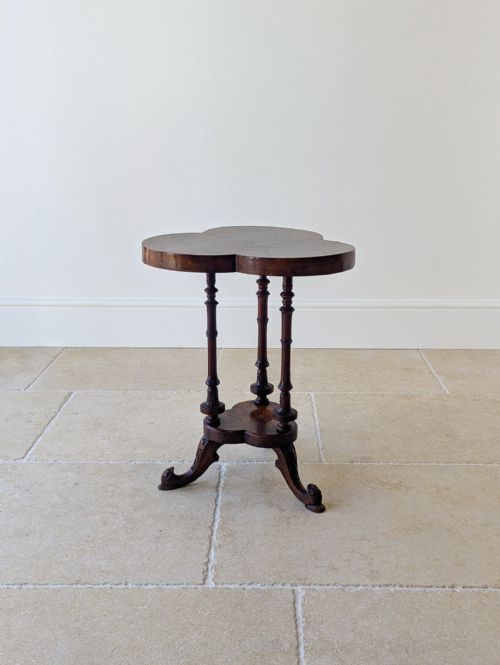
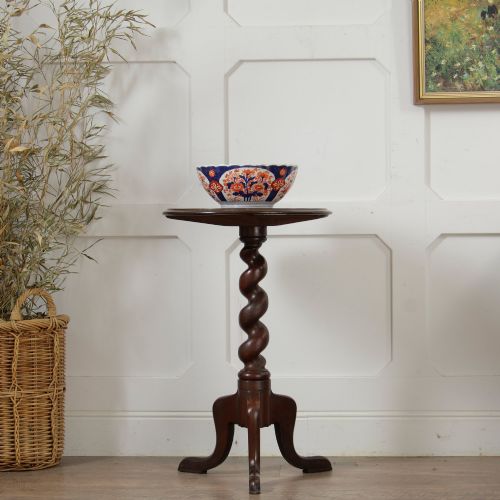
Most examples found here date from the nineteenth century, including Victorian interpretations featuring barley twist pedestals, burr walnut veneers, and circular or trefoil tops. Makers such as Holland & Son and Liberty's occasionally produced these smaller items with specific functional touches.
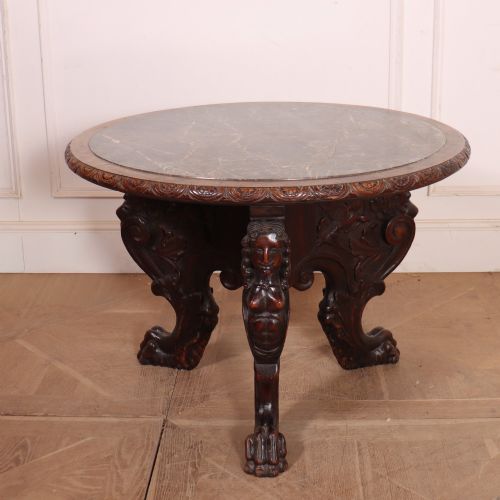
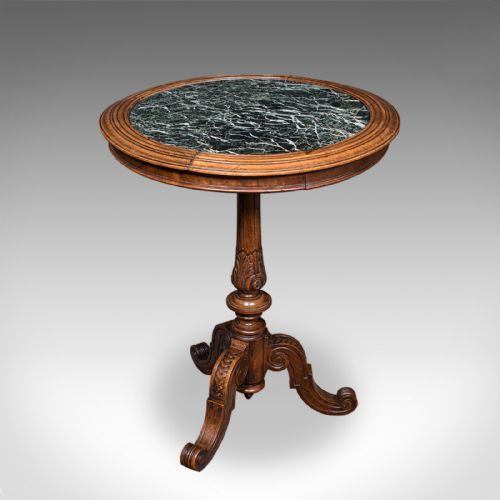
The timber varies from plain dark walnut to highly figured burr walnut, sometimes combined with secondary woods like mahogany or accented by marble and brass details. Buyers encounter everything from simple tripod bases to sophisticated inlaid marquetry and pietra dura surfaces.
Construction and materials
Cabinetmakers utilised solid walnut and decorative burr walnut veneers over secondary timbers like mahogany and oak, applying hand-rubbed finishes to bring out the dark grain. Pedestal supports frequently terminated in carved tripod legs, occasionally incorporating turned barley twist columns.
Specialist techniques included marquetry inlay, pietra dura stone work, and hinged mechanisms for tilt-top or drop-leaf designs. Brass fixtures and white marble inset tops appear on specific high-Victorian and decorative examples.
Some nineteenth-century makers included hidden tilt-top catches so guests could discreetly hide the table against the wall when the wine ran dry.
Judging quality in walnut tables
Quality rests primarily on the choice of timber figure, such as richly patterned burr walnut veneers, and the crispness of the hand-carved wood details on the pedestal and legs. Superior pieces display seamless joins on circular tops and stable, well-balanced tripod bases without excessive wobble.
The presence of maker stamps, intricate marquetry, or inset marble and pietra dura panels elevates an ordinary occasional stand into a finer decorative object. Original hardware and sound tilt mechanisms further distinguish better examples from simpler utilitarian versions.
Holland & Son·Liberty's
The Dark Walnut Wine Table Glossary
- Burr walnut
- A figured veneer taken from the wart-like growths on walnut trees, prized for its swirling, decorative grain patterns. It adds significant visual texture to table tops.
- Tilt top
- A hinged table mechanism allowing the surface to fold vertical when not in use. This clever design saved valuable floor space in historic rooms.
- Tripod base
- A three-legged pedestal support system commonly found on small occasional and wine tables. It ensures stability on uneven older floors.
- Pietra dura
- An artistic technique using cut and fitted polished coloured stones to create pictorial designs. It appears on select nineteenth-century table tops.
- Barley twist
- A spiralling carved column resembling a twisted loaf of bread, popular during the Victorian period. It adds vertical movement to table pedestals.
Dark Walnut Wine Table: Frequently Asked Questions
What is a dark walnut wine table used for?
These small stands historically held wine bottles and glasses within easy reach of guests in a parlour or dining room. Today they function flexibly as bedside stands, lamp tables, or display surfaces.
Their compact footprint allows them to fit easily into narrow corners or beside armchairs where larger furniture cannot go.
How do I tell a Victorian table from a Georgian one?
Victorian examples frequently display heavier proportions, rich burr veneers, and elaborate carvings like barley twists or inlaid marquetry. Earlier pieces tend toward simpler, more restrained lines.
Examining the construction methods underneath and the specific timber choices helps clarify the likely period of manufacture.
Are tilt-top tables stable?
A well-adjusted tilt mechanism locks firmly into place when the top is horizontal, providing a reliable surface for daily use. The original brass catches wear down over decades, so checking the pivot joint is sensible.
When locked properly, a tripod base distributes weight evenly across its three feet to prevent tipping.
How should I care for antique walnut furniture?
Protect the polished wood surface by keeping tables away from direct sunlight and sudden radiator heat changes. Regular dusting with a soft, dry cloth preserves the historic sheen without building up heavy wax residues.
Using coasters prevents moisture rings from marking the delicate walnut or burr timber veneers.