






Victorian Burr Walnut Canterbury
A Victorian burr walnut canterbury brings architectural warmth and practical display space to a room through figured timber veneers and compartmentalised framing.
Victorian Burr Walnut Canterbury
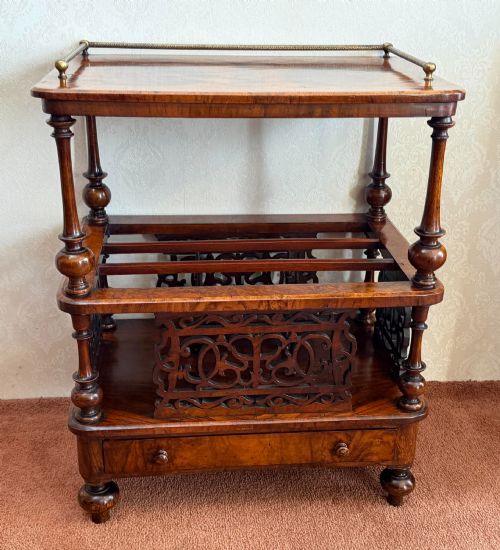
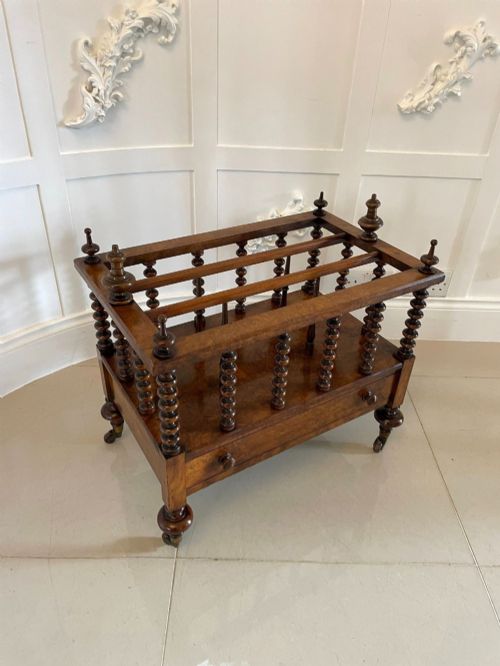
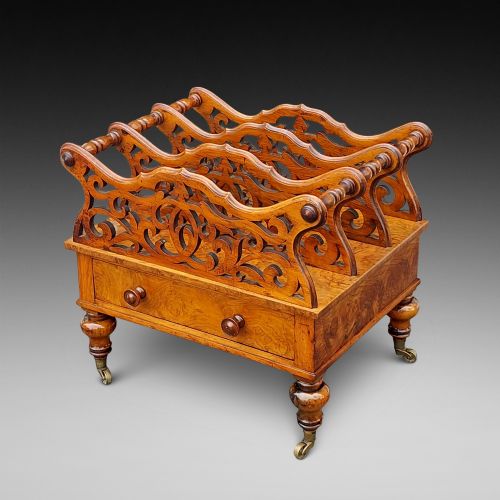
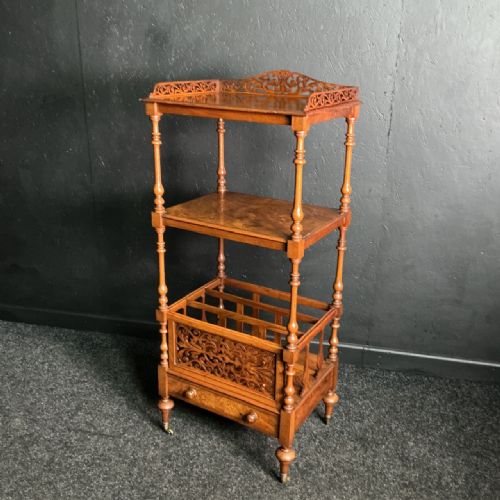
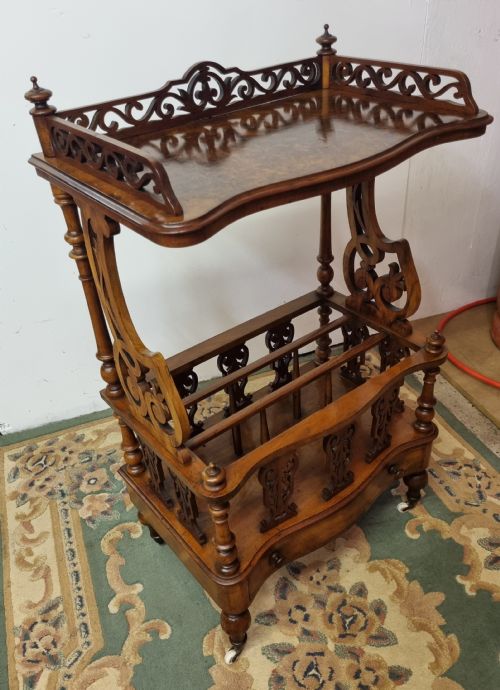
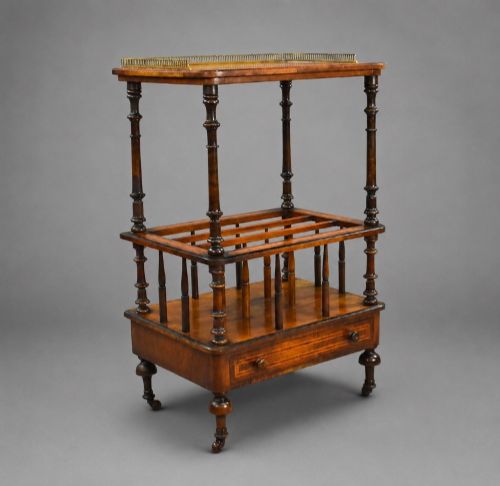
A Victorian burr walnut canterbury is a freestanding piece of nineteenth-century furniture designed with upright divisions to hold sheet music, newspapers, and magazines. These items frequently combine open partition racks with lower drawers, slender turned supports, and lower undertiers.
The versions met most often on this page belong to the Victorian and mid-Victorian periods, stretching from eighteen-fifty to eighteen-eighty. Makers combined the function of a magazine rack with the display surface of an occasional table, whatnot, or etagere.
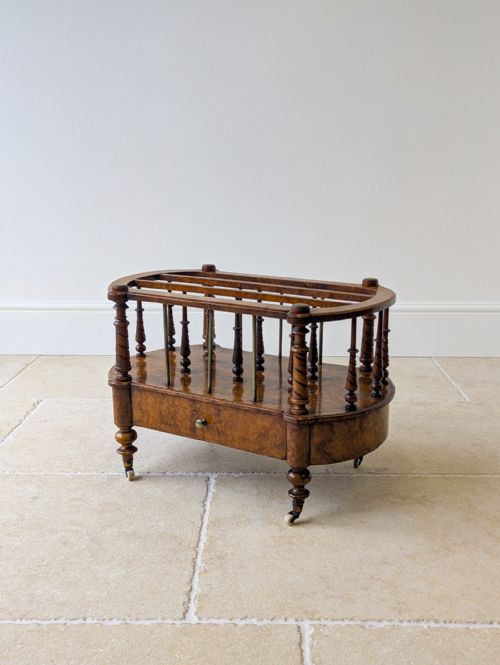
Many examples incorporate mixed forms such as music cabinets, music stands, and serpentine or oval lamp tables. The integration of display shelves above the division racks turns a simple tidy into a substantial piece of parlour furniture.
How they were made
Cabinet makers built these pieces using solid wood framing faced with burr walnut veneers selected for highly figured grain patterns. Workshops applied contrasting details in boxwood, ebony, and general wood inlay, alongside marquetry decoration.
Structural elements incorporated turned uprights, fine pierced fretwork panels, and ceramic castors fitted beneath the feet. Metal hinges, drawer pulls, and brass supports completed the movable hardware.
Victorian Burr Walnut Canterbury Retail Price Guide 2026
Typical asking prices for victorian burr walnut canterbury among the pieces listed under this phrase on Sellingantiques today, from the lower quarter to the upper quarter. They describe what is for sale here now, not the wider market.
The listings on this page span the Victorian and Regency periods, utilising burr walnut, boxwood, brass, and ceramic.
What varies in quality
The distinction between standard production and superior execution lies in the density and figuring of the burr walnut veneer used across the top and sides. Richly patterned timber demands careful matching by the cabinet maker across curved serpentine and oval surfaces.
Construction standards appear in the crispness of the pierced fretwork, the precision of the wood inlay, and the integration of functional drawers. Substantial proportions combined with fine turned supports separate ordinary racks from exhibition-grade furniture.
Shoolbred·T Wilson of London
The Victorian Burr Walnut Canterbury Glossary
- Canterbury
- A low stand with upright partitions originally designed for holding music sheets and newspapers. The form evolved during the nineteenth century to include drawers and shelves.
- Burr Walnut
- A timber taken from the gnarled growths on walnut trees, prized for swirling grain patterns. Cabinet makers sliced this wood into thin veneers for decorative surfaces.
- Whatnot
- An open set of freestanding shelves used for displaying decorative objects in nineteenth-century interiors. These tiers were frequently mounted above a canterbury base.
- Fretwork
- Openwork ornamentation cut through thin panels of wood using a saw. This technique created delicate geometric or floral lattice patterns on partition sides.
- Marquetry
- The art of applying pieces of veneer to a structure to form decorative patterns and pictures. Makers utilised contrasting timbers like boxwood to achieve detailed motifs.
Victorian Burr Walnut Canterbury: Frequently Asked Questions
Where did they sit in a Victorian home?
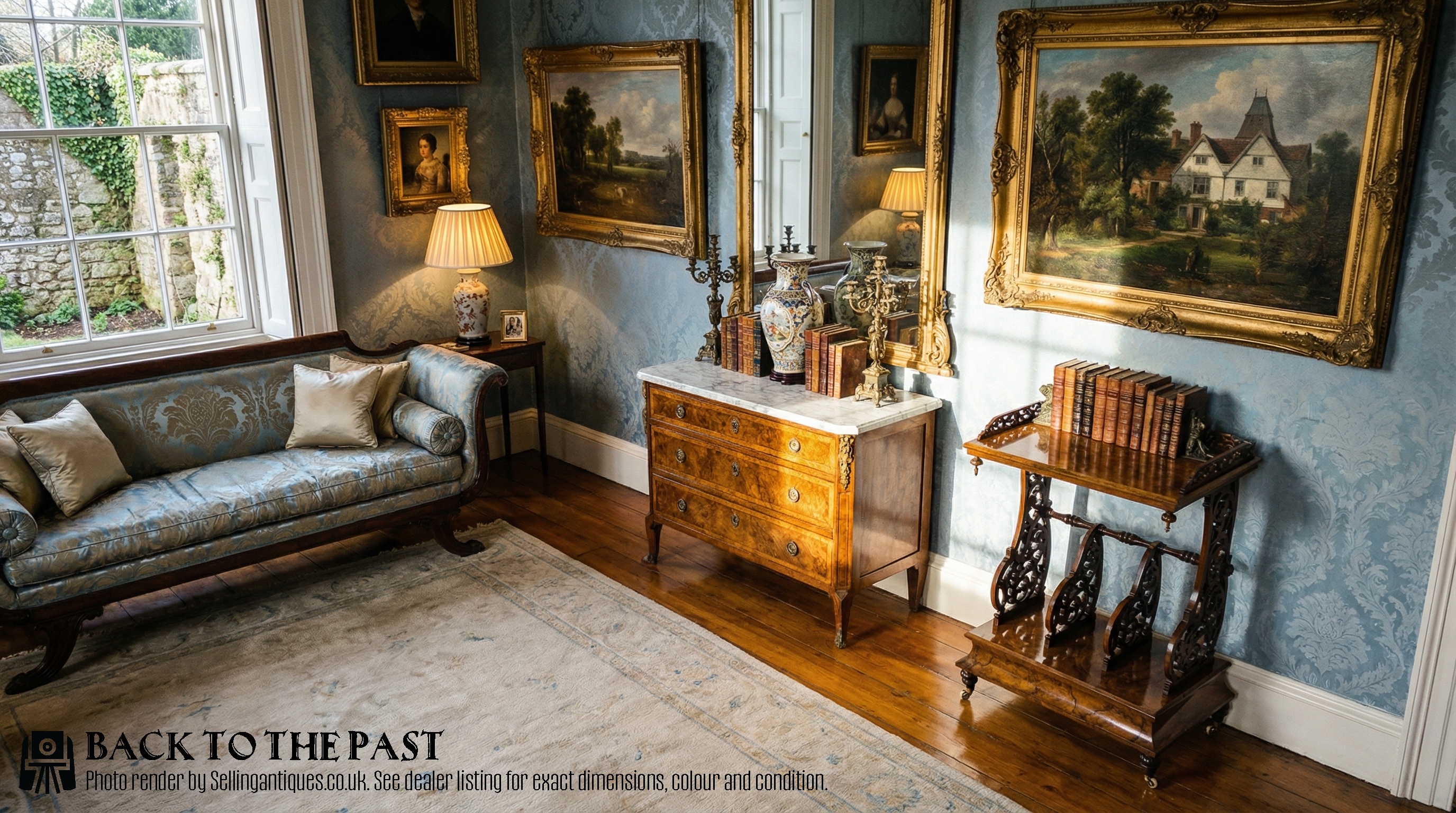
These pieces stood beside pianos, near seating areas, or against drawing room walls where reading materials needed organisation. Their finished backs allowed them to occupy central positions in a room rather than sitting strictly flush against a wall.
The addition of occasional table tops and display tiers meant they doubled as surfaces for lamps and ornamental porcelain.
How do you distinguish a whatnot from a standard rack?
A standard rack focuses primarily on the compartmentalised division frame for holding newspapers and sheet music at floor level. When builders added multiple upper display shelves supported by turned columns, the designation shifted to a whatnot or etagere.
These combined forms offered upper display space while retaining the lower utility section for periodicals.
Were they used exclusively for music?
Although the original eighteenth-century form was designed specifically to hold sheet music near instruments, nineteenth-century examples adapted to changing domestic habits. They served equally well for daily newspapers, periodicals, and general library tidies.
The addition of drawers provided enclosed storage for smaller accessories.
What indicates a mid-nineteenth century date?
Pieces attributed to the eighteen-fifties and sixties often display high Victorian proportions combined with rich burr walnut veneers and intricate fretwork partitions. The use of boxwood inlay and turned corner columns aligns with the height of revivalist cabinet making.
Later examples from the eighteen-eighties sometimes adopt simpler structural lines while retaining the core partitioned layout.