

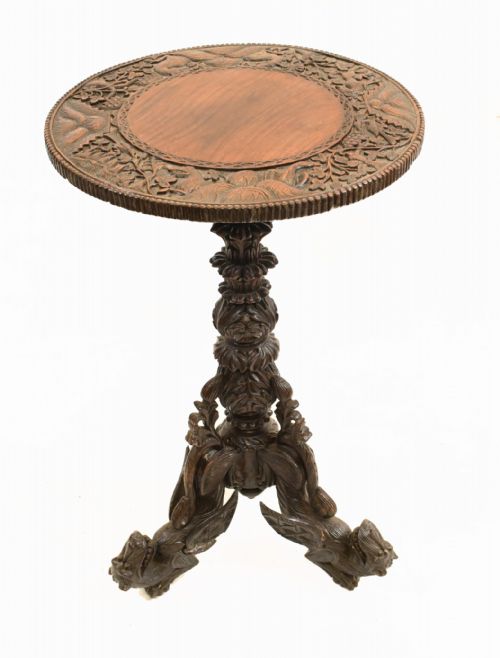


Victorian Burmese Table
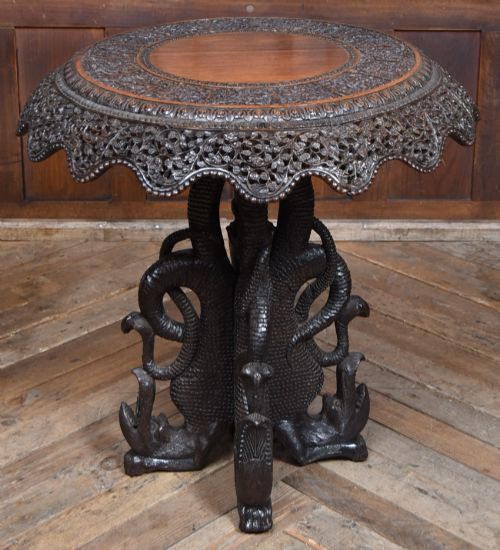
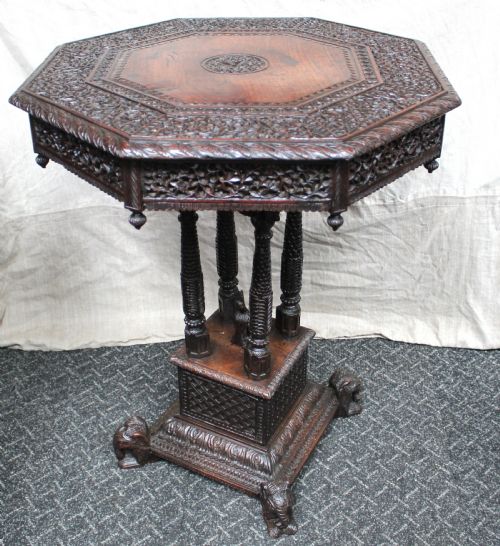
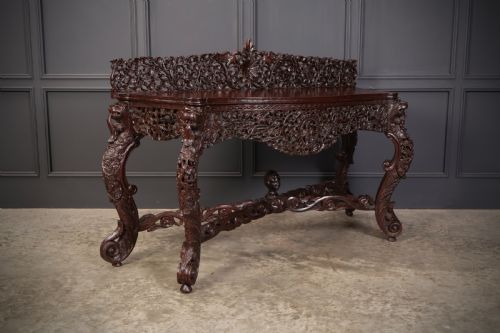
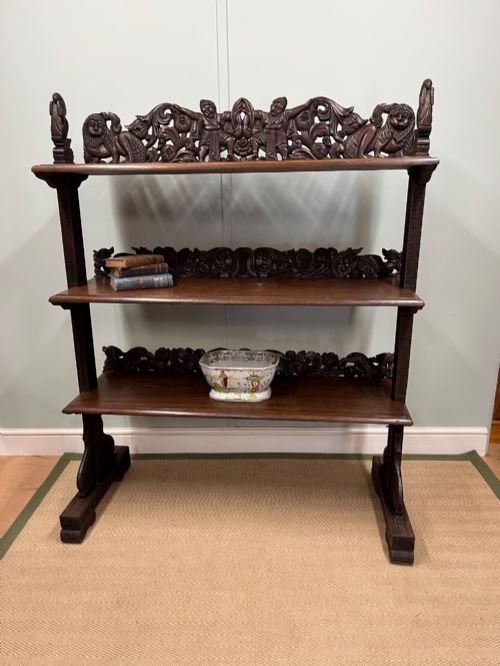
These victorian burmese table examples bring heavily carved colonial craftsmanship into a room, offering dense tropical woods and distinct regional forms.
Victorian Burmese Table
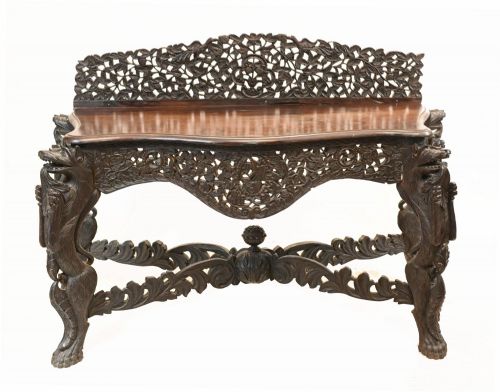
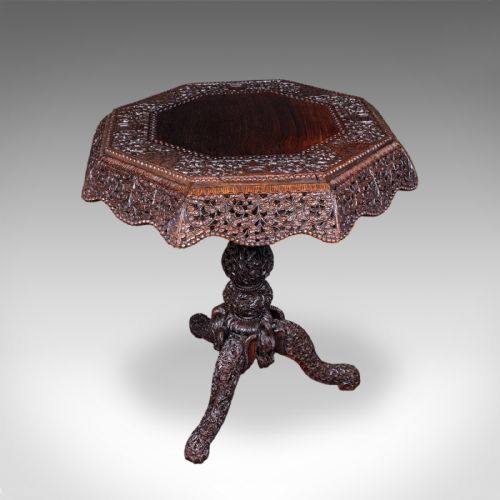
A victorian burmese table encompasses a range of occasional furniture produced during the nineteenth century, including side tables, console tables, and tiered buffets. Buyers seeking a victorian burmese table encounter heavily carved forms with distinct regional characteristics.
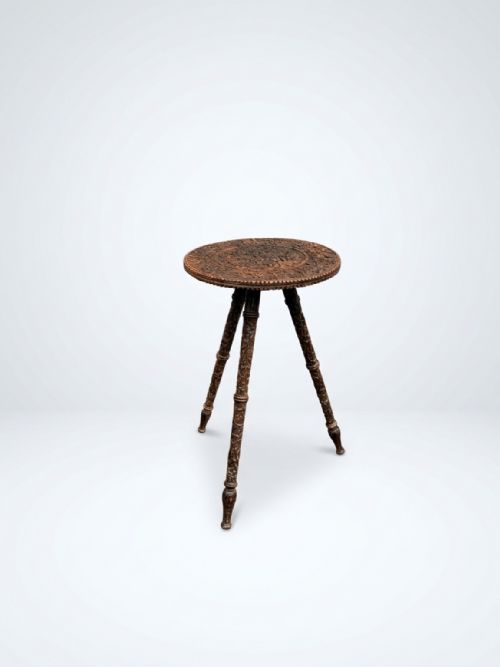
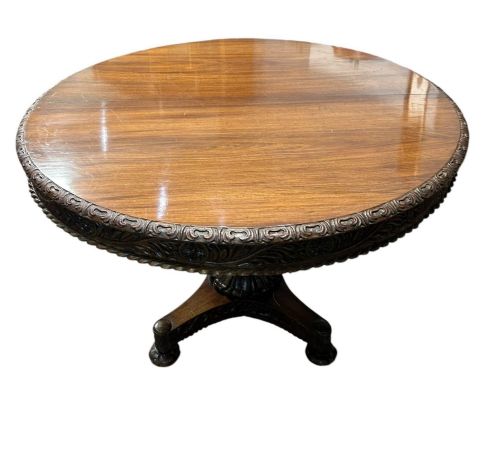
The selection frequently includes side tables and occasional tables featuring tip-top mechanisms or tiered shelving. Occasional tables and console tables dominate the available forms, alongside occasional book stands and larger dining pieces.
Origins trace back to nineteenth-century Burma and colonial workshops working within the Anglo-Burmese style tradition. Pieces date from the mid-nineteenth century through to nineteen hundred, aligning with Victorian production eras.
Assessing Craftsmanship
Depth and clarity of the hand-carving separate standard items from superior examples. Crisp relief work on dense padauk wood indicates higher workshop standard.
Structural integrity of joints and tiered elements determines longevity. Well-fitted folding mechanisms and stable multi-tier constructions represent better execution.
Victorian Burmese Table Retail Price Guide 2026
Typical asking prices for victorian burmese table among the pieces listed under this phrase on Sellingantiques today, from the lower quarter to the upper quarter. They describe what is for sale here now, not the wider market.
Listings for this phrase feature nineteenth-century periods, utilising teak and padauk wood across side tables, console tables, and buffets.
The Victorian Burmese Table Glossary
- Padauk wood
- A heavy, dense tropical timber utilised in nineteenth-century colonial furniture production. It accepts intricate hand-carving without splintering.
- Anglo-Burmese
- A design style combining British Victorian furniture forms with traditional Burmese carving techniques. These items were produced during the colonial period.
- Tip-top table
- An occasional table featuring a hinged top that pivots vertically for storage. This mechanism appears on several circular occasional tables.
- Buffet
- A multi-tiered shelving unit used for display or storage. Versions seen in this group typically have three distinct tiers.
- Console table
- A wall-mounted or freestanding table designed for placement against a vertical surface. These items frequently display deep relief carving along the apron.
Victorian Burmese Table: Frequently Asked Questions
How do I date a Victorian Burmese table?
Dating relies on recorded periods within the nineteenth century, ranging from eighteen forty to nineteen hundred. stylistic cues and material choices align with Victorian production eras.
Examination of the timber and construction methods helps establish the manufacturing period. Most examples originate from the latter half of the nineteenth century.
What woods were used in these tables?
Makers primarily relied on teak and padauk wood for structural and decorative elements. These dense hardwoods sustained the heavy hand-carving characteristic of the style.
Additional materials such as brass and bone appear on specific campaign or occasional variants. The heavy timber ensures substantial weight in finished pieces.
Where were these tables made?
Production occurred in Burma during the colonial period, frequently within workshops influenced by British design demands. The resulting Anglo-Burmese style merged local timber with Victorian furniture forms.
Items reflect the craftsmanship of nineteenth-century colonial cabinetmakers working in teak and padauk. These pieces were subsequently transported to Britain and wider markets.
How do I care for padauk and teak furniture?
Maintain the timber by keeping the surface clean with a dry or slightly damp cloth. Avoid placing these tables in direct sunlight or near heat sources to prevent wood movement.
Periodic application of suitable natural wax preserves the finish on carved surfaces. Gentle handling protects delicate relief work on edges and legs.