
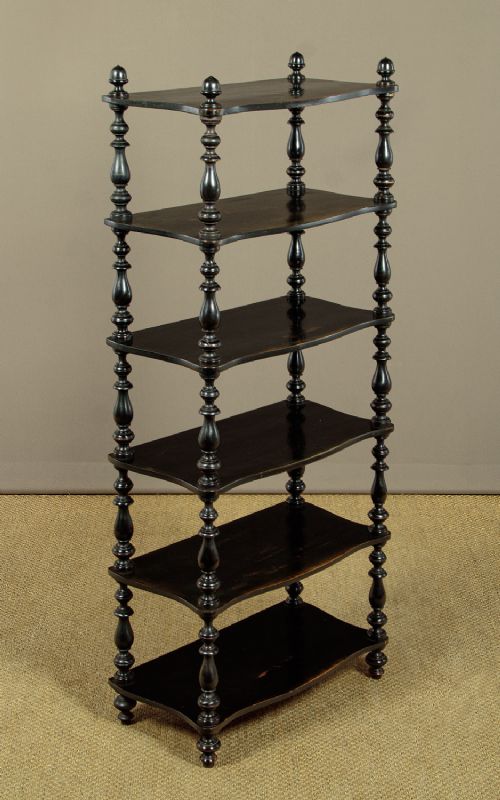


Victorian Buffet Stand
A victorian buffet stand serves meals and displays dining silver, combining tiered shelving with solid timber construction.
Victorian Buffet Stand
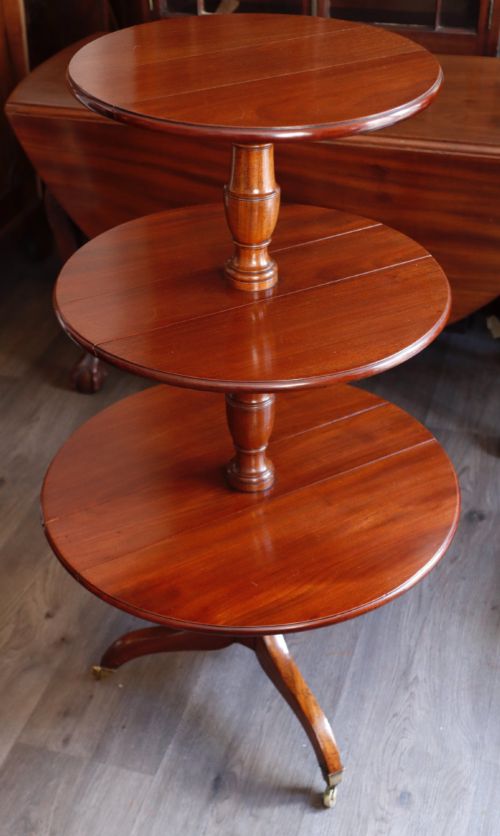
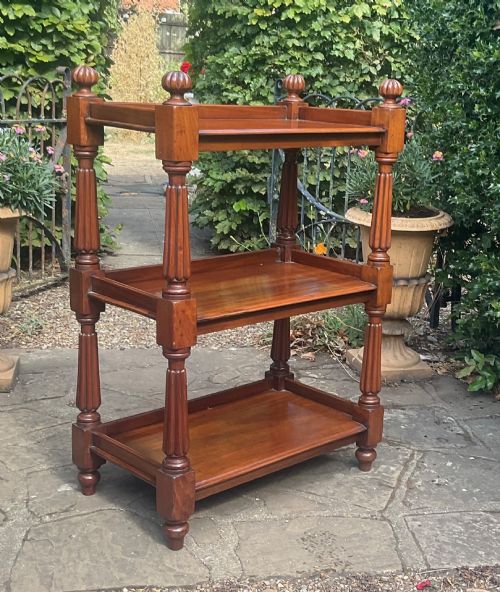
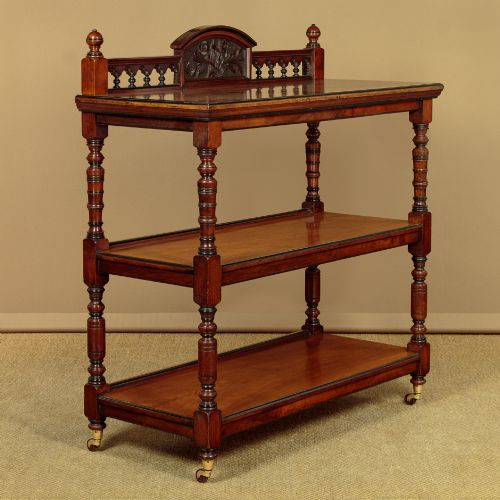
When you search for a victorian buffet stand, you encounter tiered serving pieces, revolving dumb waiters, and multi-shelf display tables designed for the dining room. These pieces originate across the nineteenth century, including Georgian and Regency precursors alongside later Victorian interpretations.
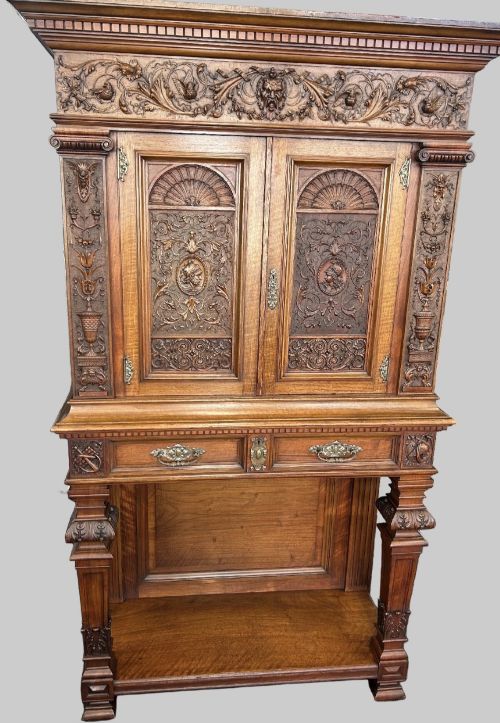
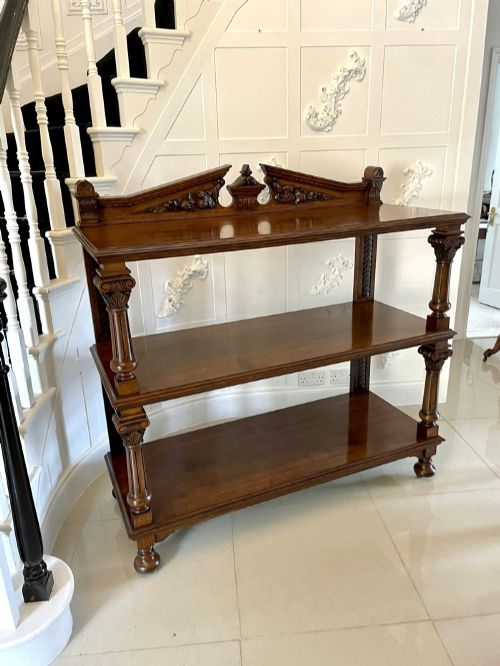
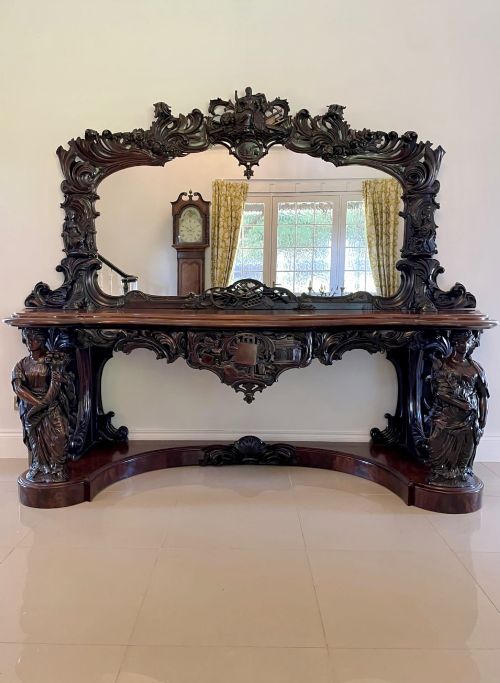
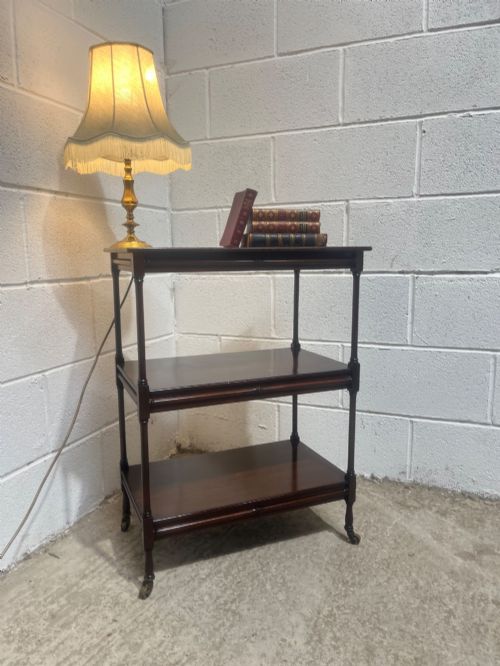
The most common formats on this page are three-tier mahogany trolleys, revolving dumb waiters on tripod bases, and stationary walnut or oak buffets. Makers produced both compact domestic versions and large exhibition-quality console tables with mirror backs.
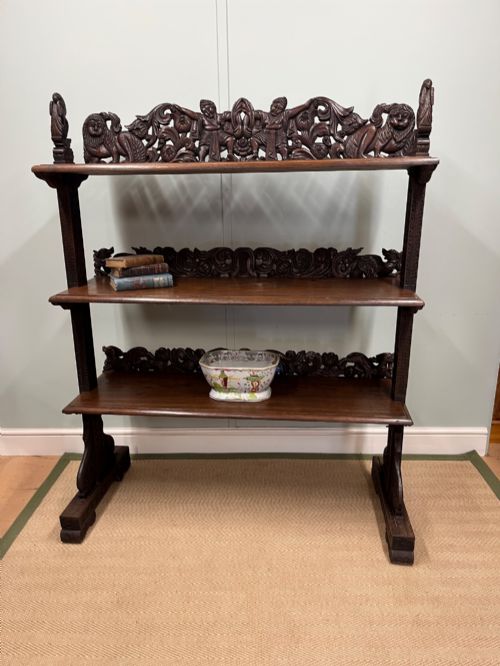
Regional variations span standard English cabinet-making to Anglo-Indian, Burmese padauk wood, and Flemish carved designs. This broad stylistic range reflects the diverse global influences present in nineteenth-century British homes.
Materials and construction
Timbers dominate the construction, with mahogany, walnut, oak, and rosewood forming the primary structural frames and shelves. Exotic woods such as amboyna, padauk, and teak appear alongside ebonised wood and applied marquetry inlay.
Joinery relies on solid timber boards, turned columns, and carved supports, occasionally supplemented by brass castors and revolving tier mechanisms. Carving varies from restrained linear mouldings to deep relief lion masks and Gothic motifs.
Object forms range from revolving dumb waiters on tripod bases to multi-tiered etageres and cabinet stands.
Judging quality in these stands
Quality rests upon the selection of timber and the crispness of the carving rather than mere scale. Dense, well-figured mahogany or richly grained walnut indicates a higher standard of original commission.
Mechanical components differentiate standard utility pieces from superior workshop output. Smooth rotation in revolving tiers, adjustable shelf mechanisms, and robust tripod or column supports dictate the durability of the stand.
Mappin and Webb·Maple and Co
The Victorian Buffet Stand Glossary
- Dumb waiter
- A tiered stand used in dining rooms for holding food and tableware without requiring servants. These pieces often feature multiple graduating shelves or revolving tiers.
- Etagere
- A set of open shelves for displaying small objects or serving dishes. These lightweight stands typically use three or more tiers supported by slender columns.
- Whatnot
- A multi-shelf piece of furniture designed for ornaments and books. The term frequently overlaps with buffet stands in nineteenth-century terminology.
- Metamorphic
- Furniture designed to transform from one form into another, such as a table that alters its tier configuration. These clever designs demonstrate advanced nineteenth-century mechanism building.
- Padauk
- A dense tropical hardwood known for its deep reddish hue and durability. Cabinet-makers utilised this material for high-status export furniture.
Victorian Buffet Stand: Frequently Asked Questions
What is a victorian buffet stand used for?
A victorian buffet stand functions as a tiered serving station for dining rooms, holding extra dishes, silver, and glassware during meals.
Beyond dining use, these stands serve as display surfaces for decorative objects and books in living spaces and hallways.
How many tiers do these stands have?
Most surviving buffet stands feature three distinct tiers supported by turned columns or central pedestals.
Some specialist examples expand to four, five, or six tiers to accommodate specific serving or display requirements.
Are these stands revolving?
Certain designs incorporate revolving tier mechanisms mounted on central pillars and tripod bases for easy access during meals.
Other variations remain stationary as fixed console tables, cabinets on stands, or tiered etageres.
What woods were used?
Mahogany, walnut, oak, and rosewood form the bulk of the timber used in these nineteenth-century pieces.
Exotic additions like padauk, teak, and amboyna appear alongside ebonised wood finishes.
How do I date a piece?
Dating relies on stylistic clues, timber choice, and construction methods characteristic of periods like the Regency, Victorian, or Edwardian eras.
Maker marks, where present, help pinpoint the exact workshop and decade of production.