
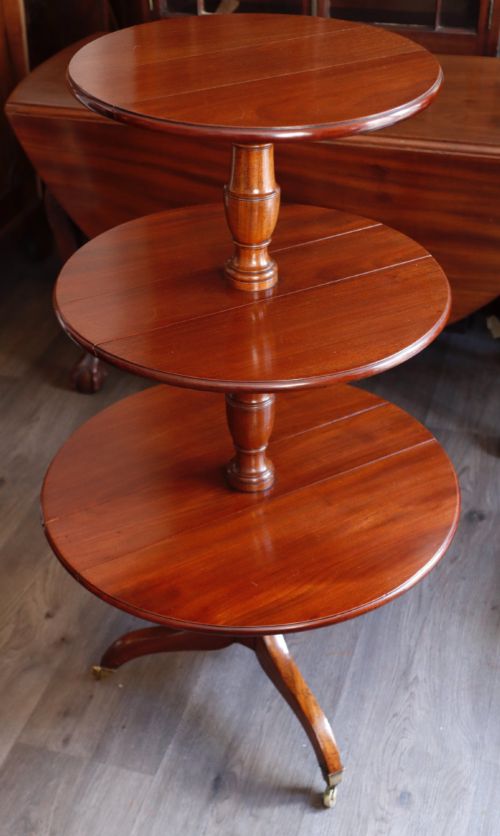


Victorian Tiered Dessert Stand
A Victorian tiered dessert stand brings tiered elegance to a room, offering practical surface space with distinct historical character.
Victorian Tiered Dessert Stand
A Victorian tiered dessert stand primarily takes the form of a dumb waiter, cake stand, or tiered table designed to present food or display objects. Buyers seeking a Victorian tiered dessert stand encounter multiple levels supported on a central column or folding frame.
The pieces on this page span the nineteenth century, with Victorian examples appearing alongside Georgian, Regency, and Edwardian items. Most listings present sturdy timber constructions built with circular shelves arranged vertically.
Makers utilised mahogany predominantly, alongside rosewood, walnut, and amboyna veneer to construct these versatile serving pieces. Forms range from heavy dining room servers to lighter folding stands intended for parlour use.
Materials and construction methods
Cabinetmakers worked extensively with solid mahogany and burr walnut veneer, applying careful turning to the central supports that carry the graduated tiers. Brass fittings occasionally appear on castors or joints, adding structural reinforcement and subtle contrast to the dark wood surfaces.
Surfaces often show ebonised wood details or parcel gilt highlights, reflecting the decorative preferences of the nineteenth century. Folding mechanisms on lighter cake stands rely on precision hinge work to allow smooth collapse and storage.
Judging the quality of tiered stands
Quality rests in the selection of timber veneers and the stability of the tiered tiers under weight. Superior examples display balanced grain matching across each shelf and rigid central columns that prevent wobble between levels.
The refinement of the turned woodwork and the crispness of edge moulding distinguish workshop production from standard utility items. Original brass castors and intact folding mechanisms elevate the standing of any piece.
Maple & Co
The Victorian Tiered Dessert Stand Glossary
- Dumb Waiter
- A multi-tiered piece of furniture traditionally used for serving food without domestic staff present. These stands feature two or three graduating shelves on a central pillar.
- Amboyna Veneer
- A highly prized decorative wood covering derived from the Pterocarpus indicus tree. It yields a rich, mottled pattern often utilised on finer nineteenth-century furniture.
- Parcel Gilt
- A decorative technique where selected portions of an object are covered in thin gold leaf. This method highlights carved details or mouldings against a dark timber background.
- Ebonised Wood
- Timber treated to resemble dark ebony wood through staining or finishing. Victorian makers employed this process to create striking contrast on stands and cabinets.
Victorian Tiered Dessert Stand: Frequently Asked Questions
What is a dumb waiter?
A dumb waiter is a tiered piece of furniture with shelves stacked vertically on a central support column. They were originally used in dining rooms to hold extra dishes and dessert courses.
Over time, these stands adapted into decorative furniture for displaying items in living spaces. The multi-level design maximises surface area while maintaining a compact footprint.
How do I care for mahogany?
Keep mahogany furniture away from direct sunlight and heat sources to prevent the wood from drying out. Dust regularly with a soft, dry cloth to protect the polished finish.
Apply a quality beeswax periodically to nourish the timber and maintain its natural lustre. Avoid placing damp items directly onto antique wood surfaces.
Are these stands stable?
Tiered stands derive their stability from a solid central column and a wide base, usually supported on tripod legs or heavy feet. Properly constructed examples balance weight across the lower shelves.
Folding versions rely on secure locking braces to keep the tiers level when open. Checking the tightness of central joints ensures safe daily use.
How many tiers do they have?
Most antique dessert stands and dumb waiters feature three distinct shelves arranged in a graduating size order. The top tier is typically the smallest, with each shelf growing broader toward the floor.
This vertical arrangement allows clear visibility of items displayed on every level. Some specific serving tables may utilise two tiers depending on their intended function.