


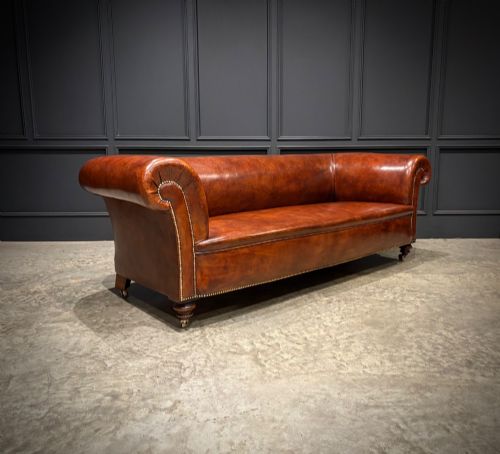


Victorian Brown Leather Couch
A victorian brown leather couch offers enduring comfort through deep buttoning, sturdy hardwood frames and rich, hand-dyed patinas.
Victorian Brown Leather Couch
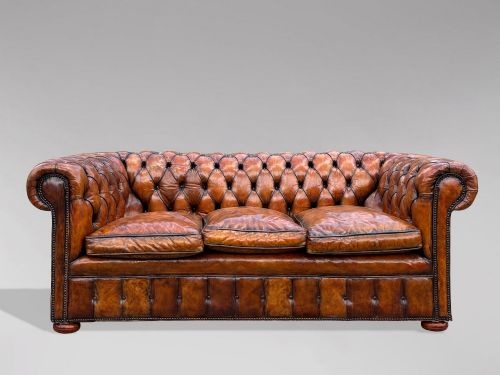
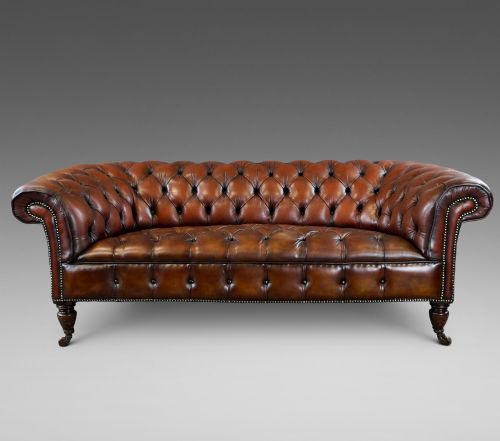
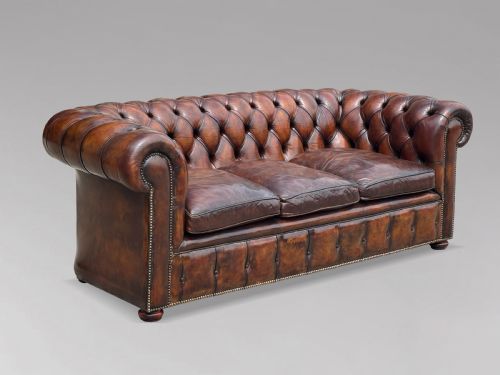
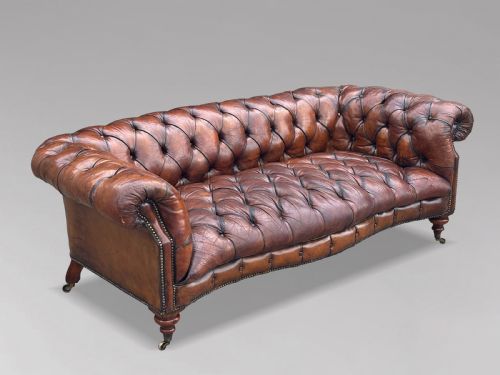
A victorian brown leather couch spans generous chesterfields, curved settees and reclining chaise longues built throughout the nineteenth century. The chesterfield remains the most common form encountered here, typically featuring low backs and rolled arms.
Makers fashioned these pieces using robust timbers including mahogany, walnut and general hardwood to support heavy upholstery. Frameworks range from simple upholstered lines to carved show frames displaying floral motifs.
Originating in domestic parlours and country houses, these seating options combine substantial proportions with practical utility. Styles extend from traditional english designs to georgian revivals and edwardian adaptations.
Materials and construction methods
Traditional construction relies upon sturdy hardwood frames built from mahogany or walnut, providing rigid support for extensive seating. Upholstery work frequently incorporates horsehair fill beneath supple leather layers.
Craftsmen utilised brass detailing such as decorative studwork to secure leather edges neatly along the frame. Hand-dyed leather techniques create rich whisky brown tones that develop character over decades.
Listings feature mahogany, walnut and general hardwood frames upholstered in leather with traditional horsehair fill.
Factors influencing overall quality
The integrity of the underlying hardwood frame and the retention of original horsehair fill largely determine a piece's structural merit. Superior examples maintain deep buttoning tension across the backrest without sagging.
The depth and uniformity of hand-dyed finishes on the leather distinguish finer pieces from simpler alternatives. Original un-restored surfaces command distinct interest compared to fully restored iterations.
Howard And Sons·Hampton And Sons Of Pall Mall·Gillows Of Lancaster
The Victorian Brown Leather Couch Glossary
- Chesterfield
- A traditional upholstered sofa featuring rolled arms and a low back with deep buttoning. This form is characteristic of nineteenth-century seating.
- Show frame
- A wooden structural framework left exposed around the upholstery to display carved details or polished timber. Walnut and mahogany were frequently chosen for this purpose.
- Chaise longue
- An elongated upholstered chair designed for reclining, often constructed with a single raised end or drop arm. Examples frequently incorporate horsehair fill.
- Horsehair fill
- Traditional stuffing material packed beneath the leather upholstery to provide firm and resilient support. It ensures long-lasting shape retention.
- Serpentine front
- A gently undulating curved shape along the front edge of a sofa frame. This design element adds visual movement to heavy seating forms.
Victorian Brown Leather Couch: Frequently Asked Questions
What is a chesterfield sofa?
A chesterfield is a distinctive nineteenth-century seating form defined by rolled arms of the same height as the backrest. It is traditionally upholstered in leather with deep buttoning.
These pieces were designed for formal sitting rooms and country houses, offering robust construction meant to endure heavy daily use.
How do I identify a nineteenth-century piece?
Authentic nineteenth-century pieces display dense hardwood frames, hand-tied springs, and traditional horsehair stuffing beneath the leather. Examining the timber type and construction methods helps verify the era.
Makers often utilised mahogany or walnut, incorporating hand-dyed finishes that develop a natural patina over time.
How should I care for antique leather?
Antique leather benefits from regular dusting and occasional conditioning using specialist balms to prevent the hide from drying out. Keeping the leather away from direct heat sources preserves the original hand-dyed finish.
Avoid harsh modern cleaning chemicals that can strip the natural patina accumulated over the nineteenth century.