



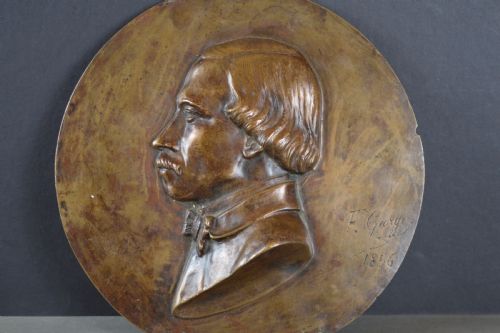


Victorian Bronzed Wall Plaque
A victorian bronzed wall plaque brings tactile historic depth to an interior, offering sculptural metalwork that anchors a room.
Victorian Bronzed Wall Plaque
A victorian bronzed wall plaque comprises cast and repousse metal reliefs designed for interior display, frequently referencing classical, neoclassical, and renaissance revival motifs. These pieces serve as focal points in a room, offering historical imagery from portraits to heraldry.
The selection here encompasses various metals and compositions, including bronze, copper, white metal, and terracotta. Collectors encounter round, rectangular, and shield-shaped formats intended specifically for wall mounting.
Originating across nineteenth-century European and domestic workshops, these plaques reflect periods spanning the eighteenth century through to the early twentieth century. The prevailing aesthetic leans heavily on historical revivalism, matching the nineteenth-century taste for commemorative and classical subjects.
Materials and methods of production
Makers utilised casting techniques alongside repousse work, hammering sheet copper or bronze from the reverse to raise detailed motifs. These metal techniques allowed workshops to produce sharp relief portraits, coats of arms, and narrative scenes.
Secondary materials such as oak and giltwood frequently provide structural backing or framing for the metal panels. Terracotta and white metal also appear, expanding the material palette beyond standard bronze alloys.
Patination played a crucial role in finishing, with chemical treatments imparting aged dark tones to bronze and copper surfaces. Gilt highlights were often applied selectively to accentuate raised figures and inscriptions.
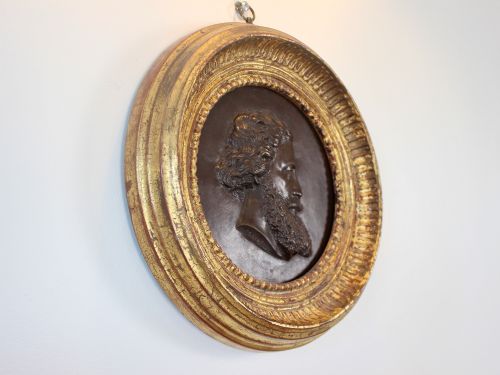
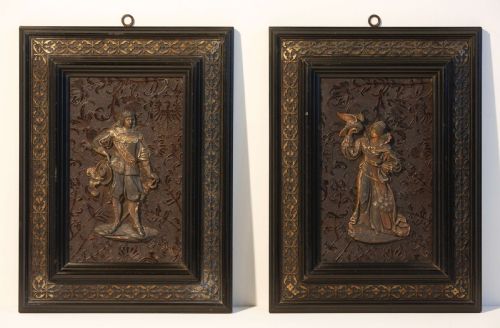
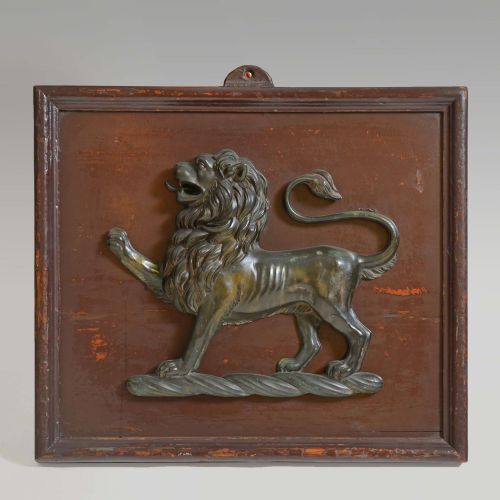
Listings feature nineteen-century portrait plaques, classical platters, and heraldic crests rendered in bronze, copper, and terracotta.
Assessing quality in relief plaques
The sophistication of the subject matter and the reputation of the founding workshop or artist elevate a piece. Signed works and exhibition-associated items demonstrate higher artisan skill than unsigned commercial foundry output.
The integrity of the patination and the preservation of the original mounting hardware influence the overall merit of the plaque. Untouched surfaces displaying deep, stable oxidation indicate better long-term preservation.
Ernst Wahliss·Smith, Beck And Beck·Gustav Grohe·Coalbrookdale·Town And Emanuel
The Victorian Bronzed Wall Plaque Glossary
- Repousse
- A metalworking technique where the artisan hammers sheet metal from the reverse side to form a raised design on the front. This method creates lightweight yet highly detailed pictorial panels.
- Patinated bronze
- Bronze treated with chemical solutions to produce a specific surface colour, most commonly rich browns, greens, or blacks. This finish protects the metal and adds visual depth.
- Neoclassical
- An artistic style drawing inspiration from the classical art and culture of ancient Greece and Rome. It manifests in these plaques through formal symmetry, classical profiles, and mythological themes.
- White metal
- An alloy of relatively low melting point metals, often plated or finished to resemble silver or bronze. It was frequently used for Victorian relief plaques requiring fine detail at lower production costs.
- Heraldic crest
- A symbolic design on an escudo or shield representing a specific family, clan, or institution. These elements appear frequently on commemorative and ancestral plaques.
Victorian Bronzed Wall Plaque: Frequently Asked Questions
How do I hang a heavy bronze plaque safely?
Heavy bronze and cast metal plaques require secure wall anchors and direct attachment to wall studs rather than plaster alone. Using reinforced picture wire matched to the weight capacity of the hanging hardware ensures stability.
Ensure the back frame or integrated hanging loops are structurally sound before mounting. Professional picture hanging fixings prevent the piece from slipping over time.
What is the difference between bronze and bronzed copper?
Solid bronze is a heavy copper and tin alloy cast in a mould to create a thick, durable relief. Bronzed copper typically involves thinner sheet metal that has been shaped by hand using repousse techniques and given a bronze-like chemical finish.
Examining the edge or reverse of the plaque usually reveals whether the piece is a heavy solid casting or a lighter formed sheet.
How should I clean a patinated metal plaque?
Cleaning should be limited to gentle dusting with a soft, dry cloth to remove surface particles. Avoid chemical polishes, abrasives, or water, as these can strip away the historical patinated finish that gives the metal its character.
Preserving the original oxidation layer maintains both the visual depth and the long-term material stability of the piece.
Are these plaques purely decorative or historical?
Many nineteenth-century plaques served as commemorative items, exhibition pieces, or portraits of notable historical figures and literary icons. While primarily intended for display, they often mark specific exhibitions, military events, or political jubilees.
Collectors appreciate them both for their sculptural quality and for the specific nineteenth-century cultural history they record.