





Victorian Bronze Tray
A victorian bronze tray brings nineteenth-century weight and cast detail to a desk or sideboard, offering both utility and a distinct historic presence.
Victorian Bronze Tray
A victorian bronze tray encompasses desk accessories, decorative dishes and trays, and larger centrepiece trays from the nineteenth century. These pieces reflect periods such as the Victorian era alongside 1890, 1880, 1900, 1870, and 1860.
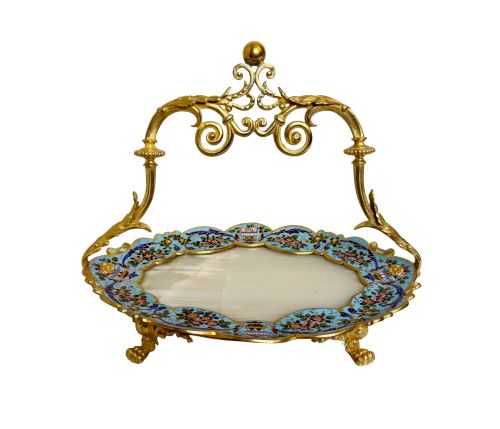
The versions most commonly met on this page combine bronze, gilt bronze, or ormolu with decorative elements like champleve enamel, porcelain, or marble bases. They range from small neo-classical platters to grand centrepiece trays designed for display.
Makers and origins span English production to French workshops influenced by styles such as French Rococo Revival, French Empire, and Art Nouveau. Buyers encounter varied forms, including inkstands and desk sets alongside serving platters.
How They Were Made
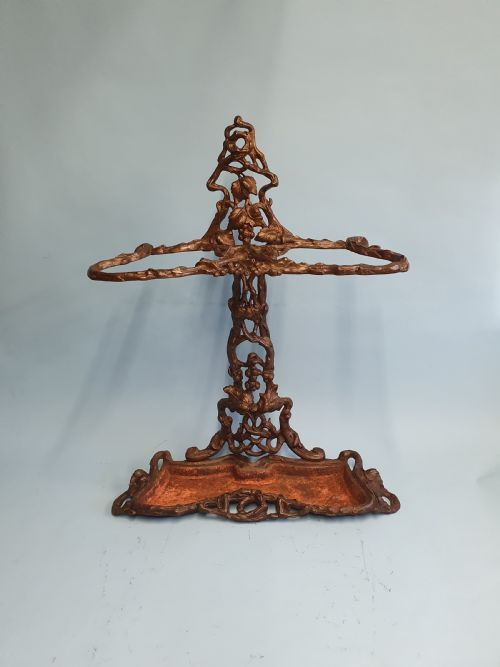
These items rely on metalcasting techniques, utilising bronze, cast iron, and brass to form rigid structural bodies and decorative trays. Gilt bronze and ormolu applications provide a bright surface finish over the cast metal base.
Many examples incorporate champleve enamel work, where recessed channels in the metal are filled with vitreous enamel colours before firing. Combinations with onyx, marble, and coromandel-wood introduce contrasting natural textures to the metalwork.
Materials recorded across the inventory include gilt bronze, ormolu, cast iron, champleve enamel, onyx, and coromandel-wood.
What Varies in Quality
Quality rests in the crispness of the cast detail, distinguishing sharp, deep relief work from soft or blurred ornamentation. Superior pieces demonstrate careful hand-chasing after casting to refine edges and surface textures.
The integration of secondary materials defines the upper tier of the range. Solid marble bases, intact champleve enamel without losses, and genuine fire-gilding separate finer examples from simpler cast items.
A. Kenrick & Sons·Falkirk Foundry·A. Marionnet·Bergmann
The Victorian Bronze Tray Glossary
- Ormolu
- Gilt bronze, typically referring to finely chased and gilded metal mounts used in nineteenth-century decorative arts. The technique involves applying a mercury-gold amalgam to bronze and heating it to drive off the mercury.
- Champleve enamel
- An enamelling technique where troughs or cells are sunk into the surface of a metal object and filled with enamel powder. The piece is then fired until the enamel fuses into place.
- Grand Tour
- A cultural trip undertaken by wealthy young Europeans in the nineteenth century to view classical antiquities. Souvenirs bought on these journeys included small bronzes and desk items.
- Centrepiece
- A large decorative dish, tray, or stand placed in the middle of a table or sideboard. These items often feature elaborate cast ornamentation and stone bases.
Victorian Bronze Tray: Frequently Asked Questions
How are these trays cleaned?
Dust bronze and gilt surfaces gently with a soft, dry brush to prevent accumulation in recessed details. Avoid using commercial metal polishes, as abrasive compounds strip away thin layers of gilding.
For enamel or stone sections, wipe carefully with a barely damp cloth and dry immediately. Moisture must be kept away from any exposed iron or vulnerable backing materials.
Can I use an inkstand for daily writing?
Historic inkstands accommodate pens and small desk items, though original glass or ceramic ink inserts require careful handling. Using them actively demands caution to avoid staining fragile bronze or marble surfaces.
Many collectors prefer to display these pieces as desk ornaments rather than functional writing equipment. This preserves the original gilding and internal components from ink residue.
What styles influence these pieces?
Nineteenth-century metalwork draws on a range of historical revivals and contemporary design movements. Neoclassical and French Empire styles favor symmetry and classical motifs, while Rococo Revival introduces asymmetrical scrolls.
Later Victorian works often incorporate Arts and Crafts simplicity or Art Nouveau organic lines. These stylistic shifts help date specific trays and desk accessories.
How do I identify French pieces?
French trays and desk sets often combine ormolu with materials like Sevres porcelain, onyx, or marble. The casting quality and chasing on French works from the nineteenth century tend to show high precision.
Stylistic cues such as Belle Epoque or Empire motifs further indicate continental manufacture. Maker signatures or foundry marks, when present, confirm the Parisian origin.