

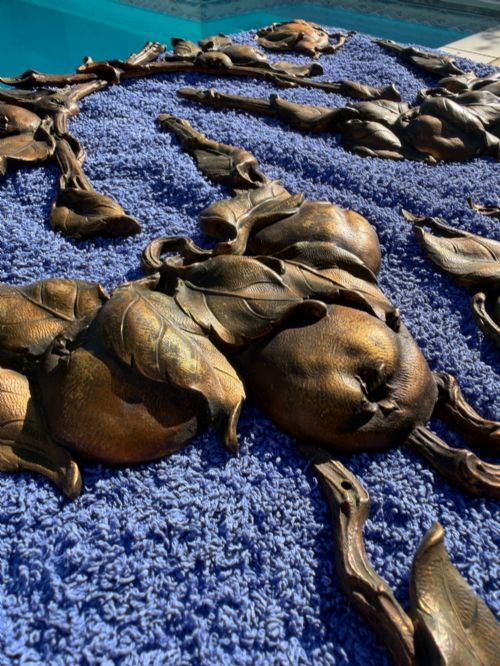


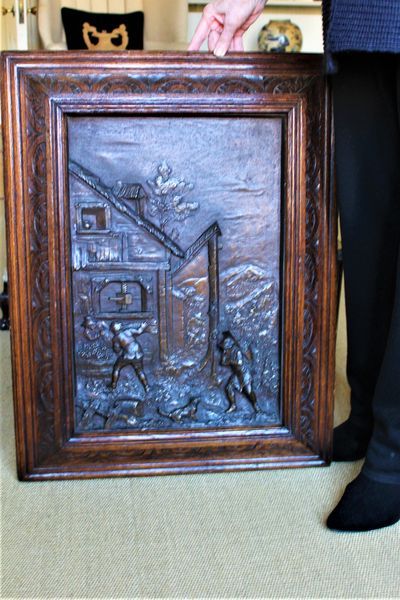


Victorian Bronze Relief Panel
These Victorian bronze relief panel pieces are sculptural metalwork plaques and mounts bringing 19th century cast detail to interior walls and furniture.
Victorian Bronze Relief Panel
A victorian bronze relief panel takes the form of wall plaques, wall reliefs, wall art, and furniture mounts produced across the 19th century, including specific dates like 1870 and 1890. These works frequently depict figurative scenes, portraits, and architectural subjects in relief.
The objects appearing here span Victorian, Victorian Neoclassical, Victorian Gothic, French 19th Century, Baroque Revival, and Indo-Persian styles. Makers and origins stretch from English and French workshops to Milan and Coalbrookdale, demonstrating varied regional output.
Buyers are most likely to meet wall plaques and relief panels cast in bronze, gilt bronze, bronzed copper, and white metal, often mounted within oak, mahogany, or ebonised wood frames.
How they were made
Foundries cast these pieces in bronze, copper, and white metal, frequently applying gilt or silvered finishes to accentuate the raised design. Metal components are combined with wood surrounds including oak, mahogany, and ebonised wood.
Makers utilised relief casting techniques to achieve depth in wall plaques and furniture mounts, sometimes mounting the metalwork onto dedicated wooden panels or incorporating plaques into jewellery boxes and caskets.
Victorian Bronze Relief Panel Retail Price Guide 2026
Typical asking prices for victorian bronze relief panel among the pieces listed under this phrase on Sellingantiques today, from the lower quarter to the upper quarter. They describe what is for sale here now, not the wider market.
Listings feature periods from the 19th century, including specific years 1870 and 1890, alongside materials such as bronze, copper, oak, mahogany, and ebonised wood.
What varies in quality
The refinement of the cast work distinguishes finer examples, where crisp detail in figures, garments, and architectural elements shows clear definition. Surface finishes such as gilding and silvering contribute to the visual distinction of the metalwork.
The quality of the secondary materials, particularly the joinery and finish of the mahogany, oak, or ebonised wood panels and frames, separates standard decorative items from more substantial mounted pieces.
Poix Blin·AB Paris·Coalbrookdale
The Victorian Bronze Relief Panel Glossary
- Relief
- A sculptural technique where the sculpted elements remain attached to a solid background of the same material. This method gives depth to wall plaques and furniture mounts.
- Gilt Bronze
- Bronze metal coated with a thin layer of gold or gold leaf. This finish adds lustre and prevents tarnish on decorative panels.
- White Metal
- An alloy of relatively low melting point metals used in decorative plaques. It often receives a gilded or silvered finish.
- Ebonised Wood
- Timber treated to resemble ebony. It provides a dark contrasting border for bronze and copper relief panels.
- Appliques
- Ornamental fittings fixed to furniture or walls. In these listings, they appear in gilt bronze.
Victorian Bronze Relief Panel: Frequently Asked Questions
How were bronze relief panels used?
These pieces served primarily as decorative wall art, wall plaques, and architectural or furniture mounts within 19th-century interiors. They were designed to be displayed on walls or integrated into functional objects such as jewellery caskets.
Larger plaques functioned as standalone wall reliefs, while smaller examples acted as appliques on furniture or boxes.
How do I date a Victorian bronze relief?
Dating relies on stylistic markers associated with the Victorian period, French 19th-century design, and revival styles such as Baroque Revival and Victorian Gothic. Specific dates or maker inscriptions occasionally appear on the metalwork.
Material choices like ebonised wood frames and specific casting techniques further help place pieces within the 19th century.
What materials are used in these panels?
The primary metallic materials are bronze, gilt bronze, bronzed copper, and white metal with silvered or gilded finishes. Wood surrounds and backing panels are typically fashioned from oak, mahogany, or ebonised wood.
Combinations of metal relief set within wooden frames form the standard construction for wall-hanging formats.
How should I clean bronze relief panels?
Dusting gently with a dry, soft cloth preserves the original surface and any applied gilt or silvered finish. Avoid aggressive chemical cleaners that strip the patination from the bronze or copper.
Wooden frames should be maintained with appropriate furniture care suitable for mahogany, oak, or ebonised surfaces.