
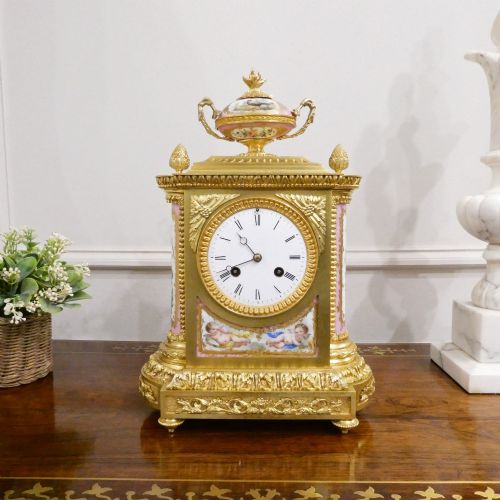
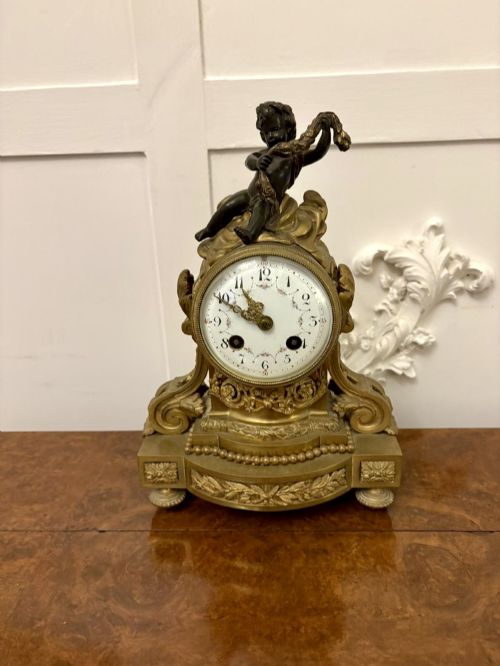

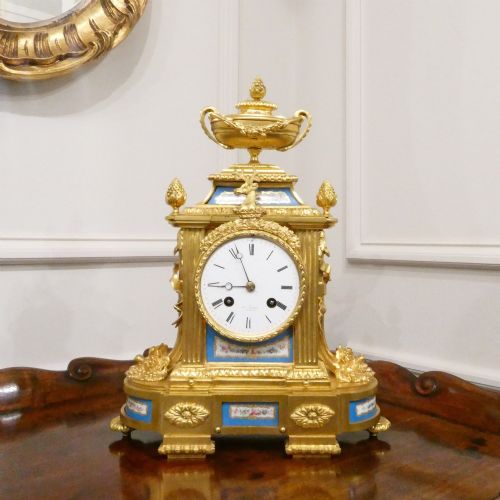
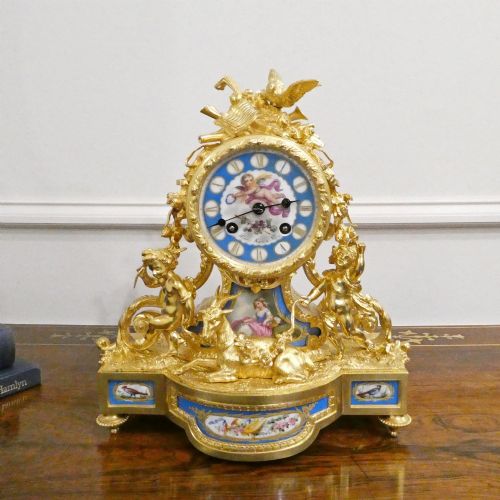

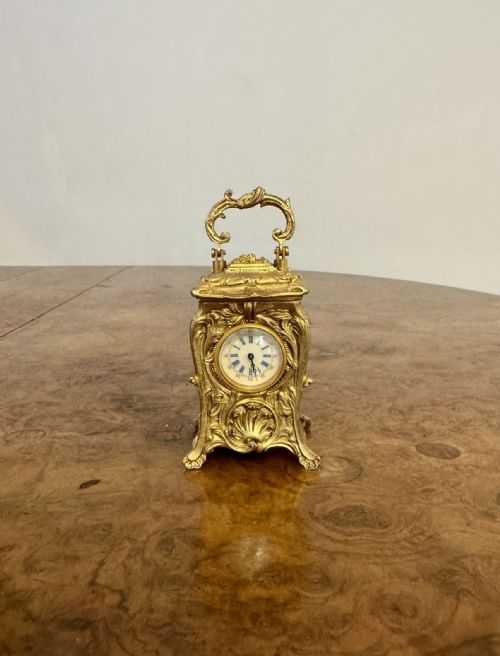

Victorian Bronze Clock
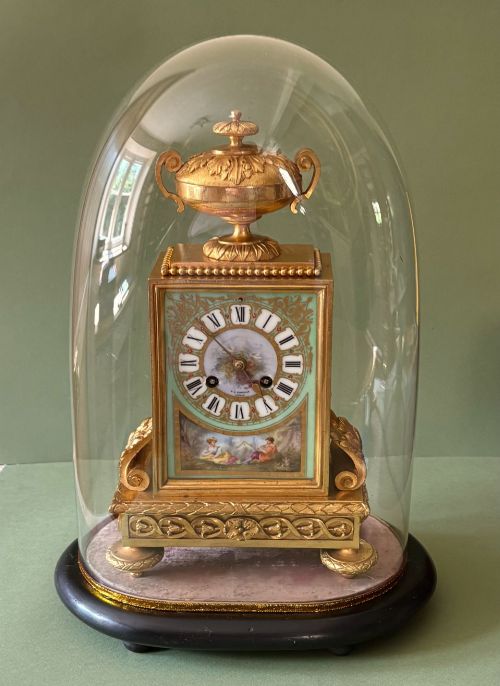
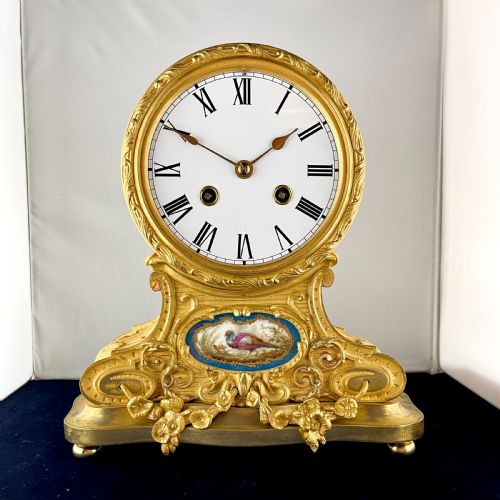
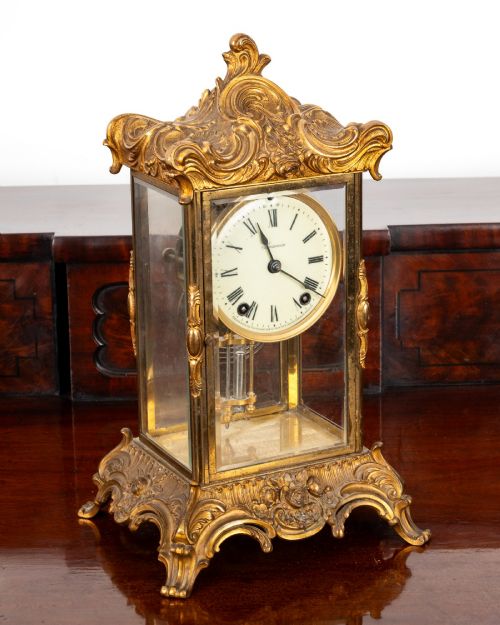
A victorian bronze clock brings substantial nineteenth-century weight and classical foundry work into a room.
Victorian Bronze Clock
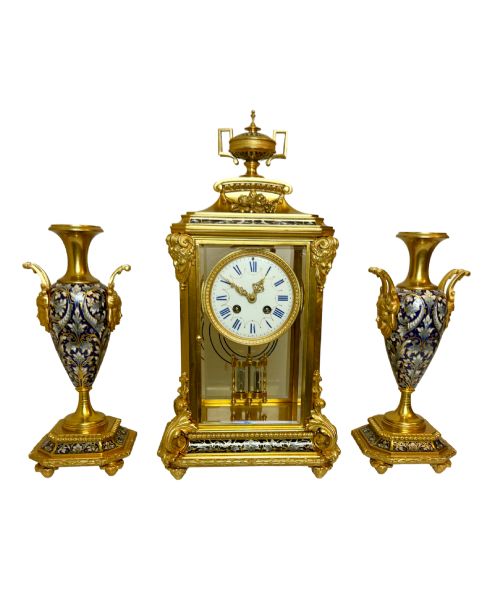
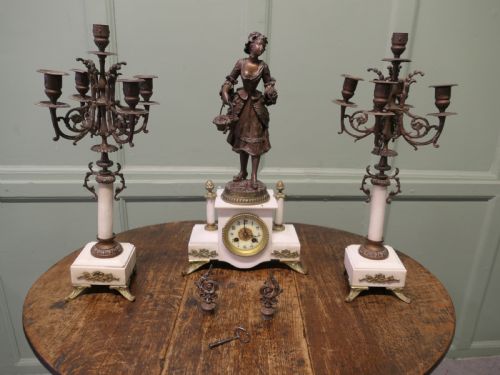
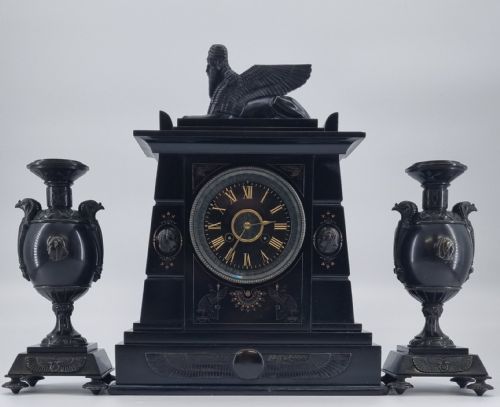
A buyer seeking a victorian bronze clock encounters mantel clocks, carriage clocks, and multi-piece garniture sets originating primarily from nineteenth-century French workshops and English makers. The most common form met here is the mantel clock, often paired with matching side urns or candelabra in a complete garniture.
The periods represented span the decades of the Victorian era alongside Regency and Napoleon III styles, utilising architectural cases, figural subjects, and classical revivals. These pieces functioned as domestic timekeepers and central decorative ornaments for the nineteenth-century interior.
Materials and Casting
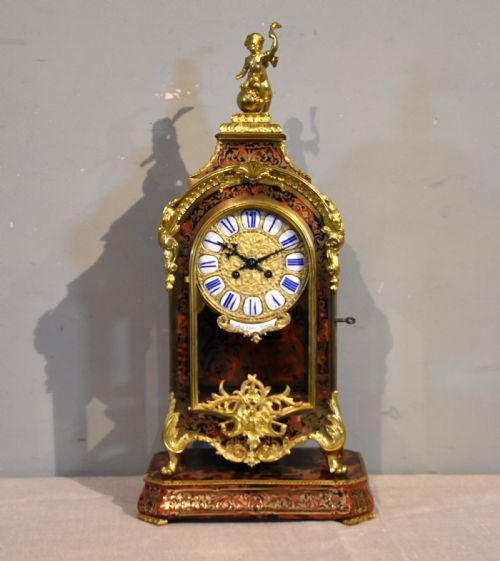
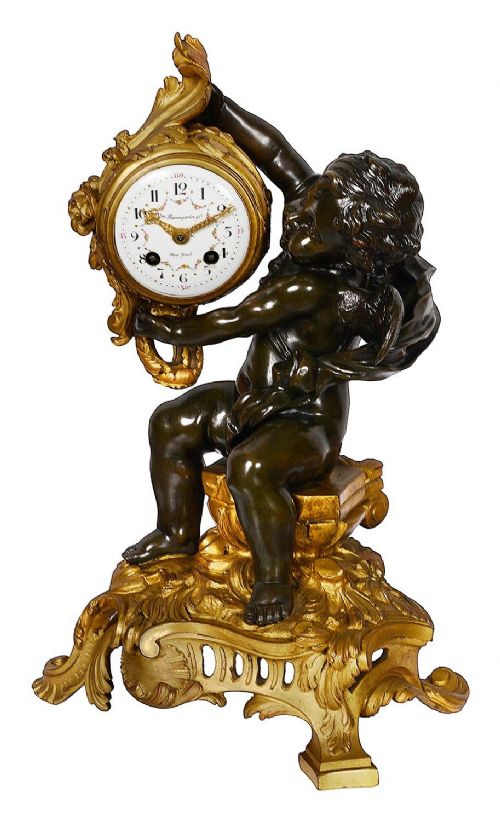
Foundries utilised cast bronze, often gilded with ormolu or accented with brown patination, combined with structural elements of marble, slate, porcelain, and brass. Enamel dials and hand-painted porcelain panels were integrated into the metal housings alongside glass viewing panels.
Casting techniques involved lost-wax or sand methods followed by meticulous chasing of the metal surfaces to sharpen botanical and figurative details. Enamel work and champleve enamelling added polychrome decoration directly into recessed channels on the bronze body.
Materials recorded on this page include champleve enamel, sienna marble, ormolu, and hand-painted porcelain panels.
Craftsmanship and Proportion
Quality rests in the crispness of the bronze chasing and the harmony between the metalwork and the structural marble or porcelain mounts. Superior examples display deep, deliberate chiselling on the figures and foliage rather than smooth, cast-over surfaces that lose fine definition.
The integration of the movement with the case, signed dialwork from established clockmakers, and balanced proportions across garniture sets distinguish the finer productions from standard commercial pieces.
Henry Marc·F.Milliot·Ansonia New York·Philippes Paris·Leroy Paris·William Payne·PH Mourey·P L Hausburg Paris·Howell James Co
The Victorian Bronze Clock Glossary
- Ormolu
- A technique of applying finely ground high-carat gold to a bronze object using a mercury amalgamation process. This imparts a durable golden finish characteristic of French decorative arts.
- Garniture
- A set of three or more matching decorative objects designed to be displayed together on a mantelpiece, typically comprising a central clock flanked by two urns or vases.
- Champleve
- An enamelling technique where troughs or cells are carved into the surface of the bronze and filled with vitreous enamel powder before firing.
- Portico clock
- A mantel clock featuring a architectural case supported by four columns, popular during the nineteenth century and often housing precision pendulum movements.
- Fusee
- A conical pulley used in clock movements to maintain an even pull on the gear train as the mainspring unwinds.
Victorian Bronze Clock: Frequently Asked Questions
How do I wind a Victorian clock?
Most mechanical clocks require a key inserted into the dial arbours to tension the springs every eight days. Care must be taken not to overwind the mechanism.
Moving the hands should be done slowly and strictly in a clockwise direction to avoid damaging the internal strike train.
What is a clock garniture?
A clock garniture is a matched set consisting of a central mantel clock accompanied by two side pieces such as urns, vases, or candelabra. These sets were designed to create a balanced display across a fireplace mantel.
The side pieces repeat the materials, bronze casting styles, and decorative motifs of the main clock.
How do I identify French movements?
French movements of the nineteenth century often bear stamped foundry marks, serial numbers, and medals on the backplate. Maker signatures frequently appear directly on the painted enamel dial.
These movements are typically housed in heavy cast cases made of bronze, marble, or slate.
Where should I place a heavy marble clock?
Due to the considerable weight of bronze and marble mantel clocks, they require a stable, level surface capable of supporting heavy loads. A solid mantelpiece or heavy sideboard prevents vibrations that can disrupt the pendulum.
Keeping the clock away from direct heat sources prevents the drying out of internal lubricants and protects enamel dials.