



Victorian Bronze Cherub
A victorian bronze cherub brings winged classical figures into nineteenth-century interiors through mantel clocks, lamps, and candlesticks.
Victorian Bronze Cherub
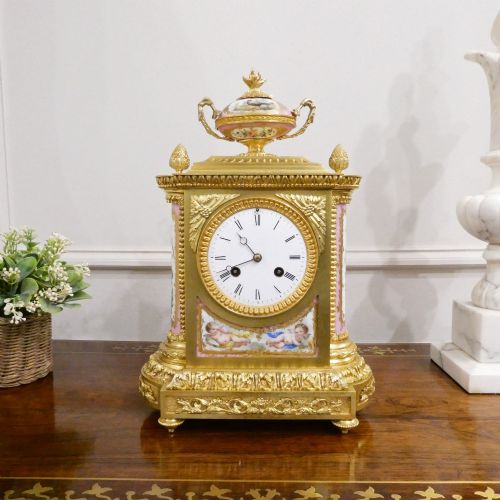
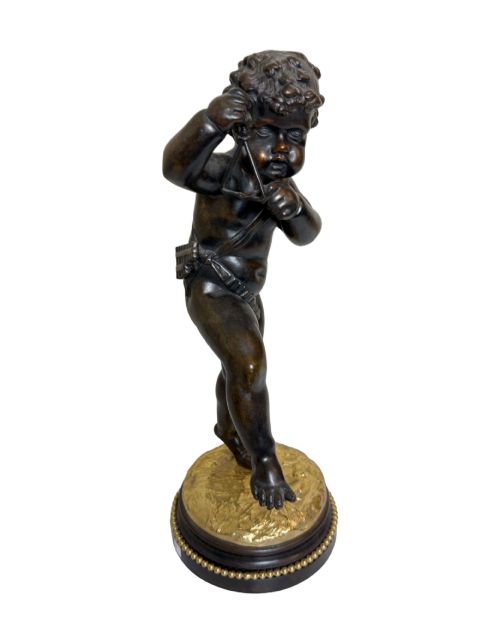
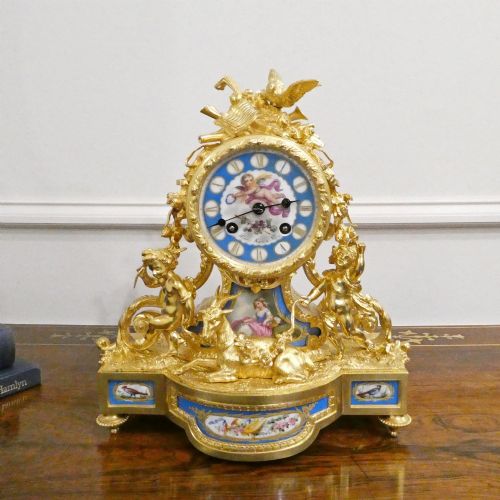
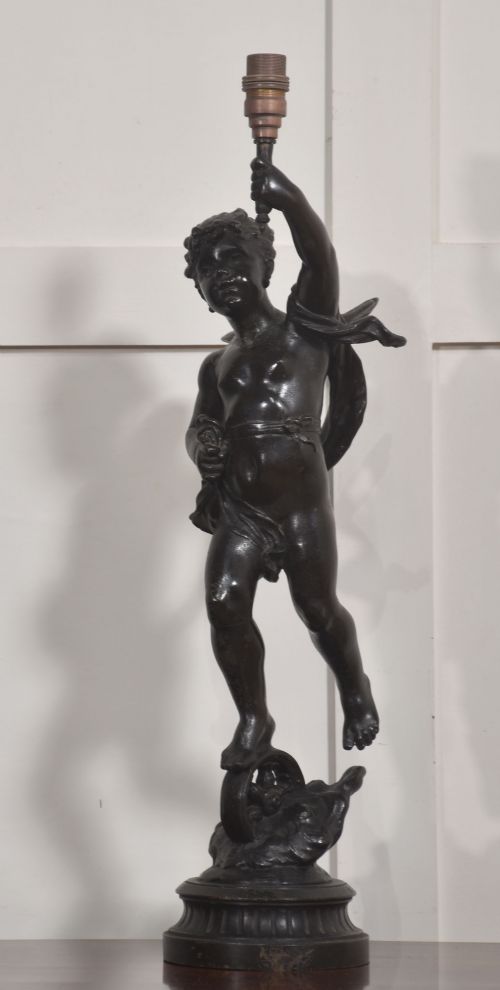
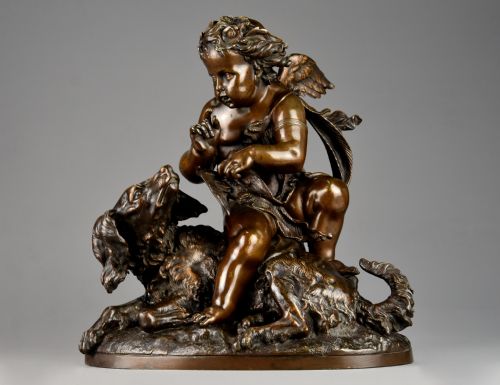
A victorian bronze cherub typically appears as a cast figure incorporated into functional household objects and decorative sculptures, drawing heavily on French Rococo Revival and Neoclassical styles from the nineteenth century. These pieces range from standalone statuettes and Grand Tour figures to functional items such as mantel clocks, table lamps, and candelabra.
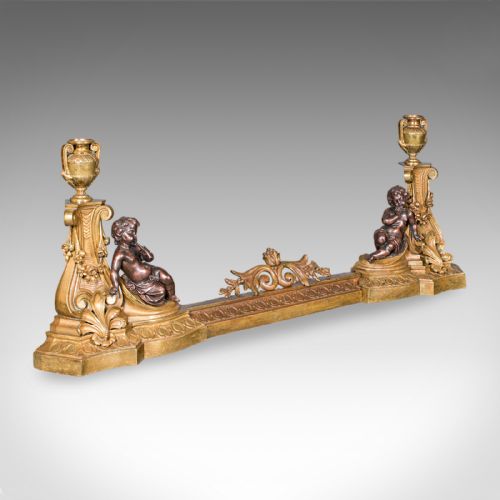
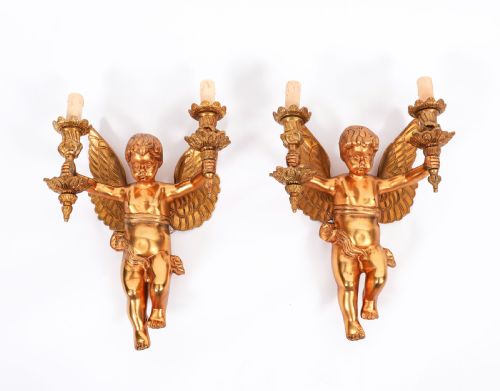
The objects on this page span the mid to late nineteenth century, capturing a period when domestic interiors favoured ornate, figurative bronze metalwork. Buyers regularly encounter pairs of candlesticks, garniture sets, and wall lights where winged putti support branches, dials, or vessels.
Materials and technique
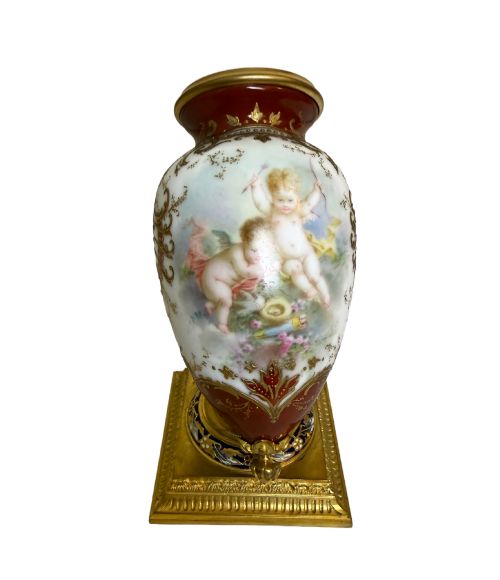
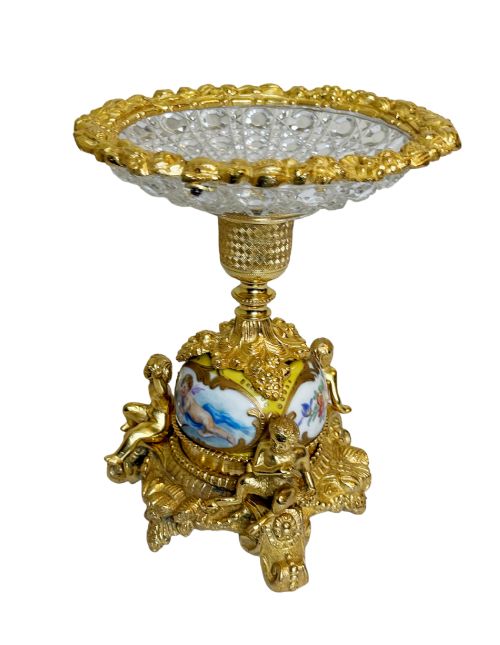
The core material across these listings is bronze, frequently paired with gilt finishes, ormolu, and patinated surfaces. Metal components are combined with contrasting elements like marble bases, porcelain panels, and cut crystal to create layered decorative objects.
Casting methods of the nineteenth century allowed for fine detail in the figures, capturing facial expressions, drapery, and hair. Subsidiary materials such as champleve enamel, glass, and brass further enrich the construction of clock sets, lamps, and centrepieces.
Listings feature items dated from 1850 to 1900, with notable concentrations around the 1880s showcasing French mantel clocks and English doorstops.
Evaluating quality
The integrity of the partnership between the bronze figure and its mountings determines the standard of the piece. Integrated designs where the cherub forms an organic part of a clock garniture or lamp base exhibit superior design cohesion compared to later adaptations.
Jean-Baptiste Delettrez·Henry Marc·Aug. Moreau·Le Roy and Fils
The Victorian Bronze Cherub Glossary
- Ormolu
- Gilded bronze produced by applying a mercury and gold amalgam to a bronze base and heating it. This technique creates a durable, rich golden surface characteristic of French decorative arts.
- Putto
- A plump, naked male child figure frequently appearing in classical art and nineteenth-century bronze sculpture. Often winged, they are commonly referred to as cherubs in Victorian decorative contexts.
- Garniture
- A set of matching decorative ornaments designed to be displayed together on a mantelpiece. These typically comprise a central clock flanked by matching candelabra or vases.
- Patination
- The surface coloration and texture developed naturally over time or applied chemically to bronze. This process alters the appearance of the raw metal, producing deeper brown or green tones.
Victorian Bronze Cherub: Frequently Asked Questions
What is a bronze cherub clock?
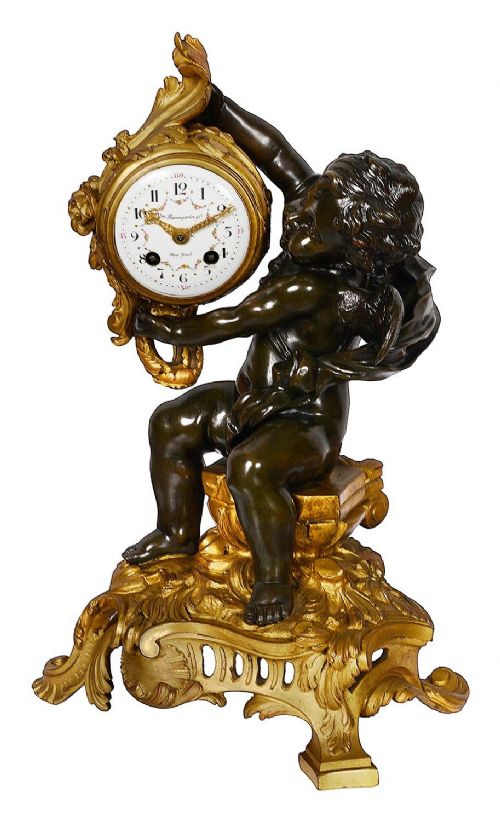
A bronze cherub clock is a nineteenth-century timepiece featuring cast figural metalwork of winged children incorporated into the clock case or garniture set. These clocks often combine gilt bronze with porcelain dials or marble plinths.
Such items served as functional centrepieces in Victorian drawing rooms, pairing mechanical clockwork movements with elaborate decorative casting styles.
How do I identify a Victorian bronze lamp?
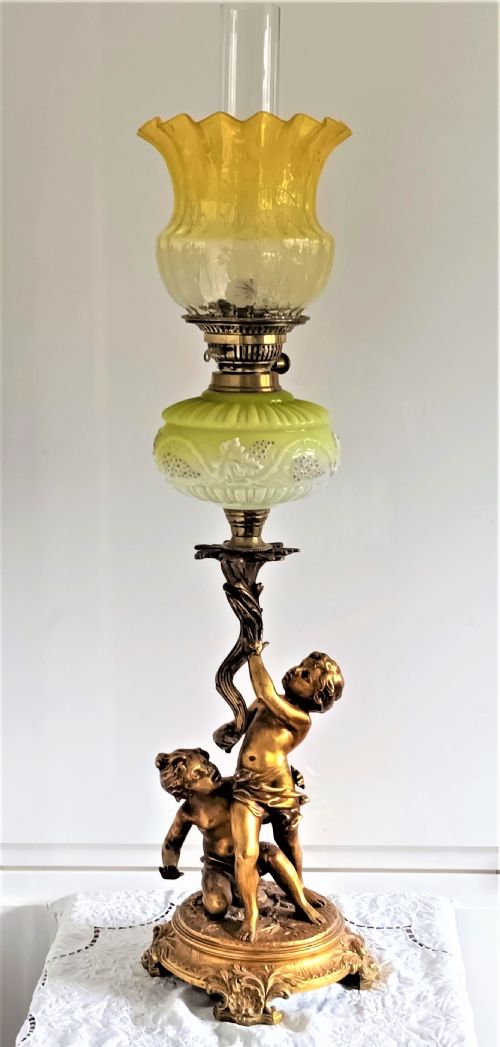
Victorian bronze lamps often utilise earlier statuettes or figural bases that have been converted for electrical or oil lighting during the nineteenth century. They typically feature patinated or gilded bronze putti mounted on heavy stone or metal bases.
Examinations of the wiring holes, fittings, and base construction help distinguish original oil lamp conversions from later electrical adaptations.
Were these cherub figures made in pairs?
Many decorative items such as candlesticks, wall lights, and vases were produced as matching pairs to frame mantelpieces or architectural doorways. Single figures also exist as standalone sculptures, desk accessories, or clock components.
Symmetrical casting variations often indicate whether two separate pieces were designed and manufactured together as a matched set.
What styles influence these bronze pieces?
The dominant styles include French Rococo Revival, Neoclassical, and Second Empire designs popular throughout the nineteenth century. These aesthetics drew inspiration from earlier continental decorative traditions, emphasising ornate scrollwork and classical motifs.
Italian Grand Tour influences also appear in bronze figures depicting children gathering grapes or engaging in mythological activities.