


Victorian Brassware Hearth
These victorian brassware hearth pieces bring warmth and decorative metalwork to the fireplace, offering functional utility alongside period character.
Victorian Brassware Hearth
When you search for victorian brassware hearth items, you encounter a selection of fireside accessories, fireplace accessories, and hearth accessories spanning the nineteenth century. These objects combine practical utility with decorative metalwork designed to sit beside the grate.
The pieces listed on this page include coal scuttles, bins, kettles, andirons, and roasting utensils originating from the Victorian period through to the turn of the twentieth century. You are most likely to meet coal bins and scuttles alongside kettles and andirons made of brass.
Makers and designers influenced these fireside items across different stylistic movements, incorporating Aesthetic Movement, Arts and Crafts, and Art Nouveau designs. The forms range from utility kitchen items adapted for the hearth to specialised coal holders.
Materials and construction
Manufacturers utilised brass and cast brass as the primary metals for these hearth objects, sometimes combining them with ebonised wood and glass. Heavy casting techniques produced robust andirons and decorative details, while sheet brass formed coal helmets and bins.
Specialised workshops employed hand-forming and casting methods to create functional items that endured daily fireside use. Details such as turned wooden handles or glass mounts complement the polished metal surfaces.
Listings feature items spanning the 19th century up to 1900, incorporating brass, copper, and ebonised wood across diverse stylistic movements.
Assessing quality in hearth brassware
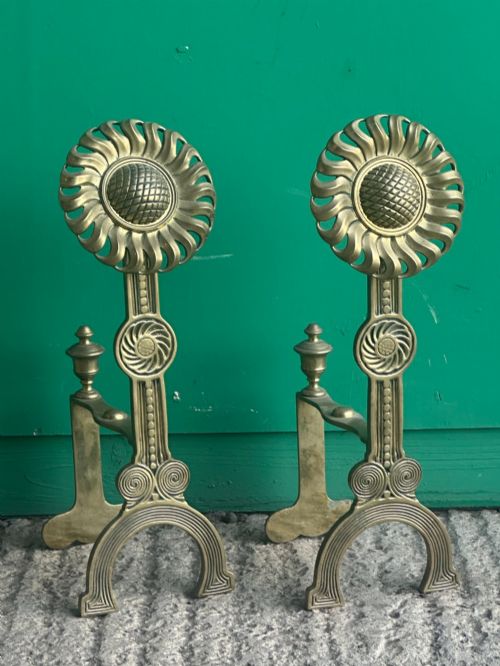
Quality in these pieces depends on the weight of the metal and the crispness of the cast details, such as the sunflower motifs on andirons. Substantial gauge brass and solid construction distinguish superior domestic items from lighter utilitarian wares.
Attribution to known makers or manufacturers adds distinction to specific fireside accessories. Pieces bearing maker marks or reflecting distinct stylistic movements like the Aesthetic Movement hold greater interest for collectors.
Thomas Jeckyll·William Tonks·Benham and Froud
The Victorian Brassware Hearth Glossary
- Andirons
- Iron or brass supports used in a fireplace to hold logs above the hearth floor. Pairs often feature decorative cast fronts.
- Coal helmet
- A type of coal scuttle shaped with a flared lip resembling a classical helmet. These containers held fuel near the fire.
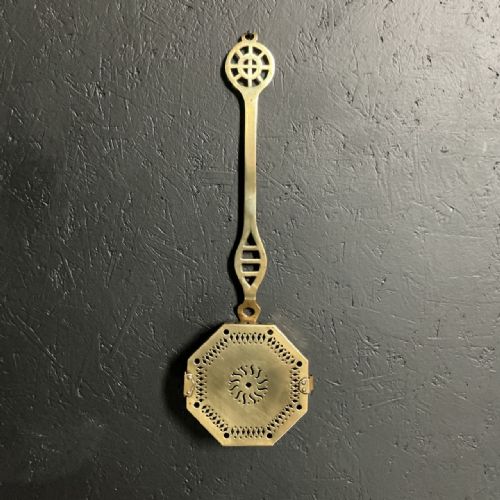
- Chestnut roaster
- A long-handled metal utensil used for roasting chestnuts over open coals. They often feature pierced brass lids.
- Cast brass
- Metal shaped by pouring molten alloy into a mould. This technique allowed makers to achieve intricate decorative relief work.
- Aesthetic Movement
- A late nineteenth-century design movement emphasising visual beauty over narrative content. It often drew inspiration from nature.
Victorian Brassware Hearth: Frequently Asked Questions
What is a coal helmet?
A coal helmet is a distinctively shaped metal bucket designed to hold fuel next to the fireplace. Its flared rim and hinged handle combined practical carriage with neat storage.
These containers sat openly on the hearth as part of the room's decorative metalwork scheme.
How do I date brass hearth items?
Dating relies on stylistic clues, manufacturing techniques, and materials associated with specific decades. Pieces reflect Victorian, Edwardian, or Arts and Crafts design preferences.
Makers' marks stamped into the metal can also pinpoint the manufacturing workshop and timeframe.
Where were andirons placed?
Andirons stood inside the fireplace hearth to support burning logs and improve airflow beneath the fire. Their decorative fronts remained visible in the room.
Pairs were matched in design, often incorporating floral or geometric motifs from the period.
How do I clean antique brass?
Antique brass generally retains character through its natural aged surface and mellowed tone. Over-polishing can remove historic patina and soften cast details.
Gentle dusting is usually sufficient to maintain the metal without stripping its history.