


Victorian Brass Stationery Box
A Victorian brass stationery box organises desk correspondence with heavy timber carcasses and secure metal mountings.
Victorian Brass Stationery Box
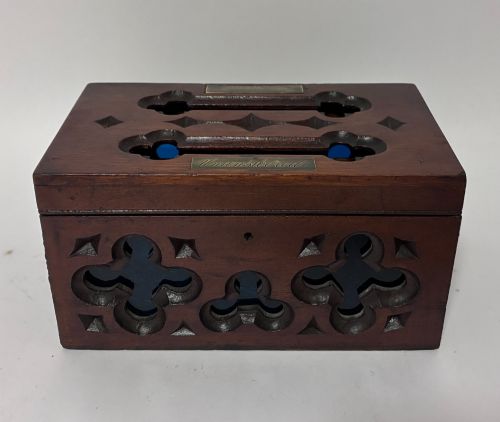
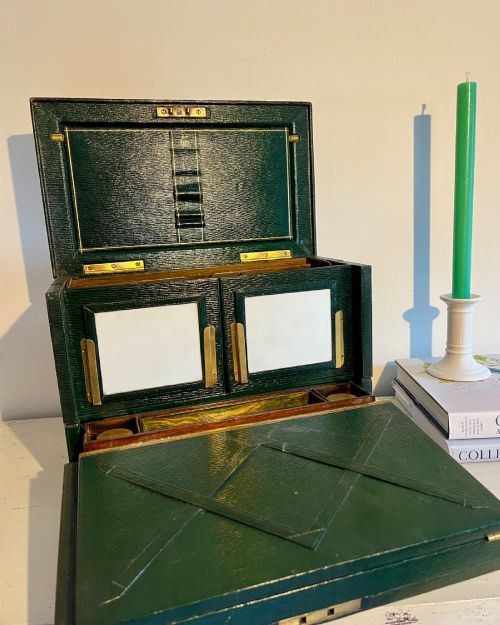
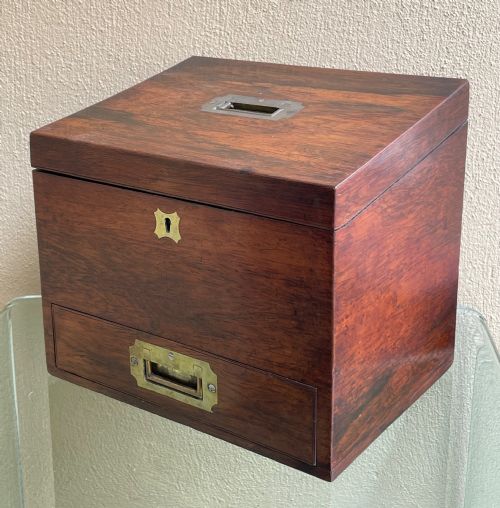
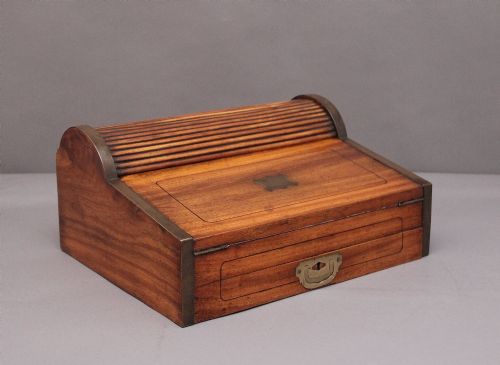
A victorian brass stationery box is a desk accessory designed to hold correspondence, letters and writing materials within a hinged or domed compartment. These pieces emerge primarily from the nineteenth century, taking the form of tabletop letter cases, correspondence boxes and desktop stationery cabinets.
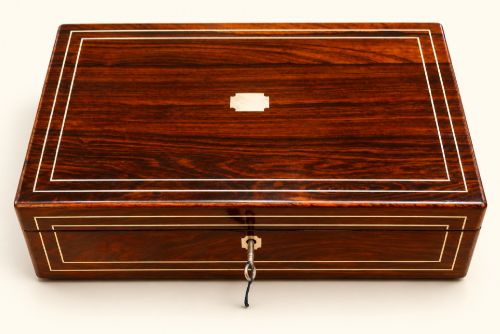
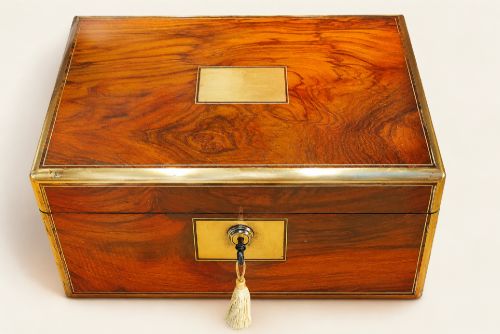
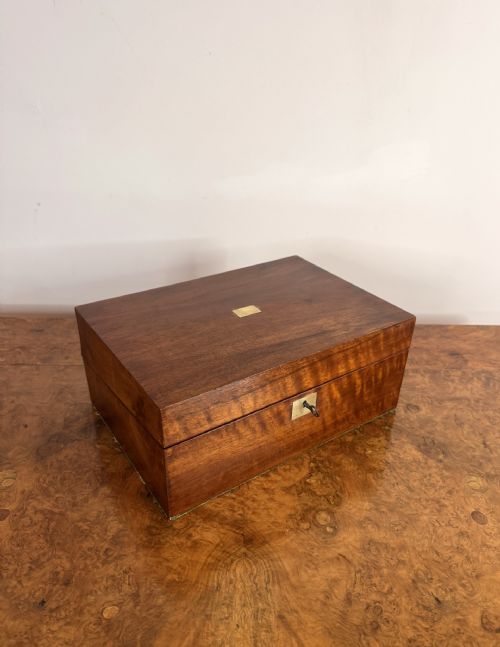
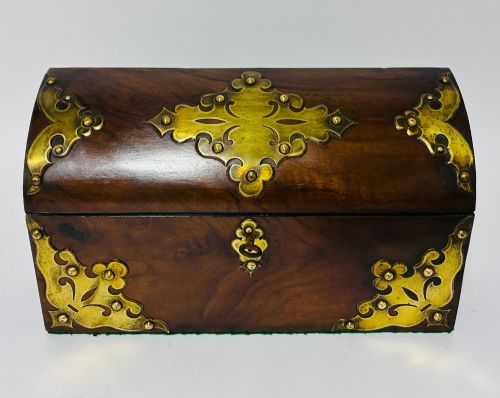
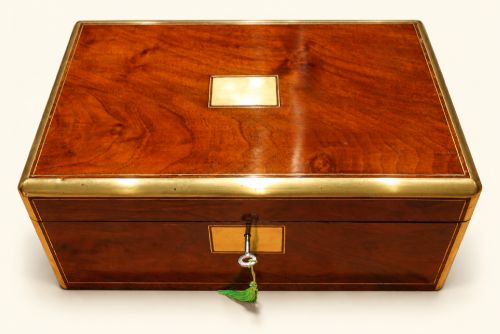
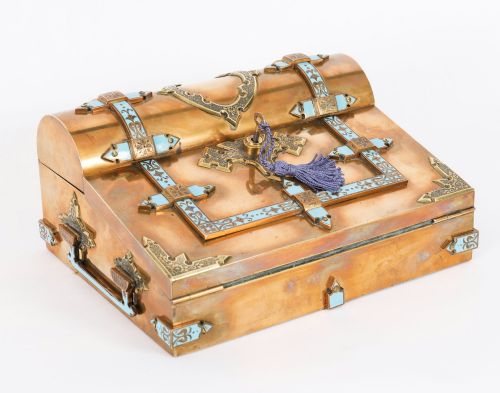
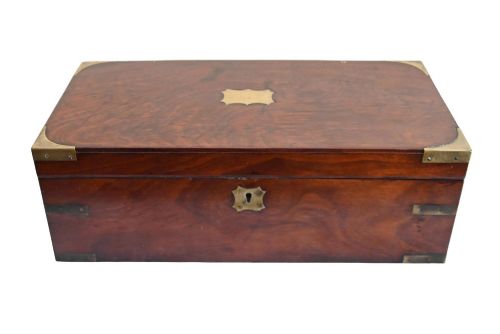
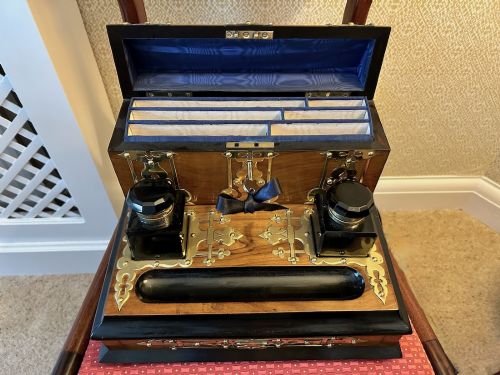
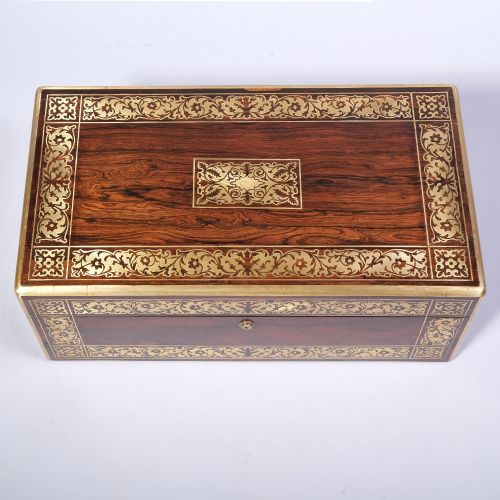
The most common examples on this page are constructed from rich timbers like burr walnut, rosewood and mahogany, heavily secured with brass banding, strapwork and corner mounts. Buyers encounter both slope-front writing boxes with stationery compartments and upright cabinets built for domestic studies and country house writing desks.
Materials and Construction
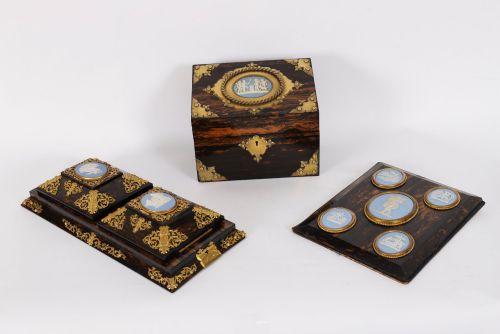
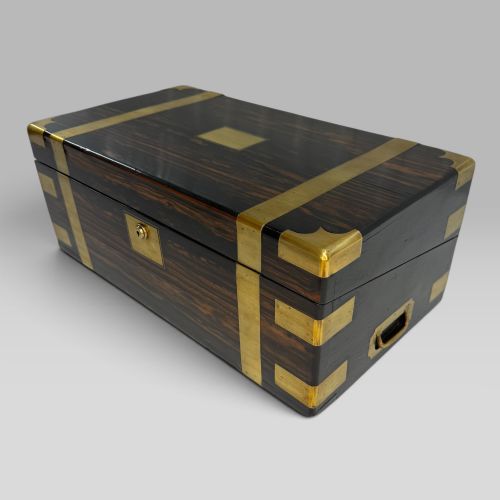
Cabinetmakers built these boxes using solid woods and decorative veneers, notably burr walnut, pollard oak and coromandel, laid over sturdy secondary timbers. Brass hardware provides both structural reinforcement and decorative contrast, appearing as inset campaign mounts, strapwork and elaborate escutcheons.
Joinery techniques focus on durability and secure closures, frequently incorporating brass locks by makers like Bramah to protect private correspondence. Interiors often feature fitted wooden divisions, tooled leather surfaces and velvet linings designed to hold paper, pens and inkwells.
Victorian Brass Stationery Box Retail Price Guide 2026
Typical asking prices for victorian brass stationery box among the pieces listed under this phrase on Sellingantiques today, from the lower quarter to the upper quarter. They describe what is for sale here now, not the wider market.
The archive includes campaign pieces, dome-top cabinets, and writing slopes equipped with secret drawers and Bramah locks.
Distinctions in Quality
Quality rests upon the choice of timber veneer, the precision of the brass inlay, and the integrity of the internal fittings. Superior examples utilise richly figured burr walnut or coromandel with thick, flush-fitting brass strapwork rather than thin brass plating.
The sophistication of the mechanism also defines the piece, with better boxes featuring secret drawers, functioning Bramah locks with original keys, and slope interiors that adjust smoothly. Heavier timber gauges and complete, original internal dividers indicate higher workshop standards.
The Victorian Brass Stationery Box Glossary
- Stationery box
- A desktop container specifically sized for holding writing paper, envelopes and correspondence. These pieces often feature sloping lids or tiered internal partitions.
- Writing slope
- A portable box that opens to form an inclined writing surface lined with leather or velvet. They include internal compartments for nibs, ink and paper.
- Campaign
- Furniture and accessories built for travel, characterised by recessed brass handles, reinforced corners and durable construction. These items were designed to withstand military or colonial transport.
- Bramah lock
- A high-security cylindrical lock patented by Joseph Bramah in the eighteenth century. They are commonly found on better-quality nineteenth-century boxes and require a tubular key.
- Burr walnut
- A prized timber veneer taken from the growth growths of the walnut tree. It produces intricate, swirling grain patterns highly favoured in Victorian cabinetmaking.
Victorian Brass Stationery Box: Frequently Asked Questions
What is a Victorian brass stationery box?
A Victorian brass stationery box is a nineteenth-century wooden desk container reinforced and decorated with brass mounts, strapwork or inlay. They were made to sit on a library table or writing desk to keep letters and paper organised.
These pieces range from flat-topped desktop cases to domed cabinets with fitted interior partitions for envelopes and correspondence. The combination of dense hardwoods and structural brass reflects the heavy usage of Victorian studies.
How were stationery boxes used?
Victorian households utilised these boxes to store writing paper, envelopes, stamps and incoming letters away from dust and ink spills. Upright models allowed correspondence to be sorted into categories within reach of the writer.
Many designs combined stationery storage with writing slopes or inkstands, creating compact writing stations for the parlour or country house study.
How do I care for wood and brass?
Maintain the timber by keeping the box away from direct sunlight and sudden temperature changes that can crack veneers. Regular dusting with a dry cloth preserves the finish without building up residue.
Brass mounts can be cleaned gently with a soft cloth if tarnishing occurs, though many collectors prefer to leave a natural aged patina on the metalwork.
How are different periods identified?
Early pieces from the Regency period tend to feature restrained brass inlay set into dark rosewood, while mid-Victorian boxes often showcase heavily figured burr walnut with robust brass strapwork. Gothic Revival and later Victorian examples introduce architectural dome tops and specialised internal tiers.
Hardware styles, lock types and timber choices offer the clearest clues to a box's decade of manufacture.