


Victorian Brass Militaria
Victorian brass militaria encompasses heavy metal ordnance, regimental headdress, and accoutrements from the nineteenth century that collectors prize for their martial history and tactile heft.
Victorian Brass Militaria
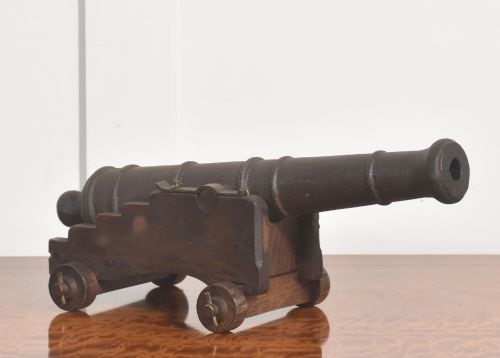
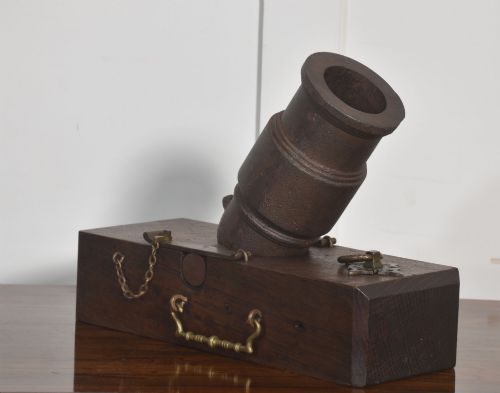
When you search for Victorian brass militaria, you encounter a diverse range of items including ornamental signal cannons, powder flasks, helmets, and doorstops originating from the nineteenth century.
The selections span standard military equipment like percussion pistols and cavalry helmets alongside decorative pieces such as miniature drums and Scottish soldier doorstops.
Pieces frequently incorporate timber mounts in oak or walnut, paired with metals like brass, copper, and cast iron to form robust functional objects and uniform accessories.
Materials and construction
Makers utilised cast and sheet brass alongside copper for powder flasks, helmets, and decorative cannons, often combining these with sturdy woods such as oak and walnut for carriages and walking sticks.
Items incorporate leather, steel, and cast iron components to provide structural strength and mechanical function, particularly in firearms, headdress frames, and ordnance carriages.
Surface finishes include gilt, paint, and polished metal treatments applied to helmets, tinplate models, and ornamental pieces to denote regimental hierarchy or decorative appeal.
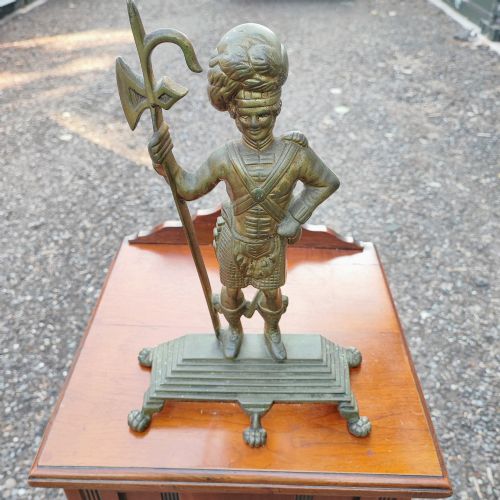
Someone once needed a heavy brass Scottish soldier holding a halberd just to keep a draughty nineteenth-century door from slamming.
Quality variations
The degree of crispness in cast brass ornamentation and the structural integrity of timber mounts determine the distinction between standard utilitarian gear and finer presentation pieces.
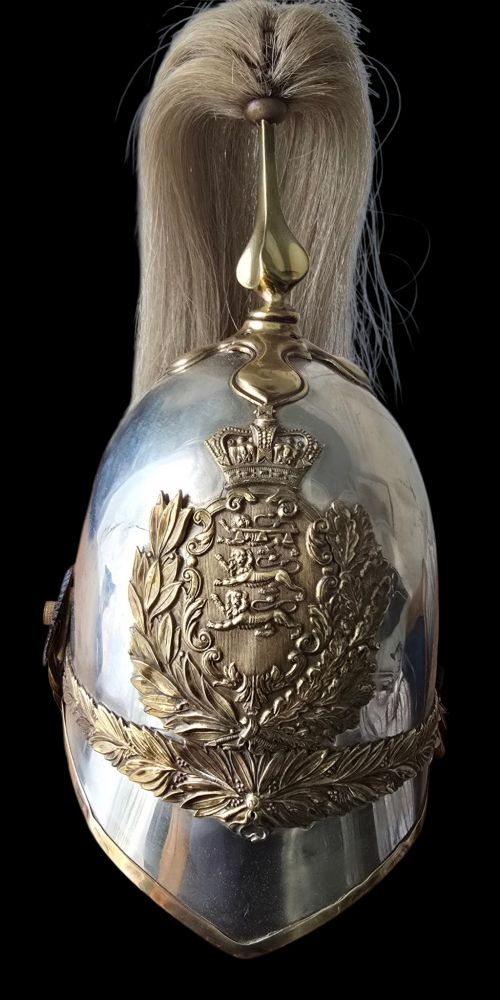
Original elements such as horsehair plumes, patent adjustable charges on powder flasks, and authentic regimental markings elevate the historical value of surviving equipment.
The Victorian Brass Militaria Glossary
- Powder flask
- A portable container used to carry gunpowder for muzzle-loading firearms. These items often feature brass or copper bodies with graduated nozzles for measuring charges.
- Signal cannon
- A small ordnance piece fired to mark time, start races, or commemorate events. They are typically mounted on wooden carriages made of oak or cast iron.
- Percussion cap
- A small metal detonating device introduced in the nineteenth century to ignite the powder charge in firearms. They superseded flintlock mechanisms and enabled more reliable firing in wet weather.
- Swagger stick
- A short cane or stick carried by military officers as a symbol of authority. Versions in the evidence combine walking stick and sword stick functions.
- Lance cap
- A distinctive military headdress worn by lancer regiments, also known as a square-topped czapka. Examples feature stiffened leather and metal components.
Victorian Brass Militaria: Frequently Asked Questions
What is Victorian brass militaria?
Victorian brass militaria comprises nineteenth-century equipment, ordnance, and decorative objects associated with armed forces. The category includes signal cannons, powder flasks, firearms, and helmets.
These pieces reflect the manufacturing techniques and military standards of the period, utilising brass, copper, iron, and wood.
How were powder flasks used?
Powder flasks stored gunpowder securely in the field and dispensed precise charges for muzzle-loading pistols and longarms. Many incorporated patent adjustable nozzles to measure the powder accurately.
Collectors find them in copper, brass, and horn, often paired with decorative motifs.
How do you date military helmets?
Dating military helmets relies on specific pattern years, regimental badges, and material construction such as white metal, gilt, and horsehair plumes. Contemporary stamps and dated inscriptions also provide reliable chronological markers.
Style evolutions in brims, peaks, and crests help distinguish mid-century models from later Victorian iterations.