
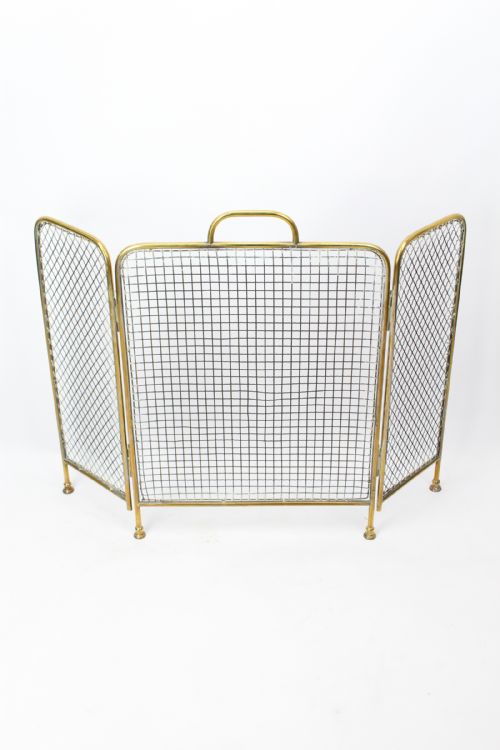


Victorian Brass Mesh Guard
A victorian brass mesh guard protects rooms from stray sparks while adding gleaming metallic texture to the hearth.
Victorian Brass Mesh Guard
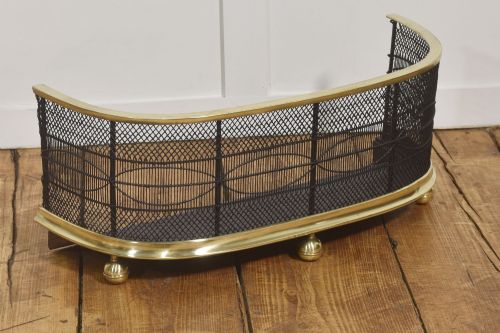
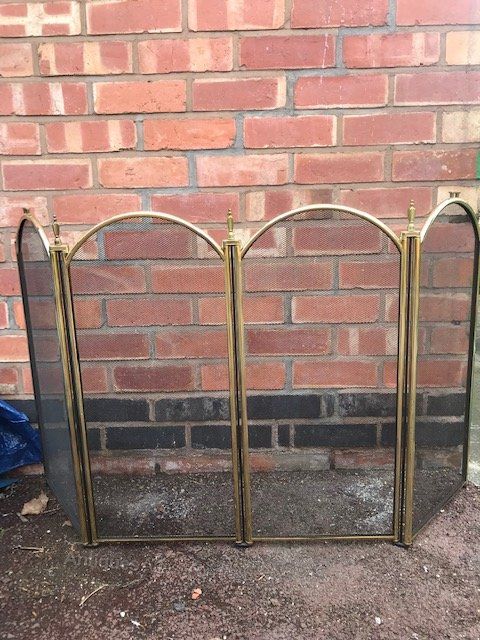
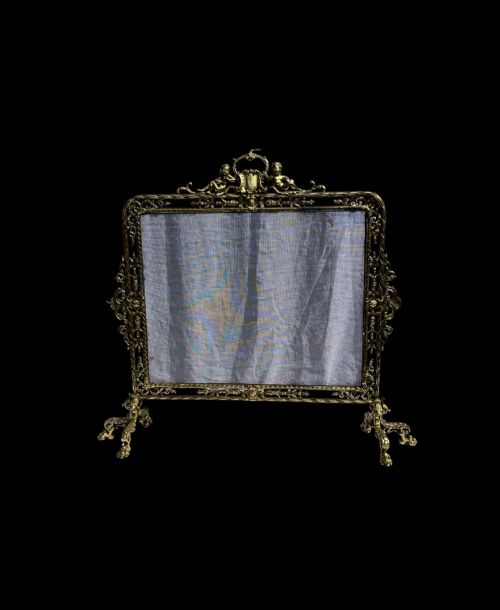
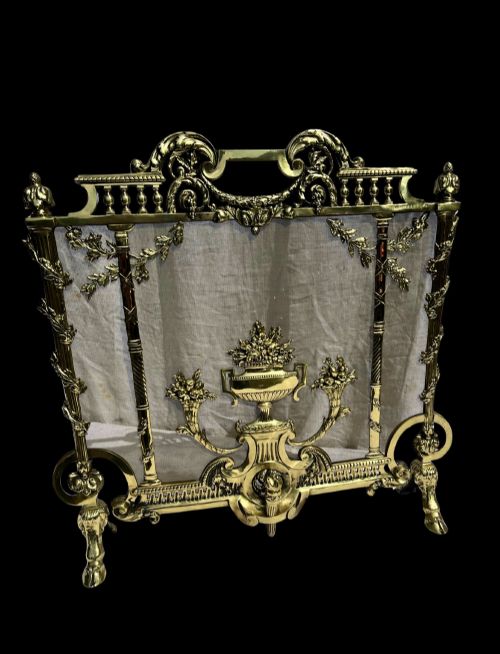
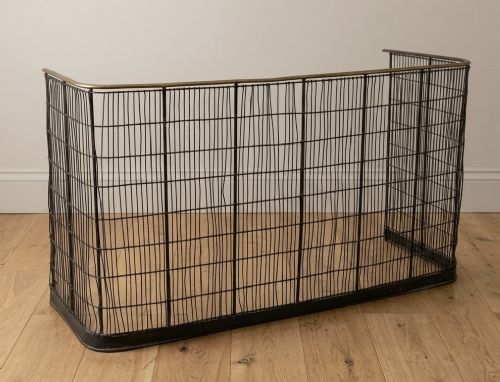
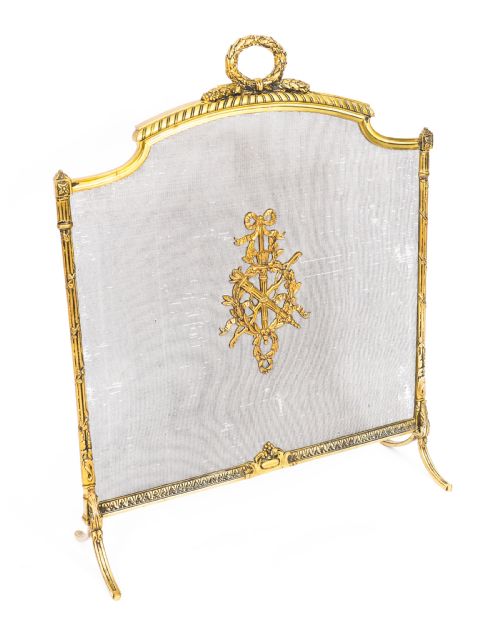
A victorian brass mesh guard comprises rigid or folding screens and enclosing nursery fenders designed for nineteenth-century fireplaces. The form ranges from simple flat frames to multi-section folding panels and bowed spark guards.
Most examples combine polished brass frames with woven wire mesh or iron mesh inserts. Pieces frequently appear alongside related hearth furniture such as fireplace fenders and nursery guards equipped with clothes rails.
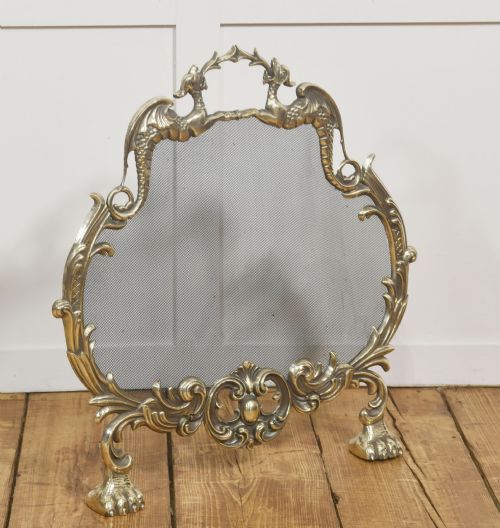
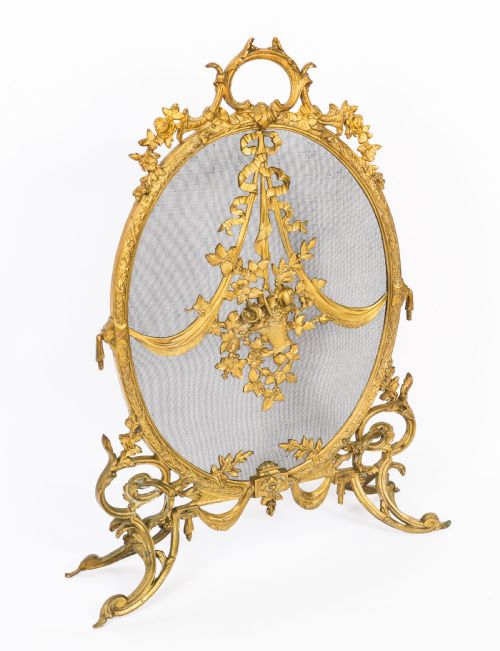
Stylistic influences span the nineteenth century, drawing on Victorian, Rococo Revival, French Empire Revival, and Regency vocabularies. Makers utilised embossed brass panels, gilt bronze, and decorative top rails to articulate these domestic barriers.
How They Were Made
Craftsmen built these guards using structural brass frames combined with flexible iron wire mesh or metal mesh screens. Frames incorporated hinged folding sections, bowed curves, and demi-lune configurations to enclose the hearth safely.
Surface decoration involved embossing sheet brass and applying black finishes or gilt bronze accents. Top rails and rims were cast or turned, securing the wire mesh panels firmly within the metal framework.
Materials recorded across the inventory include polished brass, woven iron wire, gilt bronze, and black finish metal.
What Varies in Quality
Construction weight and frame rigidity separate standard production pieces from finer hearth guards. Substantial gauge brass and tightly woven wire mesh indicate robust workshop execution.
Detailing in the cast or embossed ornaments distinguishes individual pieces. Elaborate Rococo Revival motifs and French Empire Revival casting show greater articulation than utilitarian designs.
The Victorian Brass Mesh Guard Glossary
- Nursery fender
- A low enclosing barrier designed to keep children at a safe distance from the open fire. These guards often incorporate raised brass top rails or integrated clothes rails.
- Spark guard
- A fine mesh screen positioned before the hearth to catch escaping embers. The metal wire prevents burning fragments from damaging carpets and upholstery.
- Rococo Revival
- A nineteenth-century design style favouring asymmetrical C-scrolls, shell motifs, and naturalistic plant forms. This ornament frequently appears on cast brass fire screens.
- Demi-lune
- A half-moon shape used for curved fireplace guards and fenders. This contour fits neatly around hearth projections.
- Gilt bronze
- Metal objects treated with a gold-coloured alloy or mercury gilding finish. The technique produces a rich metallic lustre on decorative revival frames.
Victorian Brass Mesh Guard: Frequently Asked Questions
How do I clean a brass mesh fire screen?
Dust the wire mesh gently with a soft brush to remove soot and debris. Avoid abrasive cleaners that might strip historical patination from the brass frame.
Polish the solid brass sections sparingly with a non-abrasive metal cleaner designed for vintage surfaces. Take care not to snag the delicate wire mesh during the process.
What is the difference between a fire screen and a nursery fender?
A fire screen stands upright to block radiant heat and contain sparks from an active hearth. These pieces often feature decorative panels or folding sections for adjustable coverage.
A nursery fender forms a low protective enclosure around the entire hearth perimeter. They frequently include top rails and were historically used to air garments near the fire.
How do I date a Victorian brass mesh guard?
Examine the construction joints, hinge types, and stylistic vocabulary of the metalwork. Pieces showing Rococo Revival or French Empire Revival ornament typically align with nineteenth-century production periods.
Notice whether the mesh is hand-woven wire or machine-produced industrial mesh. Simpler folding screens and embossed country house designs often date towards the later nineteenth and early twentieth centuries.
Can I use an antique mesh guard with a modern open fire?
Check the structural stability and heat resistance of the wire mesh before exposing the guard to an active flame. Many nineteenth-century guards function effectively as spark barriers.
Ensure the dimensions match your hearth opening so the guard sits securely on the floor. Lighter folding sections suit decorative display or enclosed gas fires best.