



Victorian Brass Garniture
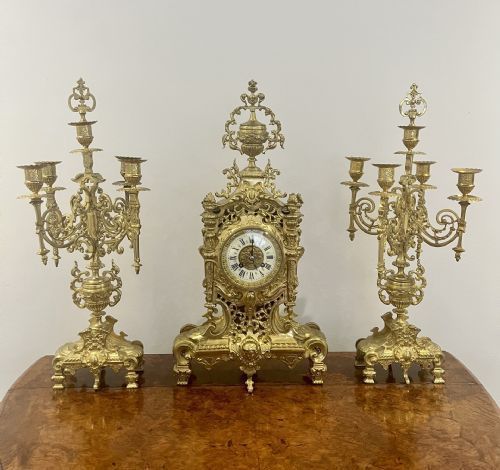
A victorian brass garniture brings coordinated splendour to a mantelpiece, pairing a central clock with matching candelabras, urns or vases.
Victorian Brass Garniture
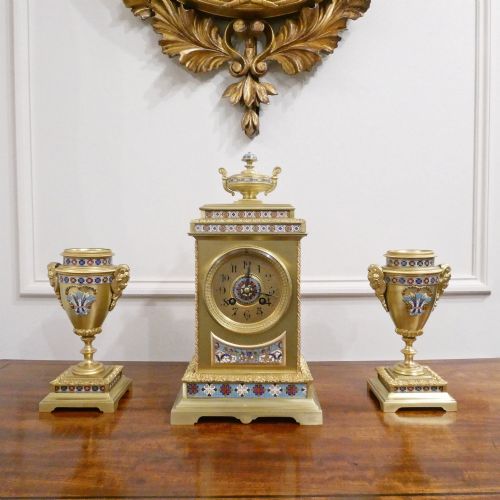
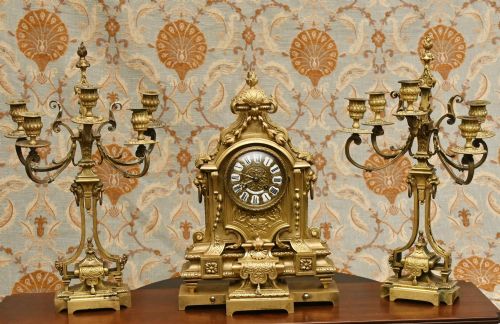
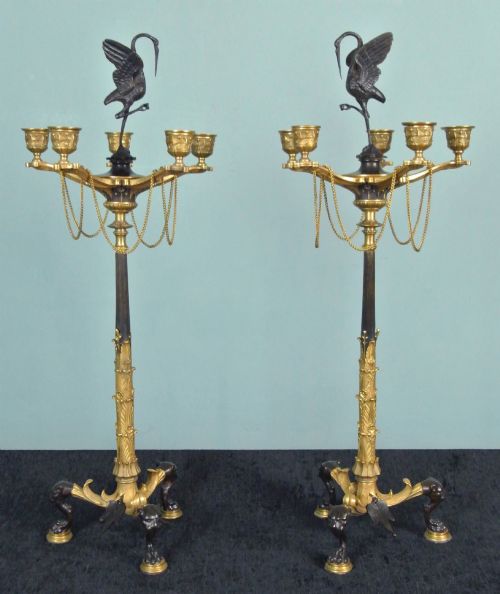
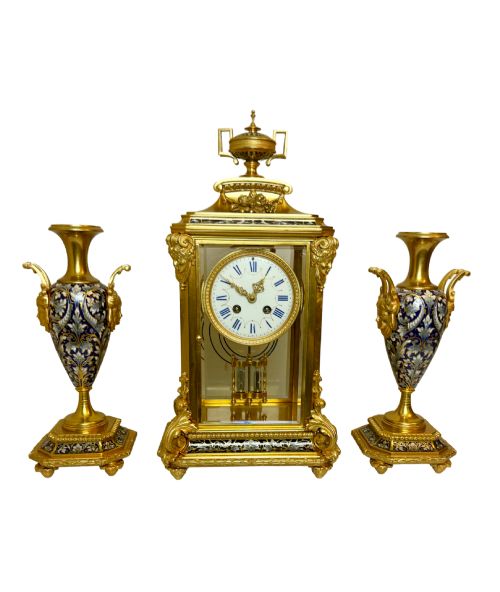
A victorian brass garniture comprises a matching set of mantel ornaments, typically featuring a central clock flanked by twin candelabras, vases, urns or ewers designed to dress a fireplace. These decorative ensembles emerge most frequently from the nineteenth century, spanning periods from the Regency era through to the late Victorian years.
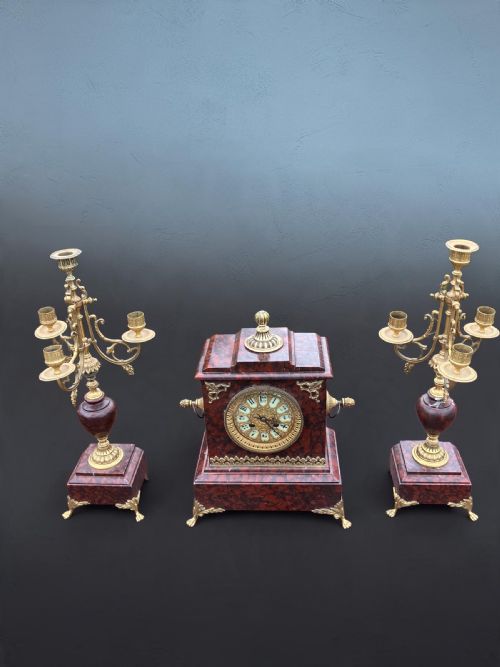
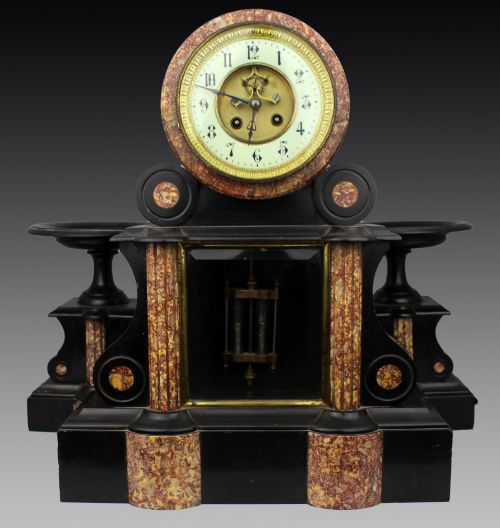
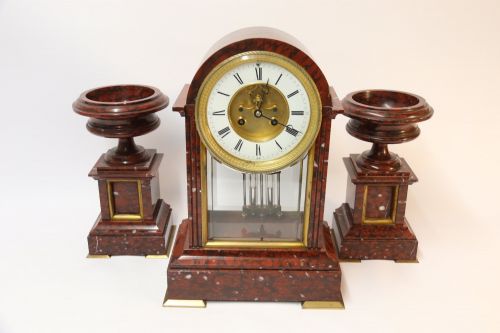
Makers and retailers combined brass, gilt bronze and ormolu with contrasting materials such as black marble, rouge marble, green onyx and porcelain. Sets frequently follow French Second Empire, Napoleon III and Rococo Revival styles, incorporating champleve enamel and cloisonne details.
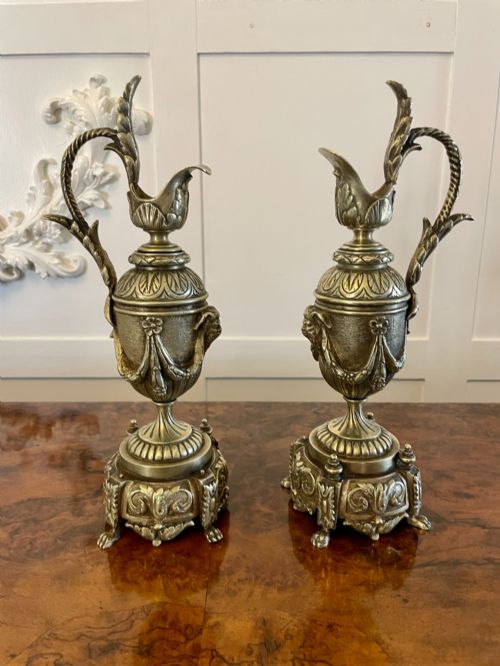
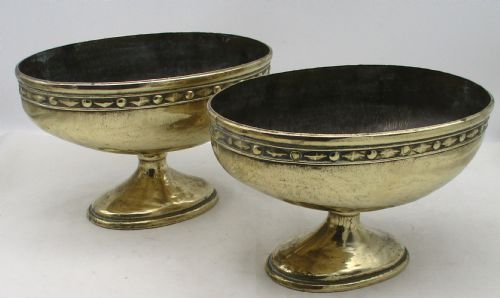
The configurations vary from three-piece clock sets with matching side pieces to pairs of decorative ewers and pedestal bowls intended for altar or mantel display. Buyers encounter diverse regional influences, with French workshops contributing heavily to the surviving pieces alongside British examples.
Materials and construction
Casting formed the backbone of these pieces, utilising brass, gilt bronze and ormolu to create ornate frames, handles and mounts. Metalworkers chased and gilded these surfaces to achieve rich reflectivity and intricate relief work.
Lapidaries shaped heavy stones like black marble, rouge marble and green onyx into polished plinths, portico columns and clock bodies. Enamellers then applied champleve and cloisonne techniques directly onto metal grounds to introduce vibrant panels of colour.
Victorian Brass Garniture Retail Price Guide 2026
Typical asking prices for victorian brass garniture among the pieces listed under this phrase on Sellingantiques today, from the lower quarter to the upper quarter. They describe what is for sale here now, not the wider market.
Some church altars doubled as showrooms, lending their brass vases to domestic mantelpieces.
Assessing craftsmanship and finish
The refinement of the casting and the depth of the subsequent chasing separate standard items from exceptional examples. Superior sets display crisp, sharply defined foliage, figures and scrollwork without softening in the metal details.
The choice and preparation of the stone foundation heavily influence overall calibre, with dense, evenly figured marble or onyx carrying greater visual weight than lesser slabs. Furthermore, the integration of complex dial enamelling and signed movements by known makers elevates the entire garniture.
Samuel Marti·Japy Freres·Barbedienne·A.D Mougin
The Victorian Brass Garniture Glossary
- Garniture
- A coordinated set of ornamental objects designed to be displayed together on a mantelpiece, sideboard or console. These typically consist of a central clock paired with matching candelabras, vases or urns.
- Ormolu
- Finely ground high-carat gold applied to a bronze or brass object using a mercury amalgamation technique. This process creates a rich, durable golden finish characteristic of ornate nineteenth-century metalwork.
- Champleve enamel
- A technique where troughs or cells are hollowed out of a metal surface and filled with vitreous enamel paste before firing. The piece is then polished flat to reveal the metallic outlines framing the coloured glass design.
- Clock garniture
- A specific three-piece or multi-piece mantel set comprising a functioning clock flanked by two matching decorative companions. These sets dominated formal Victorian and French interior display.
- Portico clock
- A mantel clock featuring a architectural case supported by columns, resembling a classical temple facade. They frequently appeared in marble and formed the centrepiece of elaborate garniture sets.
Victorian Brass Garniture: Frequently Asked Questions
What is a garniture set?
A garniture set is a matched group of decorative objects designed for symmetrical display on a mantelpiece or sideboard. They traditionally feature a central clock accompanied by two matching side pieces such as candelabras or urns.
These ensembles became popular status symbols in nineteenth-century interiors, providing a unified decorative theme for the principal reception rooms.
How do I date a brass garniture?
Dating relies on examining the stylistic cues, such as French Rococo Revival or Napoleon III motifs, alongside the materials used like black marble and champleve enamel. Mechanical components and maker stamps on the clock movements also help establish the decade of production.
Many nineteenth-century pieces bear foundry marks or retailer stamps that narrow down their origin to specific decades between the Regency period and the turn of the twentieth century.
Were all garniture sets made in France?
While many high-end sets originate from French workshops and makers, British manufacturers and retailers also produced and imported similar decorative ensembles. French influence remained strong throughout the Victorian period, leading to widespread adoption of styles like Second Empire and gilt bronze ornamentation.
Retailers in major British cities often sourced movements and components from continental makers while supplying the domestic market.
How should I clean brass and marble?
Maintenance requires gentle dusting with a soft cloth to protect vulnerable gilt surfaces and delicate enamel work from abrasion. Strong chemical polishes should be avoided on ormolu and gilded bronze to prevent stripping the historic finish.
Marble and onyx bases respond best to wiping with a damp cloth followed by immediate drying, keeping moisture away from any exposed metal joints or clock movements.