


Victorian Brass Pitcher
A victorian brass pitcher brings heavy metal and warm timber into a room, offering genuine utility shaped by nineteenth-century hands.
Victorian Brass Pitcher
A victorian brass pitcher encompasses functional vessels and ornamental ewers made during the nineteenth century, including coopered oak items bound in metal and heavy cast examples. These pieces serve as liquid measures, water carriers, or decorative lamps, reflecting the varied domestic and social needs of the period.
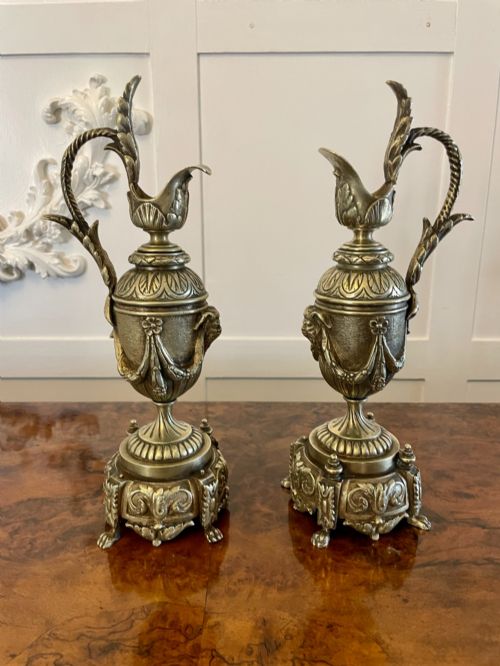
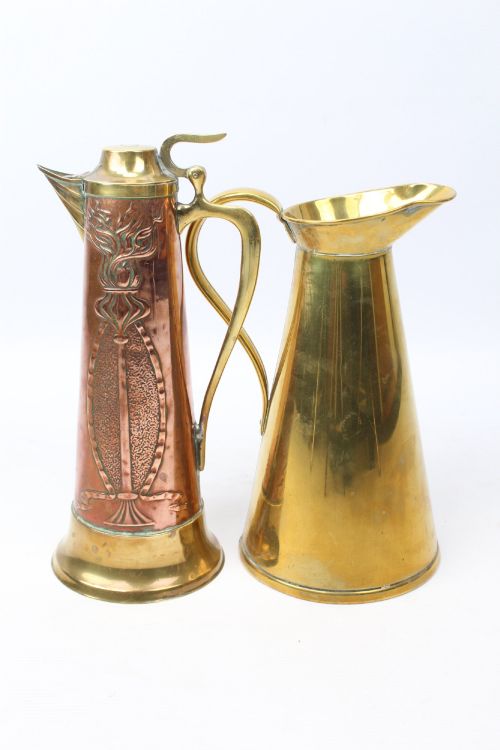
The versions most commonly met on this page range from utilitarian gallon haystack measures and tall plain containers to ornate rococo revival ewers and arts and crafts copper-and-brass milk jugs. They span several decades of production, drawing on styles from george iii traditions to later provincial designs.
How They Were Made
Maker construction relies heavily on brass and copper, sometimes combined with staves of oak secured by metal bands in the manner of coopered vessels. Artisans also utilised gilt bronze and gilt metal for decorative ewers, whilst other items incorporate clear and green overlay glass or enamel.
Techniques range from traditional stave assembly and metal beating to casting ornate surface details seen in neoclassical and rococo revival pieces. Workshops shaped these materials to endure everyday kitchen tasks or to sit upon grand dining tables.
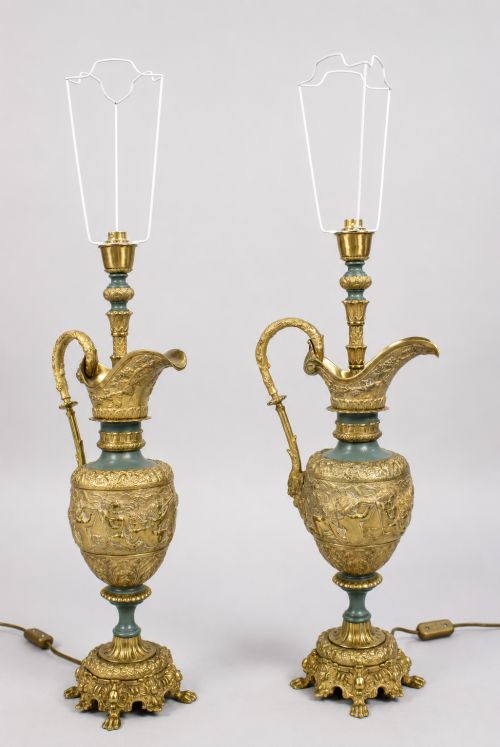
Object forms on this page include standard milk jugs, tall water vessels, heavy liquid measures, and converted lamp bases.
What Varies in Quality
Quality rests in the crispness of cast ornamentation and the structural integrity of joined materials, such as tight timber staves bound securely by metal hoops. Heavy weight and balanced proportions distinguish robust utility pieces from lighter decorative items.
The distinction between standard production and finer work shows in the finishing of handles, pouring lips, and surface patination achieved over decades of handling.
J Bower·H F Fearncombe & Co of Wolverhampton
The Victorian Brass Pitcher Glossary
- Ewer
- A large jug with a wide spout and handle, traditionally used for holding water. Many Victorian examples functioned primarily as decorative ornaments or were later converted into table lamps.
- Coopered
- Made from staves of wood fitted together and bound with metal hoops, typical of large jugs and pitchers. This method derives from traditional barrel-making techniques.
- Haystack measure
- A specific type of British liquid capacity measure characterised by its tapering conical shape resembling a haystack. These were standard commercial units utilised in trade.
- Overlay glass
- Glass formed by fusing one layer of coloured glass over another, then cutting through the top layer to reveal the contrasting colour beneath. It appears on glass-bodied claret jugs.
Victorian Brass Pitcher: Frequently Asked Questions
What is a haystack measure?
A haystack measure is a traditional British liquid capacity measure designed with a distinctive tapering shape. These metal containers were officially calibrated for trade use.
Over time, many of these utilitarian measures transitioned into decorative domestic objects valued for their robust construction and simple form.
How were these pitchers used?
These vessels served diverse roles ranging from heavy-duty agricultural and kitchen work to formal dining service. Some acted as standard liquid measures for trade, whilst others carried water or milk.
Ornamental ewers and converted lamp bases fulfilled purely decorative functions in nineteenth-century interiors, showing how utilitarian metalwork adapted to parlour use.
Are oak and brass jugs heavy?
Coopered oak and brass jugs possess substantial weight due to the density of the timber staves and the thick metal bands securing them. This construction was necessary to hold large volumes of liquid securely.
When handling these pieces, the combined weight of wood and metal provides a stable base and a sturdy feel.
How do arts and crafts jugs differ?
Arts and crafts jugs often combine copper and brass to highlight the contrast between different metal tones rather than relying on cast surface ornamentation. Their design emphasises simpler lines and visible construction details.
These pieces reflect a shift away from heavily ornate revival styles towards honest material expression in domestic metalwork.
Can I use an antique ewer as a lamp?
Many nineteenth-century ewers and gilt metal vessels have been adapted into table lamps over the years. This conversion allows decorative metalwork to function safely with modern electrical fittings.
Such pieces retain their sculptural form whilst providing functional ambient lighting in a room.