

Victorian Brass Fireplace Curb
A victorian brass fireplace curb frames the hearth, protecting the room from stray embers while anchoring the fireplace scheme.
Victorian Brass Fireplace Curb
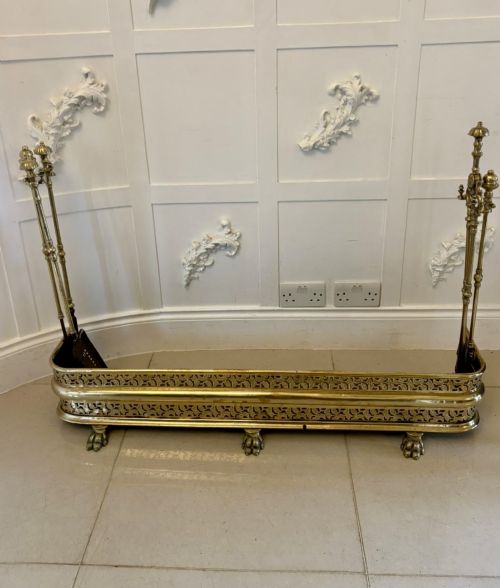
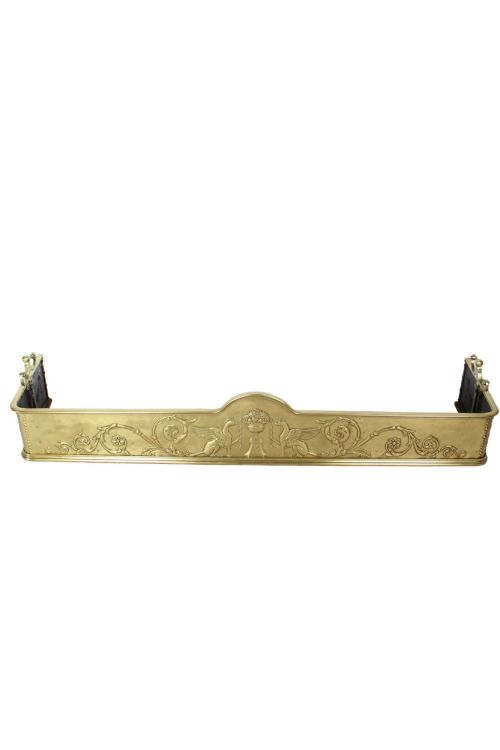
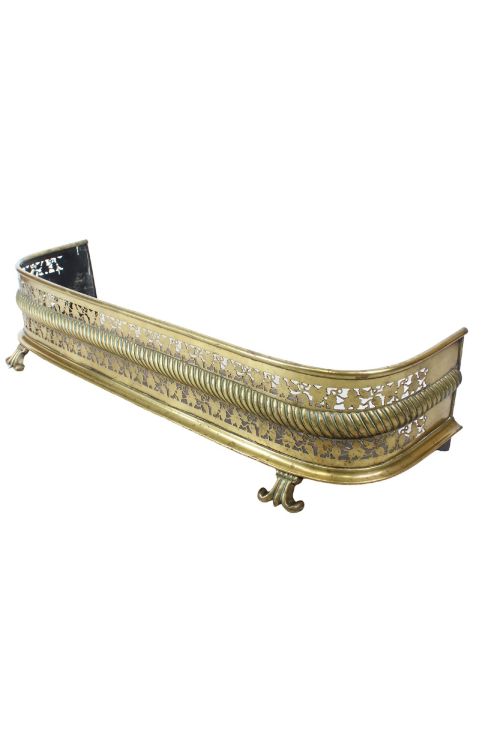
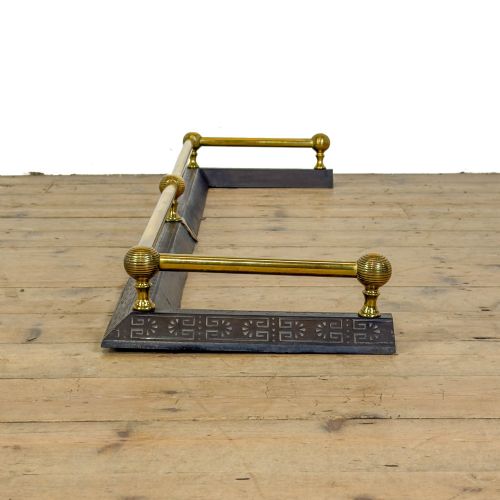
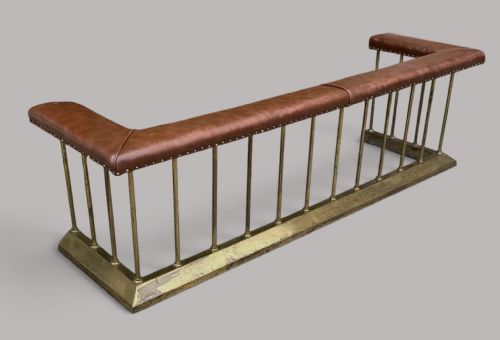
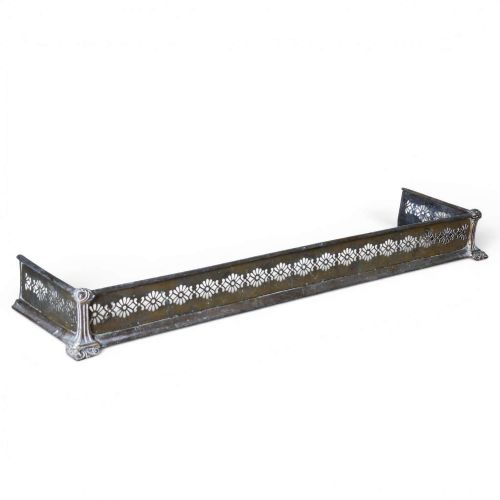
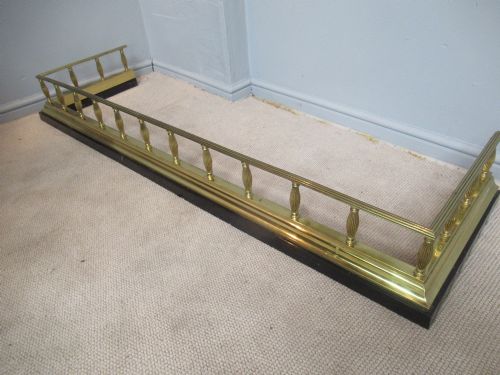
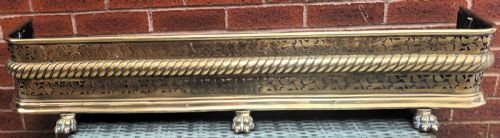
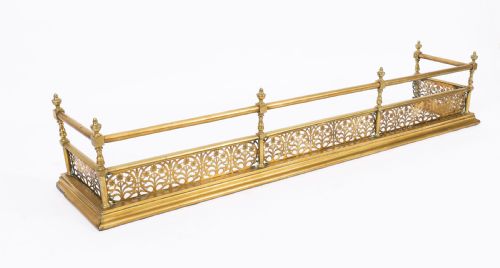
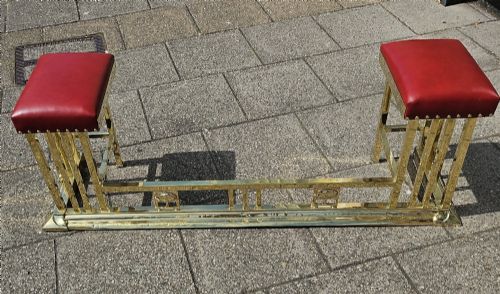
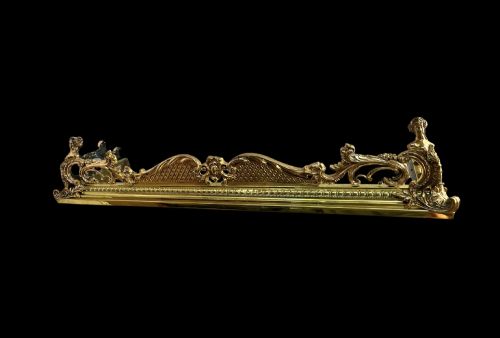
A victorian brass fireplace curb sits directly on the hearth to contain ashes and hold fire irons, appearing most frequently in standard Victorian and nineteenth-century forms. These hearth fenders range from simple pierced galleries to substantial club fenders featuring upholstered leather seats.
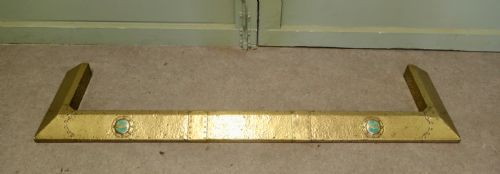
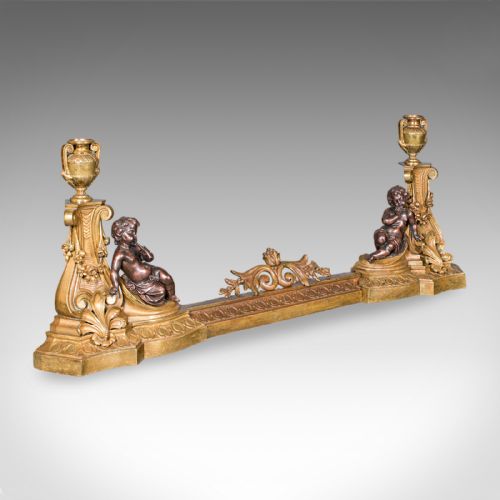
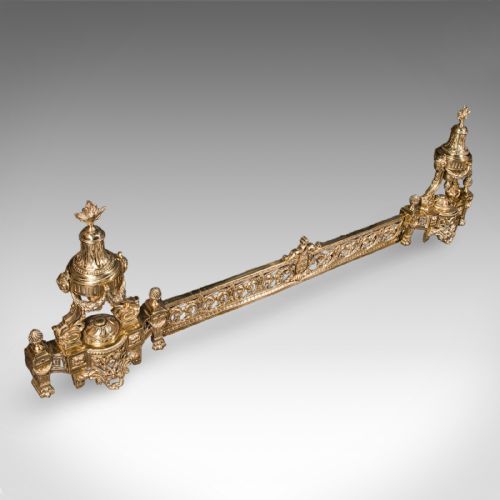
Makers of the period worked extensively in brass, often combining it with iron, steel, bronze, and copper to create both rigid frames and adjustable designs. Pieces emerge in distinct stylistic guises spanning neoclassical regularity, flowing Art Nouveau, and robust Arts and Crafts patterns with enamel cabochons.
How they were made
Workshops utilised cast brass, sheet brass, and cast iron, assembling structural frames with riveted or joined metal components. Piercing and openwork techniques formed the intricate decorative borders seen on many hearth fenders.
Makers integrated secondary metals such as steel for strength and copper for contrasting detail, occasionally applying leather upholstery to the top rails of club fenders.
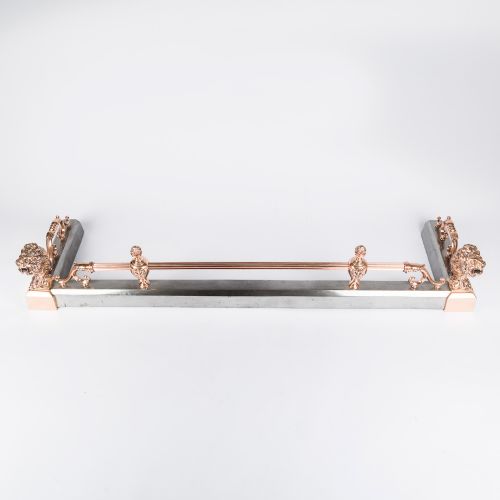
Several heavy curbs come equipped with roaring cast lions guarding the hearth.
What varies in quality
The distinction between standard examples and top-tier pieces rests on the weight of the metal gauge, the depth of the casting, and the crispness of any pierced ornamentation. Substantial brass work and refined detailing separate superior curbs from simpler production pieces.
The presence of original components, such as matching fire irons, integrated seats in mature leather, or complex decorative motifs like enamel cabochons, elevates the standing of an individual curb.
The Victorian Brass Fireplace Curb Glossary
- Club fender
- A low, padded hearth fender featuring upholstered seats on either side. This form allows people to sit close to the fire.
- Pierced brass
- Metalwork perforated with decorative patterns or open fretwork. This technique lightens the visual weight of the heavy metal frame.
- Hearth fender
- A protective metal barrier placed around the perimeter of the fireplace opening. It prevents burning logs or coals from rolling onto the floor.
- Cabochon
- A polished gemstone or enamel inset shaped with a smooth, rounded top rather than facets. These decorative elements appear on Arts and Crafts metalwork.
Victorian Brass Fireplace Curb: Frequently Asked Questions
What is a club fender?
A club fender is a specialised hearth surround featuring upholstered leather seats built into the frame on either side of the fireplace.
This design allowed Victorians to sit close to the warmth of the fire while containing stray embers within the metal curb.
How do I measure for a fender?
You measure the width and depth of your hearth stone to ensure the metal curb sits securely within the perimeter without overhanging.
Take note of any adjustable models, which offer flexibility if your hearth dimensions fall between standard fixed sizes.
Are these curbs adjustable?
Some period examples feature extending mechanisms that allow the metal frame to slide wider or narrower to fit specific fireplace openings.
Fixed models remain solid single units cast or assembled to a permanent dimension.
How do I clean brass and steel?
Maintenance involves removing dust with a soft cloth and preserving the natural patina developed over the nineteenth century.
Harsh abrasive cleaners should be avoided to protect the original surface finish of the brass, iron, and copper elements.