

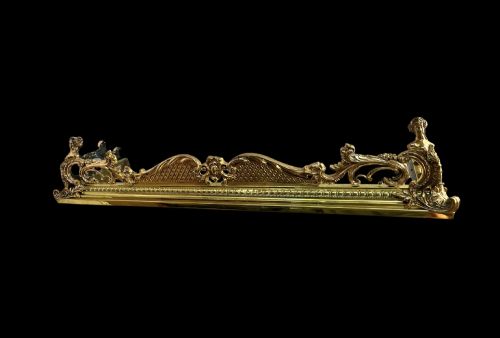
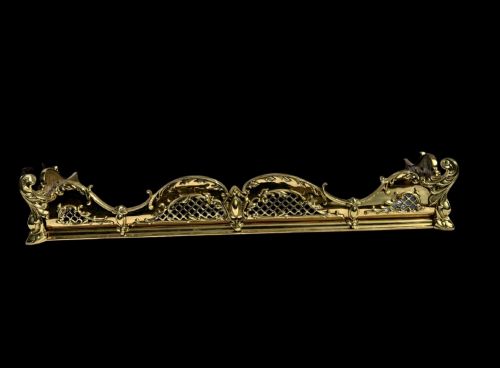
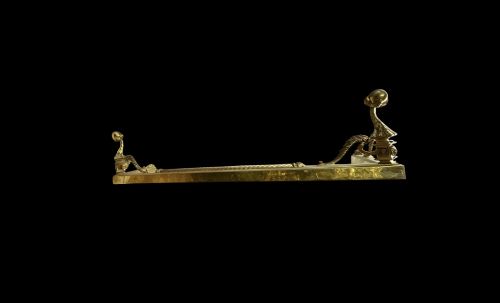
Victorian Brass Fire Curb
A victorian brass fire curb frames the hearth, protecting the room from stray embers while anchoring the fireplace.
Victorian Brass Fire Curb
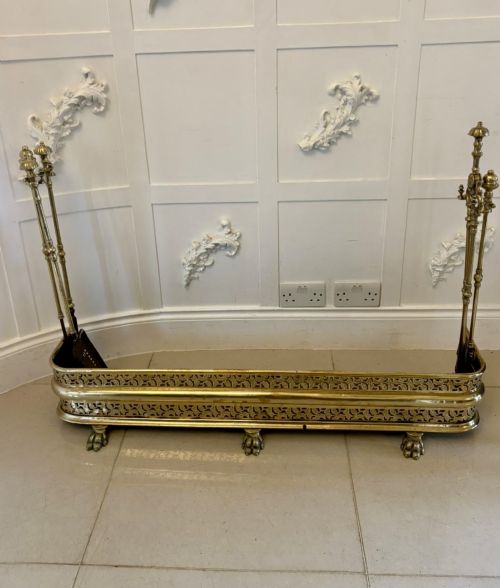
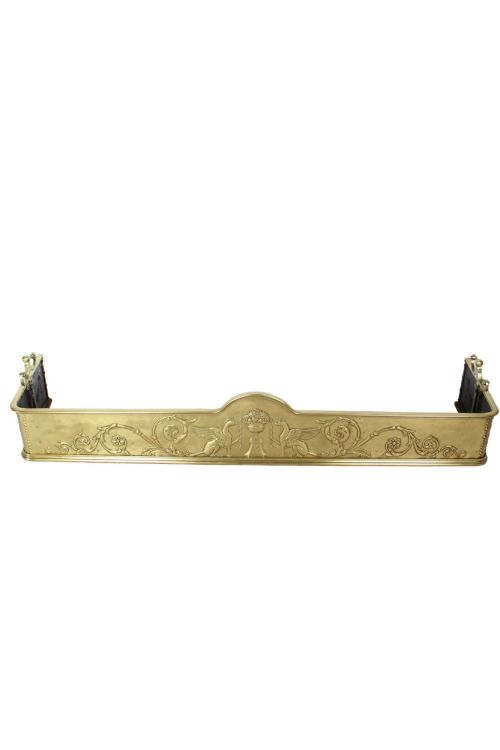
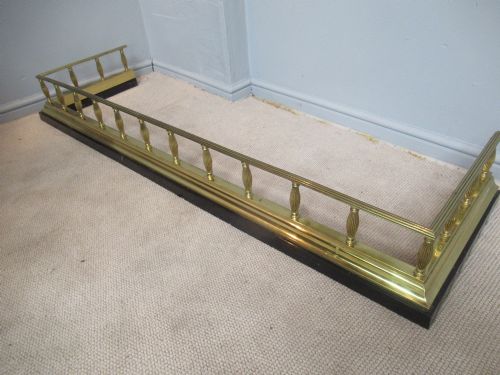
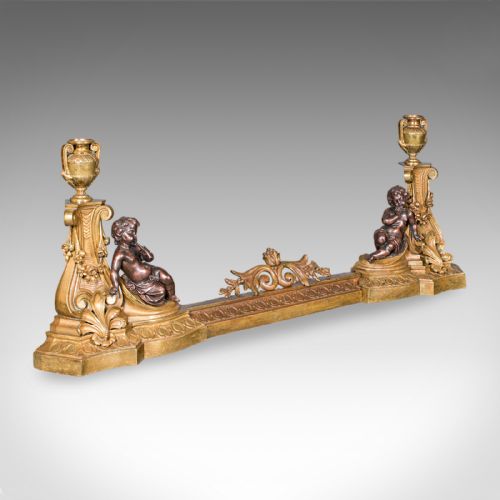
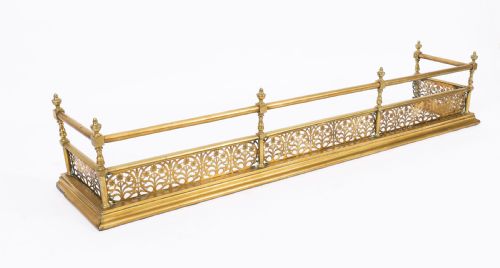
A victorian brass fire curb sits directly on the hearth, enclosing the front of the fireplace opening to contain ash and coals. These pieces range from simple, unadorned rails to heavy, ornate structures designed for grand coal-burning grates.
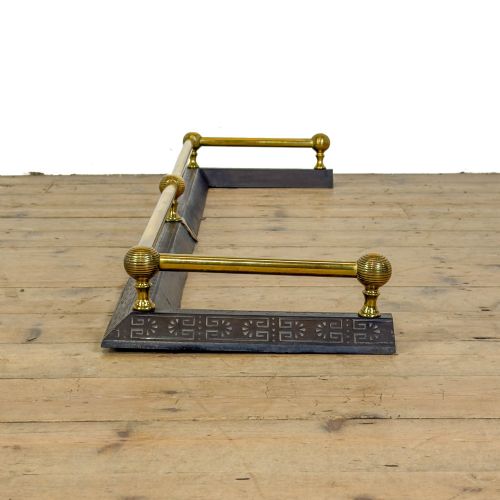
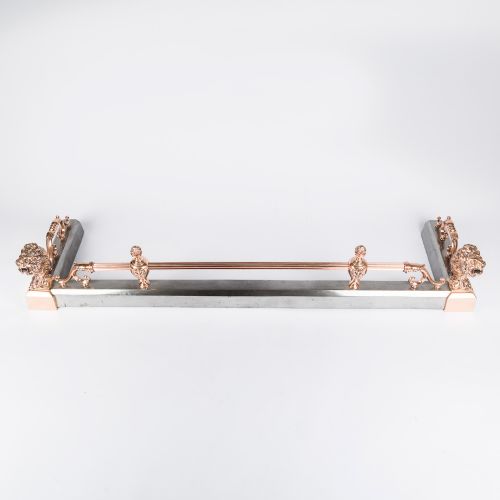
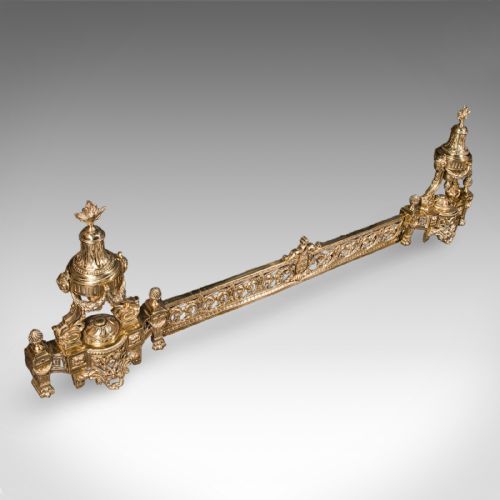
The materials and styles span the nineteenth century, with Victorian pieces dominating alongside examples from the Edwardian period and earlier nineteenth-century eras. The physical forms include adjustable bodies, curved corner designs, and low platforms intended to hold fire irons.
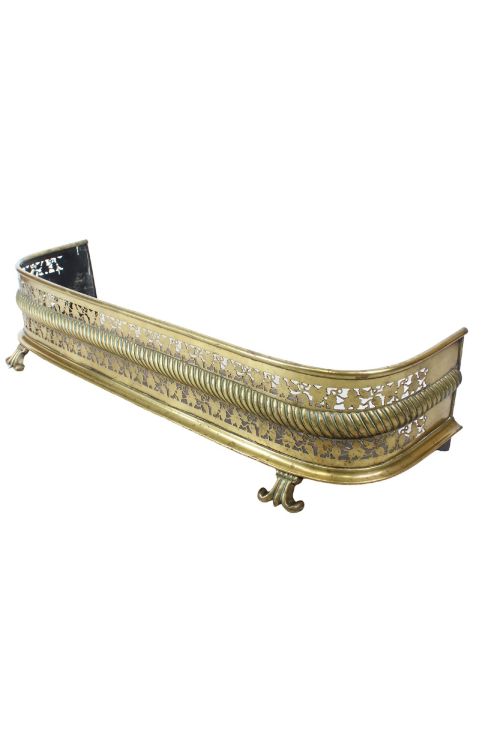
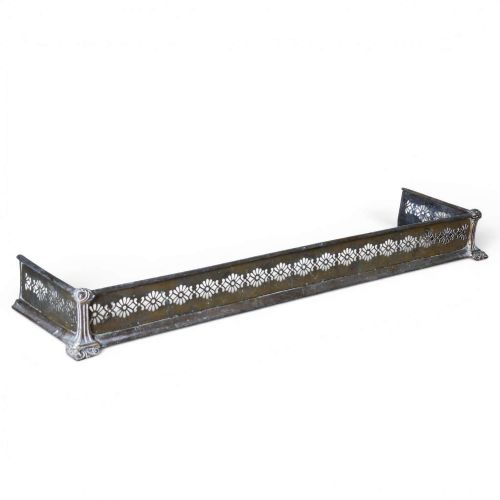
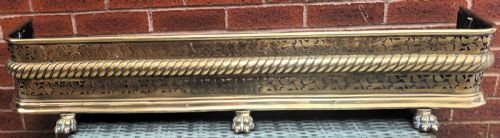
Most items seen here are brass, often combined with iron, steel, bronze, or copper, reflecting the varied manufacturing priorities of nineteenth-century metalworkers. Pierced sheet metal and cast elements give these hearth guards their distinct structural character.
Materials and construction
Makers utilised sheet brass, cast brass, and heavy iron or steel frames to build these hearth surrounds. Piercing, casting, and polishing were the primary techniques applied to shape the metal plates and decorative mounts.
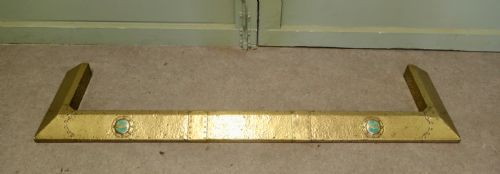
Many examples incorporate secondary metals such as copper and bronze, or feature applied details like green enamel cabochons. Iron and steel components provided internal rigidity for extending models and heavy curbs.
Listings combine Victorian, Edwardian, and Regency periods alongside materials including brass, iron, steel, bronze, and copper.
Distinctions in manufacture and condition
The thickness of the brass gauge and the crispness of any pierced or cast ornamentation separate standard utility pieces from finer decorative examples. Heavier metal gauge ensures durability and stability when the curb is adjusted or fitted to the hearth.
The integration of secondary materials, such as contrasting steel bodies or inset enamel cabochons, alters the visual weight of the piece. Surviving original elements, including matching fire irons, indicate a higher degree of completeness.
The Victorian Brass Fire Curb Glossary
- Fender
- A low metal guard placed around the hearth to keep burning fuel and ash contained. It sits directly on the floor in front of the fireplace opening.
- Kerb
- An alternative spelling for curb, referring to the metal barrier enclosing the hearth. This term appears frequently in historical descriptions and nineteenth-century listings.
- Pierced brass
- Sheet metal cut through with decorative openwork patterns. This technique lightened the visual appearance of heavy brass hearth furniture.
- Extending fender
- A design featuring telescopic or sliding sections that allow the width to be adjusted. This mechanism accommodated varying fireplace dimensions.
- Cabochon
- A polished, convex stone or enamel inset used as a decorative accent. These elements appear on Arts and Crafts examples.
Victorian Brass Fire Curb: Frequently Asked Questions
How do I measure for a fire curb?
Measure the width and depth of your hearth space to ensure the curb sits correctly against the masonry. Account for any protruding hearth stones or uneven flooring.
Adjustable models offer flexibility if your fireplace opening falls between standard fixed dimensions.
Were these curbs used with coal or wood?
Nineteenth-century hearth curbs were primarily designed to contain coal fires used in domestic grates. The metal construction withstood the intense heat and flying embers associated with burning coal.
They also served to keep heavy fire irons organised near the hearth.
How do I clean antique brass?
Remove surface dust with a soft dry cloth before applying a mild, non-abrasive metal cleaner if polishing is desired. Many collectors prefer to retain a dark, aged patina rather than achieving a bright shine.
Avoid harsh chemical dips that strip away historic surface character.
What is the difference between a fender and a curb?
The terms are historically interchangeable, both describing the low metal barrier surrounding a fireplace. Regional preferences and maker terminology determined which word appeared on historical inventories.
Both items perform the same protective and decorative function on the hearth.
Can adjustable curbs support weight?
Extending models are constructed with sliding sections designed to span specific widths rather than support heavy loads. Care should be taken when moving them to prevent the internal mechanism from binding.
Fixed-width curbs generally offer greater rigidity for heavy iron and brass assemblies.