
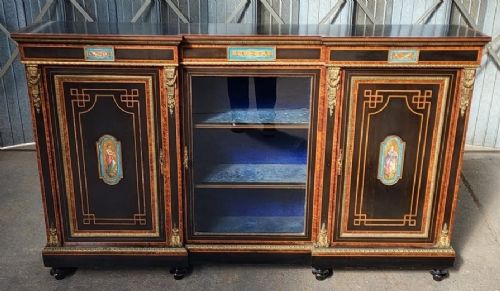
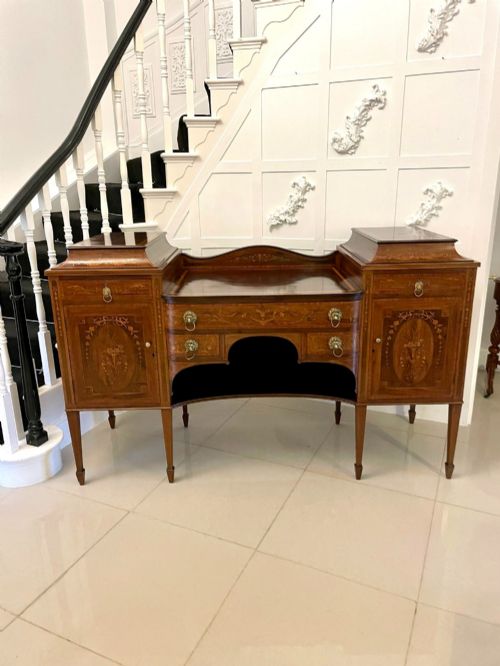
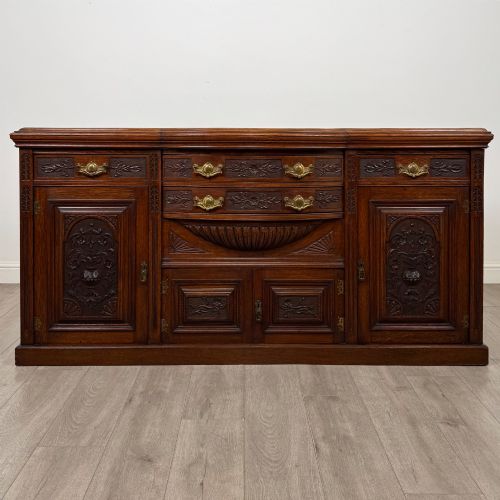
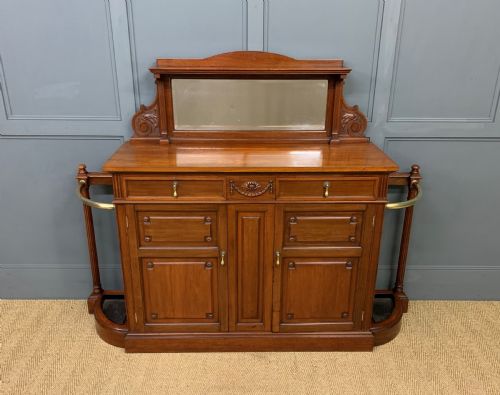
Victorian Brass Credenza
These nineteenth-century pieces of furniture combine cabinet-making with metal inlay, offering a formal surface for display or storage.
Victorian Brass Credenza
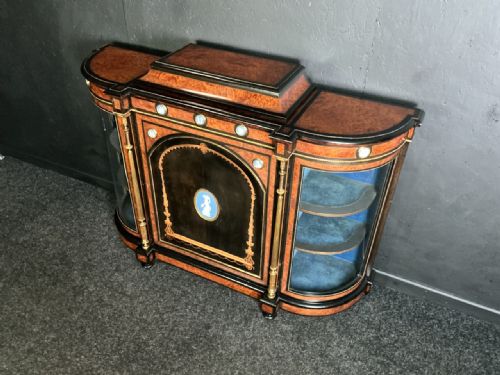
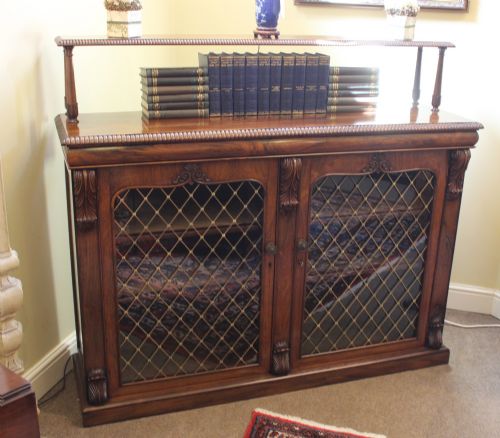
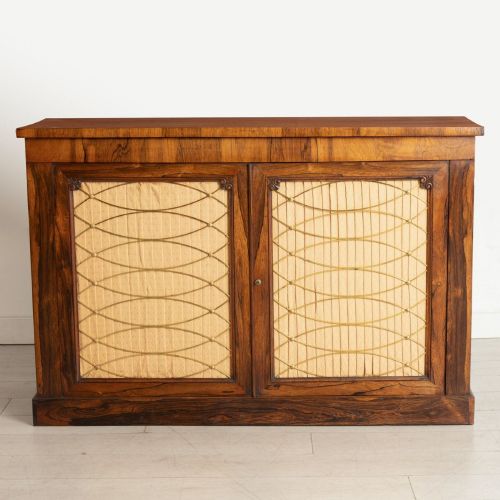
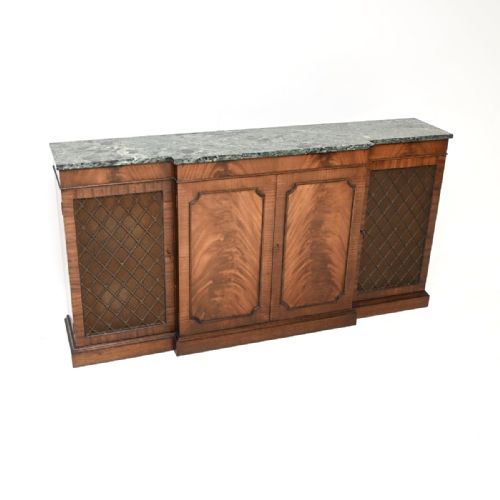
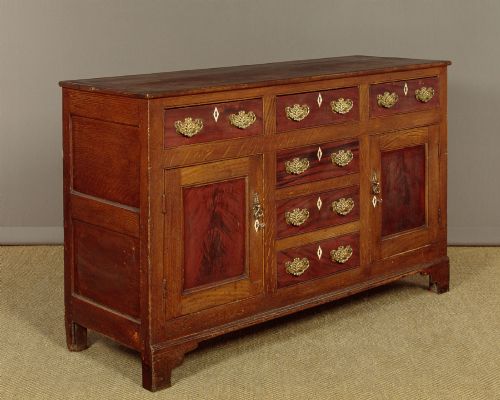
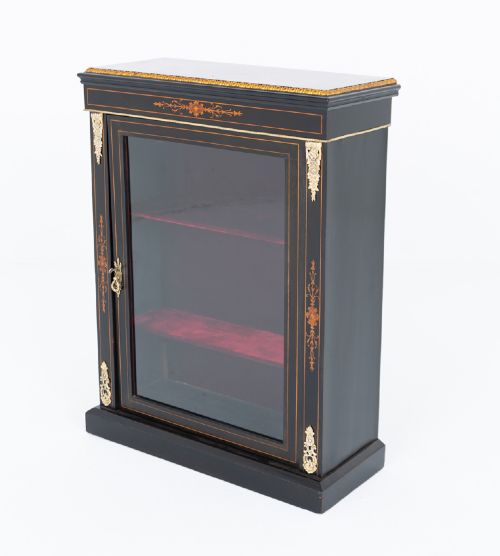
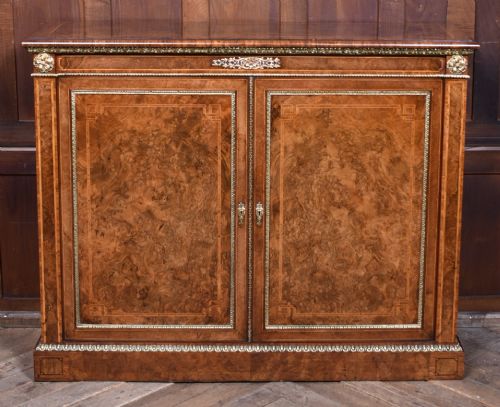
A victorian brass credenza is a low freestanding cabinet designed for nineteenth-century reception rooms, often paired with matching sideboards, display cabinets, and pier cabinets. The versions on this page originate primarily in the Victorian and Regency eras, spanning decades from eighteen-forty to eighteen-ninety.
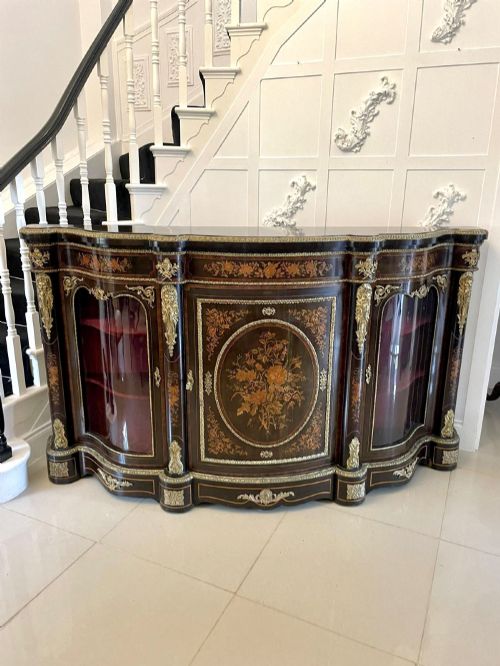
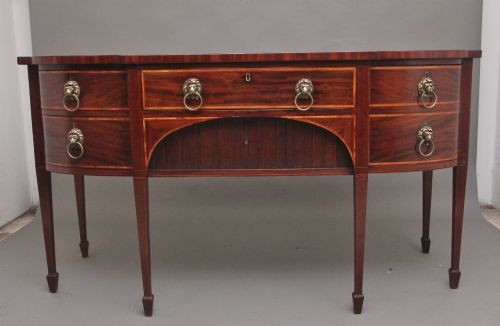
The dominant forms include breakfront credenzas, serpentine shapes, and three-door formats, alongside related side cabinets and chiffoniers. Workshops across the nineteenth century produced these pieces in forms intended to display porcelain, books, and decorative objects.
Materials and technique
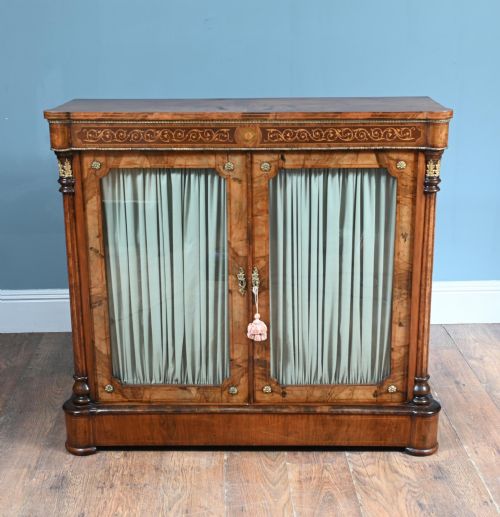
Cabinet-makers constructed these pieces using dense hardwoods such as rosewood, walnut, mahogany, and ebonised wood. Surfaces frequently incorporate tortoiseshell, amboyna, and decorative marquetry.
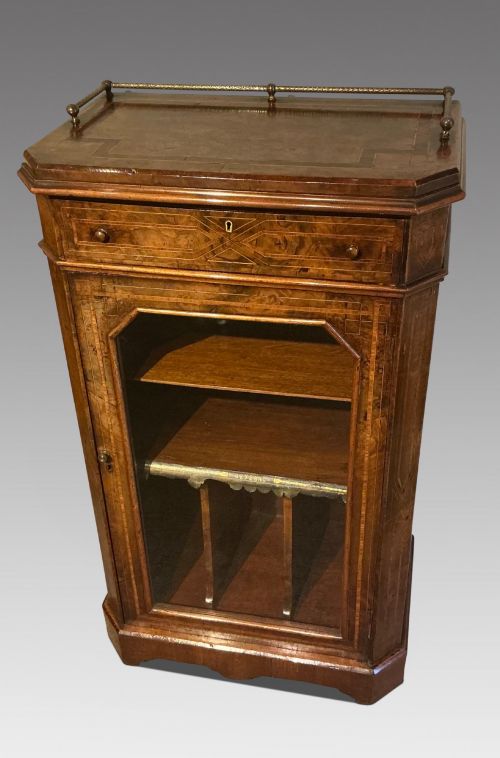
Some nineteenth-century makers hid sheet music behind glass doors, transforming formal reception rooms into impromptu concert halls.
Craftsmanship and distinction
Quality rests in the precision of the brass inlay and the richness of the timber grounds, such as burr walnut and figured rosewood. Superior pieces display complex serpentine or breakfront carcases rather than simple flat fronts.
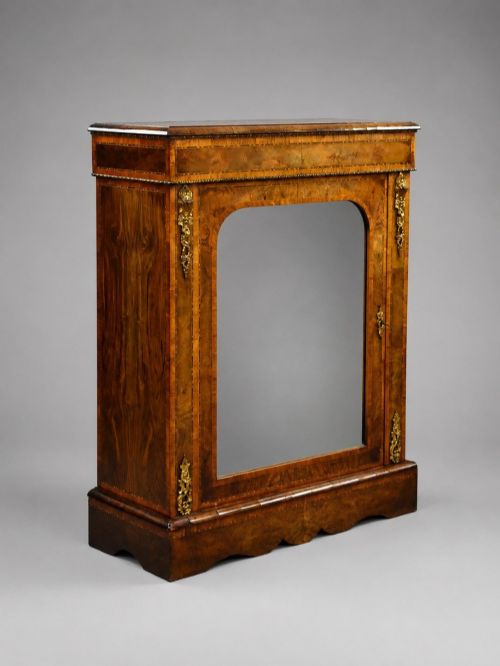
The integration of cast ormolu mounts, Sevres style ceramic plaques, and detailed boulle work separates standard utility cabinets from elaborate display pieces.
Hewetsons London·Shoolbred Co·Holland Sons·Robert Strahan
The Victorian Brass Credenza Glossary
- Credenza
- A low cabinet or sideboard designed for formal rooms, frequently fitted with glass doors and decorative mounts. It serves as a surface for display.
- Boulle
- An elaborate form of marquetry utilising brass and tortoiseshell inlaid in intricate patterns. It characterises French-influenced nineteenth-century furniture.
- Ormolu
- Gilded bronze used for decorative mounts and decorative framing on cabinet doors. It provides metallic contrast against dark woods.
- Pier cabinet
- A narrow display cabinet built to stand against the wall space between windows. These pieces often feature glazed doors and velvet-lined interiors.
- Marquetry
- Decorative woodwork where pieces of veneer are applied to a structure to form geometric or floral patterns. It highlights the surface grain of walnut and rosewood.
Victorian Brass Credenza: Frequently Asked Questions
What is a victorian brass credenza?
A victorian brass credenza is a low nineteenth-century display cabinet featuring brass inlay, ormolu mounts, and timber veneers like walnut or ebonised wood.
These pieces served as formal furniture in nineteenth-century reception rooms for displaying ceramics and decorative objects.
How do I date a credenza?
Dating relies on timber choices, construction techniques, and stylistic markers such as Regency gilt-brass mounts or late Victorian ebonised finishes.
Evidence from nineteenth-century cabinet-making shows specific shifts from rosewood in the eighteen-fifties to ebonised finishes in the eighteen-eighties.
Where should I place a credenza?
These low cabinets suit living rooms, dining rooms, or large hallways where their long profiles and decorative surfaces remain visible.
Keep them away from direct sunlight and excessive heat sources to protect the wood veneers and brass inlay.
What is boulle work?
Boulle work is a technique combining brass and tortoiseshell cut into scrolling patterns and set into a wooden ground.
This method appears frequently on nineteenth-century French revival and Victorian credenzas and pier cabinets.