

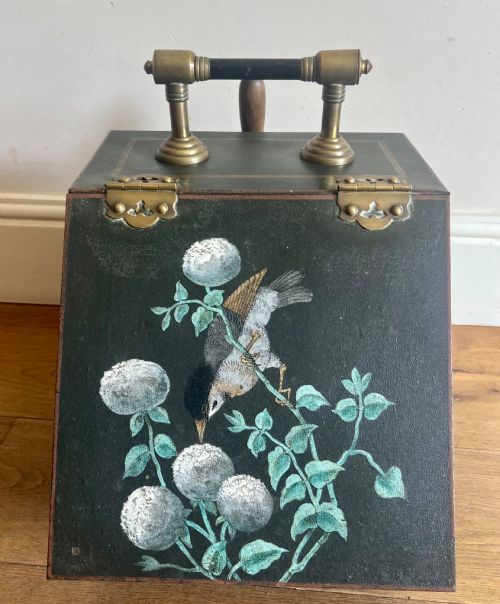
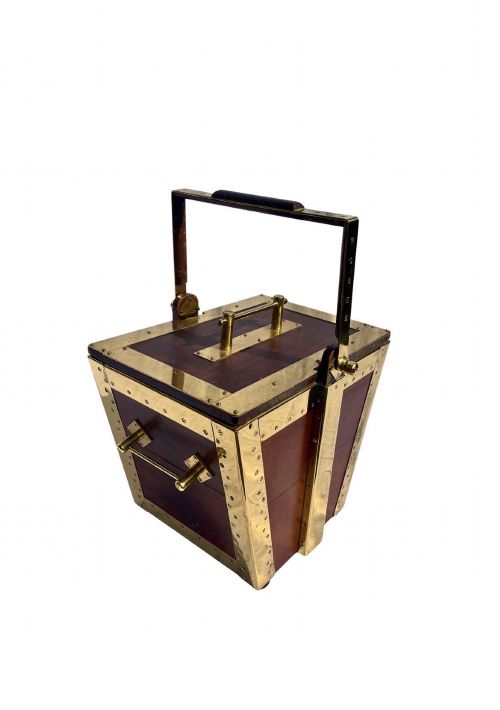


Victorian Brass Coal Purdonium
A victorian brass coal purdonium brings heavy metal polish and smart timber to the hearthside, storing solid fuel with proper nineteenth-century order.
Victorian Brass Coal Purdonium
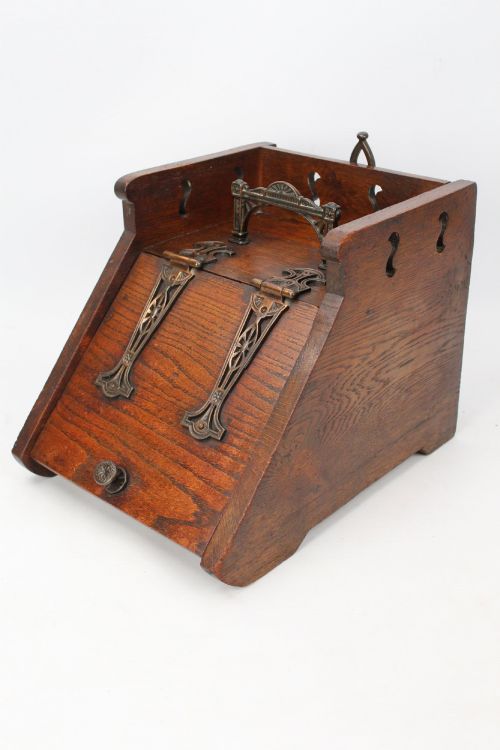
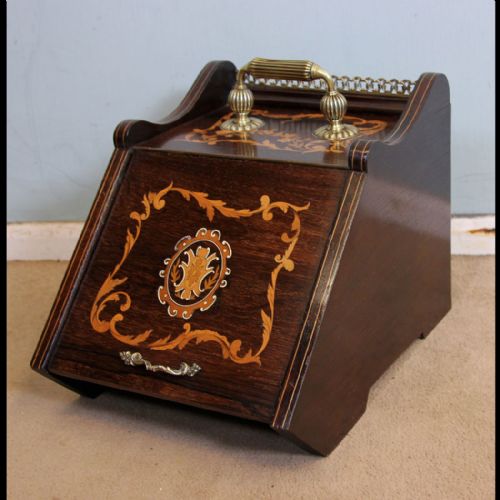
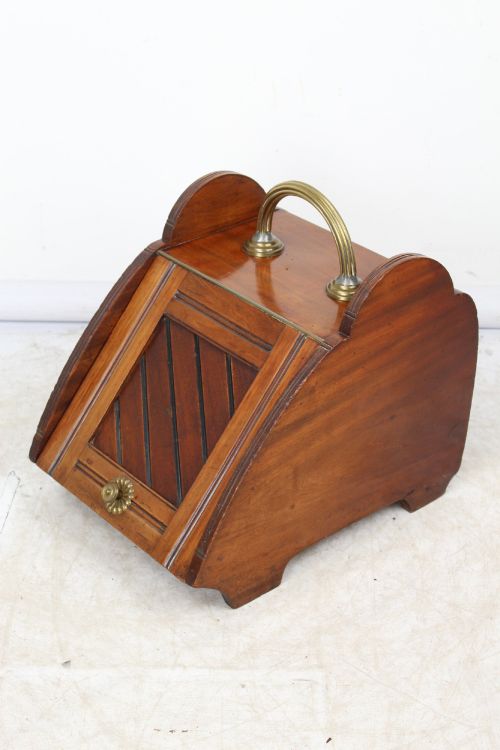
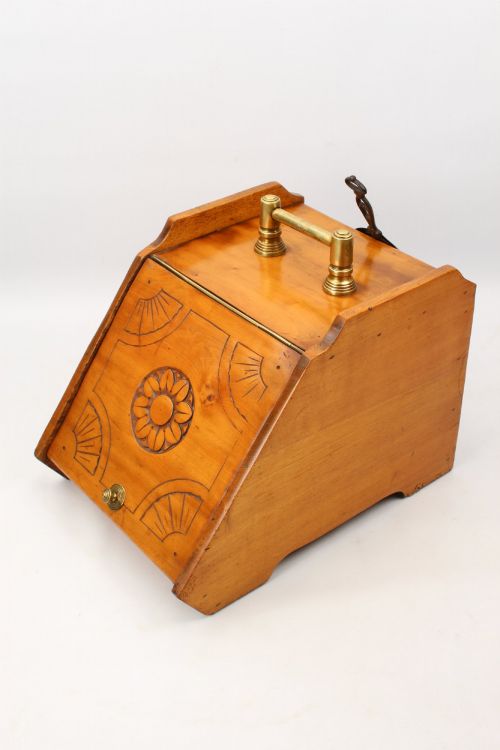
A victorian brass coal purdonium is a dedicated fireside container designed to hold fuel close to the grate while keeping domestic dust contained. You will find these pieces largely shaped as hinged boxes, lidded bins or sloping scuttles originating primarily from the Victorian and Edwardian eras.
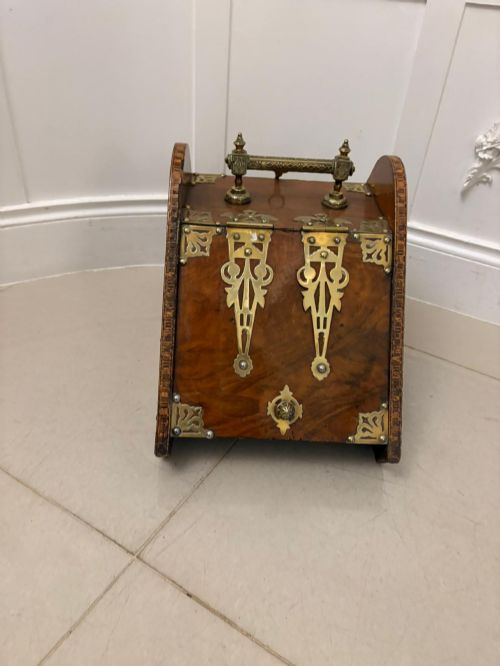
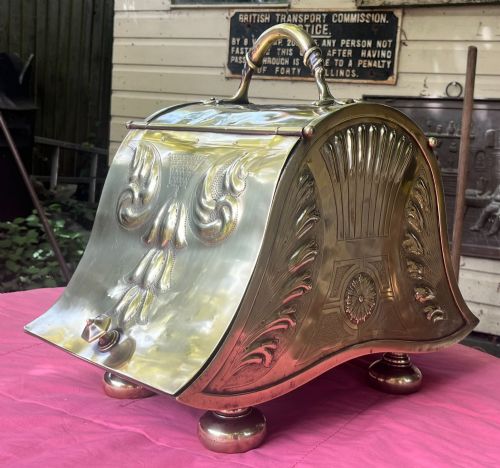
The physical forms span traditional English and Scottish craftsmanship, utilising timber bodies such as mahogany, walnut, rosewood and oak mounted with heavy brass handles, hinges and repoussé panels. Many examples incorporate metal liners and matched shovels to handle the daily coal delivery cleanly.
Materials and Construction
These fireside accessories rely on a robust combination of turned or panelled hardwoods and beaten metals. Cabinetmakers joined mahogany, walnut, oak and rosewood to form the structural boxes, while metalworkers shaped sheet brass and copper into decorative plaques, linings and scuttle bodies.
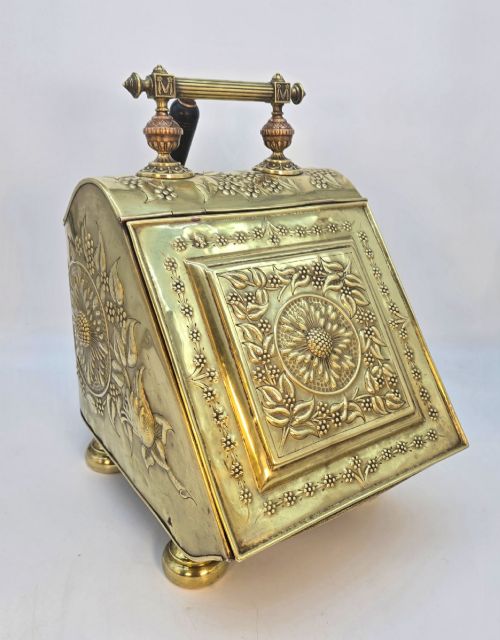
Makers applied surface embellishments ranging from floral repoussé work and ormolu mounts to intricate wood marquetry and carved motifs. Interiors frequently received zinc or removable tin liners to protect the surrounding timber from moisture and coal dust.
Victorian Brass Coal Purdonium Retail Price Guide 2026
Typical asking prices for victorian brass coal purdonium among the pieces listed under this phrase on Sellingantiques today, from the lower quarter to the upper quarter. They describe what is for sale here now, not the wider market.
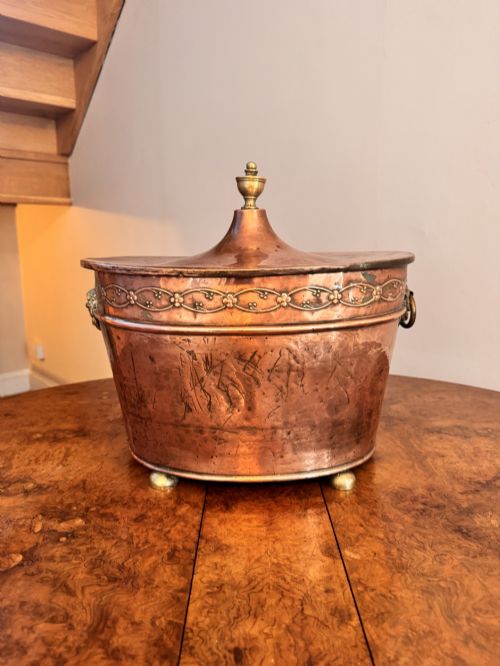
Listings feature woods including mahogany, walnut, oak and rosewood, paired with heavy brass and copper bodywork.
Distinctions in Execution
Quality rests in the weight of the metal components and the precision of the timber joinery. Superior examples display crisp repoussé detailing on the brass panels, solid dovetail joints in the wooden carcases, and intact original metal liners and shovels.
Lighter or mass-produced items often substitute plated base metals for solid brass and rely on simple butt joints rather than traditional cabinetwork. The presence of specialised mechanics, such as metamorphic tipping mechanisms or figured mouldings, elevates an ordinary fuel box into a sophisticated piece of room furniture.
William Soutter & Sons
The Victorian Brass Coal Purdonium Glossary
- Purdonium
- A specialised coal box or bin, typically featuring a sloping front or a fall-front door designed to dispense fuel neatly into the hearth.
- Repoussé
- A metalworking technique where the artisan hammers the design from the reverse side to form raised decorative reliefs on the brass surface.
- Metamorphic
- Describing a piece of furniture engineered to transform its shape or function, such as a scuttle that tilts forward on pivot hinges.
- Tole ware
- Enamelled or japanned metalware produced to mimic oriental lacquer or provide a durable painted surface for domestic vessels.
Victorian Brass Coal Purdonium: Frequently Asked Questions
How did a purdonium work by the fire?
A purdonium sat beside the fireplace to keep coal or logs out of sight until needed for the grate. Users opened the lidded top or dropped the front flap to shovel fuel cleanly.
The metal liner inside caught any residual dust and small fragments, protecting the surrounding wooden cabinet from soot and moisture.
Are these coal boxes still usable today?
Most wooden and brass purdoniums retain their structural integrity and function well as log holders or fireside storage bins. Their original metal liners make them practical for containing modern firewood.
Care should be taken to line older timber interiors with protective inserts if storing damp or rough fuel.
What is the difference between a scuttle and a purdonium?
A coal scuttle generally takes a bucket or hod shape with a swinging handle for carrying fuel from an outside store. A purdonium is typically a box-like piece of furniture designed to stay permanently in the reception room.
Purdoniums often feature drop-down fronts and matching fixed shovels stored in dedicated side compartments.
How do I identify a Victorian piece?
Nineteenth-century examples display traditional cabinet construction methods like hand-cut dovetails and heavy gauge brass fixtures. They frequently incorporate dense hardwoods such as walnut and mahogany alongside hand-beaten repoussé decoration.
Design motifs often draw upon Aesthetic Movement, Arts and Crafts or Revival styles popular during the period.