

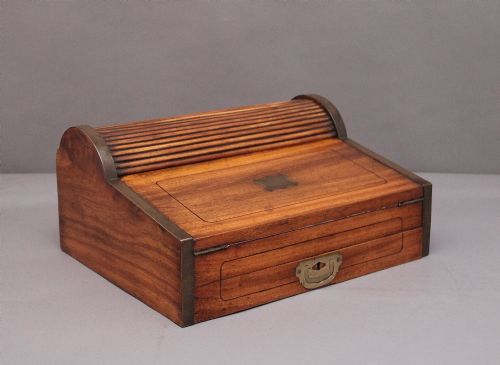


Victorian Brass Bound Slope
When you search for a victorian brass bound slope, you encounter portable desks designed for the rigours of nineteenth-century travel.
Victorian Brass Bound Slope
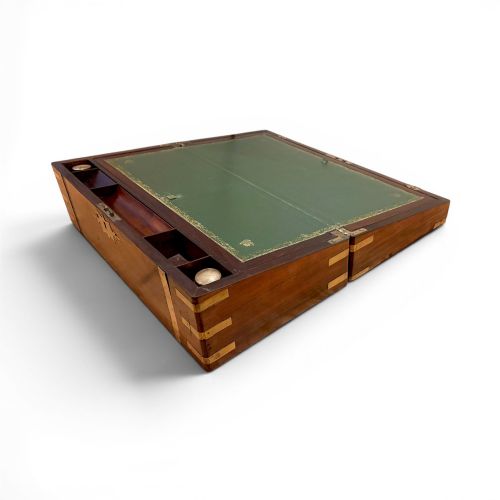
A victorian brass bound slope is a portable writing desk designed to fold open into a slanted writing surface lined with leather or velvet. These pieces were utilised for correspondence and document storage by travellers, officers and gentlemen during the nineteenth century.
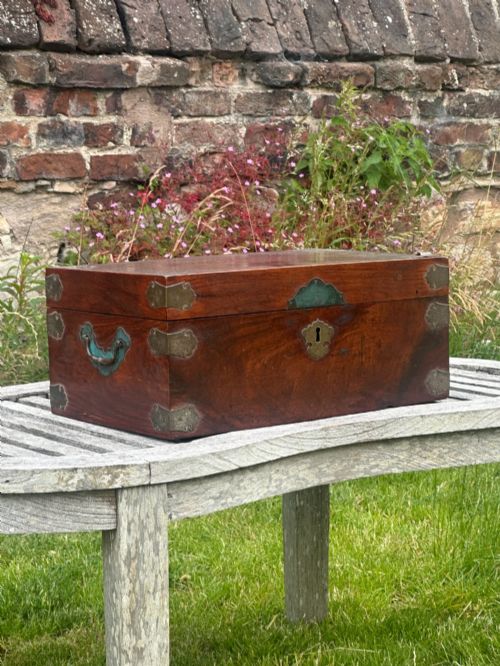
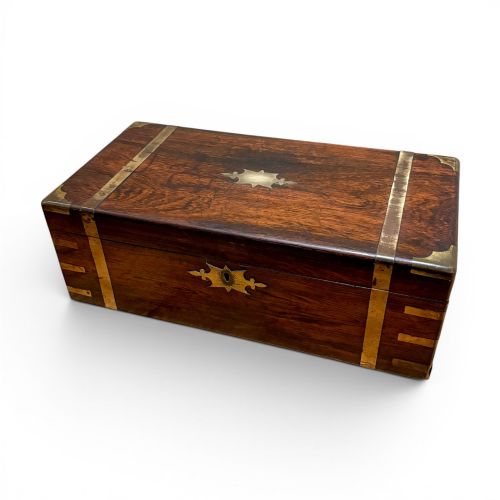
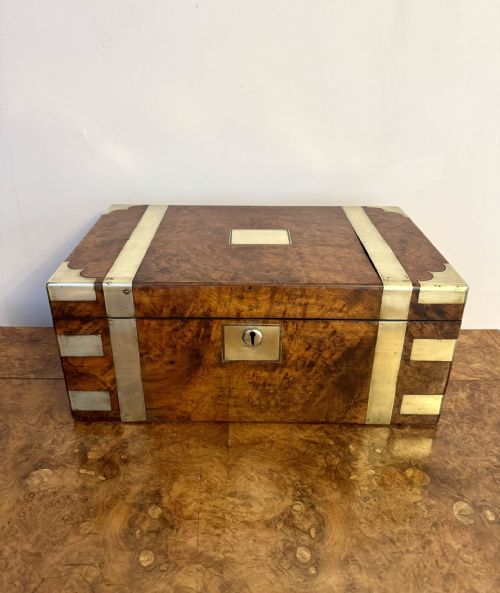
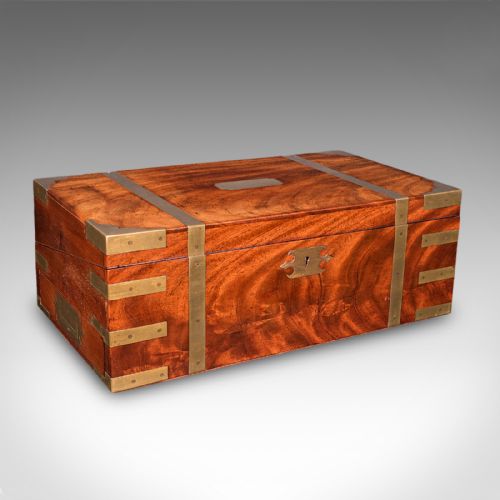
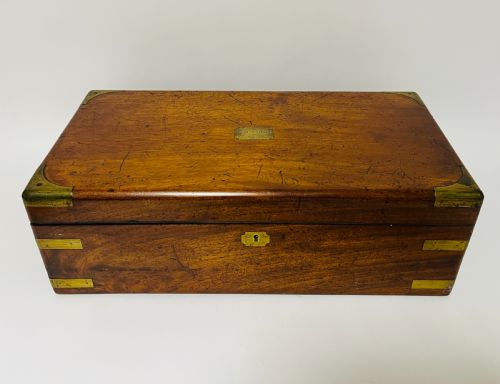
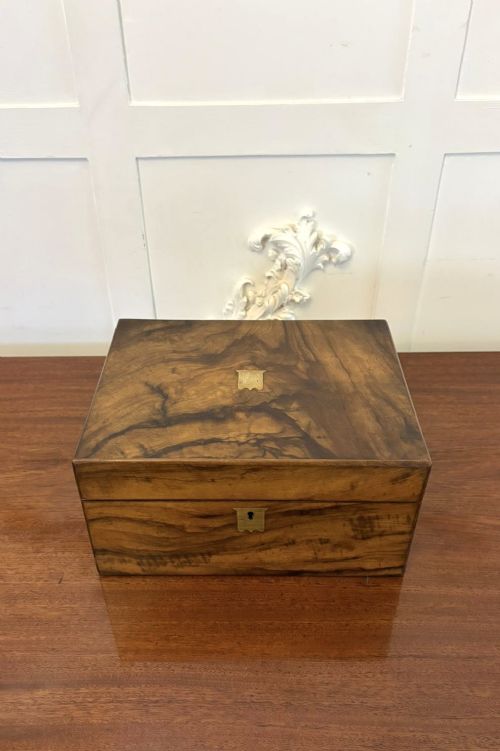
The most common examples encountered on this page are constructed from mahogany, walnut or burr walnut, reinforced with flush brass corners and strapwork to withstand movement.
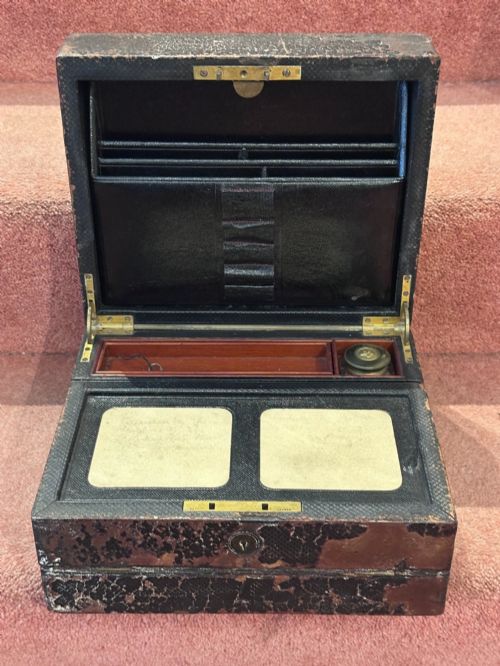
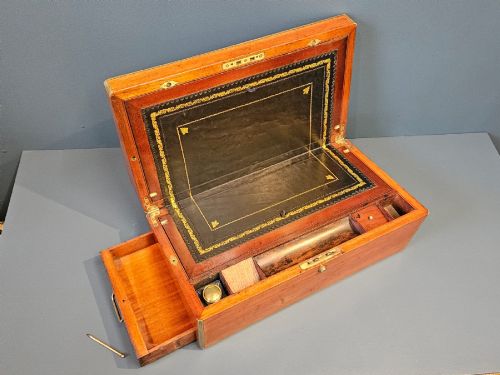
Interior fittings frequently include pen trays, inkwells and secret drawers concealed beneath removable panels or stationery compartments.
Materials and Construction
Cabinet makers built these boxes using dense timbers such as mahogany, rosewood, coromandel and camphor wood, often veneered with highly figured burr walnut or pollard oak. These woods provided a stable carcase that resisted warping in varied climates.
Brass banding and corner brackets were let flush into the wood to protect the edges from heavy impacts during transport. High-grade brass insets and escutcheons secured the structural joints while adding decorative contrast to the dark timber.
Interiors combined turned wooden components, glass ink bottles with brass lids, and leather writing surfaces tooled with gold leaf. Complex internal compartments often featured hidden spring mechanisms or sliding panels concealing secret drawers.
Listings feature woods including mahogany, burr walnut, rosewood, coromandel, camphor wood, and padouk, dating from the Victorian and Regency periods.
Variations in Quality
Quality in a victorian brass bound slope rests on the selection of timber veneers, the precision of the brass inlay, and the complexity of the internal fittings. Superior pieces utilise book-matched burr veneers across the entire exterior and incorporate heavy gauge brass corner plates fixed with closely spaced pins.
Internal engineering distinguishes standard utility boxes from high-end examples made for officers or presentation. The presence of numbered Bramah locks, concealed secret drawers, and integrated stationery racks indicates superior workshop production.
Briggs 27 Piccadilly London·George Austin of Dublin·Mappin & Webb
The Victorian Brass Bound Slope Glossary
- Brass bound
- A method of reinforcing wooden boxes with recessed brass strips and corners to prevent splitting during travel. This technique defines the military campaign aesthetic.
- Secret drawers
- Hidden compartments tucked behind false panels or activated by internal release pins. These spaces secured currency, jewellery and private letters.
- Campaign style
- Furniture constructed for portability and durability during military deployment or colonial travel. Pieces often featured folding stands and recessed handles.
- Escutcheon
- A decorative brass plate surrounding a keyhole that protects the surrounding wood from wear. On these slopes, escutcheons often match the corner straps.
- Bramah lock
- A high-security tumbler lock invented in the eighteenth century, frequently fitted to better-quality nineteenth-century boxes. They required a cylindrical key with precision cuts.
Victorian Brass Bound Slope: Frequently Asked Questions
What is a writing slope?
A writing slope is a portable box that opens on a hinge to reveal a slanted writing surface and partitioned interior.
Travellers used these boxes to keep stationery organised and secure documents while away from a fixed desk.
Why did they use brass binding?
Brass binding protected the vulnerable wooden corners and edges of boxes from impacts during transit.
This reinforcement was essential for officers and officials moving luggage across rough terrain.
How do I find secret drawers?
Secret drawers are often concealed behind removable panels within the stationery section or beneath the pen tray.
Owners usually access them by sliding vertical dividers or pressing hidden wooden spring catches.
Were these boxes used in the military?
Many slopes were built to military campaign specifications for officers on active service overseas.
These portable desks allowed commanders to write dispatches and manage correspondence from temporary quarters.