
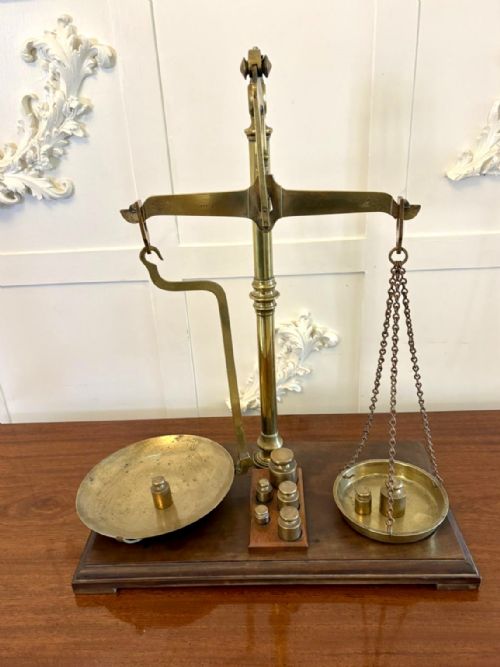
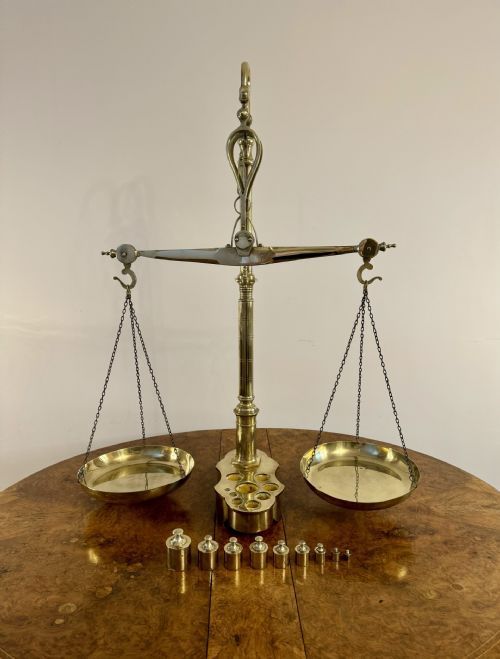
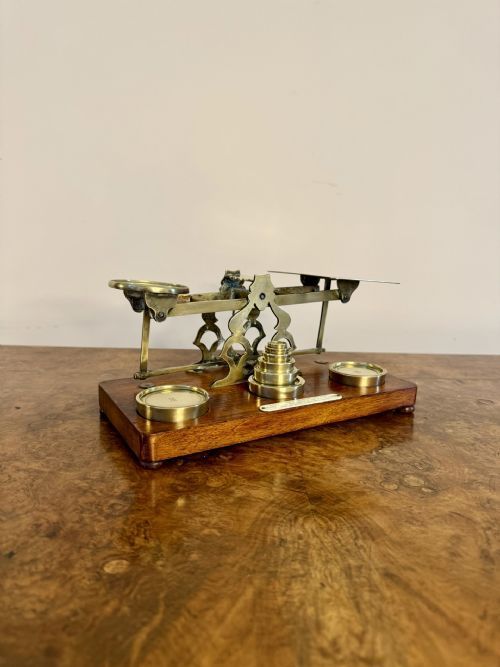


Victorian Brass Balance Scale
A victorian brass balance scale combines utilitarian accuracy with the bright warmth of polished metal, offering both practical utility and period decorative appeal.
Victorian Brass Balance Scale
When searching for a victorian brass balance scale, buyers encounter a variety of weighing instruments designed for domestic, commercial, and scientific use. The selections range from compact letter and postal scales mounted on wood bases to substantial beam scales intended for grocers, chemists, and institutional inspectors.
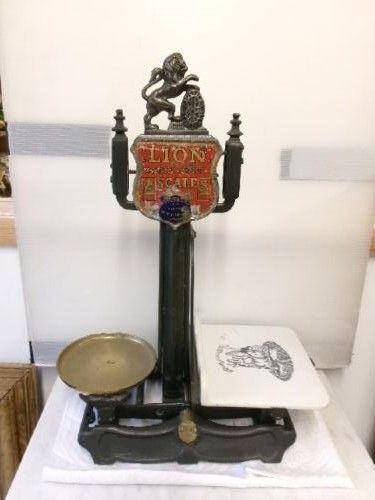
Postal scales form a prominent part of the selection, often featuring mahogany, walnut, or oak bases paired with brass pans and detailed beam assemblies. Larger commercial examples include specialised butcher scales and floor-standing models originating from urban makers and regional cooperatives.
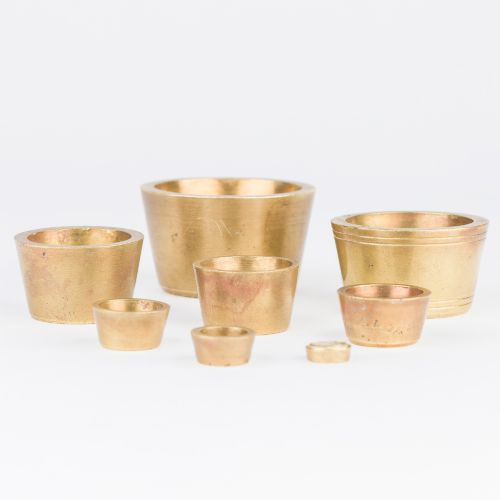
The objects span the Victorian and Edwardian eras into the mid-twentieth century, preserving the functional mechanisms of earlier trade and administration. Many survive complete with original weights, retaining their operational character for modern display or collection.
How they were made
Construction relies primarily on cast and turned brass for the beams, pillars, pans, and weights, providing durable components that hold precise balance. Wood serves extensively for the mounting bases, utilising mahogany, oak, walnut, and general timber fitted to support the metal mechanisms.
Additional materials such as cast iron, iron, glass, marble, and ceramic appear in structural frames, weights, and specialised weighing surfaces. Makers incorporated these elements to withstand heavy daily use in shops, offices, and laboratories while maintaining mechanical precision.
Materials across the listings include brass, mahogany, iron, wood, glass, cast iron, marble, and ceramic.
What varies in quality
Quality separates mass-produced utility items from precision instruments through the finish of the brass castings, the precision of the beam movement, and the integrity of the fitted wooden bases. Superior examples demonstrate crisp maker stamps, smooth articulation, and matching sets of period weights.
The presence of original components, such as matched weights in designated blocks or signed brass plates naming makers like S. Mordan or De Grave Short & Co., elevates the standing of an instrument. Finer pieces also display thoughtful proportion and superior timber selection, setting them apart from utilitarian counterparts.
The Victorian Brass Balance Scale Glossary
- Beam scale
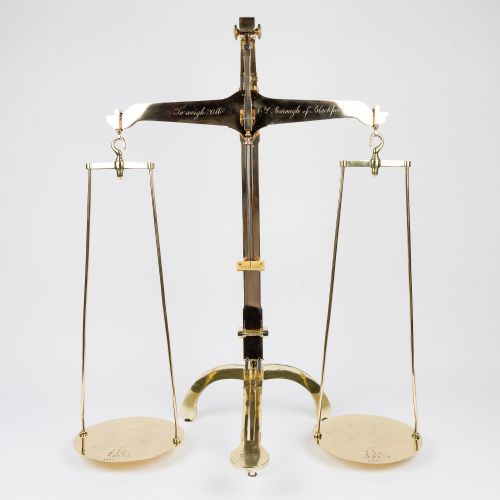
- A weighing device operating on the principle of levers, consisting of a central pivoting beam with suspended pans at either end. This design allows precise comparison between an unknown load and standard reference weights.
- Postal scale
- A specialised small-scale weighing instrument calibrated for letters and parcels, frequently mounted on decorative wooden plinths. These items often feature graduated weight charts or dedicated slots for storing small brass weights.
- Apothecary balance
- A sensitive precision scale utilised by chemists for measuring medical compounds and small quantities of dry goods. They typically incorporate delicate glass pans or enclosed box frames to protect against air currents.
- Troy ounce weight
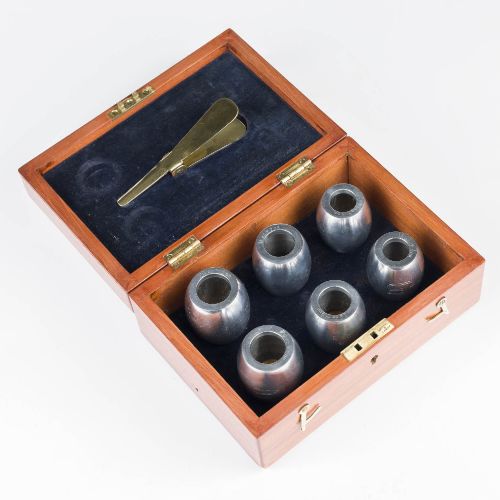
- A system of units of mass used for precious metals and gemstones, distinct from standard avoirdupois measurements. Sets of these weights are frequently found housed in fitted wooden blocks or original slots.
- Verification balance
- A heavy-duty instrument used by municipal authorities and inspectors to check commercial weights and measures for accuracy. These institutional pieces carry official stamps or inscriptions denoting their jurisdiction.
Victorian Brass Balance Scale: Frequently Asked Questions
How do I use a balance scale?
Place the object to be weighed on one pan and add standard reference weights to the opposite pan until the pivoting beam levels at the centre indicator.
Ensure the instrument rests on a flat, stable surface to maintain accurate movement across the brass bearings.
What were postal scales used for?
Postal scales calculated letter and parcel tariffs in homes and offices before the introduction of automated postage metres. Their calibrated mechanisms helped users determine correct stamp requirements based on weight.
They sit on decorative wooden bases, frequently incorporating fitted compartments for brass weight sets.
How do I clean brass scales?
Dust the surfaces gently with a soft cloth to remove surface grime without disturbing the mechanical components or wearing away the aged patina. Avoid harsh chemical cleaners that strip the historic finish from the brass and wood.
Period items benefit from minimal intervention to preserve their authentic appearance and surface history.
Where were these scales manufactured?
Makers operated workshops and factories in major urban centres, particularly London, Birmingham, Bristol, and regional towns. Companies such as De Grave Short & Co. and S. Mordan produced instruments for commercial trade and official inspection.
Many bear engraved signatures or maker plates identifying their place of origin and operational era.