


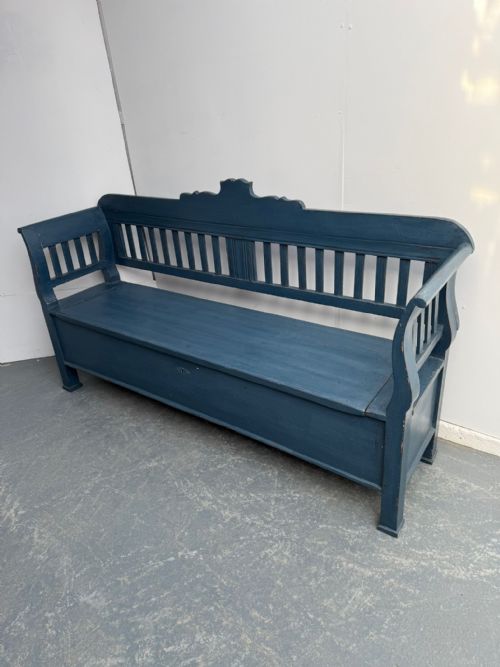

Victorian Box Bench
A victorian box bench combines a sturdy seat with concealed storage, offering practical utility and robust period charm for a hallway or living space.
Victorian Box Bench
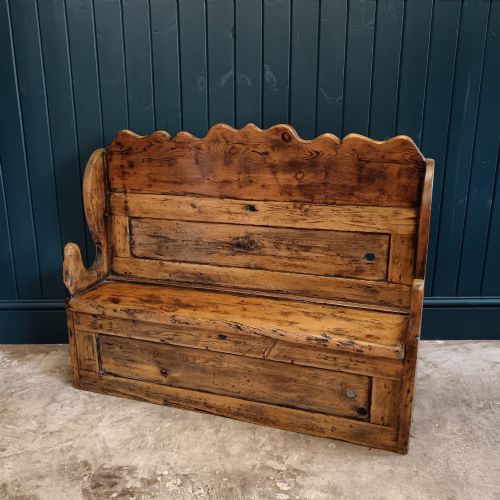
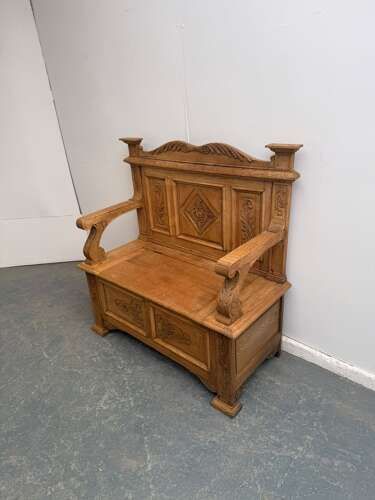
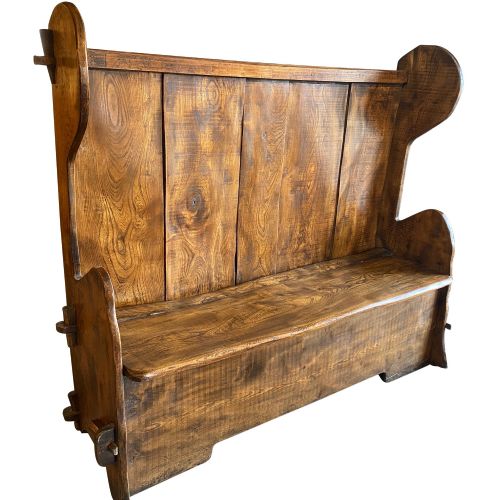
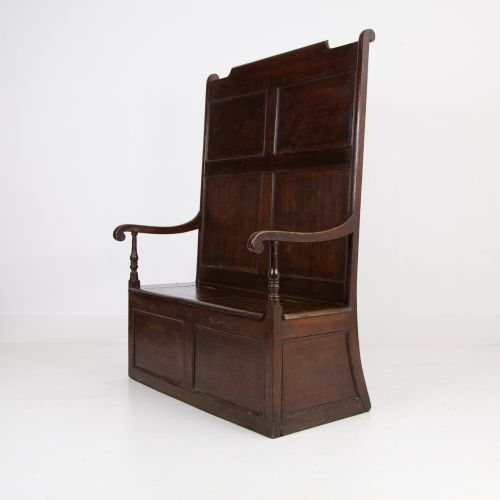
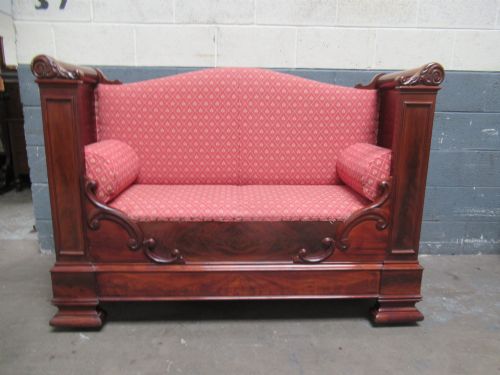
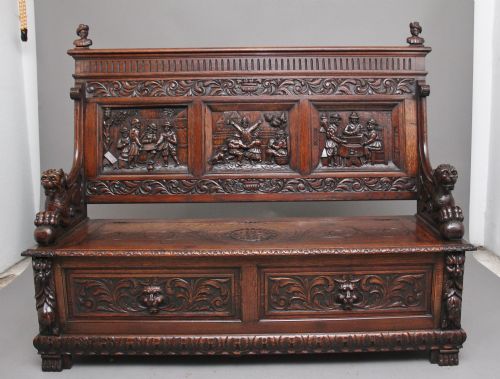
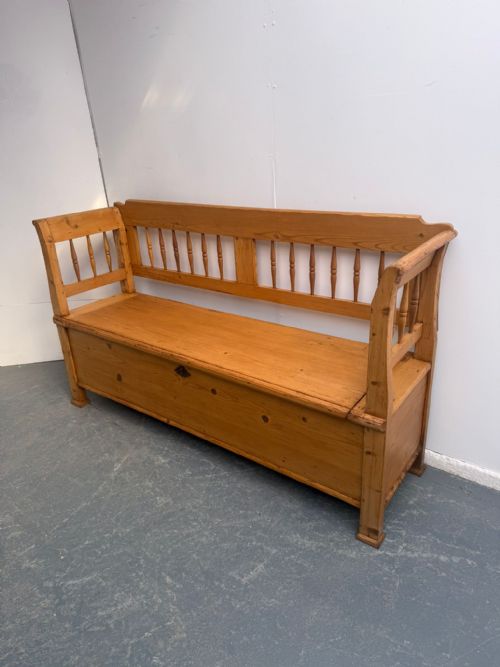
When you search for a victorian box bench, you encounter dual-purpose furniture designed for seating while concealing storage within the base. These items span Victorian, nineteenth century, and Regency periods, appearing under forms such as box settles, monks benches, and ottomans.
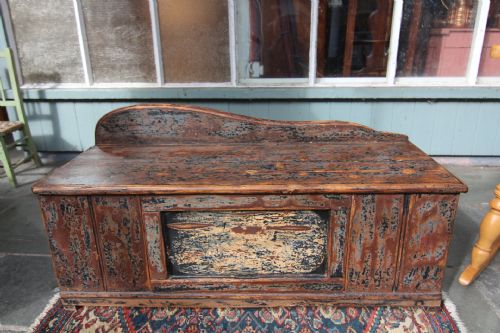
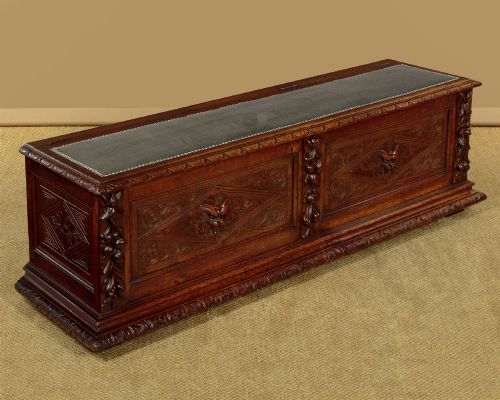
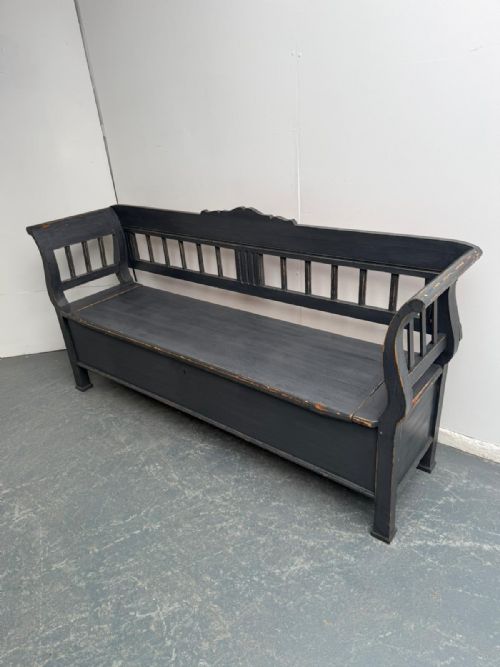
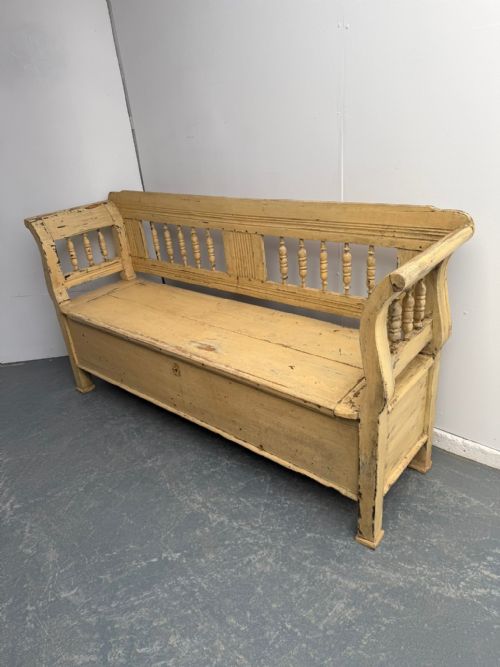
You are most likely to meet pine and oak examples on this page, including painted Hungarian variants, carved oak hall benches, and upholstered leather ottomans. They serve as functional seating solutions traditionally placed in hallways, kitchens, or country houses.
The category encompasses both rustic farmhouse designs and formal gothic revival or jacobean revival styles. Each piece provides a lift-up lid or fall-front mechanism to access the interior compartment.
Materials and construction
Cabinet makers utilised solid timbers such as pine, oak, elm, mahogany, and walnut to construct the primary framework and storage boxes. Surfaces frequently display wax finishes, traditional paint layers in grey, cream, green, or blue, or carved detailing featuring motifs like the green man.
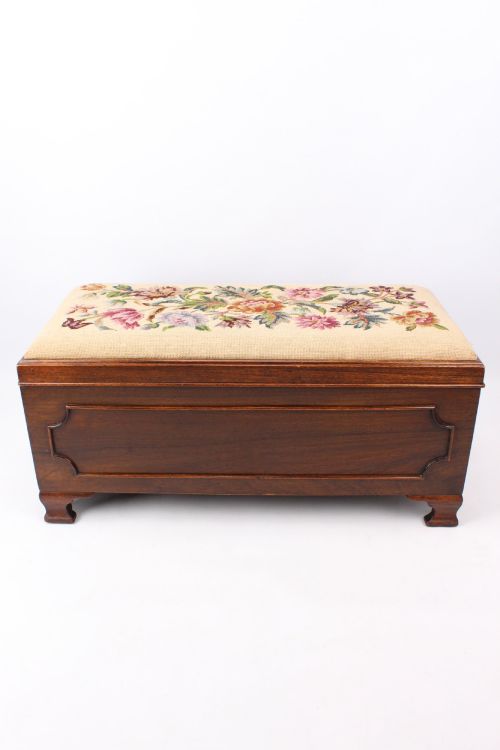
Upholstered variants incorporate leather, needlework, and fabric seat covers, sometimes supported by brass fittings or iron elements. Construction techniques range from simple country carpentry to intricate relief carving found on late nineteenth-century revival pieces.
Carved green man faces peer out from the woodwork, keeping a watchful eye on hallway comings and goings.
Distinctions in quality
Quality rests upon the selection of timber, the integrity of the structural joinery, and the crispness of any hand-carved ornamentation. Solid construction in dense woods like oak or mahogany generally indicates a higher tier of production than simpler secondary pine items.
The preservation of original painted surfaces or undisturbed patination on waxed timber elevates a piece. Furthermore, refined proportions and sophisticated revival styling distinguish bespoke country house furniture from utilitarian workshop output.
Hallett & Sons
The Victorian Box Bench Glossary
- Box settle
- A high-backed wooden bench featuring enclosed storage beneath a hinged seat. This form protected occupants from drafts in traditional hallways and kitchens.
- Monks bench
- A convertible wooden seat with a backrest that pivots to form a small table. These multifunctional items are frequently associated with nineteenth-century revival styles.
- Ottoman
- An upholstered seat or footstool with a hollow interior accessed via a lift-up lid. They are commonly finished in leather, needlework, or woven fabric.
- Coffer
- A large wooden chest used for storage, sometimes adapted with legs or seating structures. Early examples display hand-carved panels and robust joints.
- Patina
- The surface sheen and colour acquired by wood and leather through age and use. A desirable patination reflects original finishing and historical handling.
Victorian Box Bench: Frequently Asked Questions
What is a box settle?
A box settle is a wooden bench with a high back and a storage compartment hidden beneath the hinged seat. They were historically placed in entrances to provide a seat while putting on shoes and to store outdoor garments.
The enclosed lower section kept items out of sight while adding structural weight to the seating unit. Many surviving examples feature carved panels or painted finishes characteristic of the nineteenth century.
How do I use an ottoman?
An ottoman functions as both a low seat and an enclosed chest for blankets, linen, or miscellaneous household items. They suit placement at the foot of a bed or within a living room.
The upholstered top provides a comfortable resting place, while the internal cavity conceals clutter. Leather and needlework finishes require basic conditioning to maintain the textile or hide.
Where were these benches placed?
These pieces traditionally resided in the hallways, boot rooms, and kitchens of country houses and domestic dwellings. Their primary role was welcoming visitors while offering a practical place to deposit gear.
Today, they adapt easily to modern hallways and living spaces as statement storage furniture. Their robust timber construction ensures they handle daily use in high-traffic areas.
How do I identify a Victorian piece?
Victorian furniture often displays characteristic revival motifs, such as gothic tracery, jacobean scrollwork, or heavy oak carving. Construction methods typically involve hand-cut joints and dense native timbers like oak and pine.
Examining the underside, hinges, and interior surfaces reveals age-appropriate wear and manufacturing techniques. Original paint layers or deep wax patination also point towards nineteenth-century origin.