

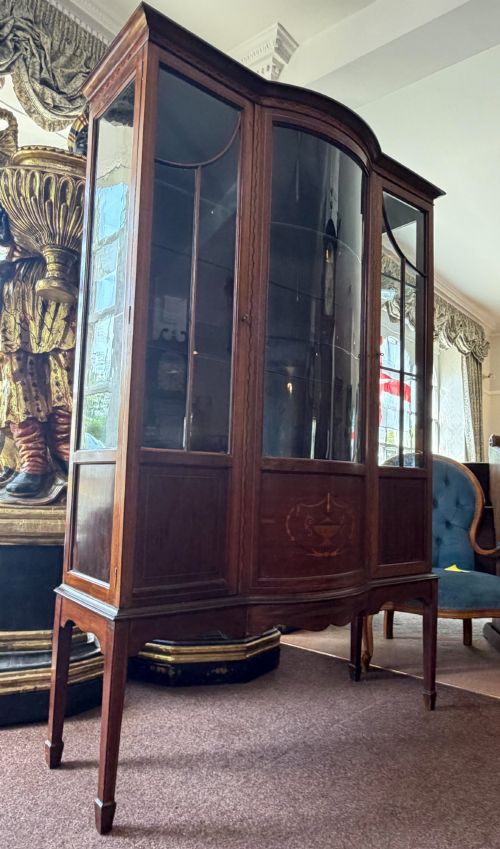
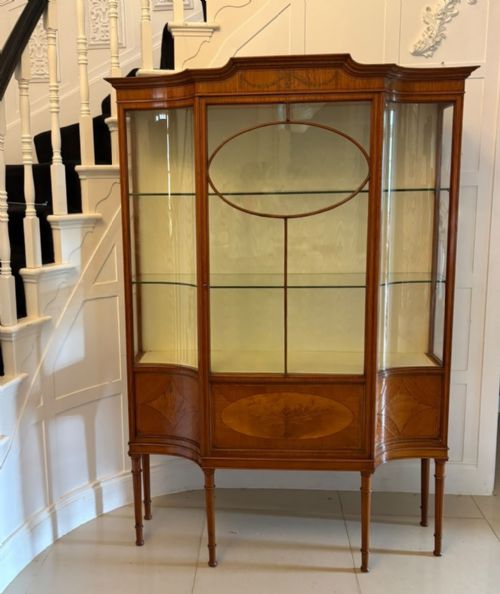


Victorian Bow Front Cabinet
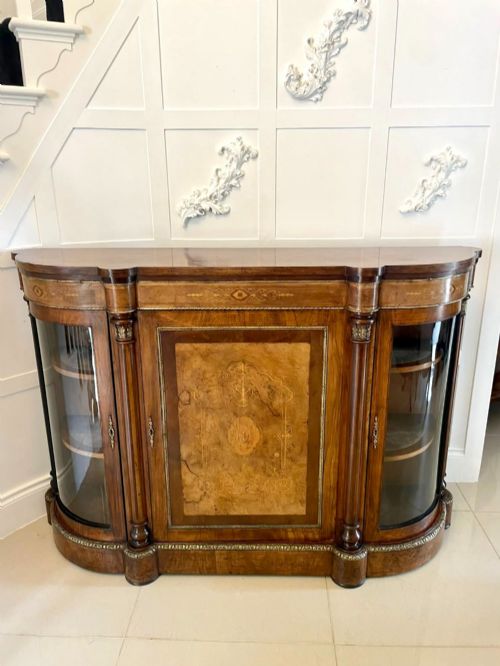
A victorian bow front cabinet brings curved mahogany and burr walnut warmth to a room while offering practical display space.
Victorian Bow Front Cabinet
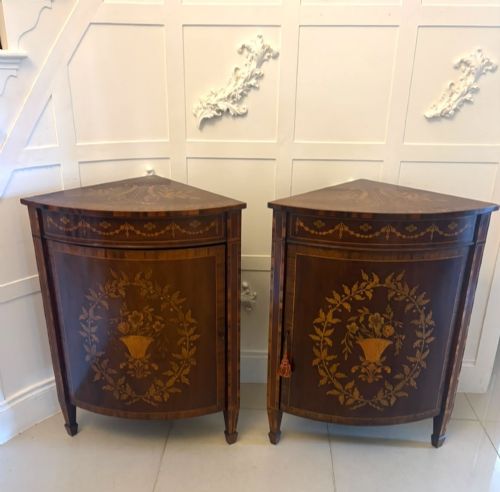
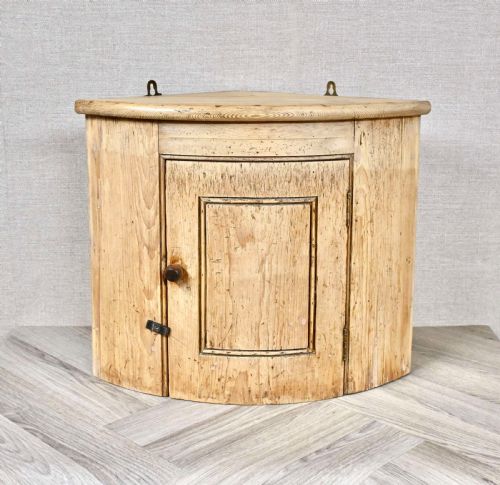
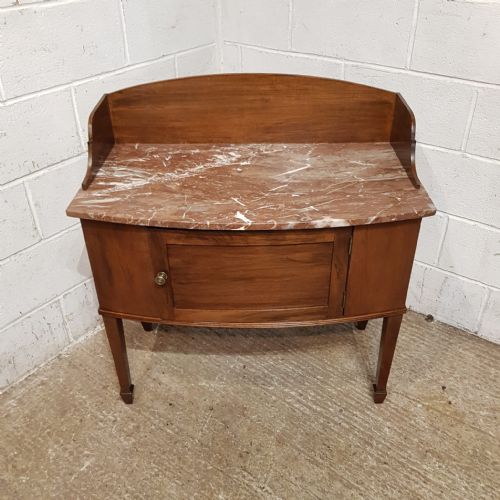
A victorian bow front cabinet encompasses a range of domestic storage and display forms shaped with a rounded, projecting front. The selection includes display cabinets, side cabinets, credenzas, chests of drawers, corner cupboards, and bedside cabinets.
Most pieces seen here date from the nineteenth century, spanning periods from early Victorian decades through to later revival styles like Sheraton Revival. These items originate primarily from domestic settings, though shop display examples also appear.
Buyers will frequently encounter mahogany and burr walnut side cabinets alongside glazed display pieces and compact bedside lockers. The curved contour softens the room layout while providing deep central storage capacity.
How They Were Made
Cabinet makers utilised dense hardwoods such as mahogany and walnut as the structural base, often applying figured veneers like burr walnut or satinwood across the curved surfaces. Brass mounts, ormolu details, and delicate fruitwood inlay provide decorative contrast to the timber grain.
Constructing a curved front required specialist steaming and shaping techniques to bend the wood accurately to the frame. Glazed doors utilised fine timber glazing bars to enclose display sections while maintaining structural integrity.
Secondary timbers such as pine appear in the internal framing and drawer linings of these cabinets. Surface finishes rely on traditional polish applications that highlight the natural figure and patina of the wood.
Victorian Bow Front Cabinet Retail Price Guide 2026
Typical asking prices for victorian bow front cabinet among the pieces listed under this phrase on Sellingantiques today, from the lower quarter to the upper quarter. They describe what is for sale here now, not the wider market.
Listings feature items spanning the Georgian, Victorian, and Edwardian eras, constructed in mahogany, burr walnut, satinwood, and pine.
What Varies in Quality
The sophistication of the timber veneer selection dictates the visual impact of the piece, with richly figured burr walnut and satinwood sitting at the upper end of the range. Plain mahogany versions offer a more restrained appearance.
The delicacy and precision of the marquetry and fruitwood inlay distinguish finer workshop output from standard production. Metalwork components, from brass handles to ormolu mounts, show varying degrees of cast detail and finish.
Proportion and the handling of the curved bow front define the architectural success of each piece. Cabinets with balanced joinery and integrated glazing represent the more accomplished examples.
Edwards and Roberts
The Victorian Bow Front Cabinet Glossary
- Bow front
- A convex, outwardly curved cabinet or drawer front. This curved profile softens room lines and increases internal central capacity.
- Credenza
- A low cabinet, frequently featuring glazed side sections and central doors. This form emerged as a prominent dining room or drawing room piece in the nineteenth century.
- Marquetry
- Decorative veneer work forming pictorial or geometric patterns using various coloured woods. Craftsmen cut contrasting timbers to fit precisely within the primary surface.
- Ormolu
- Gilt bronze mounts applied for decoration. This technique adds metallic highlights to the corners and borders of fine cabinets.
- Burr walnut
- Timber taken from the growth excrescences of walnut trees, yielding highly figured grain patterns. Cabinet makers prized this material for decorative veneering.
Victorian Bow Front Cabinet: Frequently Asked Questions
Where should I place a bow front cabinet?
These cabinets suit drawing rooms, dining spaces, or hallways where the curved profile avoids sharp corners in high-traffic areas.
Smaller bedside versions fit well beside low nineteenth-century bed frames, while larger glazed display pieces anchor a main wall.
How do I clean mahogany veneer?
Dust surfaces regularly with a soft, dry cloth to prevent particle accumulation on the polish. Avoid synthetic sprays or silicone products that can degrade historical finishes.
Apply a traditional wax polish sparingly when the timber appears dry, buffing gently to maintain the natural sheen.
What is the difference between a credenza and a side cabinet?
A credenza typically denotes a low nineteenth-century piece with enclosed central cupboards and curved glazed side compartments. They often featured elaborate marquetry and ormolu mounts for formal reception rooms.
Side cabinets generally offer simpler storage configurations with doors or drawers, suited to diverse domestic tasks across the home.
Can I use a corner cupboard in a modern room?
Corner cupboards utilise neglected room junctions efficiently, offering display or storage without occupying floor space. Their architectural form complements both traditional interiors and minimalist settings.
Wall-mounted variants free up the floor entirely, while freestanding corner units anchor empty angles.
How do I identify a Sheraton Revival piece?
Sheraton Revival furniture draws inspiration from late eighteenth-century neoclassical designs, reinterpreted during the late nineteenth century. Look for satinwood veneers, painted decorations, and delicate inlaid motifs.
These pieces combine lighter structural proportions with refined classical symmetry.