




Bow Fronted Console Table
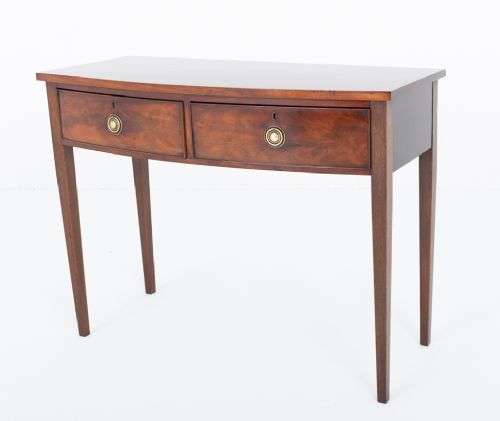
A bow fronted console table offers a curved profile that softens a narrow hallway or drawing room.
Bow Fronted Console Table
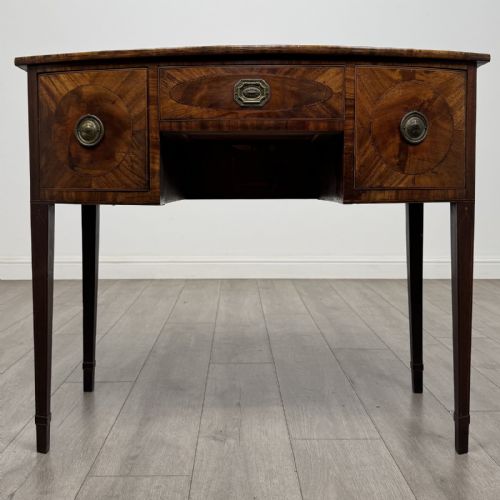
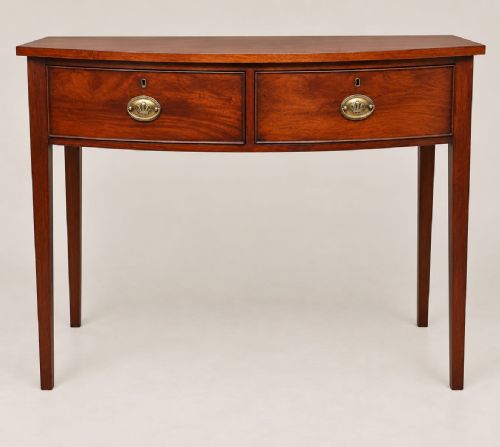
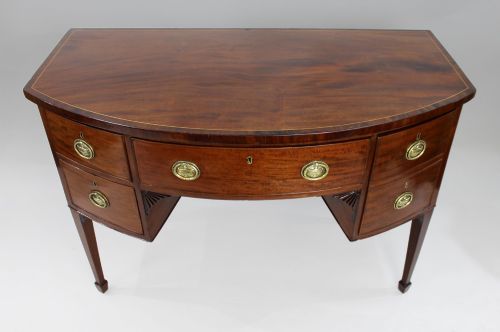
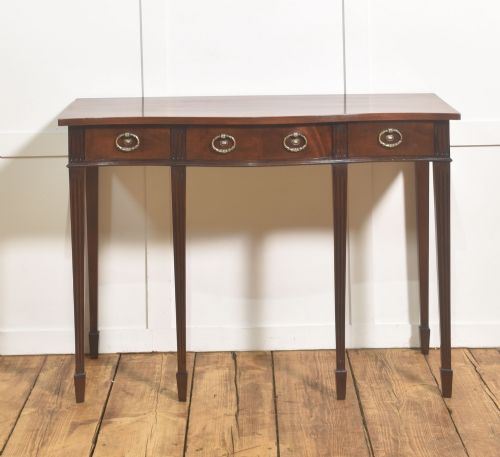
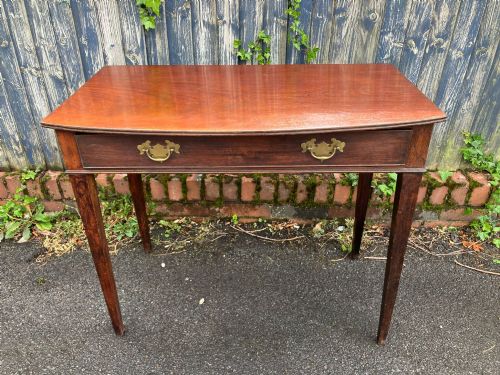
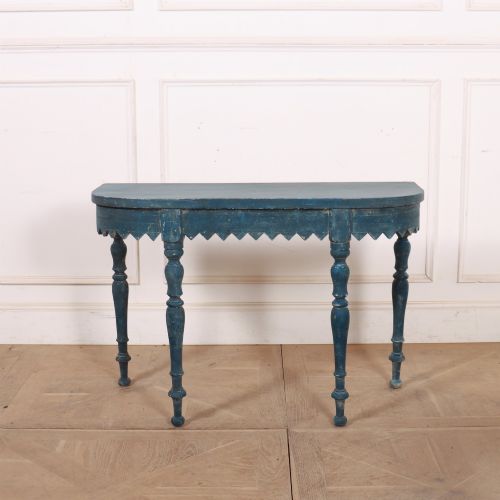
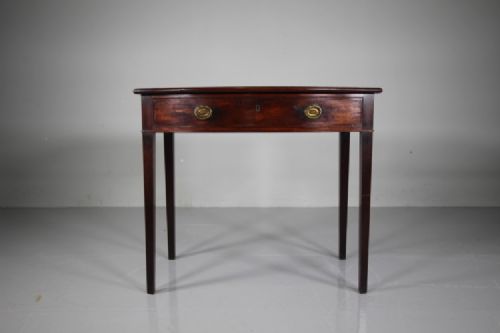
A bow fronted console table provides a curved front edge that projects outward, designed to stand against a wall in hallways, drawing rooms or dining spaces. These pieces appear most frequently in mahogany, spanning periods from the Georgian era through to the nineteenth century and the early twentieth century.
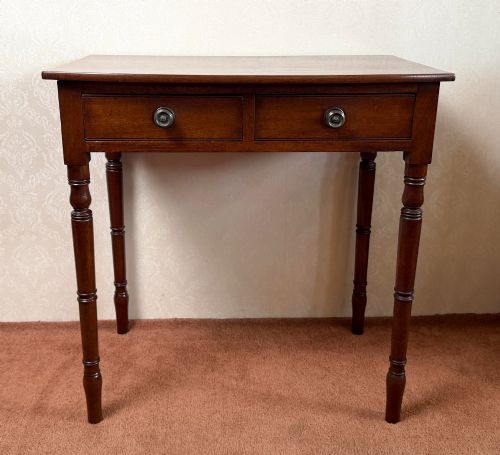
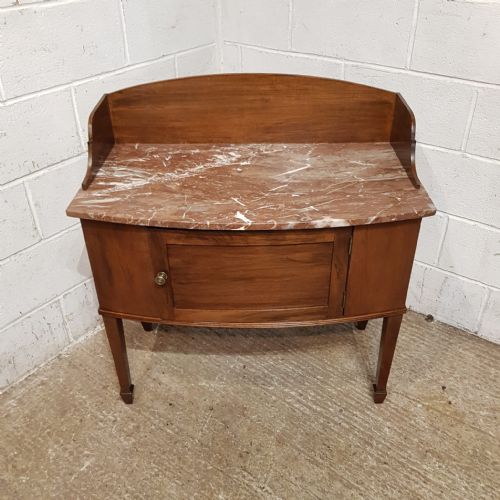
The form often overlaps with side tables, serving tables, and compact sideboards, sharing the characteristic bowed facade. Examples range from simple single-drawer formats to more elaborate inlaid designs or marble-topped variants dating from the Victorian period.
Georgian and Regency iterations dominate the selection, bringing classic proportions and figured timber to domestic interiors. Later revival pieces from the early twentieth century continue the tradition using similar materials and silhouettes.
Materials and construction
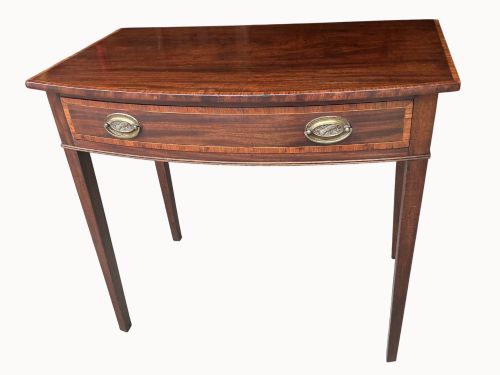
Makers relied heavily on solid and veneered mahogany, often selecting timber with rich grain patterns for the curved front panels. Secondary woods such as oak appear in drawer linings, whilst boxwood stringing provides delicate contrasting detail on inlaid surfaces.
Specialised techniques were required to shape the timber into a smooth, even bow front without compromising the structural integrity of the frame. Joiners fitted drawers with curved fronts precisely to the carcase, sometimes incorporating brass hardware and marble tops on specific washstand or console variants.
Some Victorian hall tables include a hidden lift-up lid, perfect for storing bulky gloves out of sight.
The markers of quality
Quality rests in the handling of the curved timber and the crispness of any inlaid boxwood stringing. Superior examples display carefully chosen mahogany veneers that wrap evenly around the sweep of the bow without buckling or distortion.
Construction details reveal the standard of workshop execution, from closely fitted drawer dovetails to the weight and balance of the supporting legs. Finer pieces maintain clean proportions and sympathetic timber selection across both the primary facade and secondary framing elements.
Maples
The Bow Fronted Console Table Glossary
- Bow front
- A convex, outwardly curved front elevation characteristic of certain tables, chests, and sideboards. This shape softens the rectangular geometry of a room.
- Console table
- A table designed to be fixed or placed flat against a wall, frequently supported by legs at the front. They often serve decorative or display functions in entrance halls.
- Stringing
- Thin inlay lines of contrasting wood, such as boxwood, set flush into the surface of the mahogany. This technique defines edges and panel borders on finer furniture.
- Figured mahogany
- Timber cut to reveal distinctive grain patterns like flame or curl. Cabinet makers reserved these boards for prominent exterior surfaces like drawer fronts.
- Demi-lune
- A half-moon shape used for table tops and cabinets designed to sit tight against a wall. The curved front mimics the sweep found on many console designs.
Bow Fronted Console Table: Frequently Asked Questions
Where should I place a bow fronted console table?
These tables suit narrow circulation spaces like entrance halls, landings, or corridors where a standard rectangular piece might obstruct movement. The curved front helps soften corners and opens up floor space while still providing a surface for lamps or decorative objects.
In dining rooms or living areas, they function well against a blank wall as a serving surface or a focal point beneath a mirror. Their shallow depth ensures they remain unobtrusive in tighter interior layouts.
How do I identify a Georgian piece?
Georgian examples typically display dense, heavy mahogany with patination accumulated over centuries of use. Look for hand-cut dovetails in the drawer construction and traditional timber framing methods appropriate to the eighteenth or early nineteenth century.
Proportions tend to be balanced and restrained, relying on the natural grain of the wood rather than excessive ornamentation. Secondary timbers like oak or pine inside the drawers further help confirm the period of manufacture.
What is the difference between a console table and a side table?
Console tables are traditionally designed to stand directly against a wall, sometimes relying on the wall for partial stability or featuring decorative brackets. Side tables are freestanding pieces of furniture finished on all sides or intended for general placement around a room.
In practice, antique terminology often overlaps, and many pieces catalogued as side tables function identically to console tables in modern homes. Both formats share similar heights and shallow depths suited to perimeter placement.