


Victorian Bottle Vase
These Victorian bottle vase examples bring narrow necks and globular bodies into your room, offering distinct silhouettes shaped by nineteenth-century kilns.
Victorian Bottle Vase
A victorian bottle vase is a ceramic or glass vessel defined by a slender neck rising from a bulbous, rounded body, designed primarily for holding single stems or standing alone as a decorative object. When you search for this phrase, you meet diverse interpretations ranging from earthenware and porcelain to faience and stoneware.
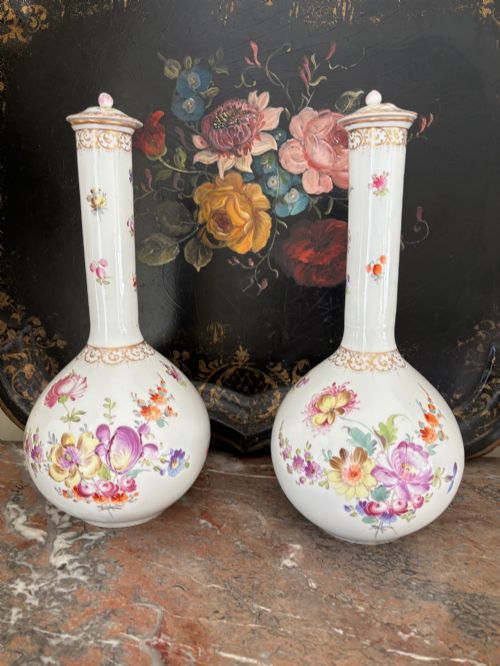
The pieces on this page span the nineteenth century, including specific dates such as eighteen eighty and nineteen hundred alongside broader Victorian and Georgian attributions. Forms vary from sunburst bottle vases to Jackfield Dudson pottery examples painted with mice in the Aesthetic taste.
Origins stretch across British potteries and continental workshops, encompassing styles like Arts and Crafts, Art Nouveau, and Hispano-Moresque glazed ceramic. You encounter both single vessels and matching pairs, each demonstrating the period's fascination with varied ceramic bodies and surface treatments.
Materials and methods
Potters and glassmakers utilised earthenware, stoneware, terracotta, porcelain, and glass to form the bodies of these vessels, shaping them by hand or mould before applying glazes. Earthenware and terracotta provided porous, matte bases, while porcelain and stoneware offered denser structures capable of holding liquids.
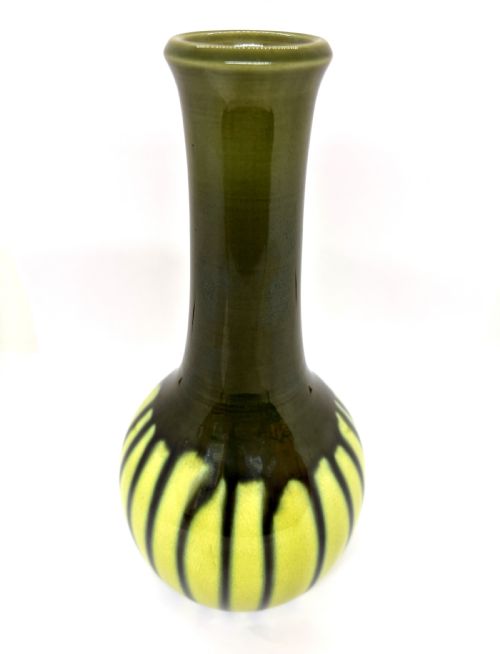
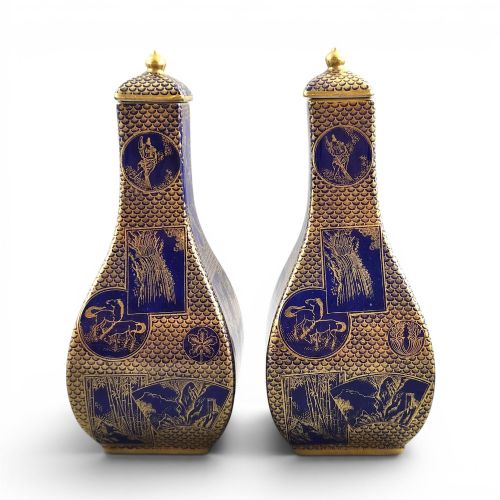
Surfaces received hand-painted floral decoration, enamel, gilding, gold leaf, and specialised glazes such as Peachblow and faience. Kiln firing fixed these pigments and lustres to the ceramic substrate, creating permanent metallic sheens and colourful motifs.
Materials recorded across the archive include porcelain, stoneware, earthenware, terracotta, enamel, glaze, and gold leaf.
Assessing quality
The standard of a victorian bottle vase rests upon the precision of its form and the execution of its surface decoration. Hand-painted details, crisp moulded lines, and even glaze distribution separate superior examples from standard production pieces.
The reputation of the maker and the complexity of the glaze chemistry, such as complex faience or layered enamel, elevate the standing of individual vessels within the wider nineteenth-century ceramic tradition.
Sitzendorf·Burmantoft's Pottery·Mason's Patent Ironstone·Stevenson & Hancock King Street Derby·Doulton Lambeth·Minton·Watcombe Terracotta Pottery·Jackfield Dudson Pottery
The Victorian Bottle Vase Glossary
- Faience
- Tin-glazed earthenware decorated with coloured pigments over an opaque white glaze. This technique creates a smooth surface suitable for painted patterns.
- Imari
- A style of ceramic decoration featuring deep cobalt blue, iron red, and gilt highlights. The palette originates from Japanese export wares imitated by European potteries.
- Terracotta
- Unglazed or clear-glazed fired brownish-red clay. This porous material was frequently modelled into matte-finished decorative vessels.
- Stoneware
- A heavy, dense ceramic fired at high temperatures until vitrified. The resulting body is impervious to liquid without requiring a glaze.
- Vaseline glass
- Pressed or blown glass containing uranium dioxide, which produces a characteristic yellow-green colour and glowing appearance under ultraviolet light.
Victorian Bottle Vase: Frequently Asked Questions
What is a Victorian bottle vase used for?
These vessels were created for domestic display on mantelpieces, tables, and cabinets, often holding single flower stems or standing as ornamental items.
Their narrow necks kept stems upright while the bulbous bodies provided stable bases for display in nineteenth-century interiors.
How do I identify a Victorian bottle vase?
Look for characteristic nineteenth-century ceramic bodies, glazes, and decorative styles such as Aesthetic taste motifs, hand-painted florals, or faience finishes.
Makers' marks stamped or painted on the underside often provide specific clues to the pottery and date of manufacture.
Are these vases glazed or unglazed?
Many examples feature glossy or matte glazes, enamel colours, and gilding applied over ceramic or earthenware bodies to seal the surface and add colour.
Some pieces, particularly terracotta or stoneware varieties, utilise specialised reactive glazes like Peachblow or Hispano-Moresque lustres.
How should I display a bottle vase at home?
Place them on flat surfaces where their profiles and surface decorations can be appreciated from multiple angles in natural light.
Pairing matching vessels on either side of a mantelpiece reflects nineteenth-century symmetry, while single examples work well within curated cabinet displays.