
Victorian Books
When you search for victorian books, you enter a world of timber library furniture, adjustable shelving, and bound nineteenth-century volumes designed for serious study.
Victorian Books
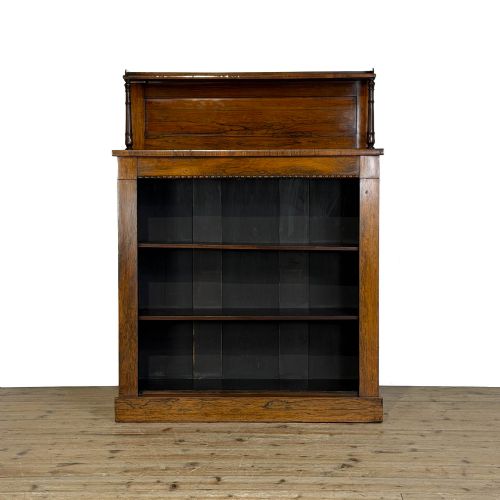
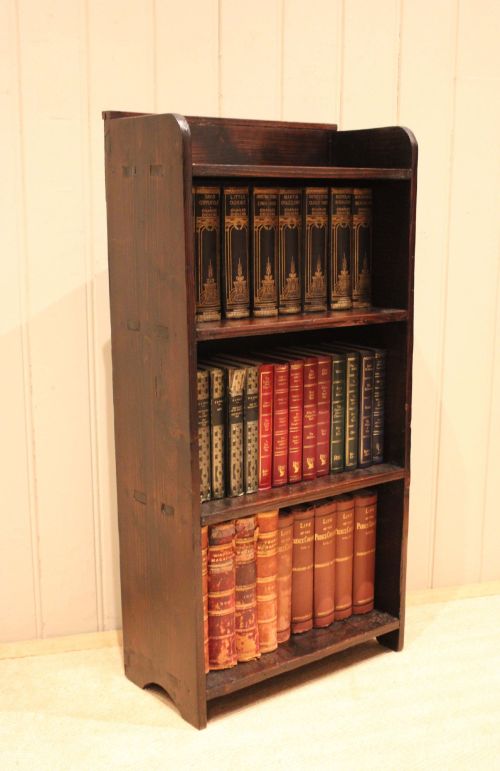
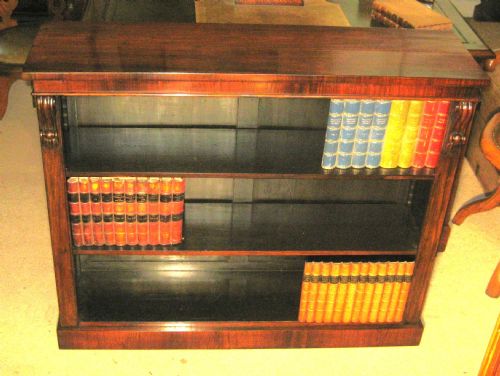
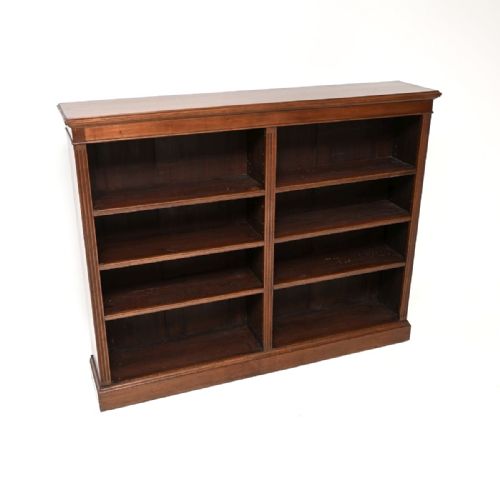
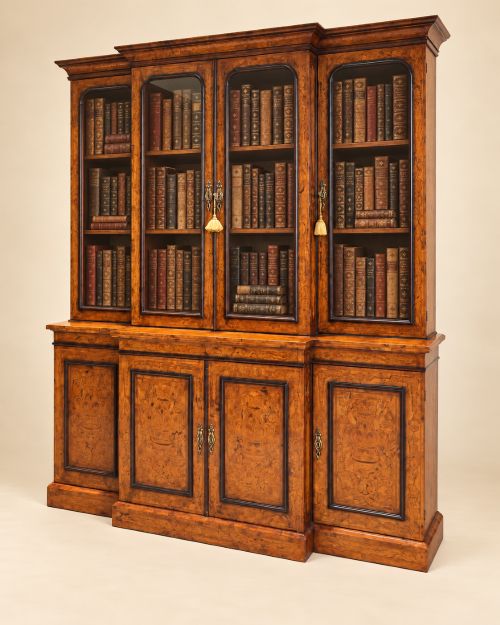
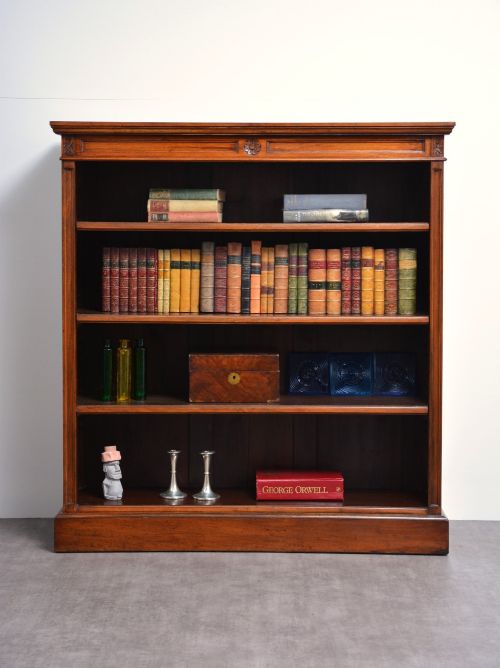
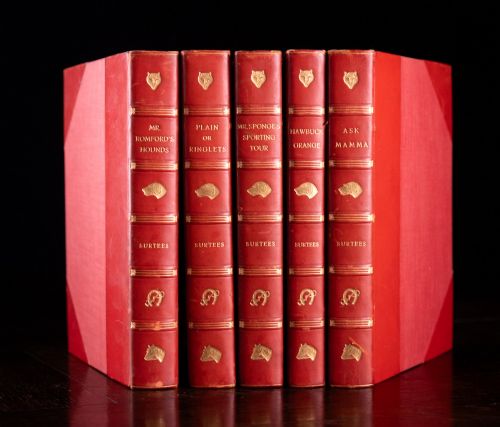
Victorian books and associated library furnishings encompass open bookcases, revolving bookstands, adjustable reading tables, and period literature bound in leather or cloth. Buyers find everything from utilitarian pine bookshelves to elaborate breakfront cabinets in burr walnut.
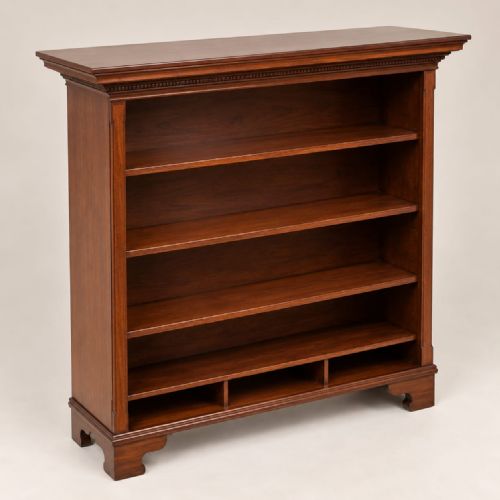
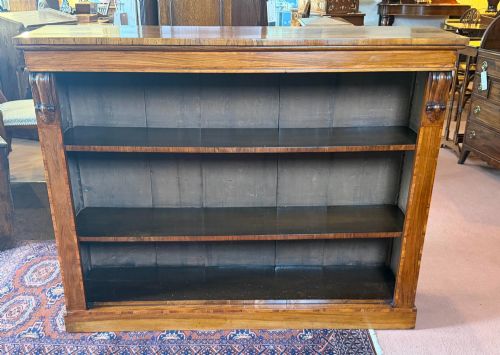
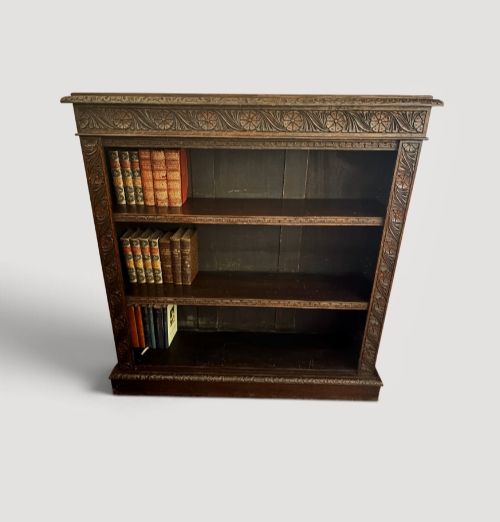
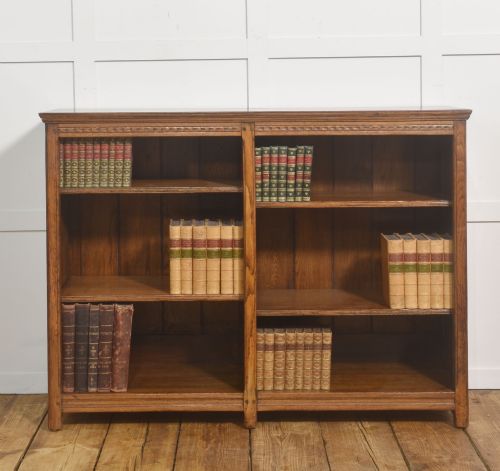
The open bookcase remains the most common form on this page, frequently constructed in rich mahogany or oak with functional adjustable shelves. Alongside the larger cabinetry, smaller table-top bookslides, reading stands, and original multi-volume sets appear with regularity.
What Varies in Quality
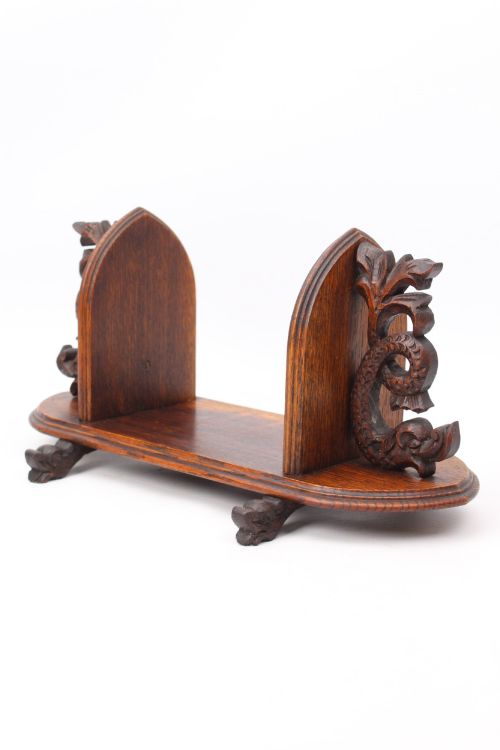
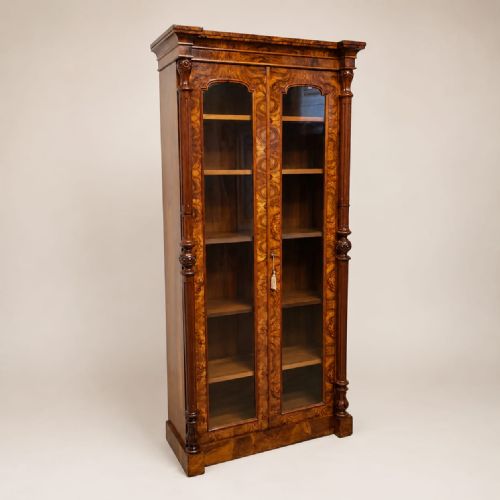
Selection of timber grain fundamentally divides standard utility pieces from high-end library appointments, with figured burr walnut and rich rosewood commanding attention over plain pine or standard oak. The depth of hand-carving, particularly in Gothic Revival examples, signals the original workshop's ambition.
Proportion and scale dictate desirability, where narrow, tall formats or breakfront configurations demonstrate superior architectural planning. Internal mechanics, such as smooth-action revolving bases and robust brass shelf supports, further separate standard items from exceptional ones.
Listings feature woods like mahogany, rosewood, oak, walnut, burr walnut, and pitch pine across bookcases, stands, and cabinets.
Sampson Mordan·Betjemann·Huntley and Palmer
The Victorian Books Glossary
- Breakfront
- A piece of furniture where the central section projects forward from the flanking wings. This architectural arrangement creates depth and shadow in larger bookcases.
- Bookslide
- An adjustable rack designed to hold a small row of volumes upright on a desk or table. Many incorporate scissor actions or extending wooden brackets.
- Whatnot
- An open set of multi-tiered shelves used for displaying books and ornaments. They appear in corner formats or freestanding rectangular shapes.
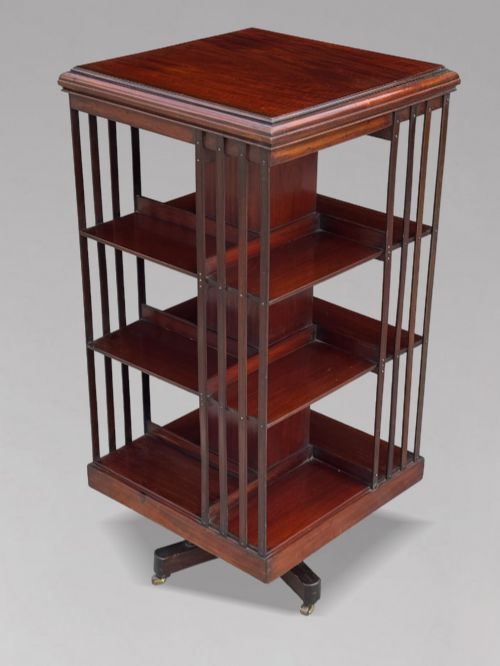
- Revolving bookcase
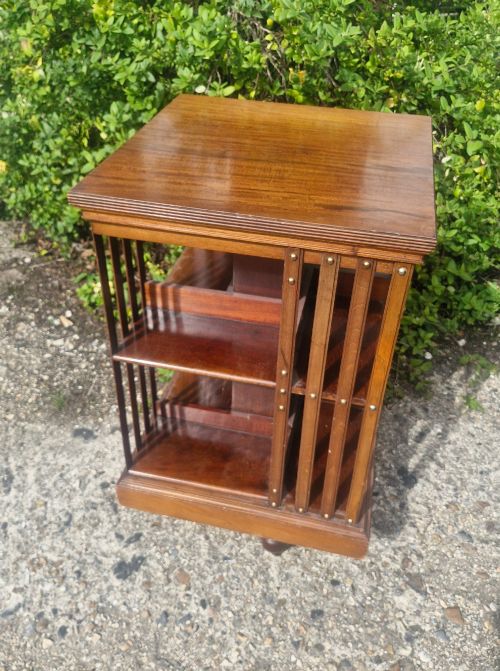
- A compact table-top or floor-standing bookcase mounted on a hidden pivot. This allows a reader to access multiple volumes from a single seated position.
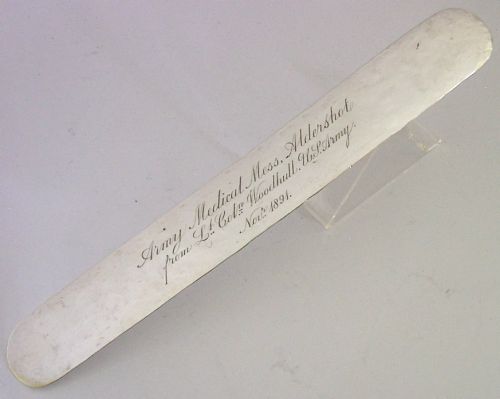
- Page turner
- A hand-held implement fashioned from materials like silver or ivory to slip between uncut book pages. These accessories formed part of the nineteenth-century reading routine.
Victorian Books: Frequently Asked Questions
How do I adjust the shelves?
Many nineteenth-century bookcases utilise wooden ratchets, brass pegs, or sliding tooth rails inset into the interior sides. You simply lift the shelf slightly to clear the supporting mechanism and relocate it to the desired height slot.
Original shelves fit snugly within their specific carcases, so timber movement over the decades means you should handle the boards with care during adjustment.
Where were these bookcases placed?
Larger architectural bookcases stood against study and library walls, while revolving stands sat beside armchairs for immediate access to reference volumes. Smaller table-top bookslides lived on desks, side tables, and drawing room surfaces.
Their varied footprints allowed homeowners to integrate reading materials into nearly every habitable room of the house.
How do I clean leather bindings?
Leather-bound volumes require a gentle touch, starting with a soft, dry brush to remove dust from the spines and boards. Avoid harsh modern chemical cleaners that strip natural oils from historical hide.
Store your books away from direct sunlight and excessive humidity to prevent the leather from drying out and cracking over time.
Can I trust revolving stands?
Period revolving stands rely on internal wooden or metal spindle mechanisms that distribute weight evenly across a cruciform base. Test the rotation gently to ensure the bearing moves smoothly without grinding.
Avoid overloading the upper tiers with heavy folios, as balance remains essential for proper daily rotation.