


Victorian Bohemian Glass Vase
A victorian bohemian glass vase brings saturated colour and heavy ornamentation to a room, showing the ambitious output of nineteenth-century glassmakers.
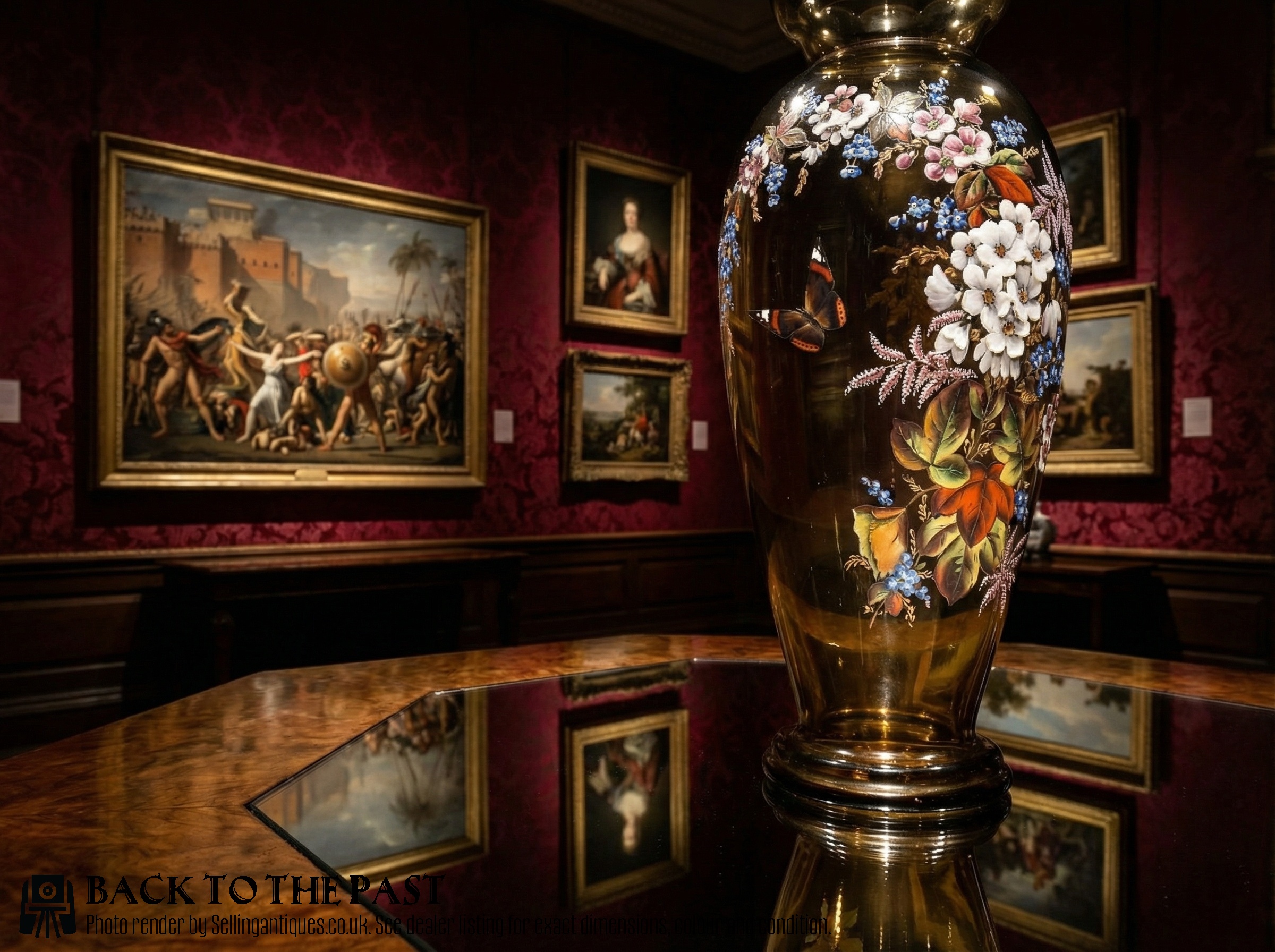
Victorian Bohemian Glass Vase
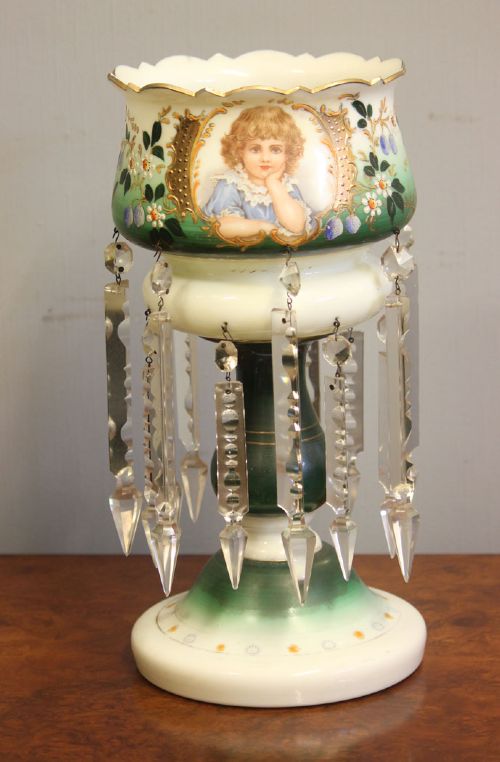
When you search for a victorian bohemian glass vase, you encounter a range of nineteenth-century vessels that span from ruby flash glass to delicate opaline. These pieces often arrive as pairs of mantel lustres hung with glass prisms or as single tall garniture urns intended for display. The forms demonstrate the diverse output of Bohemian workshops during the Victorian era, mixing utilitarian glassmaking with ornate decorative arts.
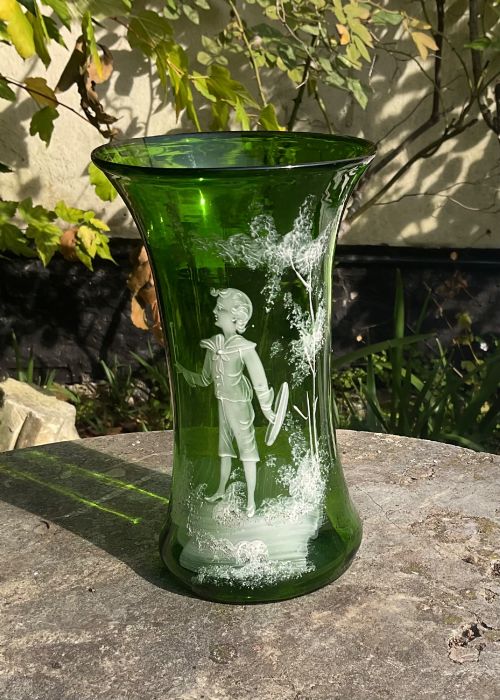
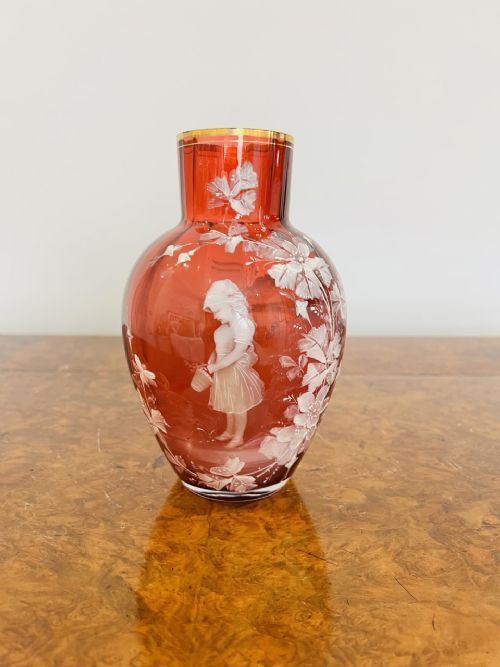
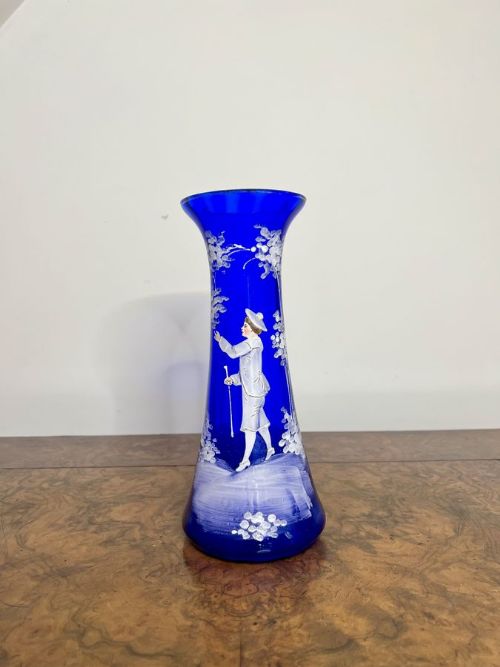
The objects on this page typically date from the middle to the late nineteenth century, reflecting periods such as 1880 and 1900. You will find cobalt blue cut-to-clear vessels, green glass hand-painted with hunting scenes, and cranberry glass decorated in the style associated with Mary Gregory. These pieces represent both traditional domestic tablewares and ambitious decorative statements created for nineteenth-century interiors.
How they were made
Maker's workshops relied on hand-blowing glass and applying layers of different coloured metals to achieve distinct optical depths. Overlay and flash techniques involved casing a clear or contrasting body in ruby, green, or blue glass, which workers then cut away using wheels to expose the contrasting colour underneath. Enamel painting and gold leaf application finished many surfaces, requiring skilled hands to paint figures, florals, and hunting scenes directly onto curved vessels.
Engraving and etching created intricate matte designs against polished or flash grounds. Workshops also utilised lead crystal and opaline glass as foundations for polychromatic enamel decoration. The addition of cut glass prisms on mantel lustres demonstrates how makers combined metalwork and glass to produce complex decorative objects.
Materials recorded on this page include ruby glass, cranberry glass, gold leaf, lead crystal, and enamel.
What varies in quality
The distinction between standard production and top-tier pieces rests on the crispness of the wheel-cutting and the finesse of the enamelling. Pieces with deep, sharp facet cuts or carefully detailed hand-painted portraits show greater technical mastery than simpler, moulded examples. The thickness of the glass overlay and the precision of the gilding also separate utilitarian items from exhibition pieces.
Gradations in quality appear in the complexity of the colour palette, from uniform solid glass to complex flashed layers that reveal fine detail when carved. Pairs that match perfectly in height, colour saturation, and prism completeness command greater attention than mismatched or heavily worn survivors.
Mary Gregory·Harrach·Moser
The Victorian Bohemian Glass Vase Glossary
- Mantel lustre
- A decorative glass vase or urn hung with cut crystal prisms, designed to sit on a fireplace mantelpiece. These pieces often feature painted enamel details and gilded rims.
- Flash glass
- A vessel made with a thin outer layer of coloured glass applied over a clear or contrasting body. Workers then cut through this thin top layer to create two-tone patterns.
- Mary Gregory glass
- Glassware decorated with white enamel silhouettes of children amidst foliage or pastoral settings. This style takes its name from an American decorator, though most examples originate in Bohemia.
- Opaline glass
- An opaque or translucent pale glass that mimics the appearance of opal. It provides a smooth pastel ground for hand-painted floral and animal decoration.
- Garniture set
- A matching group of three or more vases and urns designed to be displayed together on a sideboard or mantel.
Victorian Bohemian Glass Vase: Frequently Asked Questions
How do I spot flash glass?
Examine the cut edges where the coloured surface meets the clear or contrasting body underneath. You will notice a distinct boundary line where the thin outer layer has been carved away by the wheel.
This technique differs from solid coloured glass, which maintains the same hue throughout its entire thickness regardless of cuts or chips.
What are mantel lustres used for?
Mantel lustres served as decorative garniture pieces on nineteenth-century fireplaces, designed to catch and reflect candlelight from the room. The hanging glass prisms scatter light across the mantel.
They functioned primarily as ornamental displays rather than containers for holding water and fresh flowers.
Are all Mary Gregory pieces English?
Despite the association with an American decorator name, the vast majority of these white enamelled glass pieces were produced in Bohemian and Victorian European workshops. The style spread widely across continental glass factories during the nineteenth century.
Collectors use the term to describe the distinctive white silhouette painting technique rather than a specific geographic origin.