



Victorian Bobbin Furniture
Victorian bobbin furniture brings together turned spindles and structural joinery, offering tactile warmth and nineteenth-century character for domestic interiors.
Victorian Bobbin Furniture
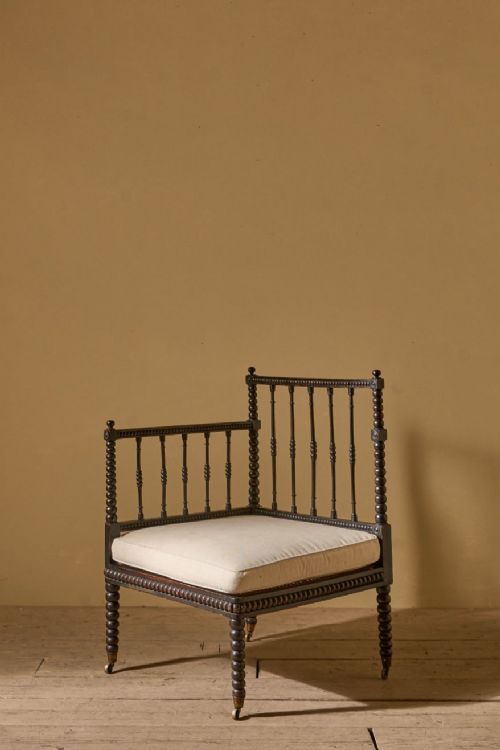
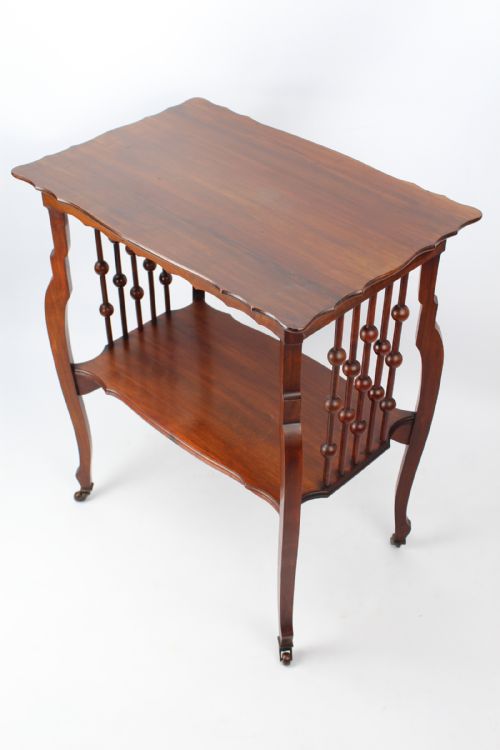
Victorian bobbin furniture comprises seating and tables defined by spool-turned spindles, drawing on nineteenth-century vernacular and revival styles. You will frequently encounter side tables, corner chairs, and armchairs constructed during this period.
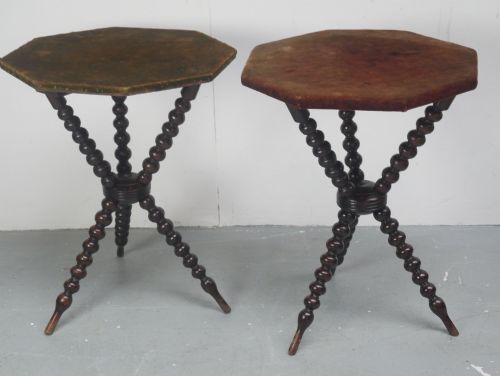
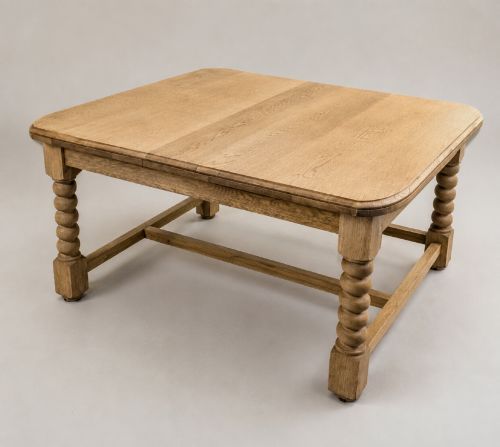
The objects span multiple stylistic revivals, appearing in ebonised finishes, bleached oak, and warm walnut. These pieces range from simple pine cricket tables to elaborate occasional tables and library seating.
Origins stretch across the nineteenth century, capturing Victorian industrial turning techniques alongside earlier Regency influences. The forms serve both functional domestic roles and decorative interior display.
Materials and construction
Makers utilised native and imported hardwoods including oak, walnut, mahogany, and pine, often applying an ebonised finish to mimic costly exotic woods. Turned components were produced on a lathe, creating the characteristic repetitive spool or bobbin shapes.
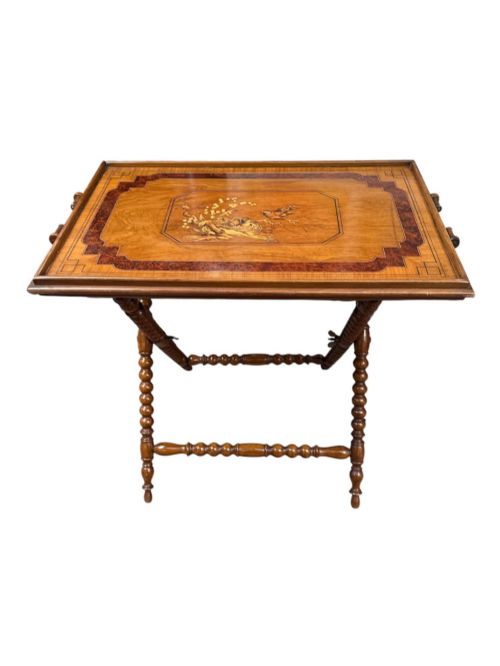
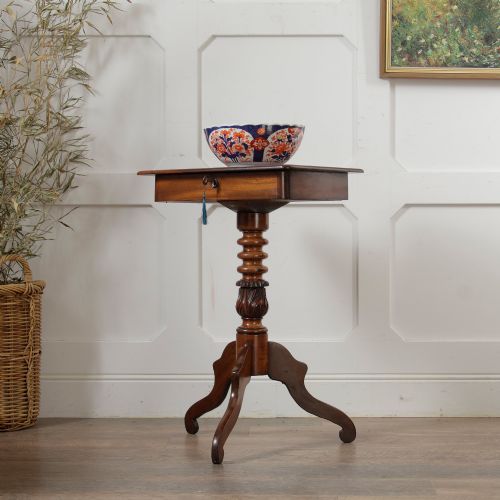
Structural elements rely on traditional jointing methods combined with applied turned spindles for legs, stretchers, and backrests. Surfaces occasionally incorporate secondary materials such as leather inserts, marble tops, and marquetry details.
Listings feature nineteenth-century furniture utilising oak, walnut, mahogany, pine, and ebonised finishes across various tables and seating forms.
Assessing craftsmanship and condition
Quality depends upon the crispness of the lathe work and the uniformity of the spool turnings across each individual spindle. Superior examples maintain tight structural joints without excessive movement in the turned framework.
Selection of timber significantly dictates the grade of the piece, with dense hardwoods like walnut and mahogany offering greater durability than softer pine alternatives. The preservation of original surface finishes, whether polished wood or ebonised coatings, preserves historical integrity.
Liberty & Co
The Victorian Bobbin Furniture Glossary
- Bobbin turning
- A form of woodturning that creates a series of rounded, spool-like shapes along the length of a spindle. This decorative technique is also known as spool turning or pillaging.
- Ebonised
- Wood finished with a dark stain or paint to imitate expensive ebony. This treatment was particularly popular during the Victorian era for accentuating turned details.
- Cricket table
- A small, lightweight table traditionally featuring three legs and a circular top. They frequently incorporate peg joinery and bobbin-turned supports.
- Gateleg table
- A table with hinged leaves supported by swing-out legs. In bobbin furniture, these support legs often feature extensive spool turning.
- Turner's chair
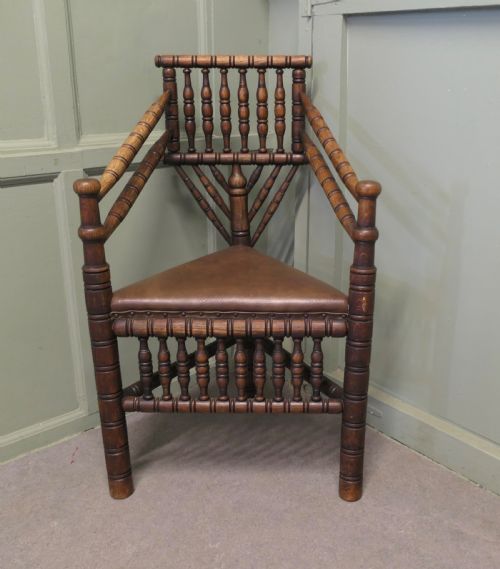
- A sturdy wooden chair constructed almost entirely from turned spindles and posts. These designs trace their lineage back to medieval prototypes.
Victorian Bobbin Furniture: Frequently Asked Questions
How do I style a bobbin table?
Bobbin tables work well as occasional surfaces in living rooms or as bedside stands. Their sculptural turned legs add visual texture without overwhelming a room.
Pair them with plain upholstery or minimalist decor to let the detailed woodwork stand out. They suit both traditional interiors and eclectic modern spaces.
Are bobbin chairs comfortable?
Many bobbin chairs were designed for occasional seating rather than prolonged lounging. Armchairs and rocking chairs provide more physical support than side or corner chairs.
Adding a small cushion can improve comfort for daily use. The upright posture encouraged by these seats makes them practical for desks and dining areas.
How do I date bobbin furniture?
Dating relies on examining the timber species, joinery methods, and overall form. Nineteenth-century examples often utilise walnut, oak, or ebonised hardwoods.
Stylistic clues such as Aesthetic Movement influences or Arts and Crafts simplicity help narrow down the decade of production. Secondary woods and fastener types provide further chronological evidence.