
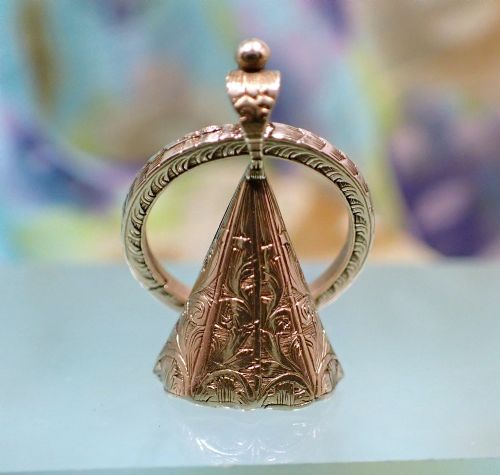


Victorian Bloodstone Charm
These small victorian bloodstone charm pieces combine deep green stone with rich gold or silver to sit on a chain or watch guard.
Victorian Bloodstone Charm
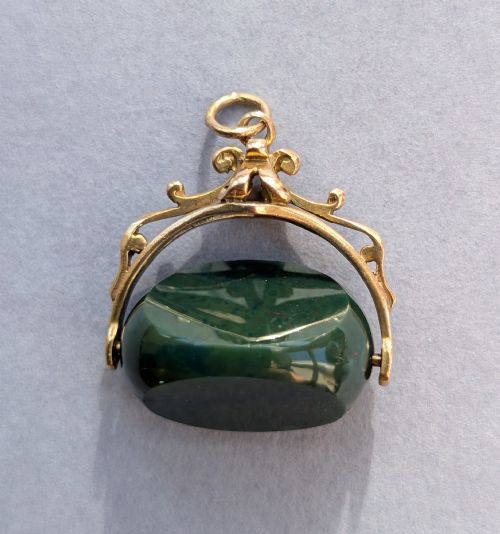
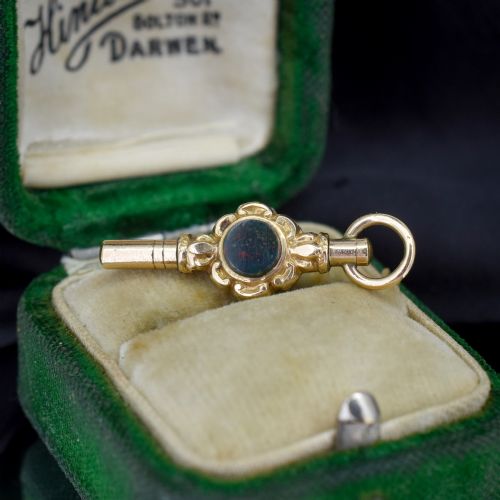
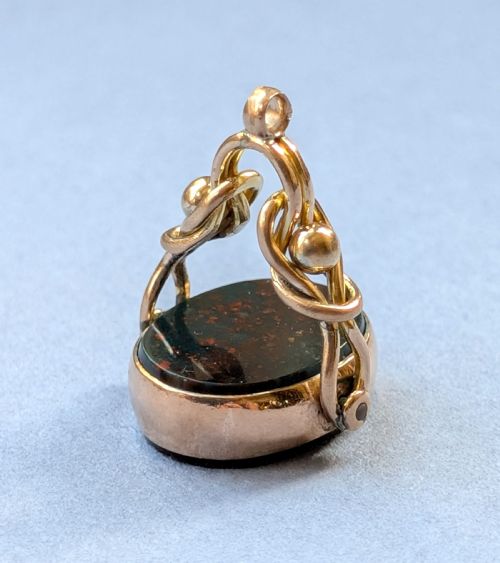
When you search for a victorian bloodstone charm, you encounter hardstone jewellery designed to be worn on watch chains, charm bracelets or pendant necklaces. The forms span swivel fobs, engraved seals, shield watch keys and hardstone padlocks.
The pieces on this page lean heavily towards Victorian and Edwardian examples, alongside later 20th-century items from the 1920s, 1930s and 1960s. You meet spinning fobs and split rings carrying bloodstone alongside carnelian, agate and silver lucky charms.
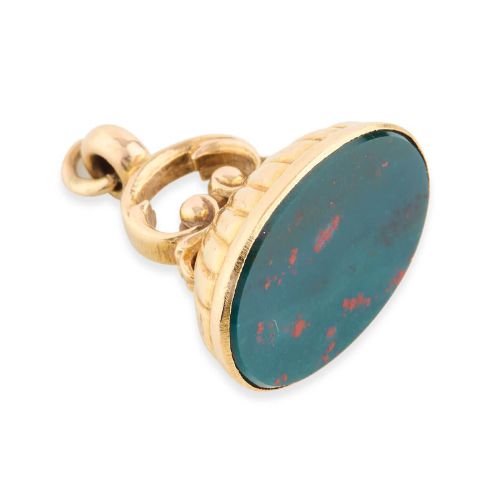
Originating as functional seals and watch accessories, these items function today purely as personal ornaments. The typical piece combines dark green stone flecked with red against polished 9ct rose gold, yellow gold or silver.
How they were made
The metalwork relies on solid 9ct gold, 15ct gold, silver or gold gilt formed into bezels, swivel frames and split rings. Heavier items utilise 15ct gold, while lighter pieces employ 9ct rose gold or sterling silver settings.
Lapidaries shaped the bloodstone, carnelian and agate by cutting and polishing the hardstone into smooth shields, panels or revolving fob tablets. Engravers then carved intaglios, ciphers or names like Jane directly into the stone face.
What varies in quality
The distinction between ordinary and superior pieces rests on the crispness of the stone engraving and the weight of the gold. Fine examples feature deeply cut intaglio seals and substantial 15ct gold mounts rather than thin gold gilt over base metal.
Mechanism integrity also separates pieces, particularly in spinning fobs and swivel rings that must turn smoothly within their outer loops. Retained matching split rings and original chains elevate the integrity of a grouping.
The Victorian Bloodstone Charm Glossary
- Bloodstone
- A dark green chalcedony quartz dotted with red jasper inclusions resembling drops of blood. This dense hardstone took a high polish suitable for pressing into hot wax.
- Fob
- A short pendant attached to a pocket watch ribbon or chain. These often swivel to present a hardstone face on one side and a blank or engraved metal seal on the reverse.
- Intaglio
- A design incised into the flat face of a stone so that an impression left in wax produces a raised relief. Seals of this type served to authenticate letters and documents.
- Hardstone
- A collective term for decorative stones harder than ordinary marble, including bloodstone, agate and carnelian. They resist scratching and wear well in daily use.
- T Bar
- A short transverse bar of metal attached to the centre of a pocket watch chain. It slotted securely through a waistcoat buttonhole.
Victorian Bloodstone Charm: Frequently Asked Questions
How do I wear a antique fob?
You can slide a fob onto a sturdy neck chain to wear it as a pendant against the chest. Alternatively, attach it to a heavy charm bracelet or a traditional Albert watch chain.
The sturdy swivel loops and split rings on these pieces make them secure for daily hanging.
What gold purity should I expect?
The gold mounts on these pieces span several traditional standards including 9ct gold, 9ct rose gold and the richer 15ct gold common in earlier Victorian items. You also encounter silver and gold gilt settings.
Higher karat gold displays a deeper, warmer hue that complements the dark green and red tones of the bloodstone.
How do I date a piece?
Dating relies on stylistic clues such as the heavy mounts of the Victorian era, the refined swivel frames of the Edwardian period, or the specific forms of watch keys and shield fobs. Hallmarks, where present on the gold or silver mounts, provide exact assay office years.
Comparing the cut of the hardstone and the mechanism of the swivel frame also helps place an item within the nineteenth or twentieth century.