


Victorian Biscuit Container
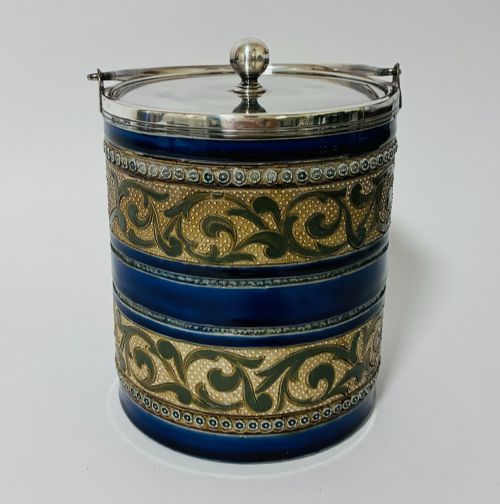
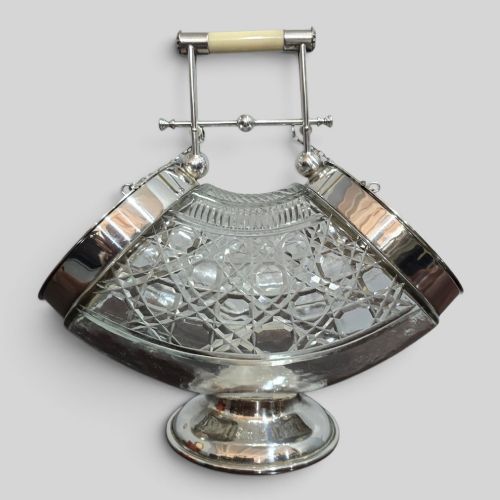
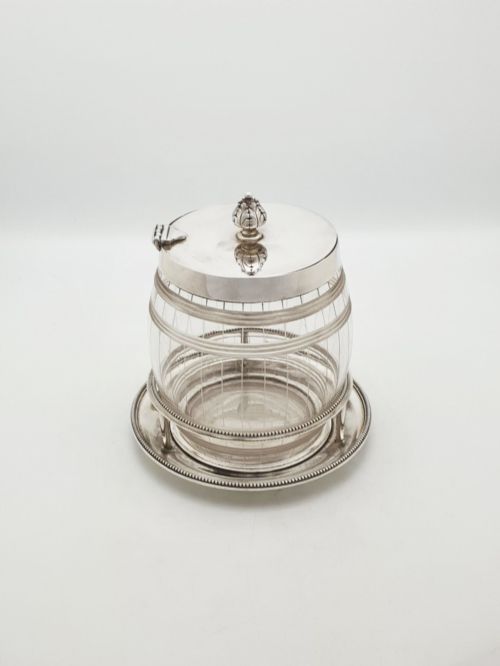
These Victorian biscuit containers combine silver plate with ceramic and glass to grace any afternoon tea table.
Victorian Biscuit Container
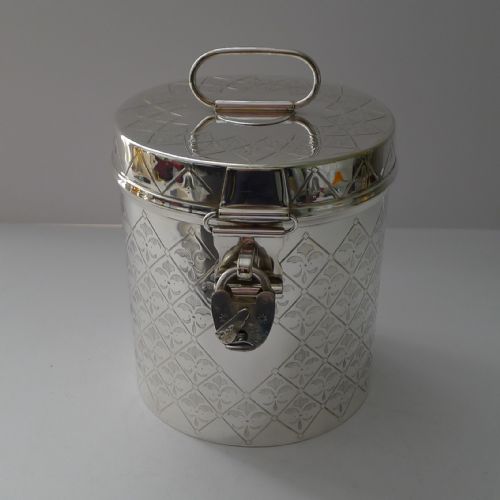
A victorian biscuit container sits on the dining or drawing room table to hold dry biscuits within a lidded vessel. You encounter forms ranging from ceramic jars and cut glass barrels to decorated novelty tins and heavy metal boxes.
Most examples hail from the Victorian and Edwardian eras, spanning periods from the mid-nineteenth century up to the early twentieth century. These vessels appear under various names including biscuit barrels, biscuit boxes, and decorative tins.
Makers utilised diverse materials to create these containers, pairing ceramic bodies or glass inserts with metal mounts and hinged lids. Some pieces take playful novelty shapes such as books, satchels, or weights.
How they were made
Manufacturers combined silver plate, nickel silver, and sterling silver for the mounts, handles, and lids. These metal elements were often applied to ceramic bodies or glass inserts.
Ceramic portions include stoneware such as Doulton Lambeth and Jasperware from Wedgwood. Glass vessels feature cut glass, hobnail cutting, and cranberry glass.
Specialist firms cast metal in novelty forms like weights or books, and mounted them with hinged mechanisms for secure storage.
Some Victorian biscuits clearly weighed heavily on minds, judging by the containers shaped like gym weights.
What varies in quality
The weight and thickness of the silver plate or sterling silver mounts influence the substance of the piece. Substantial metalwork and robust hinges indicate better workshops.
The clarity and depth of the glass cutting, or the crispness of the ceramic moulding in Jasperware and stoneware, mark out finer examples. Novelty pieces depend on the ingenuity and precision of their shape.
The presence of hallmarks, maker stamps, or locking mechanisms distinguishes standard production items from notable maker output.
Mappin and Webb·Elkington·Thomas Bradbury·Huntley and Palmers·Wedgwood·Peek Frean and Co·James Dixon and Sons
The Victorian Biscuit Container Glossary
- Biscuit barrel
- A lidded container specifically designed for storing dry biscuits at the table. This term is frequently used interchangeably with biscuit box.
- Silver plate
- A layer of silver fused to a base metal such as nickel silver. This technique provided the appearance of solid silver at a lower cost.
- Jasperware
- A type of fine stoneware developed by Wedgwood featuring contrasting applied white reliefs against a coloured matte background. It remains distinct for its tactile finish.
- Cranberry glass
- A rich red glass coloured with gold chloride during production. It often appears in Victorian tableware and decorative items.
- Hobnail cut
- A sharp, faceted geometric pattern cut into the surface of glassware. It creates a textured exterior that catches the light.
Victorian Biscuit Container: Frequently Asked Questions
What were victorian biscuit container pieces used for?
These containers held dry biscuits or crackers during formal afternoon tea and dining in the Victorian home. They kept baked goods dry and presentable on the sideboard.
The hinged lid allowed hosts to serve guests easily while keeping the contents fresh between gatherings.
How do I date a victorian biscuit container?
Dating relies on stylistic clues, ceramic types, and any hallmarks stamped into the metal mounts. Victorian pieces often display heavier floral engraving, whereas Edwardian items lean towards lighter neoclassical motifs.
Maker marks and registration numbers found on the base or rim provide further chronological context.
Are novelty biscuit tins functional?
Novelty biscuit tins and boxes served the same practical storage purpose as standard ceramic barrels. Manufacturers shaped them into amusing forms like heavy weights, satchels, or books to entertain guests.
Many retain their original hinged lids and inner compartments designed for everyday use.
How should I clean silver plated mounts?
Silver plated mounts require gentle cleaning with a soft cloth and a specialised silver polish. Avoid abrasive agents that might strip the thin silver layer from the underlying base metal.
Keep moisture away from any ceramic or glass joints during the cleaning process.